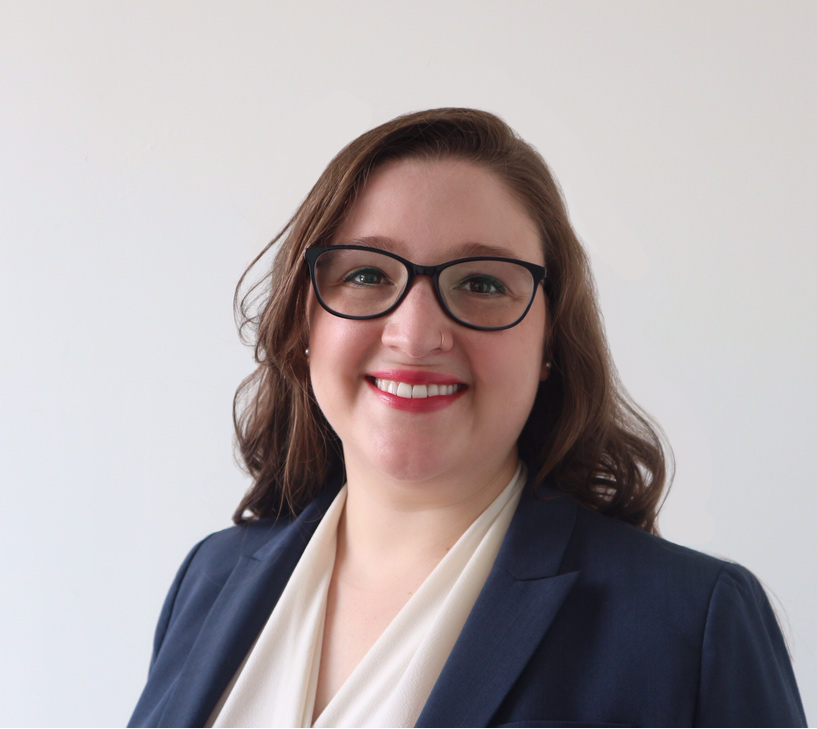
Chelsea Moriarty Coffield discusses the importance of collaboration in public health and shares strategies for building trust and health equity.

 Spotify
 Apple Podcasts
 Amazon Music
 Public health's most complex challenges require stronger partnerships, deeper community engagement, and leaders willing to connect people across sectors. In this episode, Chelsea Moriarty Coffield, population health program manager for Community Health Choice and DELPH scholar, explains why collaboration is more than coordination, sharing practical strategies for building trust, aligning organizations around community needs, and embedding health equity into everyday decision-making. She also discusses the importance of one-on-one relationships, cross-sector partnerships, and leadership rooted in humility rather than expertise. Whether you're leading a coalition or looking to strengthen collaboration within your own organization, this conversation offers actionable lessons for creating lasting public health impact.
Leading Collaboratively for Lasting Public Health Impact | ASTHO
Workforce Trends in Public Health Preparedness | ASTHO
The Boundary Spanning Leadership Framework’s Impact on Public Health | ASTHO

JOHN SHEEHAN:
This is Public Health Review Morning Edition for Monday, July 27, 2026. I'm John Sheehan with news from the Association of State and Territorial Health Officials.
Public health's most complex challenges require stronger partnerships, deeper community engagement, and leaders willing to connect people across sectors. Today, Dr. Chelsea Moriarty Coffield, Population Health program manager for Community Health Choice explains why collaboration is more than coordination, sharing practical strategies for building trust, aligning organizations around community needs, and embedding health equity into everyday decision-making.
CHELSEA MORIARTY COFFIELD:
Public health outcomes advance and improve when organizations stop working alongside each other and start working together. So, I am part of a coalition in Harris County that's six different organizations in completely different sectors. We have public health, healthcare, behavioral health, insurance, data analysis, and we are trying to figure out how we can communicate better to streamline our case management, so we can improve patient outcomes, because we're working with a very complex patient population. They have more than one issue that needs support, whether or not that is diabetes and hypertension, also housing insecurity, food insecurity, and each of these organizations are an expert in one thing. And so, when we all work together, we can deliver true holistic care for our patients. That's more sustainable because when a patient has housing and has food, they can attend their doctor's appointments, they can take their medication, and they can really make significant, sustainable health improvement, and that's just better for all of us overall.
SHEEHAN:
Of course, and so when you talk about all these different systems, how do you align them along with stakeholders so that you get those positive outcomes you were discussing?
COFFIELD:
Yeah, so I really like to center it on the community voice, not just so much about aligning the organizations. So, as an example, I led Harris County's 2024 community health assessment, and I had a lot of different priorities I was trying to bring together. We had our PHAB accreditation requirements. I had several programs that needed specific data, and then we also wanted to collect information that the community actually cared about. So, we did many different data collection methods. We had surveys, listening sessions, interviews, storytelling, data visualization, as well as that kind of standard quantitative data, and so that really shifted our conversation from "what do the numbers say?" to "what are community members experiencing?" and so we were able to take that assessment and you know really heavily on the community story and turn it into a community health improvement plan, and that plan now has new been used to support other data initiatives as well, such as food insecurity, behavioral health, health equity initiatives, and so by making community voices the foundation, and we use the data to help explain the story.
SHEEHAN:
You've also written about sort of the three pillars of trust, structure, and accountability. Why are all three so important, and what happens when you don't have one?
COFFIELD:
So, structure alone doesn't create collaboration. Trust and communication do. So, this was a story from my early consulting career. I was supporting a biopharmaceutical company apply for a grant that would help support FDA approval process, and you know we had a great team of really smart people, and the structure was there. The grant had very specific requirements, but the problem was we were a new team, and we didn't trust each other, and we didn't have a structure for communication. So, everyone was unsure of what their role was. I thought one person was responsible for the budget. Somebody thought I was responsible for the scientist biographies, and ultimately we missed the deadline. We didn't have all of the pieces we needed in place, and so you know, learning and growing from that experience. Now, I build in a communication plan into my project plan. You know, very clear outlines: who's doing what, when are we going to share updates, and how are we going to address challenges before they become a crisis. And you know, because trust doesn't happen accidentally; it has to be designed into the project.
SHEEHAN:
You've written about embedding equity across a department. What does that look like practically?
COFFIELD:
For me, health equity isn't a project; it's how an organization makes decisions. And I think it needs to come from two approaches, both top down and bottom up. So, for top down, you know, you want leadership to be explaining health equity in all of their messaging. Talk when they talk about new projects or new initiatives, strategic priorities, connecting that back to health equity and explaining why it matters. But then on the other side, you know, that front-facing staff needs to have an understanding of how their daily tasks benefit the community member. How does it improve health outcomes? And what's great about when frontline staff connect their daily work to a bigger initiative is that they feel more connected to the work. They have more autonomy and accountability, and more passion to drive it forward. And so, all of this, you know, health equity being the purpose helps create ownership. And so, health equity happens through these thousands of everyday decisions, not just one big initiative.
SHEEHAN:
And you mentioned earlier how you know public health systems can span you know different systems of government, healthcare, community organizations, insurance, and each one is you know working at their own goals, their own priorities. What is one thing you've done, one strategy you've employed, to get those groups working in the same direction?
COFFIELD:
So, I really put a big emphasis on the one-on-one relationships, not large meetings, and so I aim to find a champion at each organization, and I learn about their priorities, I learn about their pain points, what success means to them, and see how I can best support them in my role. So, for example, I was working with a community organization that was supporting disability advocacy, and they wanted to work with the local food bank, but they had no idea how to go about that process. Well, I had a relationship at the local food bank, and so I was able to connect the two teams, but also explain how this new relationship could be beneficial to both organizations, and how, as the public health official, I could help support in project planning and data analysis. And so that was just one example on like a very small scale. All I was doing was connecting two people, but now it's set up this formal relationship across two major organizations, because oftentimes the people aren't misaligned. We're all working towards the same outcome, but someone hasn't connected the dots yet.
SHEEHAN:
Yeah, and related to that, you've written that professionals and leaders should move away from trying to feel like they have all the answers. How does that change the way a team can operate? And what would you what would you tell leaders who always feel like it's on them?
COFFIELD:
So, leadership isn't knowing everything; it's knowing who to bring to the table. I had to quickly learn that public health work is never done. There's always going to be new evidence, new revisions, new changes that need to be addressed because community needs change, and so it's impossible for one person to be the expert in everything every time. So, for example, like I know a lot about chronic disease, a lot about chronic disease management. I don't know as much about food insecurity, and so I rely on my partners at the local food bank to help guide my public health planning when I'm designing programs to address food inequity. And so, by being able to kind of model that humility, by being able to say to my team, like, "Hey, I don't know, but I'm gonna find out." lets, gives, them the permission to do the same to really, you know, be honest about where their gaps and understanding are, but also recognize, hey, I can bring in other people to help support me, and because the strongest leaders build rooms full of experience instead of trying to become the expert in everything,
SHEEHAN:
And as public health challenges evolve from increasing workforce shortages, or you know the dissemination of misinformation or climate impacts, how does collaboration need to evolve?
COFFIELD:
So, tomorrow's public health leaders will succeed by building partnerships across sectors that traditionally haven't really worked together. A current interest of mine is how do we partner with the private sector? Initially, it seems like public health and private business wouldn't have anything in common, but when you look at the bigger picture, public health wants healthy communities, and businesses want healthy workforces, so at the end of the day, we do have some alignment, and so there are opportunities to figure out how we can support each other to deliver that end goal, whether or not it's with climate change, workforce shortages, addressing misinformation. Public health leaders can then become the translators across all of these sectors, because future leaders won't solve problems alone. They'll connect people who can.
SHEEHAN:
Absolutely. And lastly, what piece of advice would you give to a public health worker who wants to start that collaboration or support for collaboration in their own agency?
COFFIELD:
I would say model the collaboration before asking others to collaborate. So, I work in Harris County, that's home to five million people. Its so large, coalitions can feel very overwhelming and almost get stuck in the planning phase. And so instead, start with one person, one organization, one project, and through that interaction, you build the trust, the structure, the accountability, and can demonstrate success. So that over time, you can add new partners to new project initiatives, and really organically build that coalition focused on relationships and focused on the community, because we don't have to transform public health overnight. We just have to collaborate a little bit better today than we did yesterday.
SHEEHAN:
Dr. Chelsea Moriarty Coffield, thanks so much.
COFFIELD:
Thank you. It was great being here.
SHEEHAN:
Dr. Chelsea Moriarty Coffield is Population Health program manager for Community Health Choice.
Public Health preparedness professionals fulfill critical functions in the event of a public health emergency, such as coordinating emergency response planning, managing incident command structures, and ensuring readiness for a multitude of threats. This essential group of workers faces significant strain, especially after the COVID-19 pandemic, which accelerated major workforce changes within public health. Read more about workforce trends and public health preparedness at the link in the show notes.
Since 2018, ASTHO has customized the Boundary Spanning Leadership framework for the public health workforce. BSL develops leaders' ability to create direction, alignment, and commitment across both vertical and horizontal relationships within health departments and with community partners. The framework aims to work across differences in geography, demographics, leadership level, department, or unit. It's designed for settings where the goal is not only to lead people but to lead across these differences, bridging agencies, sectors, levels of authority, and communities. Learn more at the link in the show notes.
This has been Public Health Review Morning Edition. I'm John Sheehan for the Association of State and Territorial Health Officials.