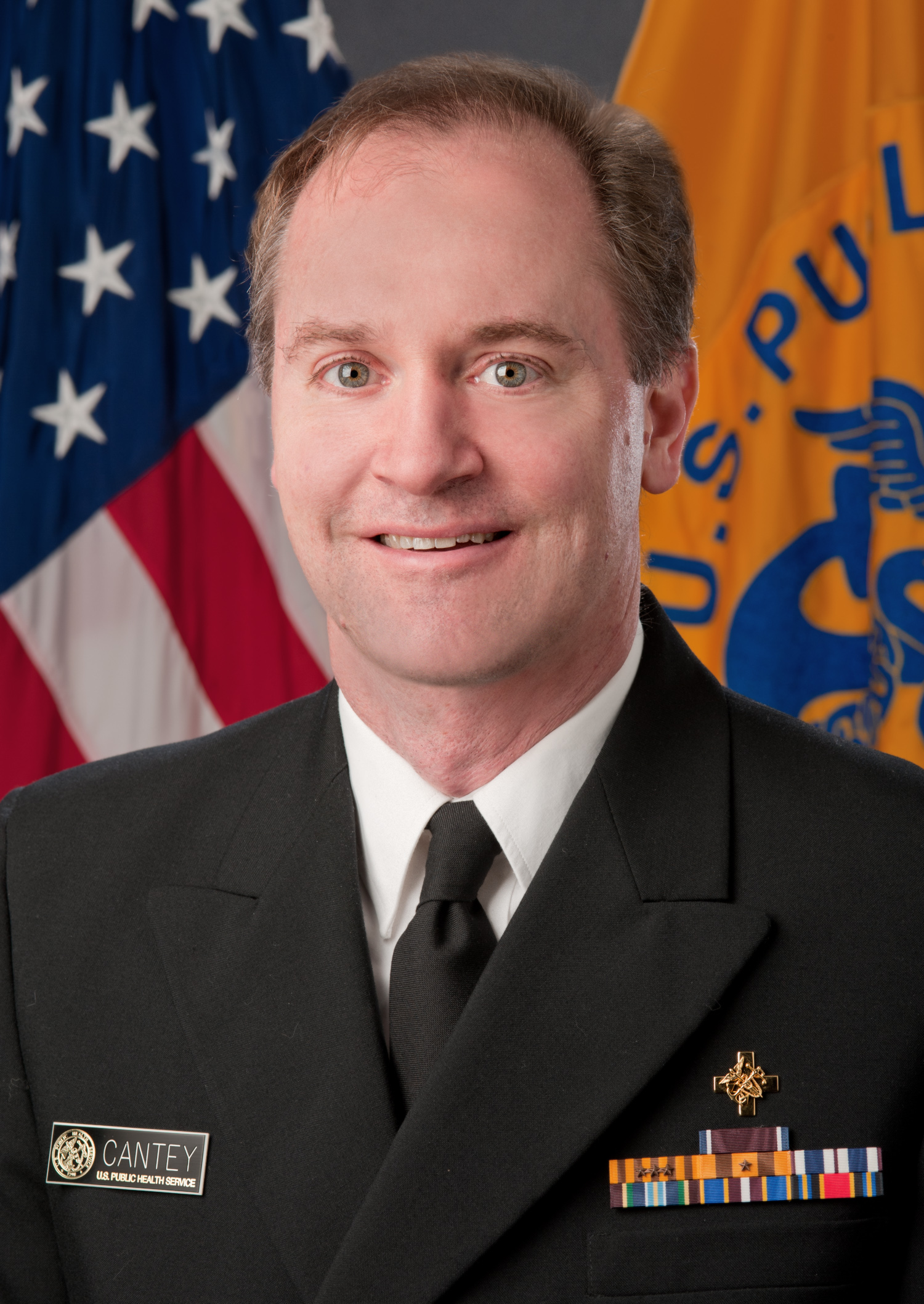
Paul Cantey of CDC and U.S. Public Health Service discusses the current status of New World Screwworm in the United States and explains how federal, state, territorial, and local agencies are coordinating their response, early recognition and treatment, and what public health professionals should know.

 Spotify

 Apple Podcasts

 Amazon Music
New World Screwworm is a One Health concern requiring coordination among public health, animal health, agriculture, and environmental partners to identify and respond to cases. Paul Cantey, a captain in the U.S. Public Health Service and chief of the Parasitic Diseases Branch at CDC, discusses the current status of New World Screwworm in the United States, including active animal cases and the absence of known human cases. He explains how federal, state, territorial, and local agencies are coordinating their response, why early recognition and treatment are important, and what public health professionals should know about protecting people, pets, and livestock. Cantey also discusses risk communication, preparedness exercises, coordination across jurisdictions, and the importance of knowing who to contact before a case appears.
New World Screwworm Insights and Action Steps | ASTHO
New World Screwworm Outbreak Resources | CDC
New World Screwworm Resources | Texas Animal Health Commission
Advancing Strategies to Bridge the Gap in Rural Public Health and Rural Health Care | ASTHO
Guidance for Developing and Implementing a Quality Improvement Council | ASTHO

JOHN SHEEHAN:
This is Public Health Review Morning Edition for Tuesday, September 29, 2026. I'm John Sheehan with news from the Association of State and Territorial Health Officials.
New World Screwworm is a One Health concern requiring coordination among public health, animal health, agriculture, and environmental partners to identify and respond to cases. Today, Paul Cantey, a captain in the U.S. Public Health Service and chief of the Parasitic Diseases Branch at CDC, discusses the current status of New World Screwworm in the United States, including active animal cases and the absence of known human cases.
PAUL CANTEY:
The good news is, as of right now, it still remains pretty quiet. There are zero human cases in the United States. There has been only one travel-associated case identified in 2025. So, from the human perspective, that's looking pretty good. There have been a total of 50 animal cases in the U.S., but there are currently only those two active cases: one in Texas and one in New Mexico.
SHEEHAN:
And how is the federal response working across border states to protect people?
CANTEY:
So first of all, it is a unified one government response. USDA is in the lead, with the Department of the Interior, Department of Health and Human Services, and other agencies involved. The coordination goes through the One Health Coordinating Unit for New World Screwworm. It's actually a working group, but the One Health Coordinating Unit is co-led by USDA, Department of Interior, and CDC, and they take turns leading that coordinating body, and it helps make sure that we're all all the various agencies in the federal government are talking with one voice and talking to one another. More specifically, CDC and its support for state, tribal, local, and territorial health officials, we have been involved in a number of activities. There, we have worked with states to increase the ability for local diagnosis, microscopic diagnosis of neural scrum, and human and people who are infested. We've also been working on developing and helping to develop response plans, making sure that clinicians and public health officials are aware of how the pest is transmitted, how to prevent it, what are the steps that need to be taken to make a diagnosis or to get someone to treatment. There have been tabletop exercises we've been involved in, and we've also been able to get some funding out through various mechanisms to states to help with either tabletop exercises, other preparedness activities, getting health communications messages out to the general public or to clinicians who might see human patients.
SHEEHAN:
So, New World Screwworm is a public health issue. It's an animal health issue. Is it a food safety issue?
CANTEY:
Currently, the U.S. food supply is safe, and I would not consider New World Screwworm a safety issue because the parasite is not spread from person to person, animal to animal, or animal to people, so you cannot get New World Screwworm from your food. If an animal is infested in the United States, it would be inspected before it goes into the the to the food supply, and would be removed from the food supply if identified out of an abundance of caution. But once an animal, if an animal was infested and it died from New World Screwworm, once it dies, the parasite will actually leave the body or it will die.
SHEEHAN:
So, how can the public protect themselves or their pets or livestock from New World Screwworm? And what should the public just generally know?
CANTEY:
Probably the first part is more important. I mean, you're not at risk for New World Screwworm if the parasite's not in the area. This is again not a it's not a virus that spread person to person. You're not going to get it on an airplane. You're not going to get it at school. You're going to have to be out in the environment where the parasite is being spread. So, the first thing is know where where where is the parasite currently found in the United States? You can go to the screwwoom.gov website, and you can find the maps of Texas and New Mexico and actually see the counties where the animal cases were. So knowing where the parasite is is important. Things that humans can do to protect themselves. You want to be aware of any cuts or scrapes you might have. Keep those covered if you're outdoors in an area where the parasite is present; this may include, you know, putting a band-aid on it, wearing a long-sleeve shirt or long pants to cover your skin. Don't forget to wear hats if you have, you know, eczema of the scalp or you have a cut on your head. You know, a hat could help provide protection as well. You can also use EPA-approved repellents to keep the insects from landing and biting you. But you know, there are also our pets and our livestock and other animals that are at risk. Although the major risk for infection is livestock, they are the ones that are most at risk in Central American Mexico. The number two animal infected in Mexico is dogs, and any animal can be infected. So to protect your pets, you know, be aware of any cuts or scrapes or any wounds. If they come in with a foul-smelling wound or seem to be in a lot of pain with a wound, that would be a reason to go see your veterinarian as soon as possible. Certainly, if you're in an area with known transmission in your concern, keeping your pets indoors as much as possible would be important because, you know, the fly is going to be biting outdoors in the daytime. It's not going to be inside your house. The other thing I should probably say, if you suspect that you or your animal is infested, you as a human, should go see your healthcare provider immediately. You should take your animal to the veterinarian. If you see larvae in the wounds, your wounds, or the wounds of your animal, you would want to make sure that you collect those larvae and bring them with you. You do not want to release any of the larvae into the environment because that creates a risk of introducing the parasite into a new environment, in which case transmission could be started in that area.
SHEEHAN:
Are the larvae visible? Are they obvious?
CANTEY:
Yeah, the larvae and the eggs can be very small and hard to see. So, when you know, when the fly bites, it will lay a few eggs on the open wound. But as they develop in the larvae, they are very obvious. They are larger. I think there's some images on the website, so you can see that they're not a centimeter long, but they're big enough that you can see them very easily with the naked eye, and you can feel them. Most patients will complain of pain in the wound, and you can actually feel the larvae moving as they're burrowing into the living tissue. They can actually feel that in the wound. Clearly, animals can't complain of that, but you might actually see visible movement under the skin, or just any time and, you know, the normal pain response that you would see in a cat or dog, or your pets, that would be an indication that this might be more than just a normal wound.
SHEEHAN:
Are there other recommendations for how agencies can communicate with the public about New World Screwworm?
CANTEY:
CDC, on its web pages, has already created a number of communication materials that can be used with health care providers, or at-risk populations, or the general public. So, one, you know, reviewing those materials and downloading the handouts that are useful to your population would be helpful. I think it's important to remember when you're messaging to message the fact that you're only at risk if you're in an area where the parasite is present and transmission is ongoing. You cannot get this from person to person. You cannot get this from your pet. You get this when the fly lays eggs in the wound, so really focusing on covering wounds, protecting yourself from being bitten by the flies, and having them laying eggs in your wound are important messages. And then other seeking care, you in humans you need to surgically extract all the larvae, so you need to go see the provider, and you need to make sure that the larvae are taken care of. And by taking care of them, they are all collected, they are all killed appropriately, and the appropriate number are submitted for diagnosis. You do not want to allow the parasites to re-enter the environment and possibly continue their life cycle and continue transmission.
SHEEHAN:
And how can state and federal agencies work together combating screwworm? And are there any other new partners who should be included?
CANTEY:
Yeah, I think it's important we continue. We're already doing with the coordinated response and recognizing that this is a One Health issue. So a One Health approach needs to be taken. The identification of a human or an animal case in an area where transmission is not known to have occurred previously should involve reporting to both sides of the equation. You should not, you know, public health should not be working without coordinating with its agricultural partners. Also, don't forget the you know parks and wildlife and Department of Interior has a role. Wildlife can be a vector for moving, helping the parasite move into new areas. So we need to be cognizant of that as well. So continue to coordinate across your institutions and across agricultural partners that you might not normally work with; parks and recreation that you might not normally work with will be important. The other thing to really think about is, you know, these parasites are out in the environment. They don't respect our borders, so you you you may need to be reaching early across other jurisdictions, not just thinking about what's going on in your jurisdiction, but what are the surrounding counties? What is the nearby state? If you're on the U.S.-Mexico border, what's going on on the Mexico side? And coordinating with some of those partners, and really thinking about how you might reach out to them once the first case appears in your jurisdiction, would be an important part of the planning process.
SHEEHAN:
We mentioned that New World Screwworm requires a One Health response. Can you talk about what that means?
CANTEY:
Sure. I mean, one example is the case, the travel associate case, that happened in Maryland. Once the case is identified, you have to make sure that not only the public health was involved, but the state animal health official was involved. All the local agricultural partners. Decisions had to be made as to to determine whether or not there was the risk of introduction of parasite in the environment, and if that were the case, then you'd have to decide where you might set up traps for surveillance. You might need to communicate, if it's near farmland, how to communicate the information to the various farmers in the area whose livestock might be at risk, and then how and what kind of messaging is important to the general public. So there are a lot of different moving parts that need to come together and need to communicate and work well together.
SHEEHAN:
What do you recommend for public health professionals who are starting to see or thinking about preparing for New World Screwworm?
CANTEY:
First of all, remember this is a scary disease, but it's a manageable disease. I mean, the headlines are going to be 'flesh-eating parasites coming to kill us all.' I mean, that's not what's going to happen if it's managed appropriately. We know how to treat individuals. We know how to diagnose individuals. The important thing is making sure that people know what they need to do and that they need to get to care quickly. Those individuals who have had poor outcomes typically have delayed access to care or delayed treatment because it's not recognized. So early recognition is very important, and making sure people know how to get into care for themselves, their family members, or their pets or their livestock will make all the difference. Two, knowing who to call in advance is important. I think when we've done some of these tabletop exercises with various jurisdictions, you don't always know all the right people to call and have their contact numbers. So making sure you know, okay, if there's a case, I need to call this person in our animal health group, this person in our environmental health group, this is the person in the state I need to call. This is who I need to call in our regional network. This is who I might need to call if you're on the border and in a border county. Really, knowing who you need to talk to and having that ready to go. I think are very important things to think about, and also think about the risk populations. These are people who are outdoors primarily during the day, who might not be able to take care of or cover all their wounds at all times. So, who are those groups in your jurisdiction? Do you have an unhoused population that may be sleeping outdoors during the day that you want to get in touch with? Do you have people raising livestock who you know can protect their wounds? But if you're holding a calf during a delivery, you might have higher risk. So how do you communicate to these people? What are their risks? I mean, even in the areas where we know that there is endemic transmission, you know, the annual incidence rate is maybe 1% or less than 1%. So this is not something where you're going to have 1,000s, and 1000s, and 1000s of human infections overnight.
SHEEHAN:
Paul Cantey is a captain in the U.S. Public Health Service and chief of the Parasitic Diseases Branch at CDC.
Rural communities are essential to the health, economic vitality, and resilience of the nation. Yet many rural areas continue to face persistent barriers that affect both health outcomes and quality of life, including workforce shortages, limited access to care, constrained public health capacity, and challenges securing sustainable investments. Addressing these complex issues requires approaches that move beyond traditional sector boundaries and strengthen connections among public health, health care, economic development, education, philanthropy, and community leadership. Learn about advancing strategies to bridge the gap in rural public health and rural health care at the link in the show notes.
The new resource, Guidance for Developing and Implementing a Quality Improvement Council, provides guidance and recommendations to support the development, implementation, and sustainability of a quality improvement council within a public health agency. QI in public health refers to the use of a deliberate and defined improvement process, such as plan, do, study, act, to improve efficiency, effectiveness, service quality, and population health outcomes. A QI council helps establish a coordinated approach to QI, supports a culture of continuous improvement, and strengthens organizational performance and accountability. Learn more at the link in the show notes.
This has been Public Health Review Morning Edition. I'm John Sheehan for the Association of State and Territorial Health Officials.