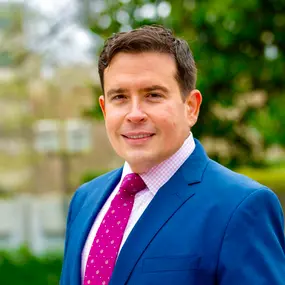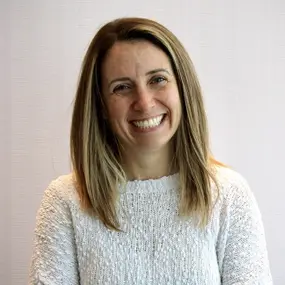
Santiago González-Irizarry and Larissa Pardo from DC Health discuss how PHIG funding and data modernization efforts helped the agency move from reactive, disconnected systems toward a coordinated data governance structure.

 Spotify

 Apple Podcasts

 Amazon Music
DC Health is taking an enterprise-wide approach to data modernization, bringing staff from across programs, IT, informatics, and analytics together to develop a shared strategy. Santiago González-Irizarry, data modernization lead for DC Health, discusses how the agency moved from reactive, disconnected systems exposed during the COVID-19 response toward a coordinated data governance structure and modernization framework. Then, Larissa Pardo, a statistician with DC Health, explains how a four-day strategic planning workshop brought about 40 staff members together to identify common challenges, establish a shared vision, and break down silos. She describes how the process strengthened workforce engagement, built camaraderie, and helped DC Health establish a North Star: getting “the right information to the right people at the right time” to create a healthier D.C.
This work is supported by funds made available from the Centers for Disease Control and Prevention (CDC) of the U.S. Department of Health and Human Services (HHS), National Center for STLT Public Health Infrastructure and Workforce, through OE22-2203: Strengthening U.S. Public Health Infrastructure, Workforce, and Data Systems grant. The contents are those of the author(s) and do not necessarily represent the official views of, nor an endorsement, by CDC/HHS, or the U.S. Government.
Public Health Infrastructure Grant: Resources & Impact - PHIG

JOHN SHEEHAN:
This is Public Health Review Morning Edition for Tuesday, October 13, 2026. I'm John Sheehan with news from the Association of State and Territorial Health Officials.
DC Health is taking an enterprise-wide approach to data modernization, bringing in staff from across programs, IT, informatics, and analytics together to develop a shared strategy. On today's PHIG Impact Report, Santiago González-Irizarry, data modernization lead for DC Health, discusses how the agency moved from reactive, disconnected systems exposed during the COVID-19 response toward a coordinated data governance structure and modernization framework. Later, Larissa Pardo, a statistician with DC Health, explains how a four-day strategic planning workshop brought about 40 staff members together to identify common challenges, establish a shared vision, and break down silos. But let's start with Santiago González-Irizarry.
SANTIAGO GONZALEZ-IRIZARRY:
DC Health is the Washington, D.C. Department of Health, and what's unique about DC Health is that we function as both a state and local health department. We're also positioned very close to the federal government and two big states, Virginia and Maryland, which is kind of unusual, and it shapes everything that we do. In this dual role, that means that we run disease surveillance, epidemiology, vital records, immunizations, maternal and child health-all these different data programs for the DMV region. So there's a lot of influence and collaboration among the neighboring jurisdictions. Right now, in my role, I sit in the Office of the Chief Data Officer, where my role as data modernization lead is making sure that systems and people across the agency are highlighting what are our data needs.
SHEEHAN:
And what was the situation in DC Health that needed the data modernization program?
GONZALEZ-IRIZARRY:
I think that we are not unique in that the COVID response exposed a lot of gaps in how data was received and shared. When I joined DC government in 2020 during the COVID response with a Contact Tracing Force, it was mostly focused on disease surveillance, so I got to see firsthand how a lot of the effort went into manual handwriting, disconnected systems, and one-off fixes that really didn't answer the big questions. So the pandemic proved that people could perform, but that the systems were not connected, and that pushes to do major modernization initiatives like automation of our electronic lab reports.
SHEEHAN:
Yeah, definitely. So you had, you know, people doing handwritten procedures. What was it like, you know, bringing together staff, these adapted processes, new data systems? What was it like bringing all those different groups together for the planning process?
GONZALEZ-IRIZARRY:
I think that during a period of time, as an agency, very mission-driven, we were very focused on responding to that emergency. So the instinct was to be very reactive and to solve problems that were coming in, and sometimes pivoting month by month. What this brought was the realization that we needed to take a pause and really think strategically into what the future of our data modernization strategy would look like. That meant bringing people that we worked with very closely together, but perhaps never got the opportunity to meet in person.
SHEEHAN:
Sure, and I imagine getting buy-in from leadership was pretty critical to that whole process.
GONZALEZ-IRIZARRY:
Absolutely, I think that one of the things that could really push change is getting that buy-in from leadership. We're very fortunate that our leadership understood the importance of having this community built and how to bring together our workforce and the technology. So having that buy-in from our director, from our leadership, was very fundamental from the beginning.
SHEEHAN:
Of course. And you developed something called the Data Modernization Advisory Council. What was that, and why was that important?
GONZALEZ-IRIZARRY:
So one of the things that we really needed to close some of these gaps was to create a data governance body. Data governance was happening, but it was done programmatically, and through the PHIG grant, this shed light into the importance of having an enterprise data governance council for us in DC Health. We adapted to our unique agency needs. And it is composed of members from the different administrations as well as the data stewards from major health information systems. So, in that effort, we are able to harmonize and really discuss in a collaborative way how our data modernization is going to be implemented, and what are the specific needs from the different programs.
SHEEHAN:
And what is its role moving forward? How will it sustain progress?
GONZALEZ-IRIZARRY:
So, for some time, we have been dedicated to thinking about what this planning phase will look like, making sure that we stand up our data governance, that we create a solid data modernization framework. It's something that we have been investing in. Now that we have all those components in place, we're thinking about the implementation phase. So we're very excited to take all these gains and push it towards the implementation, which is going to be where we combine the technology, our workforce, and where we would like to be in the future.
SHEEHAN:
And throughout this process, what has the DC Health partnership been like?
GONZALEZ-IRIZARRY:
It's been a wonderful partnership. For us, we didn't want it to take an approach that was simply top-down in creating our data modernization framework, so we began this partnership with ASTHO, in which we plan very intentionally to create a space to bring the community together. And it sounds very straightforward, but these take a lot of planning and dedication, so that when people come together, you have the right questions to ask. Most of all, creating trust so everyone feels comfortable sharing their feedback. And what we discovered was that when we initiated the data modernization strategic workshops, we wanted to have a solid two-day in-person workshop, but very quickly we realized that we needed to have more time. So, in that coordination with ASTHO, we were able to then take the initial facilitation and plan for a follow-up where we cemented our framework.
SHEEHAN:
And looking ahead a few years, what does success look like with this process?
GONZALEZ-IRIZARRY:
I think that success looks like moving away from a culture that is program-based and data siloed into one that is going to be with an enterprise vision, one that will support and will enable interoperability. We can invest in the best technology, but if that technology is not coming with a workforce that feels empowered to use that technology in a way that will be solving real-time public health challenges, then it's not going to defeat the purpose. So now the way that we envision data modernization for DC Health is one where we have both the really robust technology, but also a very skilled and sophisticated workforce that is going to be ready and enabled to push us forward.
JOHN SHEEHAN:
Santiago González-Irizarry, thanks so much.
SANTIAGO GONZALEZ-IRIZARRY:
Thank you.
JOHN SHEEHAN:
Santiago González-Irizarry is the data modernization lead for DC Health.
Now, let's hear from Larissa Pardo, a statistician with DC Health.
So you began the data modernization strategic planning with workshops last year. What was the goal of the workshops, and what kinds of activities were involved? The
LARISSA PARDO:
The goal of the workshop was to get DC Health to a place that we could build out a strategic plan for our data modernization. A lot of that was based on grabbing a bunch of different minds in one room and creating a bunch of different activities to bring forth what everyone could create to create that strategic plan. So the activities really ranged. They were well thought out. A lot of them were in kind of class discussion with everybody all at once, you know, a question would be brought up, and it was just 40 people talking in a room, bouncing ideas off each other, and then we would break up into small groups and kind of discuss a specific element of whatever we talked about. And then we had these asynchronous activities as well that people would take time to kind of, like pen to paper, think about some things that they wanted to prioritize, and then sticking those thoughts up on a wall. And it was a lot of activities that were very different in terms of how you approach them and think about them. And it was incredibly inclusive to get everyone's opinion in different ways and kind of organize those. To come out with some kind of strategic plan.
SHEEHAN:
What emerged from the workshops, and were there any a-ha moments?
PARDO:
Oh, a lot of a-ha moments. It was really interesting, actually. I think what emerged was a vision, kind of a mission statement, which we hadn't really had before, and then what we developed were like four pillars for our strategic plan, and then objectives under those pillars. Essentially, I don't think we really ever gave ourselves a chance to kind of sit around all of the data folks from IT to informatics to data analytics to sit around and just chat with each other. You know, we go from meeting to meeting to meeting, little silos of meetings, and none of us really chat in one room, in one space, to kind of walk through all the different problems we have. And so, the biggest aha moment for, I think, a lot of people was realizing we all have very, very similar problems, going from, you know, immunizations, to cancer registry, to vital records, to all these different data sources. No one really talks across those, so it isn't apparent immediately that we all have the same problems. But we have many of the same data modernization problems. And then I think the other big a-ha moment was kind of coming together and creatively thinking through a solution and getting on one page. It was one of the most positive things I've done at DC Health, it really just brought people together and created this like really creative culture that we all saw, "Oh, hey, here's the problem. Let's be humans, get creative, and think of the solution together, and all get on one page."
SHEEHAN:
And what became the sort of top-line vision?
PARDO:
Yeah, good question. So this took us about a day and a half to agree on, which was wild to me. I thought it would take two hours, but basically the vision was to get the right information to the right people at the right time, creating a healthier DC. Simple. It's quick. It's actually, I think it's a different jurisdiction that had something very, very similar, and so we were given examples. ASTHO really put a lot of different examples up in an organization behind, you know, showing us different things to kind of get us to start thinking. And so we saw a couple different examples, and then we started thinking through what we would want. And you know, it was ping-ponging conversations across the room, and you know, people felt really strongly about certain ideas of, no, "it should be phrased this way." And then we went down pen and paper, and then put them back up. And there were a lot of activities to kind of get us to think through the exact words we wanted and process what we exactly wanted. I remember Heidi from ASTHO. She said some words to me that still resonate throughout my life, and she was like, "Just trust the process. The only way out is through." And then slowly, over a day and a half, it became clear that those words- right information to the right people at the right time- create a healthier DC, where it's like, "Yeah, that's exactly what we need." I need the correct data analyst to get the right data at the right time for them to do the correct analysis. For them to be able to kind of build that bridge of analyzing data to make policy and connect that to action. And so they're really simple words, but they unfold continuously. It's like, oh yeah, that's exactly what we need.
SHEEHAN:
Sure, but you know, complex in its simplicity. Can you allude to this a little bit? But clearly, workforce engagement was a big part of this. It sounds like change management itself had a role to play as well, right?
PARDO:
Oh yeah, I think both of those are very much buzzwords. You know, workforce engagement and then change management, but truly, this workshop was both of those in practice. 40 people in a room for four days discussing, arguing, and coming to consensus is the most workforce engagement I've ever seen in any of part my career. It was people coming together to problem-solve, to build something, and everyone was very engaged because, you know, we all work in these silos that- it makes sense there's- a lot of it is CDC funding-driven. That like, you know, I work in immunizations, I work in maternal health, I work in HIV. Everyone's engaged in their own specific work, but when we think about, you know, the D.C. resident. A D.C. resident isn't thinking in those silos. Getting us in that room got us to transform and start thinking in the sense of, like, D.C. resident health, and we all have similar data problems. And how do we solve those and bridge those gaps in order to present one uniform DC health administration that can go and actually improve health across DC? So it was that engagement of four days. Not only were people very engaged, but also that change management of thinking through, "Hey, we all have problems. Let's all get on the same page."
SHEEHAN:
Does data modernization, as a concept, mean something different to you now?
PARDO:
Yeah, I think so. I think I saw data modernization as like each individual group, you know, figuring out their specific thing. Like, okay, maybe they're receiving Excel spreadsheets through an email, and then modernizing that to something else. And I think I saw data modernization after this workshop as an ongoing thing that you have to constantly do, and b it's an enterprise system thing. It's not individual groups doing things by themselves. I mean, it can be, but I think it's more functional to get everyone in a room and do it the way of saying, "Hey, we have an enterprise data modernization movement that we need to start pushing, and let's get everyone on the same page." And I think this workshop, to me, was unique in that a lot of times I think in government ideas come from the top, and they trickle down. And this was very democratic. You know, it was 40 people in a room of all different levels, and everyone had an equal voice, and I think data modernization is one of the unique items in a public health organization that should be kind of built that way. It should be this kind of democratic process across people to get everyone on the same page and align and agree to certain things. And I think that workshop changed how I see data modernization as a tool to bring everyone together.
SHEEHAN:
Yeah, and it sounds like this workshop was pretty impactful. Is it something that you would recommend to other jurisdictions?
PARDO:
Absolutely. As a data person, data folks a lot of times sit in silos and like can be introverts and stick more to themselves. This is integral in the idea that like data modernization should like democratically be led across the enterprise, and so to do that, you have to kind of get all voices in one room, not just to find the solution, but more so to see that everyone has these very similar problems, and that you all need to build the wheel together, not in individual little silos.
SHEEHAN:
Well, Larissa Pardo, thanks so much.
PARDO:
Thank you so much, John. Appreciate it. It was really great to chat.
SHEEHAN:
Larissa Pardo is a statistician with DC Health. Earlier, we heard from Santiago González-Irizarry, data modernization lead for DC Health.
This has been another PHIG Impact Report, part of Public Health Review Morning Edition. I'm John Sheehan for the Association of State and Territorial Health Officials.