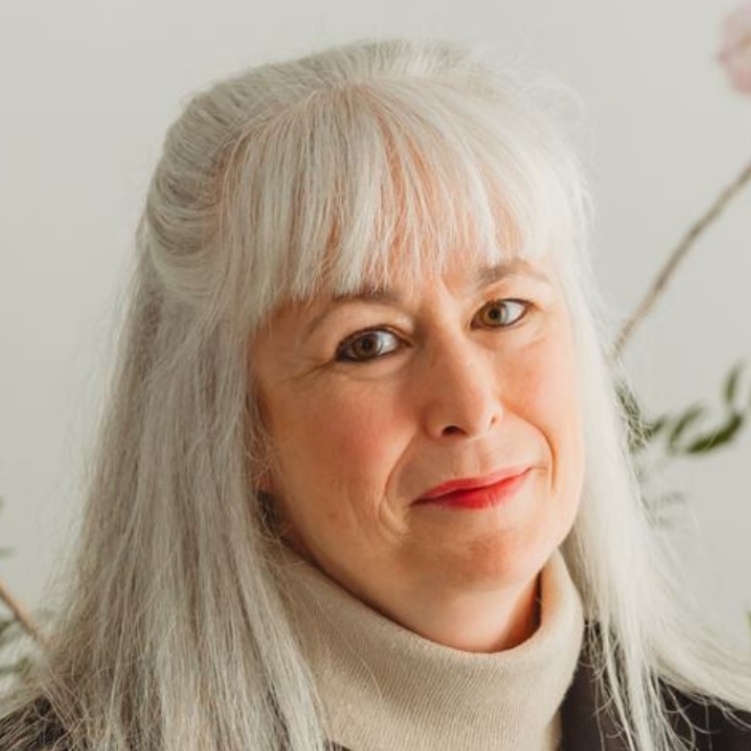
Rachel Sheehan of Premier, Inc. explores how data-driven strategies, quality improvement initiatives, and stronger community partnerships can reduce maternal mortality, expand maternity care access, and improve health outcomes for mothers and families.

 Spotify

 Apple Podcasts

 Amazon Music
Maternal health improvements are possible when states, hospitals, and community partners use data to identify the drivers of severe maternal morbidity and target care where it can have the greatest impact. Rachel Sheehan, director of perinatal improvement at Premier, Inc., an ASTHO Innovation Advisory Council member, discusses how patient safety bundles and state perinatal quality collaboratives have helped reduce maternal mortality, while highlighting the challenges that remain in prenatal and postpartum care. Rachel Sheehan also discusses how states can use rural health transformation investments to expand maternity care access, including through care coordination, virtual care, and data-driven identification of high-risk patients. She explains why sustaining proven interventions, aligning measures across agencies, and strengthening partnerships with community organizations will be critical to improving maternal health and health outcomes for families.
Innovation Advisory Council | ASTHO

JOHN SHEEHAN:
This is Public Health Review Morning Edition for Tuesday, October 6, 2026. I'm John Sheehan with news from the Association of State and Territorial Health Officials.
Today: using data to drive better maternal health outcomes. Maternal health improvements are possible when states, hospitals, and community partners use data to identify the drivers of severe maternal morbidity and target care where it can have the greatest impact. Rachel Sheehan, director of Perinatal Improvement at Premier Inc. discusses how patient safety bundles and state perinatal quality collaboratives have helped reduce maternal mortality while highlighting the challenges that remain in prenatal and postpartum care. Rachel Sheehan, welcome to the show.
RACHEL SHEEHAN:
It's nice to be here. Thank you for inviting me.
JOHN SHEEHAN:
Nice to have you. Maternal morbidity: why is it such an important issue for state public health officials and for Medicaid leaders today?
RACHEL SHEEHAN:
Well, we know that state, territorial public health leaders and agencies have a critical focus on maternal health across the nation right now. We know there are 59 state, D.C., and territorial Title V Maternal and Child Health Block Grant funded through HRSA, and also state perinatal quality improvement collaboratives that are supported by the CDC, HRSA, and other maternal child health funding that the states are investing in. A lot of that investment has been sparked by the concerns around maternal mortality as a nation. What we're seeing within the Health and Human Services Perinatal Collaborative that Premier supports is that there is a connection between maternal morbidity and maternal mortality. In our data set, 97.5% of patients who experience maternal mortality have an underlying severe maternal morbidity condition. We also know that the patients experiencing severe maternal morbidity are incurring additional costs during the delivery encounter, and that's impactful to everyone within the healthcare industry that's trying to support this improvement within maternal and child health.
JOHN SHEEHAN:
Certainly, and states have invested in maternal morbidity for years. What has worked and what has not?
RACHEL SHEEHAN:
We've had the opportunity at Premier to support the Health and Human Services Collaborative. In that collaborative, we're working really hard to support hospitals in the work they're doing at the state level. So, state PQC work, AIM bundle implementation, and what we've seen is that there's been the ability to decrease maternal mortality by approximately 41% by implementing these bundles, by digging into the data that we have available related to severe maternal morbidity and the drivers of maternal mortality. Yet maternal mortality continues to be a challenge in the prenatal and postpartum period. So while we've had improvement, significant improvement during the delivery encounter, we still have opportunity to make improvements. So, one of the greatest things that's happened within the collaborative itself is the ability to have hospitals across the country impact their implementation strategies by sharing information. Historically, hospitals have been very proprietary about process improvement work, about outcomes, about data around outcomes through the collaborative. That proprietary-ness has really come down, and teams are sharing across the nation best practices, how to overcome challenges, and where they can make an impact. We have the large AIM bundles that are very high level. The hospitals within the collaborative have been successful at identifying the things that have worked, the drivers of the individual outcomes, by getting down to patient-level data, and as I said, the greatest thing is that they're willing to share that information. So other hospitals don't have to start from scratch. They can take pre-developed programs that have worked. They can utilize data reports and data analytics that have worked in other organizations, and that sharing increases efficiency and effectiveness in process improvement. The question now becomes: How do we move that out into both the prenatal and the postpartum period?
JOHN SHEEHAN:
You mentioned Premier's Women's and Infants Collaborative. Which has shown remarkable improvements, including a 41% reduction in maternal deaths. Why was that approach different?
RACHEL SHEEHAN:
The approach is specific on identifying the drivers of maternal morbidity and mortality, helping each individual member of the collaborative see what the causes are. There's been evidence across the nation that maternal morbidity varies by region in terms of what the leading cause of morbidity is, and as I said earlier, morbidity is related to mortality. What we do with the members is look for where the biggest opportunities are, and what we know is, despite having patient safety bundles for some of the leading drivers of both morbidity and mortality, though the leading drivers continue to be the same thing. So, how do we get down to the drivers of the drivers? How do we identify what are the underlying causes of the morbidity? And what we're seeing is that chronic conditions are increasing across the nation within the maternal health patient population, as they are in the population as a whole. With the chronic conditions increasing, those chronic conditions are impacting the rates of morbidity and mortality. How do we implement programs, or hardwire, or sustain programs that we've worked on in the past? The state PQCs have done phenomenal work at implementation of these bundles, supporting hospitals in implementing the bundles. The challenge is there's a lot of competing priorities within this space. We do an implementation. We focus on that area. Then we move on to the next implementation. Sustaining the work is not as easy as some think. Providing additional data resources to identify those drivers helps keep the focus on that area without having a lot of other factors in the periphery having to be considered. So, becoming efficient because we can identify the specific factors that are driving, and helping hospitals and health care providers know what those are, so that they can implement evidence-based interventions about those specific drivers.
JOHN SHEEHAN:
Rural communities often face greater challenges, particularly with maternal health challenges. How can states use the Rural Health Transformation Program to help?
RACHEL SHEEHAN:
Well, we see that about 35 states are prioritizing maternity care access and child health initiatives through the rural health transformation grant program, which again is indicating that the states understand how critical this work is. We've had the opportunity to support some work that's going on in South Dakota. It started with an Our Moms grant, moving into a rural health transformation grant to focus on care coordination in support of making sure patients across all sectors, whether it's urban or rural, have access that they need. As we see maternity services decline in rural areas, we have to be creative, and so we have had the opportunity to work with Avera, who's developed a hub-and-spoke model and a care coordination model that now integrates virtual care. Utilizing data to identify patients at risk has been the service that we're providing within that program. With the limits in the resources that are available, it's important to make sure that high-risk patients are identified efficiently, and that we can modify care that's provided, whether it's increasing appointments or providing telehealth services or specialty consultations that are done remotely, in supporting complex care throughout areas of opportunity, throughout areas where care has limited access, we need to do a better job at that, and we need to make sure that we're utilizing technology in those areas as care becomes more complex. As I said, chronic conditions are a significant factor. The need for prenatal care is changing because of that, and the combination of less access and increased complexity needs to be addressed in innovative ways.
JOHN SHEEHAN:
One of the ideas you've discussed in the past is using existing federal investments to amplify existing programs rather than creating brand new ones. Could you talk more about that?
RACHEL SHEEHAN:
As I said, the AIM bundles were created, so those were funded through HRSA and built on the premise of patient safety within maternal health; identifying the drivers of maternal mortality were foundational in the development of those programs. We see within the members that we get to work with that sustainability can be difficult. So the programs are there. The core principles are there. Finding innovative ways to support hard-wiring those standards and the best practices that have driven the outcomes is critical going forward, as hospitals and all of health care agencies are stretched with resources. It's important for us to make sure that anything we do is improving efficiency and effectiveness at the same time. The bundles were written originally at a very high level, bringing them down to this very specific interventions or elements within the bundles that are impactful is extremely helpful to those who are implementing the work to make the improvement. Eliminating things within any of the recommendations would be helpful so that the focus can be more consistent. One of the things that I hear frequently from physicians, from leaders within maternal child health, is: how do we nationally get to one set of measures? The hospitals have workarounds. We submit this for CMS. We submit this for CDC. We submit something else for state health departments. How do we really align the strategy across all of the agencies that are stakeholders in maternal and child health to provide a consistent and concise set of measures so that our resources are allocated in a manner that can impact sustained improvement over time?
JOHN SHEEHAN:
Are there lessons to be learned from maternal maternal healthcare that could be applied to other areas of care?
RACHEL SHEEHAN:
Maternal mortality is decreasing in many hospitals, indicating, as I said, that the AIM bundles in the state PQC work has been impactful. Yet we continue to have opportunities prenatal and postpartum. A lot of that again goes back to chronic conditions, and we need to take what we're learning in maternal health, such as how gestational diabetes can lead to type two diabetes later on in life. Hypertensive disorders of pregnancy can lead to cardiac conditions later on in life. Both of those things are related to other areas of opportunity within women's health in general, such as diet and exercise, to manage obesity or hypertension that ends up leading to cardiac disease, kidney disease, or long-term diabetes. So I think the focus can shift to those chronic conditions and the healthy lifestyles that are needed to prevent the chronic conditions moving forward. Not only would that continue to improve care and maternal health, but it'll improve care for women's health across the board, and hopefully for families in general. As we get the moms healthier and into healthier lifestyles, hopefully that would translate to having healthier families across the board.
JOHN SHEEHAN:
And lastly, Rachel, what gives you the most optimism about the future of maternal health?
RACHEL SHEEHAN:
The continued focus and investment at all levels is something that we need to continue to see, and we're hearing of additional private sector investment in the maternal and child health space that will be impactful. Also, knowing that we once thought maternal mortality was so complex that we wouldn't be able to drive it at the rates that we have been successful at is definitely providing hope for those clinicians that work within the specialty. We know there's more opportunity, but we also see more people. Becoming more innovative, we see hospitals engaging with community resources and community-based organizations to overcome the gaps in care that have been challenges for a long time, such as maternal mental health. Recently, it was published that about 52% of postpartum moms struggle to get adequate resources in postpartum health. Yet, I have the opportunity to work with hospitals that have been successful at engaging community-based organizations to make sure those gaps are closed and that moms are getting the care that they need, whether it's clinical care with a provider or it's support group resources that are coming from those community-based organizations. So, as I said earlier, the proprietary-ness of we own this space and this is ours, or hospitals saying we don't own this space moving into the community, we're seeing a lot more collaboration between different stakeholders at different levels. That has to continue; it has to grow, and I am seeing that. So it is making me hopeful that we'll continue this work, and eventually we will get to the point where we are the safest place for moms to have babies, and we see improved health across the maternal continuum and across the continuum of health within the family.
JOHN SHEEHAN:
Well, Rachel Sheehan, thanks so much.
RACHEL SHEEHAN:
Thank you for having me. This was a wonderful opportunity.
JOHN SHEEHAN:
Rachel Sheehan is director of Perinatal Improvement at Premier Inc. Premier is a part of ASTHO's Innovation Advisory Council, which connects private sector experts with state and territorial health leaders to advance public health innovation.
This has been Public Health Review Morning Edition. I'm John Sheehan for the Association of State and Territorial Health Officials.