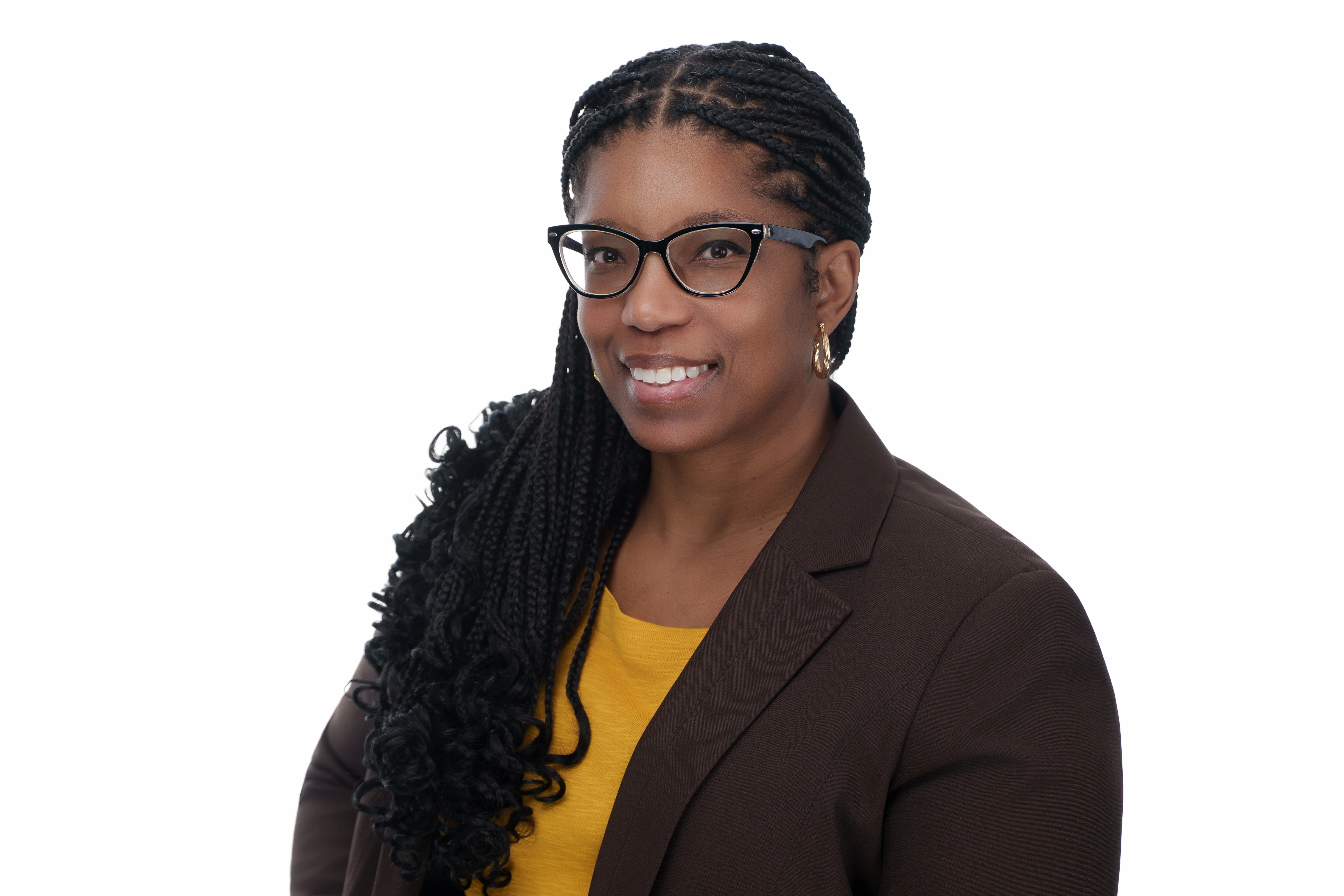
Shebra Hall, chief of the Bureau of Chronic Disease for the Delaware Division of Public Health and a 2026 DELPH graduate, highlights how a cardiovascular health learning collaborative helps partners share resources, strengthen communication, and address health from clinical and community perspectives.

 Spotify

 Apple Podcasts

 Amazon Music
Delaware is bringing health systems, community organizations, faith-based institutions, and clinical partners together through a statewide cardiovascular health learning collaborative. Shebra Hall, chief of the Bureau of Chronic Disease for the Delaware Division of Public Health and a 2026 graduate of ASTHO’s Developing Executive Leaders in Public Health (DELPH) program, discusses how the collaborative is helping partners share resources, strengthen communication, and address cardiovascular health from clinical and community perspectives. Hall also explains how DelawareHeartCollaborative.org provides a centralized digital home for the network, while emphasizing that technology is only one part of successful collaboration. The relationships among partners, she says, are what ultimately make the work possible.
DELPH Leadership Profiles | ASTHO
Delaware Implements Collaborative Communication Platform for Heart Health | ASTHO
Power Hour PLUS: Expand Your Impact - Session 2 - Conversations That Move Work Forward
Power Hour PLUS: Expand Your Impact | ASTHO
Process Improvement Readiness Assessment Tool | ASTHO

JOHN SHEEHAN:
This is Public Health Review Morning Edition for Wednesday, October 14, 2026. I'm John Sheehan for the Association of State and Territorial Health Officials.
Delaware is bringing health systems, community organizations, and clinical partners together through a statewide cardiovascular health learning collaborative. Today, Shebra Hall, chief of the Bureau of Chronic Disease for the Delaware Division of Public Health, and a recent graduate of ASTHO's Developing Executive Leaders in Public Health, or DELPH, program, discusses how the collaborative is helping partners share resources, strengthen communication, and address cardiovascular health from clinical and community perspectives. She published a blog on this topic while participating in the DELPH program.
Shebra K. Hall, welcome to the show.
SHEBRA HALL:
Thank you, thank you for having me.
SHEEHAN:
So, Shebra, what was the idea behind the Cardiovascular Health Learning Collaborative?
HALL:
Well, the Delaware Cardiovascular Health Learning Collaborative grew out of our work in the National Cardiovascular Health Program and the requirements associated with this federal award. And one of the required activities was to join an existing cardiovascular health learning collaborative or to create a new one. So for Delaware, we saw this as an opportunity to build something that could have a lasting impact beyond simply meeting a grant requirement. And Delaware has really strong health systems and community organizations, but many of these groups' work-related issues without having a consistent way to communicate or share resources. So we wanted to coordinate their efforts. The Learning Collaborative can provide an important structure for bringing several different partners together across different sectors. They can facilitate communication among health agencies and community partners, help leverage resources, and support programs focused on improving cardiovascular health outcomes overall, and particularly for individuals and communities at the highest risk for poor cardiovascular health outcomes. They can also create opportunities to address cardiovascular health from both clinical and community perspectives and to work together.
SHEEHAN:
Yeah, and you know, just to sort of give an idea of all the groups you're talking about, there are 117 members from health systems, community organizations, faith-based institutions, clinical partners. It's a wide range of partners and stakeholders. How do you keep them all aligned?
HALL:
Well, one of the most important strategies has been recognizing that every partner brings a different perspective, their own set of resources, even their own set of challenges. So, effective communication starts with making sure everyone feels that their voice and experience are valued, and we found that communication works best when it's consistent, accessible, and very clear.
SHEEHAN:
And so, how has the platform DelawareHeartCollaborative.org helped members share information, stay connected, you know, try and break down silos?
HALL:
Yeah. So the DelawareHeartCollaborative.org is a digital home for the Learning Collaborative. So instead of information being scattered across different individual organizations, or even in our email inboxes, members have a centralized place to connect and share. And this has been really valuable for reducing silos. Community organizations might have an approach that could benefit a clinical partner, and a health system might have some data or other resources that could help a community-based organization. So the platform creates opportunities for those connections to happen.
SHEEHAN:
Absolutely, and you can, you know, you can imagine how some of those digital features, like shared workplaces and discussion boards and, you know, real-time feedback and chats, that does make collaboration easier across all kinds of work, particularly, I'm sure, in public health.
HALL:
Yeah. So the website is very much still a work in progress, but our vision is for those kinds of tools to make collaboration less dependent on everyone being available at the same time, and it's especially important in public health and community work, where we have limited capacity at times. So those shared workspaces allow partners to contribute to projects and access materials whenever it works for them. And the discussion boards could provide a place for questions, ideas, and resource sharing, while real-time feedback could help partners provide input and shape initiatives as they develop.
SHEEHAN:
Absolutely. And do you have any lessons, takeaways, or challenges revealed from the process that would be helpful for other state leaders?
HALL:
So the biggest lesson is that technology is important, but the relationships are even more important. So the platform can only be successful when people understand why it exists, see their value in participating, and feel like they have a meaningful role in the work. I would encourage other public health leaders to start with the problem they're trying to solve and the relationships they want to strengthen, rather than starting with the technology for you. So you have to build the platform around the needs of the people who actually use it. Keep participation simple, communicate consistently, and create opportunities for the members to see real results in their involvement.
SHEEHAN:
Do you have any more plans for the platform?
HALL:
Well, the next step for DelawareHeartCollaborative.org is to continue evolving from a place where people share information on the platform into a place that actively supports collective action. So we want to continue strengthening connections across sectors, expand opportunities for shared learning, make it easier to identify and respond to cardiovascular health needs, and ultimately use the collaborative network to help drive measurable improvement in cardiovascular health across Delaware. The long-term vision is a sustainable community where organizations don't have to work in isolation. Instead, they can connect and learn from one another, coordinate their efforts, and collectively make a greater impact than any one organization can make alone.
SHEEHAN:
Well, Shebra Hall, thanks so much.
HALL:
Thank you for having me. It's been a pleasure.
SHEEHAN:
Shebra Hall is chief of the Bureau of Chronic Disease for the Delaware Division of Public Health. Shebra is also a graduate of ASTHO's Developing Executive Leaders in Public Health program, or DELPH, and is featured along with other DELPH graduates in the September 2026 edition of DELPH Leadership Profiles, which marks an exciting evolution from previous DELPH magazine volumes, shifting from a traditional publication format to a collection of individual leadership stories. This volume highlights Cohort Six scholars and their unique leadership journeys through personal profiles that share their experiences, advice, values, strengths, and approaches to leadership cultivated through the DELPH program. Find more in the show notes.
ASTHO's Power Hour PLUS: Expand Your Impact series equips public health leaders with strategic insights, practical tools, and real-world strategies needed to lead with confidence and drive meaningful change. The second session, Conversations That Move Work Forward: Influence Through Conflict, builds on crucial conversation skills by introducing the "third space" as a psychologically safe way to navigate disagreement, competing interests, and emotionally charged moments with greater influence. Register at the link in the show notes.
Public health agencies rely on business processes to keep their important work moving. So, keeping these processes up to date is critical. Process improvement identifies and addresses inefficiencies in business processes, making the work smoother and more effective. For many public health agencies, this work starts by taking a closer look at routine tasks and systems. Learn more about ASTHO's process improvement readiness assessment tool at the link in the show notes.
This has been Public Health Review Morning Edition. I'm John Sheehan for the Association of State and Territorial Health Officials.