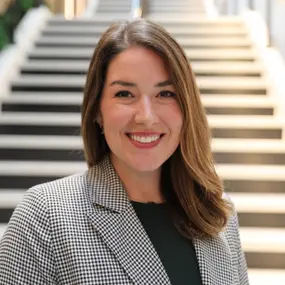
In this episode, Catherine Murphy, former senior analyst for Government Affairs at ASTHO and congressional aide, shares insights on how public health professionals can effectively engage with Congress and advocate for their priorities. She highlights the value of patience, finding common ground, and connecting public health policy and funding to real community impact.

 Spotify

 Apple Podcasts

 Amazon Music
Effective public health advocacy starts with understanding how Congress works, building relationships with lawmakers and their staff, and connecting policy and funding decisions to the people and communities they affect. We’ll hear from Catherine Murphy, formerly a senior analyst for Government Affairs at ASTHO, who’s had experience on both sides of the table: first as a congressional aide and later as a public health advocate. She’ll tell us about her experience working on Capitol Hill and what public health professionals should know about engaging with Congress and making their voices heard. Murphy explains why patience is essential in the legislative process, how public health advocates can find common ground across political differences, and why listening to concerns and avoiding assumptions can lead to more productive conversations. She also shares a key lesson for advocates: the most effective stories connect public health funding and policy to tangible programs, people, and outcomes in their communities.
Facilitating Connections on Capitol Hill for Public Health Advocacy: Lessons and Reflections | ASTHO

JOHN SHEEHAN:
This is Public Health Review Morning Edition for Friday, October 2, 2026. I'm John Sheehan with news from the Association of State and Territorial Health Officials.
Effective public health advocacy starts with understanding how Congress works, building relationships with lawmakers and their staff, and connecting policy and funding decisions to the people and communities they affect. Today, we hear from Catherine Murphy, formerly a senior analyst for Government Affairs at ASTHO, who's had experience on both sides of the table, first as a congressional aide and later as a public health advocate. She'll tell us about her experience working on Capitol Hill and what public health professionals should know about engaging with Congress and making their voices heard.
Catherine Murphy, welcome back to the show.
CATHERINE MURPHY:
Thank you so much for having me. It's great to see you, John.
SHEEHAN:
Catherine, you've spent a lot of years helping public health officials meet with and work with Congress, congressional officials. Is there a moment that captures why that's been so important and why advocacy is important?
MURPHY:
There are so many. Before I came to ASTHO, I worked on the Hill as a full-time staffer. I was an intern. I was a staff assistant. I was a legislative aide, and my favorite part of that job. There were so many. My favorite part was taking meetings with constituents and answering the phone wildly when I was an intern. All staff at every level answer the phone in a congressional office, so it was a through line in my work there. But it was my favorite part of interning. It's really important to me that people are connected with their government and they see what their taxpayer dollars are doing and what their elected officials are doing for them. And so, I think that's the root of why advocacy and why that engagement on the Hill is such a priority in my work. In my time with ASTHO, because I schedule meetings and I handle Hill Day logistics, I spend those days working from one of the House or Senate office buildings and kind of running around to help with last-minute issues that arise. But when I have the chance, I love to join those meetings with our members and learn what they share with legislative staff because they're subject matter experts, and the staff are always so engaged. They have so many questions because they're doing this work on behalf of the state, so they're just they're really able to meet at a different level than I can when I go into to meetings with legislative staff, and it's just really great to watch them be these subject matter experts and really explain how these federal dollars drive improvements in their health departments.
SHEEHAN:
Yeah, and that experience on, you know, sort of both sides of the table is so important and so valuable. What do you think that public health officials underestimate, or just don't understand, about how decision-making actually happens in Washington.
MURPHY:
I started my first policy job at 24, right after the world began looking for its new normal after COVID, and there was this big flurry of investment in public health, and it was a very exciting time to learn the ropes, specifically in health policy. And what I've learned since is that the legislative process is slow; it's intentionally slow. Congress is built that way, and working in this field requires a high degree of patience. That said, public health is a bipartisan priority, and legislators and their staff remain focused on supporting public health policy. So I don't think that public health professionals necessarily have the bandwidth to know the minutiae of what's going on within Congress, or why something may not be reauthorized, or where funding may be held up. And something I've loved in my time at ASTHO is seeing how our government affairs team is kind of on call for our SHOs to get information as things happen, or to share information with agencies and with committees on the Hill. When you say funding is held up, you know a health department is getting a message that they're not able to spend on funding for some reason or another, and we're able to reach out to Senate help and let them know what's going on and see if there can be any movement.
SHEEHAN:
Yeah, and what do you think is the difference between a meeting that sort of leads to change or leads to movement and a meeting that's kind of just sharing information?
MURPHY:
I think if there's sort of an acute issue, what I've observed is that ASTHO engaging directly on the issue with someone in the federal government often gets an answer. At least you know there's awareness, and across the board, staffers and members are really invested in making sure that their states have what they need. As far as you know, a major issue, I haven't really heard of a non-response or a staffer who's not committed to finding answers or at least alerting their member that they work for in what's going on.
SHEEHAN:
Public health issues can be politically charged. It's the times we live in, but you've said that you've seen bipartisan support for public health issues, which is great. What are the effective ways of bridging those political divides and actually getting things accomplished?
MURPHY:
I've yet to meet a staffer or member who's anti-public health. I think not to demonize our media, of course, but I think we often see clips from congressional hearings that far overstate opposition to the field overall. Members might have one small issue or one thing they want to drive a point home on, or they frankly want to get it into a press release or some other sort of content on their social media that shows that they're fighting for the interests of their district. If holding someone accountable or what have you is important to their constituents, but while lawmakers might have varied opinions on what should be funded and how, they overall recognize the crucial role that public health plays in keeping us safe, improving quality of life, and ensuring we are prepared for the next outbreak. I think that a lot of what we do on the government affairs team in our meetings with members and with staffers is sort of sharing the basics of public health because it's easy to build consensus around wanting clean water and ensuring that our food is safe when we go to restaurants and that we're prepared for a potential outbreak, which obviously has costs to well-being, potentially life, and also just high-dollar costs in medical bills and lost work.
SHEEHAN:
Sure. Are there skills or approaches that you think will be especially valuable in the years ahead when it comes to advocacy work, or do you see advocacy itself as sort of shifting or changing and requiring new skills?
MURPHY:
I think this transcends public health. We all have the opportunity to be advocates for the things we care about all the time. Whatever we specialize in is what we can talk to our friends and our neighbors, our family, and the person in line with us at the grocery store about. And there are some complexities in public health, and so making space for listening to dissenting opinions, concerns, and fears makes for a much better discussion. So advocates need to be really good listeners, but also we are countering misinformation, and we are countering a deep mistrust in some of these systems. So ensuring that we're open-minded and positive in our discussions really helps. I think public health also struggles because it's invisible until it's needed. We're quietly at work in the background of daily lives, but finding ways to share how we are all impacted by public health and driving that awareness is so important. And as I said, I start a lot of meetings talking about how our public health departments support basic needs like clean water and making sure that restaurant food is safe, as well as things like mitigating disease outbreaks and pandemic preparedness, and pieces like that.
SHEEHAN:
Is there a point of view or a perspective or perhaps a shift in thinking that listeners should take away when they think about how they can strengthen public health in their own communities, especially as it concerns, you know, lawmakers?
MURPHY:
Yes, absolutely, and I always advocate for folks going to their lawmakers in the district. So you can meet your federal representatives in the district; you can also meet your representatives at every level, and I encourage calling them, reaching out to them, and making appointments in their office to meet with their health staffer, whoever handles your issue of jurisdiction. Go into the conversation open-minded and positive, and assume best intentions from the person you're speaking to. You probably have far more in common and are far more in alignment than you'd expect. I know this was a fear for me after leaving the Hill and coming to ASTHO. I never knew who I would get in a meeting and what their opinions might be, but they've overwhelmingly been so positive, and the staff are incredibly dedicated to their work and to supporting their state or their district and the country overall. The strongest advocacy comes from storytelling, so being able to bridge the gap between the funding and what it actually does, what programs does it support, and how is it changing the shape of public health in the community in the state? So to really know what's happening and tie that to a program or a person, there's a reason why so many patient groups bring patient advocates to Capitol Hill because their experience is incredibly memorable. I distinctly remember researching and asking my former boss to co-sign. I think it was called the Safe Step Act, after meeting with a patient advocacy group, and I still remember their faces. So, really tying it to a personal level can help really stick in a staffer's brain.
SHEEHAN:
Yeah. Well, Catherine Murphy, thanks as always, and thank you so much for everything you've done. Your hard work supporting communities and connecting public health officials with the right people.
MURPHY:
It has been such a joy working with ASTHO and working with our members. And if anyone ever has questions, please reach out to the GA team or find me on LinkedIn.
SHEEHAN:
Catherine Murphy is a former senior analyst for Government Affairs at ASTHO.
Stay informed on the latest federal developments with the View from Washington, D.C. segment on this podcast, which offers timely updates from Capitol Hill. ASTHO's Government Affairs team provides public health policy analysis, federal updates, and insights on emerging actions and what they mean for state and territorial public health. So be sure to subscribe and never miss an episode.
For more than 80 years, ASTHO has championed public health and supported the work of state and territorial health agencies across the nation. Stay ahead of the curve on emerging health policy trends and legislative developments at both the state and federal levels. Subscribe to ASTHO's Legislative Alerts and get timely updates delivered directly to your inbox. The link is in the show notes.
This has been Public Health Review Morning Edition. I'm John Sheehan for the Association of State and Territorial Health Officials.