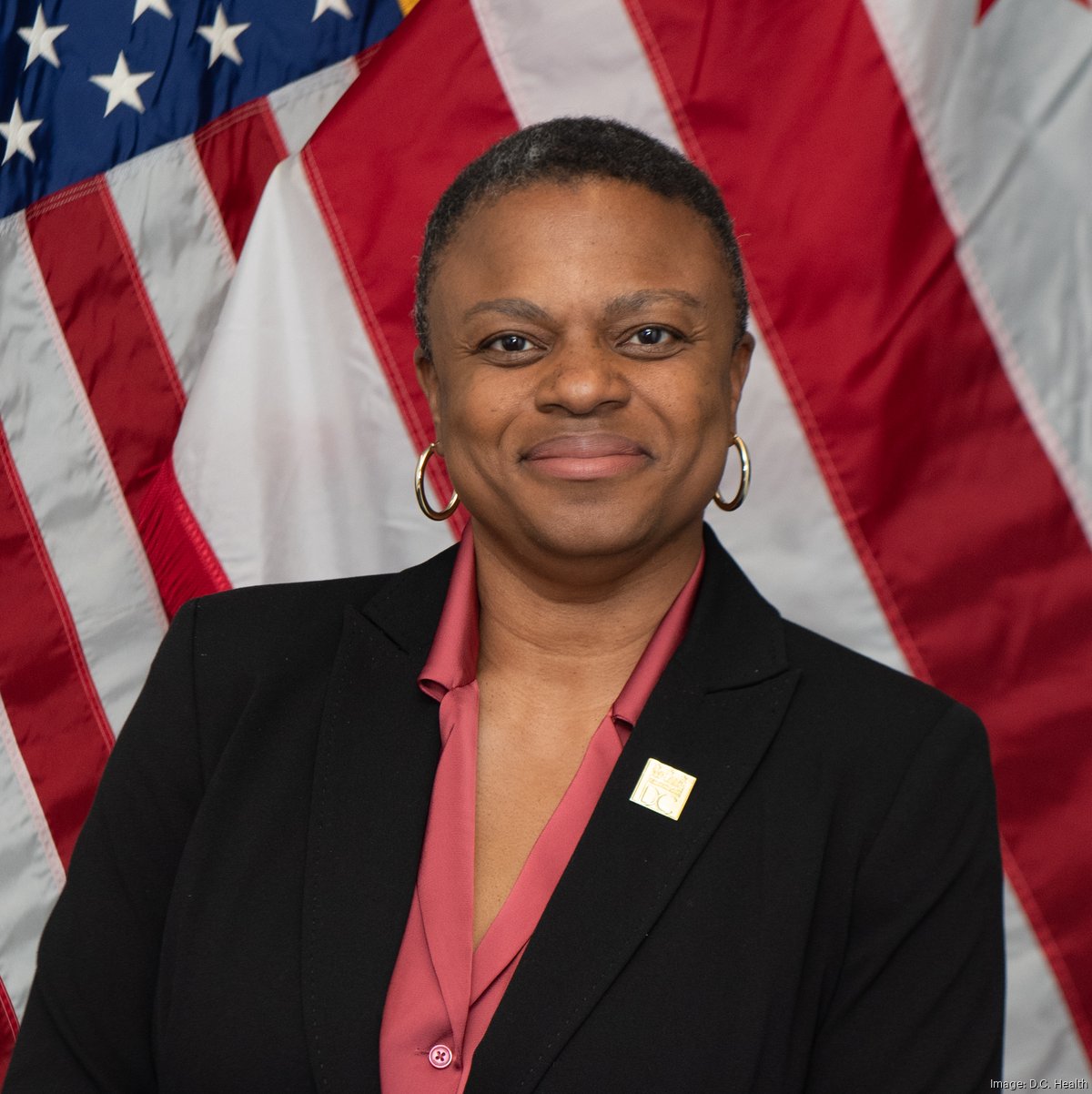
On today's episode, ASTHO member Ayanna Bennett discusses the Potomac River sewage spill, the public health risks it created, and the coordination required between local, state, and federal agencies to protect residents. Later, ASTHO’s Jen Layden explains why partnerships are central to ASTHO’s 2026–2029 strategic plan.

 Spotify
 Apple Podcasts
 Amazon Music
 What happens when a massive sewage spill threatens one of the nation’s busiest waterways? ASTHO member Ayanna Bennett, director of the District of Columbia Department of Health, joins the show to discuss the massive Potomac River sewage spill that unfolded during a brutal winter storm, the public health risks it created, and the extraordinary coordination required between local, state, and federal agencies to protect drinking water, recreation, and food safety. She reflects on the lessons learned from managing a multi-jurisdictional emergency under intense public and media scrutiny. Later, ASTHO’s Senior Vice President for Population Health and Innovation, Jen Layden, returns to talk about why partnerships are central to ASTHO’s 2026–2029 strategic plan.
Developing a Policy Action Plan to Improve Access to STI Medications Webinar
Funding & Collaboration Opportunities | ASTHO

JOHN SHEEHAN:
This is Public Health Review Morning Edition for Thursday, May 28, 2026. I'm John Sheehan, with news from the Association of State and Territorial Health Officials.
Today, we hear about the massive sewage spill that threatened one of the nation's busiest waterways. Dr. Ayanna Bennett, ASTHO member and director of the District of Columbia Department of Health, joins us to discuss the massive Potomac River sewage spill that unfolded during a brutal winter storm. It created a serious public health issue and required extraordinary coordination between local, state, and federal agencies. Later, ASTHO Senior Vice President for Population [Health] and Innovation, Dr. Jen Laden, returns to talk about why partnerships are central to ASTHO's 2026-2029 Strategic Plan and why public health can no longer work in silos.
First, here's Dr. Ayanna Bennett.
Dr. Ayanna Bennett, welcome to the show.
AYANNA BENNETT:
Thank you. Thanks for having me.
SHEEHAN:
So, Dr. Bennett, tell us about the wastewater cleanup on the Potomac this last winter.
BENNETT:
Well, it was very cold on MLK weekend, so people may have missed it, but there was a very large sewage pipe that broke right along the side of the Potomac River in Maryland that drifted down our way toward D.C. So, it became a big problem for the whole region for a while there.
SHEEHAN:
Yeah.
BENNETT:
That was January 19.
SHEEHAN:
And for listeners that maybe aren't on the East Coast or in the Mid-Atlantic region: it was a cold winter.
BENNETT:
Yes, so that first week, when the pipe broke, it was very icy on the river, there was not a lot of activity, because very soon after that we were all snowed and then iced in. And so, for the first week to two weeks of it, it was not all that big a story, because it was happening in the middle of ice and people had other things to worry about, but it took them about a week to take the sewage that had been flowing out of the broken pipe into the Potomac and push it through a bypass through the C&O Canal. They used a canal that already runs alongside the river and pushed the sewage through there until they could get it back into an unbroken part of the pipe. And that took a week to do, so that left anywhere from 60 to eventually more like 20 or 30 million gallons a day running into the river, so somewhere in the order of 250 million gallons of sewage ran into the river over that time period.
SHEEHAN:
Oh my gosh. And it's almost hard to overstate how difficult it was to just respond to anything in that time. As you, as you mentioned, there was snow, but then very quickly soon after everything froze over, and there were just feet of ice, sort of obstructing everything that made it hard to, you know, walk, let alone get equipment anywhere. So, it was a really challenging situation.
BENNETT:
Yeah, DC Water is the water authority that runs that pipe. Even though the pipe pulls sewage from Northern Virginia and Maryland, it does run to a water treatment plant in DC, and the company is called DC Water. So, we were involved from the beginning, the Department of the Environment here in D.C., Energy and the Environment in D.C. But it soon became a thing where all three state entities, lots of little local jurisdictions, and many, many other people got involved pretty quickly after the snow and ice melted. So, we all sort of dealt with the main emergency, while DC Water did the real construction work that really didn't involve anybody else. But once that part was stabilized, it really did become something that everybody had to get all hands on deck for.
SHEEHAN:
Yeah, and why did this, why did a sewage spill become a food safety issue?
BENNETT:
So, there are a couple things that became an issue. First, we do have in both the Maryland and Virginia parts of the waters, a little bit where the spill was, not so much, but a lot down towards the Chesapeake Bay, where they do shellfish harvesting, shellfish are filter feeders. And so, they tend to take in pollutants in the water and are a pretty vulnerable food source in terms of pollution. It did turn out that testing didn't show a lot of issues there. And so, eventually all the environmental groups and the FDA were able to say it's fine. But that took some real focused science and testing before they could do that. The other is people fish on that river. Luckily, not a lot of them try to do that in a January snow and ice storm. And it was quite a few weeks before we started to really have to contemplate people's using of the river. Most of our worry was around contact, though. So, open wounds, skin infections, ingestion of the water. So, we were looking for the water to meet the recreational standard that the EPA sets, that would have told us it's safe for people to be able to be in contact with the water. We have lots of rowers. We have other folks on the water. So, it was both a food safety risk, which it turned out seemed not to be to realize, but then a real legitimate physical health risk for folks who might have been wanting to go into the water.
SHEEHAN:
Yeah, and as you describe, it's a very busy waterway. And as such, there's a lot of attention on it. How did local media play a factor in the story?
BENNETT:
Yeah, at first it wasn't a whole lot, because they had plenty of other things to talk about, and they were frozen in with the rest of us. But then towards the beginning of February, the stories started to come. Unfortunately, the size of the sewage spill was so impressive. It may or may not, depending on who you talk to, be one of the largest ones we've ever had in the U.S. That was really impressive to the media. And so, they started to report it as the biggest, worst possible thing. It is different in a lot of ways than how we were experiencing it as the responding agencies. So, the worst thing that could ever happen became kind of a perpetual story. People on the news were showing footage from the spill, even though the news story was now three weeks later. The spill had really been contained along most of that time period. So, we were having to constantly battle the story of the worst thing that could ever happen has happened. The river's destroyed. Tt's all a mess. When really we had a controlled problem that we then had to manage like any other emergency, figuring out what the impacts were, how to mitigate them, what to tell the public. But that became very different once the president tweeted about it. And then it was a whole, we were off to the races, and a whole new story.
SHEEHAN:
Yeah, that'll happen.
BENNETT:
It happens sometimes,
SHEEHAN:
And you sort of alluded to this, but the Chesapeake is in this, you know, it borders a couple states, and D.C. is its own entity. So, could you talk about the necessity to coordinate between those jurisdictions and those agencies?
BENNETT:
So, D.C. came into it partly because this is where the president lives. But it's also really important to D.C. because we get our water from the Potomac River. And we don't have a secondary source. So, we really have to pay attention. Anytime there's any kind of contaminant in the river, it becomes an issue for us to worry about our water safety. That was not an issue here, because we got very lucky in a couple things. First, the break happened downstream of our major water intake. So, they did testing up where the water intake was, and it looked like there was no impact at all from the very beginning. All of the impact was downstream of that. The other is that Maryland is at the site of the break. On the other side of the river is Virginia. As you flow out to the bay, you hit a little bit of Delaware, even, but you've got Maryland, Virginia, both sharing that bay, and you pass DC in between. So, all of us had some vested interest in it. We, because of the water safety, they, because it was hitting their recreational and seafood waters. And so each jurisdiction, like we do for everything, has their own response to manage. You can't really just go do what Virginia said. So, we're each doing our own science and our own internal conversations. And then we tried to pull it together so that we weren't contradicting each other or someone's getting information someone else isn't getting. And we wanted to be sure that we had a response that seemed coherent to the public, and that gave people a good sense of what to do. Because you can flow from Maryland waters into D.C. waters and back over and land in Virginia. But for you, that's one experience. For us, it's three jurisdictions in potentially three different sets of directions,
SHEEHAN:
Absolutely. And now that the ice has melted and everything is settled, do you have any postmortem takeaways from the spill?
BENNETT:
Yeah, I will say that, one, it's a river. So, we got very lucky. Rivers, in many ways, unless you keep putting the thing in the river, clean themselves, right? The water that it initially spilled into was in the ocean not long after it spilled. So, that was a positive point. But the after effects, the residual bacteria, all of the things that we don't know about sediment, we're still looking at a little bit of that. We do know that our testing shows that the water is safe. So, that is not the issue. But do we have things about the ecosystem and the environment that we should worry about? We're still on top of it and testing and looking for those impacts. The other takeaway is it is really complicated on a natural body of water that is both a food source. So, FDA was in there. It's a natural body of water. So, EPA was in there. It was an emergency. So, we had FEMA, and we had public health issues. So, we had CDC, and all of those federal agencies were coming offering help to both the environmental and public health agencies in each of the affected jurisdictions. So, we are trying to cooperate within our jurisdictions with agencies that we maybe don't work with all the time. We're trying to cooperate across the jurisdictional lines, and then between the feds and the states. And, that is a lot of people. So, D.C. became the convener. We're kind of in the middle geographically. And we've got all the federal folks. So, we became the convener, and then having weekly meetings where all those federal partners and all of the jurisdictional partners can meet to ask the one question the one time and get one answer and really be sure that we were all sharing the same information. So, a lot of coordination, but someone has to convene. And also you have to be sure that everybody's at the table. Environment alone would have been a problem for the public health issues that they don't normally address. We alone couldn't deal with the rivers, many environmental issues that we don't know about. So, it really required everybody at the table. But that means ideally at the same time, if at all possible, because the multiple conversations, it really it killed us during COVID, and we learned better. And so we didn't do it this time.
SHEEHAN:
Dr. Ayanna Bennett. Thanks so much.
BENNETT:
Thank you for having me. It's a really important conversation for us to learn from.
SHEEHAN:
Dr. Ayanna Bennett is an ASTHO member and director of the District of Columbia Department of Health.
Now, let's hear from ASTHO's Senior Vice President for Population [Health] and Innovation, Dr. Jen Layden, about why partnerships are central to ASTHO's 2026-2029 Strategic Plan.
JENNIFER LAYDEN:
Yeah, thanks. Great question. And when we asked, oh, worked on the Strategic Plan, the concept and the importance of partnership was was at the forefront. When we think of some of the complex challenges that we solve and face in public health, whether it's a response or dealing with new health conditions, new threats, new programs, they are very complex, and rarely can public health do them on their own. And when you look at, for example, during COVID, there's so many great instances where not just ASTHO, but jurisdictions were working with partners. And from that we learned a lot. We saw the importance and the value of partnering with individuals, teams that have different expertise, different ways of thinking, different ways of working, in which that was successful to get things done more rapidly and more effectively. And so, as we continue to develop how we work in public health. The concept of let's work differently, let's work with with teams and colleagues that bring a different area of expertise to the table. Public health is in many ways a cross-disciplinary, interdisciplinary field in which we can't solve everything on our own. We have epidemiologists and data analysts and policy experts and comms experts, but sometimes we need someone with deep technical expertise or someone who understands the community or a certain subject matter area. And we don't have always the skill sets in-house, So, really trying to identify how we partner in an effective way, not just in times of crisis, but in times at baseline. Establishing those partners, so that we can be more effective in really serving the communities and the jurisdictions that we serve. As we were thinking about it for the Strategic Plan of ASTHO, importantly, we wanted to say, 'How does not only ASTHO partner better and differently with different types of organizations and experts, but how do we support the ability and foster the opportunity for our jurisdictions to also establish partnerships?' So, bringing them and providing resources and mechanisms and in ways in which they can also partner with others, others with different areas of expertise to help them do the work that they do to serve their communities.
SHEEHAN:
Yeah. And the notion of partnerships also includes non-traditional partnerships. Now, what does that mean in a public health context?
LAYDEN:
Yeah, so it's partners that we may not always be versed at working with. When we look at the growing types of threats and what our communities need, that means sometimes thinking differently, working differently, how we can communicate better and in different ways. And doing that, it means sometimes bringing on individuals with different types of skill sets in how they engage and communicate and share information with communities. As we see this rapidly evolving digital transformation and use of AI, that introduces a whole new era of experts we may need to to work with, folks that are in the technology field with AI expertise that we may not have always worked with, engaged with. What we bring is that deep subject matter expertise of public health, public health problems. What our jurisdictions need, how we navigate and work with jurisdictions and communities, but we may not have that AI or technical expertise. So, identifying that type of expertise, that type of field or sector that has that expertise that we can partner with to blend those disciplines together to help solve and address some of these really complex challenges.
SHEEHAN:
Yeah. Can you talk a little bit more about, sort of, the need for these partnerships, and for public health to sort of tackle some of these more complex challenges?
LAYDEN:
Yeah. So, I sometimes liken it to, I bring it back to an analogy. When I practice medicine, I practiced transplant infectious disease. And that was a very complex scenario in which you're helping the individual through a very, not only complicated surgery, but a set of factors that you need to get right to make that transplant and survival work well. And so, you needed the surgeons, you needed the internist, you needed the social worker, you needed the pharmacist, you needed a team to come together with very different areas of expertise to make not only the surgery successful, but the care of the individual successful as well. When I think of that in the in the realm of public health, I think very similarly a sense of the challenges that we are working to address the health threats and the threats to health that we're trying to address to keep communities safe require an interdisciplinary approach. So, we need individuals who understand the deep AI expertise, because we're going into this rapidly evolving digital transformation, where the technology is evolving so rapidly. We can't be expected within public health to understand that, and to know what is the most state of art technology out there, as well as some of the biases and the challenges with using this technology. And the other reality is we may not always have the expertise, is it's really hard for us to bring that expertise with into public health organizations and within jurisdictions. So, when I was at the state level, it was very, you know, difficult to hire individuals with deep analytic or technical background. You know, the challenges around not just hiring, but also being able to pay and whatnot, the salaries to retain them in jurisdictions was very challenging. So, for us to be able to expect to have all the right expertise within public health is not realistic. And so, establishing partners in which we're working with individuals and experts and private sector partners that have different skill sets that we couldn't bring in-house to really complement the challenges that we're facing.
SHEEHAN:
And how is ASTHO helping its members to identify and strengthen those partnerships?
LAYDEN:
Yeah, so there's a lot of ways that we're addressing this. And I think, one, just calling it out is an important part, and a critical part of the strategic plan is one of those. We have the growing Innovation Advisory Council. We're in the second year of it. We had a great first year. We have a really great number of members in the second year. and we use that as one mechanism by which to support the engagement with jurisdictions, ASTHO, and our IAC members. They've been IAC members participate in some of our in-person events with our state health officials and others. We also have an opportunity where they share information, whether it's on calls, or through our podcasts about the work that they do to support. So we try to have them bring topics to the state health officials and teams within jurisdictions, so that's one way. The second way is through the Public Health Data Consortium. One area that is ripe for a partnership is in the data and technology space, especially with the challenges around resources and the technical expertise and technical capacity within jurisdictions, identifying creative, sustainable ways. And so, with the Data Consortium, we are partnering. We entered into a non-binding MOU with two partners, Health Verity and Veritas. And the three of us ASTHO, and these two private partners are serving as the operating partners for the Public Health Data Consortium. What we are doing is we now have our first cohort of states that are involved with this Consortium. And that's bringing together the two partners that we're working with, with the jurisdictions to address access and quality of data. So, that's another way in which we're really in supporting direct engagement and interactions between public health and private partners.
SHEEHAN:
And lastly, so when 2029 rolls around, what will success look like to you?
LAYDEN:
Success to me is, one, we've built the trust and awareness of how to partner. Sometimes it is challenging of not knowing the best way to partner with new partners. So, one, by doing it, creating a mechanism by which we create the opportunity to partner that builds trust, builds trust of in the relationship, because you're working together to solve a problem. And it builds awareness of what that partnership can do. So, that's one. Two is really having sustainable partnerships that we're building. And that's one of the focuses of the Public Health Data Consortium is we believe there's a an opportunity to address some of the resource gaps and the technical gaps that jurisdictions have by partnering with private sector partners who are very versed in working in the data technology space. And so, by 2029, we really want to show that not only can you have trust in doing that, but that there is a benefit to it. There's a benefit in in how we work. It's a benefit in how we serve our communities. And it's a sustainable approach forward. So, proof of concept, longstanding sustainable partnerships that we've developed, and building that trust and kind of reliability in showing how partnerships work.
SHEEHAN:
Dr. Jen Layden is ASTHO senior vice president for population [health] and innovation. Earlier, we heard from Dr. Ayanna Bennett, director of the District of Columbia Department of Health.
Ensuring reliable access to STI medications requires coordinated policy action, and practical policy tools exist to help jurisdictions respond to shortages and strengthen access. Join ASTHO on June 10 for a webinar focused on policy options jurisdictions can leverage to navigate STI drug shortages and medication access barriers. This webinar will walk attendees through action plan development to address key challenges, including supply disruptions, access barriers, and considerations related to the 340B drug pricing program. Find more at the link in the show notes.
ASTHO is accepting applications for the Implementing Pharmacist-Prescribed Contraception Learning Community. This opportunity will support state and territorial health agencies with technical assistance to develop sustainable pharmacist-prescribed contraception programs, including workforce capacity reimbursement pathways and patient awareness efforts to improve access to contraception. The deadline to apply is May 31, 2026 by 5 p.m. Eastern. Find more at the link in the show notes.
This has been Public Health Review Morning Edition. I'm John Sheehan for the Association of State and Territorial Health Officials.