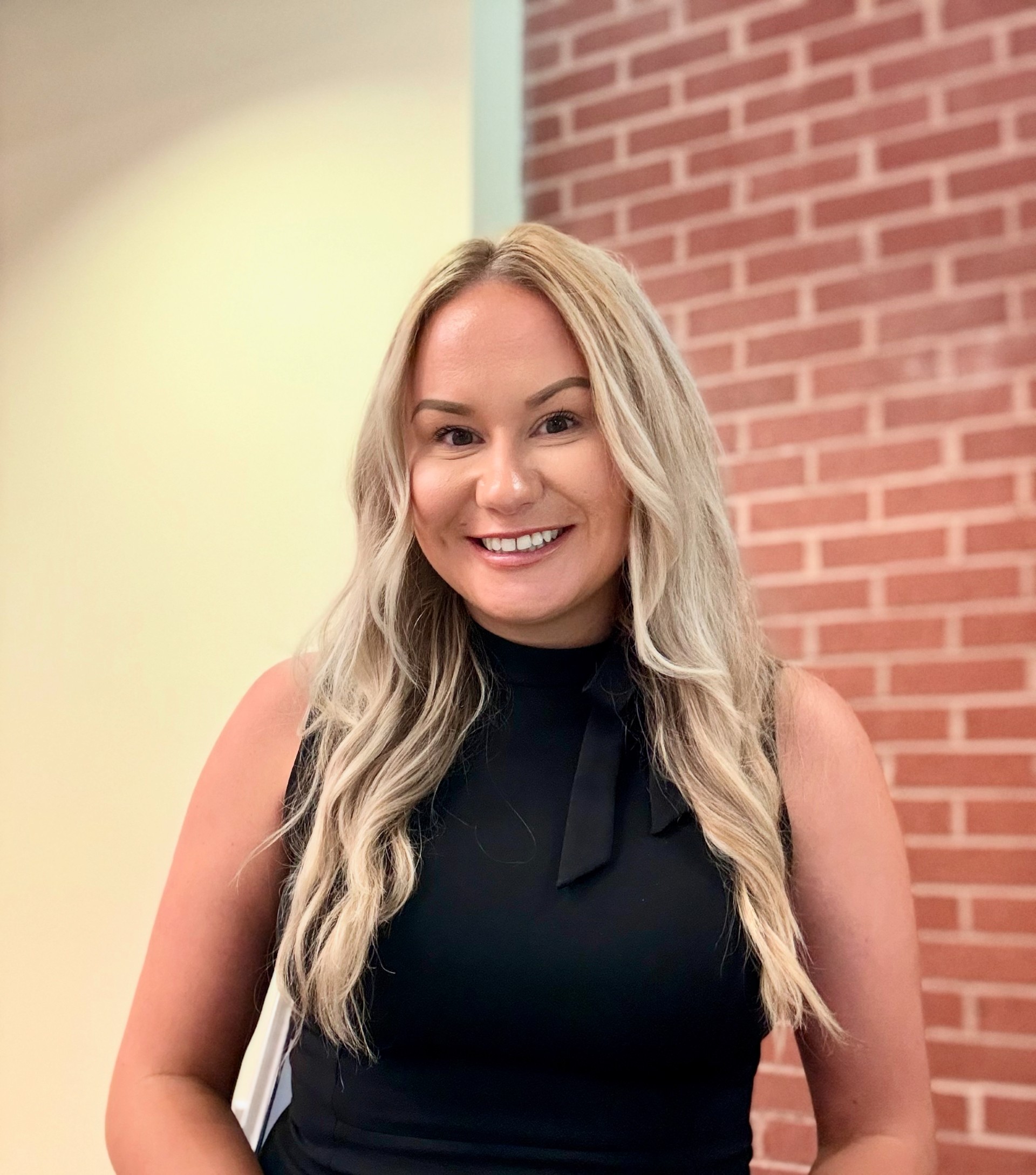
Kaylin Clonch, workforce essential learning director at the South Carolina Department of Public Health, tells us about the agency’s approach to strengthening its training culture.

 Spotify
 Apple Podcasts
 Amazon Music
 Great public health professionals are often called upon to teach others, but expertise in a subject area does not always translate into effective instruction. Kaylin Clonch, workforce essential learning director at the South Carolina Department of Public Health, tells us about the agency’s approach to strengthening its training culture. Drawing on her experience as a classroom teacher, Clonch explains how adult learning principles, instructional strategies, and learner engagement can transform workplace training from “death by PowerPoint” into meaningful educational experiences.
Home | Public Health Careers.org
PH-HERO Workforce Resource Center | ASTHO
12 Things Health Agencies Need to Know About Enterprise AI | ASTHO

JOHN SHEEHAN:
This is Public Health Review Morning Edition for Wednesday, July 15, 2026. I'm John Sheehan with news from the Association of State and Territorial Health Officials.
Great public health professionals are often called upon to teach others, but expertise in a subject area does not always translate into effective instruction. Today, Kaylin Clonch, Workforce Essential Learning Director at the South Carolina Department of Public Health tells us about the agency's approach to strengthening its training culture. Drawing on her expertise as a classroom teacher, Clonch explains how adult learning principles, instructional strategies, and learner engagement can transform workplace training from "death by PowerPoint" into meaningful educational experiences.
KAYLIN CLONCH:
At the South Carolina Department of Public Health, we created a Train the Trainer program to complement our agency training standards policy. So, within this policy, it outlines best practices and ways to ensure consistency throughout training in the agency. Within this policy, we have the Department of Administration's agency training standards outlined as well, and those once again just cover best practices for instructional strategies, facilitation, documentation, and development of training in general. So, the Train the Trainer course is a great complement to show how to utilize those in practice, and it really keeps that consistency across trainers in the agency. So, we understand that in public health, there are so many diverse jobs and professions, and we have our subject matter experts who are great in their area. And just to keep the consistency with the actual implementation of instruction, this is how Train the Trainer came to be.
SHEEHAN:
Gotcha. Had you been seeing some inconsistency across training programs?
CLONCH:
No, not necessarily inconsistencies. But when I started at the agency, I started as a training coordinator. But previously, I was a classroom teacher for seven years. So, it's not that we were seeing inconsistencies. We're just seeing a gap in how to properly educate, if that makes sense, because like I said, everybody is fantastic at what they do, but they don't understand it from the educational standpoint of this is how learners learn. This is how we're best going to get the information, get the learners to connect to the content, and make it engaging and make it fun. I think the biggest thing when I started at the agency was just because we're workforce development and just because we are all professionals doesn't mean that learning has to be stagnant. I always say we don't have to do "death by PowerPoint". We can make learning engaging and fun, and that's going to boost retention of the content and make it more applicable to the learner.
SHEEHAN:
Absolutely, and that you are a classroom teacher that now makes complete sense.
CLONCH:
Yes, so I'm so happy I still get to utilize all of that in my daily work.
SHEEHAN:
So how is the course structured?
CLONCH:
So, it's structured with, it's kind of dual is what I'm going to say, so throughout the course we have chunking of what andragogy is, and andragogy is the principles of adult learning. So, we cover what are the principles of pedagogy versus andragogy? So, how do children learn versus how do adults learn? And then we look at that from two lenses. So, we can see that through as a facilitator, what do I do to help build on those principles of andragogy? And as a learner, how are they best going to receive the learning? And even if you're unfamiliar with the principles of adult learning, it's easy to connect because we've all been adult learners. So, we know, oh, this is this works well because I can make it relevant to my work. This works because I have these intrinsic motivations. So even if this is your first time being a facilitator, you're able to see why adults enjoy learning the way that they do, and why that retention really sticks. How it does throughout the course, we discuss how to build the lesson plan around those principles, and we also talk about instructional strategies and classroom management strategies. Because I always say we'd love to think that adults are coming in and they're focused and they're ready, but really, we have 1,000 Other responsibilities and things going on, so sometimes we're not the most engaged learners without also a little bit of classroom management. But those instructional strategies go a long way to really bolster engagement and boost that retention as well. So, I always say, teaching is not a science; it's an art, even though it's technically a science. But it's an art. You really just have to play around with it and see what works best for you and the learners at the same time.
SHEEHAN:
Right. And what you can't do is just stand up in front of a class and talk at somebody.
CLONCH:
No, because that is definitely not going to work. And throughout the discussion in the course, people really start to realize how much discussion is such an invaluable piece in the adult learning environment because we have so much experience and we want to bring that to the table as well. So, I always try to encourage people to leverage adults' experiences, professional and personal, into the lessons as well because we want to talk about it, and it is going to bring some valuable insight to the content as well.
SHEEHAN:
What kinds of results have you seen?
CLONCH:
So, I think we've seen really good results. We've had, like I mentioned earlier, such a diverse group and groups of people enter the class. We've had nurse trainers, we've had healthcare quality inspectors, WIC educators, data modernization professionals. So, I think probably the biggest turnout is they're able to take these instructional strategies and take this how to develop a lesson plan and connect it to their content so that their learners are able to find it immediately relevant and applicable. So, because it is not just here's a PowerPoint, you know, copy and paste, they can now let's do role playing. Let's do scenario-based learning. Let's do case studies. Let's have a discussion that really utilizes critical thinking with peers. Let's do shadowing. So, there's all of these tools now that they can bring into their fields and connect it to the content, and they're really going to find the relevance in it when they get to their field. But I think the biggest thing is we're really finding that consistency, so people are confident to be trainers and really hone in their craft themselves. And I think that's just going to, you know, create that culture of consistency and high-quality education, which is what we really want. And it also doesn't hurt that we're making learning fun at the same time.
SHEEHAN:
Is there anything that you've seen from the public health workforce that that might be instructive to trainers and other agencies?
CLONCH:
I think for if an agency is trying to adopt a Train the Trainer, I think it's important to really hone in and focus on the needs of the workforce. So, when I first started this session, when I first started this training, it was really tailored for whole group instruction, and as I started going around the state and presenting it, I realized that a lot of people train one-on-one. So, some of the things that I was teaching maybe weren't easily modified for a one-on-one type of trainer trainee environment. So, I adapted it, and then I made sure to implement a lot of here's how this can be adjusted for if it's just you and one other person. And I thought that was really eye opening at the time because even though I'm in the mix every day, listening to people, watching people train, it didn't really click. Oh, there's you know a huge demographic of people who are just training one person at a time. So, I think it's important to really look at what your trainers need, what your agency needs, and then it's okay to be flexible and modify the content as needs come up. But just really looking at what does training look like for your agency is important.
SHEEHAN:
Do you have plans to expand on or change the program in any way?
CLONCH:
I think I'm at a great spot for keeping the in-person one as it is, unless something else arises. I'll be happy to modify, adapt, and make sure that people get what they need, but the big thing for 2026 is going to be virtual training. So I'm going to make a completely separate session that really just is virtual training and how to facilitate trainings that are happening 100% online, because that's such a big portion of how we train and what we do, so I think that's going to be my next big project.
SHEEHAN:
And I'm sure as a former classroom teacher, that prospect, how does that feel?
CLONCH:
I love it. I love creating trainings. I love facilitating trainings in my position now, I have a training team, so I don't get out and train as much as I would like to. So when I get these moments to create and facilitate, I'm just so passionate about making training engaging because it is going to really promote that retention and relevance, and it makes work more fun. It makes the culture of your organization more enjoyable. If people are looking forward to a training that is promoting psychological safety, making sure that they feel comfortable asking questions, making sure that the quality of instruction that they're getting is high in both content matter and facilitation. I think that should be our main priority, and I'm so thankful that I'm in a position to be able to spearhead this and show people how we can make instruction a catalyst to workforce success.
SHEEHAN:
Kaylin Clonch is the Workforce Essential Learning Director at the South Carolina Department of Public Health.
The Public Health Hope, Equity, Resilience, and Opportunity (PH Hero) initiative supports state and territorial health agencies in addressing workforce burnout, moral injury, and retention challenges, grounded in trauma-informed and equity-focused approaches, PH Hero offers curated resources to protect, support, and strengthen the public health workforce. Discover evidence-based tools, expert guidance, and research to help build resilient, thriving teams. Learn more through the link in the show notes.
Across the country, state and territorial health agencies are under growing pressure to modernize how they detect disease, analyze surveillance data, and communicate with the public. Artificial intelligence, or AI, has emerged as a promising set of tools for this work. But the gap between promise and practice is wide, and the agencies that are actually succeeding offer a very different playbook than the finished products most vendors sell. Learn more by reading the ASTHO blog, “12 Things Health Agencies Need to Know About Enterprise AI”. Find a link in the show notes.
This has been Public Health Review Morning Edition. I'm John Sheehan for the Association of State and Territorial Health Officials.