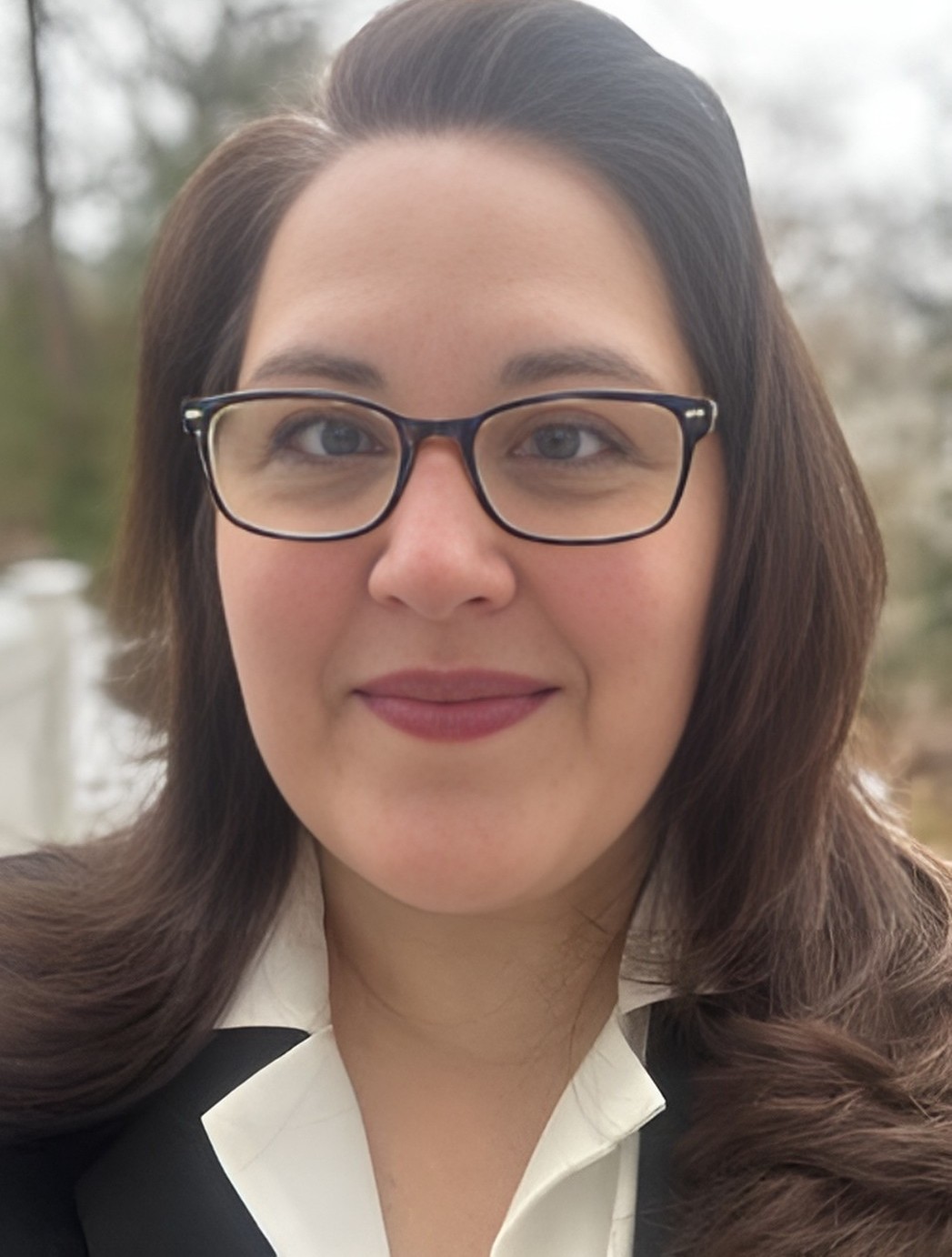
In this episode, Alysia Mihalakos, chief of the Center for Emergency Preparedness and Response at the Rhode Island Department of Health, shares how serving as a subject matter expert for Jodi Picoult's novel "Hollow Bones" helped bring the realities of public health preparedness to life, from emergency exercises and partnerships to resource constraints and post-pandemic workforce challenges.

 Spotify

 Apple Podcasts

 Amazon Music
Storytelling can help public health agencies show communities what emergency preparedness looks like and why the work matters before a crisis happens. Alysia Mihalakos, chief of the Center for Emergency Preparedness and Response at the Rhode Island Department of Health, discusses her experience serving as a subject matter expert for author Jodi Picoult’s new novel, “Hollow Bones,” which features a public health preparedness leader as its main character. Mihalakos explains how the novel reflects the realities of preparedness work, including exercises, partnerships, resource challenges, and the loss of institutional knowledge following COVID-19. She also discusses how books, television, social media, and other forms of storytelling can help the public better understand the work happening behind the scenes to keep communities safe, while helping public health professionals feel seen and understood. Finally, Mihalakos shares ideas for how agencies can build creative partnerships with people who have audiences outside traditional public health channels.
Funding & Collaboration Opportunities | ASTHO
Delaware Implements Collaborative Communication Platform for Heart Health | ASTHO

JOHN SHEEHAN:
This is Public Health Review Morning Edition for Wednesday, September 30, 2026. I'm John Sheehan with news from the Association of State and Territorial Health Officials.
Storytelling can help public health agencies show communities what emergency preparedness looks like and why the work matters before a crisis happens. Today, Alysia Mihalakos, chief of the Center for Emergency Preparedness and Response at the Rhode Island Department of Health, discusses her experience serving as a subject matter expert for author Jodi Picoult's new novel "Hollow Bones," which features a public health preparedness leader as its main character. Mihalakos explains how the novel reflects the realities of preparedness work, including exercises, partnerships, resource challenges, and the loss of institutional knowledge following COVID-19.
ALYSIA MIHALAKOS:
I was reading a book called Mad Honey by Jodi Picoult, who is my absolute favorite author. And as I was reading the acknowledgements section, I saw the name of one of my friends and colleagues in the acknowledgements section. So I reached out to her and said, "How did this happen? And she shared that she has been providing legal consult on Jodi's books for a number of years, and they've become very good friends. So fast-forward a few months, and she was talking to Jodi about the new book that she was researching and writing, which was about the 25th anniversary of 9/11. And in the book, the main character lost her mother on 9/11 and spent her entire education and career trying to prevent other people from having a similar experience with the loss of a loved one, and that led her to public health preparedness and response. And so Jodi was searching for a subject matter expert in the field to fill in all of the context on what it means to work in that field, and my colleague said I know exactly the person, and so we got to meet multiple times via Zoom. We talked for hours about the work and fun stories, and you know, I got to know her, and she's an amazing human being. She also came to Rhode Island to see an exercise that we did; she wanted to better understand what it was like to see a full-scale exercise, and so we have one that we do regularly with the Rhode Island College School of Nursing. That's a mass casualty incident response, and so she got to see an exercise that had professional medical actors, moulage, you know, the makeup that makes it look like a true trauma response- and then, you know, the test of how people respond under those circumstances.
SHEEHAN:
That is an incredible coincidence, and how serendipitous. The main character leads Rhode Island's emergency preparedness. Does the role in the book look pretty much like what you do day to day?
MIHALAKOS:
The book does reflect many of the realities of the work that we do day to day, especially when it comes to exercises and partnerships. There is some reflection on the concerns about working in a politicized and unstable funding environment, which I thought was a really unique asset that she brought to the book that I think will resonate with a lot of our public health colleagues; it certainly reflects a lot of my own thought processes and the things that I discuss with friends, family, and colleagues. It also reflects a lot of what's happening in my brain overnight as I'm trying to sort through what else do we need to be concerned about, what could we do differently or better? How are we going to manage resources or lack of resources in both the preparedness and response phases? I think she captured it pretty well. The main character also experiences what it's like to lose institutional knowledge because of COVID inside her health department, which is not actually reflective of what happened. I've been in my role for a very long time, but a lot of health departments are really struggling with the loss of pre-COVID institutional knowledge for responses to all different types of hazards. I think the other thing that's unique is that, you know, she's significantly younger than I am. She's married and having a baby, which are not my experiences at all, so it's definitely not me in the book, but it reflects a lot of the work that we do.
SHEEHAN:
Sure, and it strikes me that it's such an opportunity for the field, for public health to have these experiences reflected in fiction, a place where you're going to hit different audiences than public health messaging would normally hit. Can you sort of dig down on that importance of finding different ways to get those messages out?
MIHALAKOS:
I think that this is going to be a phenomenal opportunity for us in public health preparedness because people really never see behind the curtain in public health overall. A lot of the times we say that public health is working when the public is not talking about it, and that makes it difficult to advocate for public health in general, and the same thing with preparedness, we've struggled for a very long time to measure preparedness, and it's not something that can be measured because each emergency is different, and our response to those emergencies is therefore different, and it's different. Jurisdiction; it's different by circumstance and season, so it's difficult to talk about and advocate for because it's difficult to measure. We, I think, I think the storytelling element is very appealing at this moment in time to folks. I think we're seeing that with the television show The Pitt, which I think is the closest recent example we have that highlights what preparedness is, even though it doesn't directly address preparedness. Over the course of two seasons, we see the characters in that emergency department address two very large emergencies, and they know what to do because they have rehearsed for it in the past, and that's part of the Hospital Preparedness Program and the work that we do there. But to see that mass casualty incident, to see that cyber downtime response, put additional stress and have an impact on patient care, I think is very meaningful to people. But the thing that has been the most hopeful to me about that experience is how many healthcare workers who work in emergency departments say that they see, they feel seen and heard for the first time, and that they are finally able to talk with their own families and friends about the work that they do because people have a different level of understanding. And so, I am hopeful that we will have a similar experience here, where people will know and understand what it really means, and may behave differently because they now know and understand what it means to be prepared and how hard people are working behind the scenes to keep them safe.
SHEEHAN:
Yeah, and what an interesting point you make about the benefits to the public health workforce, in addition to public understanding of what happens behind the curtain and what it means to actually, you know, keep a community safe, there are these benefits to workers too who are seeing their experiences reflected in fiction and therefore, you know, feeling seen. That's really great. Do you think it presents an opportunity to change how agencies approach how they communicate what they do to communities?
MIHALAKOS:
I think it will offer us a moment in time to really highlight what's happening. Sheri Fink wrote a book; it's nonfiction called Five Days at Memorial, which has been one of the most seminal texts. You know that we refer to when we talk about why preparedness is so important, and it's based on Memorial Hospital in Louisiana during the response to Hurricane Katrina, and it really highlights what happens when you're not prepared enough. And so it has a little bit of that scare factor to really talk about what happens, you know, when you don't have all of the right resources in place, or when you think you understand what the plan is and the circumstances are completely different than what you anticipated, which is always the case when it comes to emergency planning. But again, we plan, train, and exercise as many scenarios as we can, so that we really try to have as much muscle memory as we can, and then therefore the bandwidth to address things that we didn't anticipate, and I think that you know a lot of very difficult content is covered in that book, and then Apple TV turned it into a you know a limited series, so it got a lot of attention, and I think again helps us present something to a group of people who sometimes don't understand that that is not fiction, and need to you know really understand you know the impacts that had on so many human lives and how just a few steps or a little bit of time and attention can really make a big difference when we're talking about preparedness.
SHEEHAN:
And lastly, Alysia, I think your experience of, you know, having a personal connection to this author is probably pretty unique. How would you recommend other public health agencies go about more creative ways of engaging in partnerships to, you know, boost that message of preparedness?
MIHALAKOS:
This came to me. I did not go out and seek it by any stretch. And for it to be so fortuitous to be my favorite author of all time, and, you know, the opportunity to highlight our work is just a dream come true. But I think we know a lot of people who we don't necessarily recognize, and the more we talk about the work that we do, the more it picks up on someone's ear, so you know we've spent a lot of time in since COVID, really focusing on social media and influencers in social media, trying to really capture people's attention in ways that are slick or exciting or new. And so I think if people sit back and reflect on that, and think of, you know, are there other people who I know who may have an audience of their own in a different way? We may find new opportunities to talk about the work, and that's really tied to your earlier point about storytelling. I think that's going to be key to our success.
SHEEHAN:
Alysia Mihilakos, thanks so much.
MIHALAKOS:
Thank you, John. It was a pleasure.
SHEEHAN:
Alysia Mihilakos is chief of the Center for Emergency Preparedness and Response at the Rhode Island Department of Health.
Apply to the Public Health Story Lab. Public health professionals and community members are invited to apply for a storytelling coaching program running from October to December, ending with a live storytelling event the first week of December 2026. Selected participants will work with a professional storytelling coach to develop a meaningful public health experience into a clear, compelling story they can use in their work and share with a broader audience. More info is at the link in the show notes.
In 2023, about 37.8% of Delaware adults reported having high blood pressure, also known as hypertension. Hypertension affects men and women almost equally, but tends to be higher among non-Hispanic Black adults compared to non-Hispanic White adults. To address hypertension and high cholesterol, Delaware applied for and received funding from CDC's National Center for Chronic Disease Prevention and Health Promotion to implement the National Cardiovascular Health Program. Read all about it at the link in the show notes.
This has been Public Health Review Morning Edition. I'm John Sheehan for the Association of State and Territorial Health Officials.