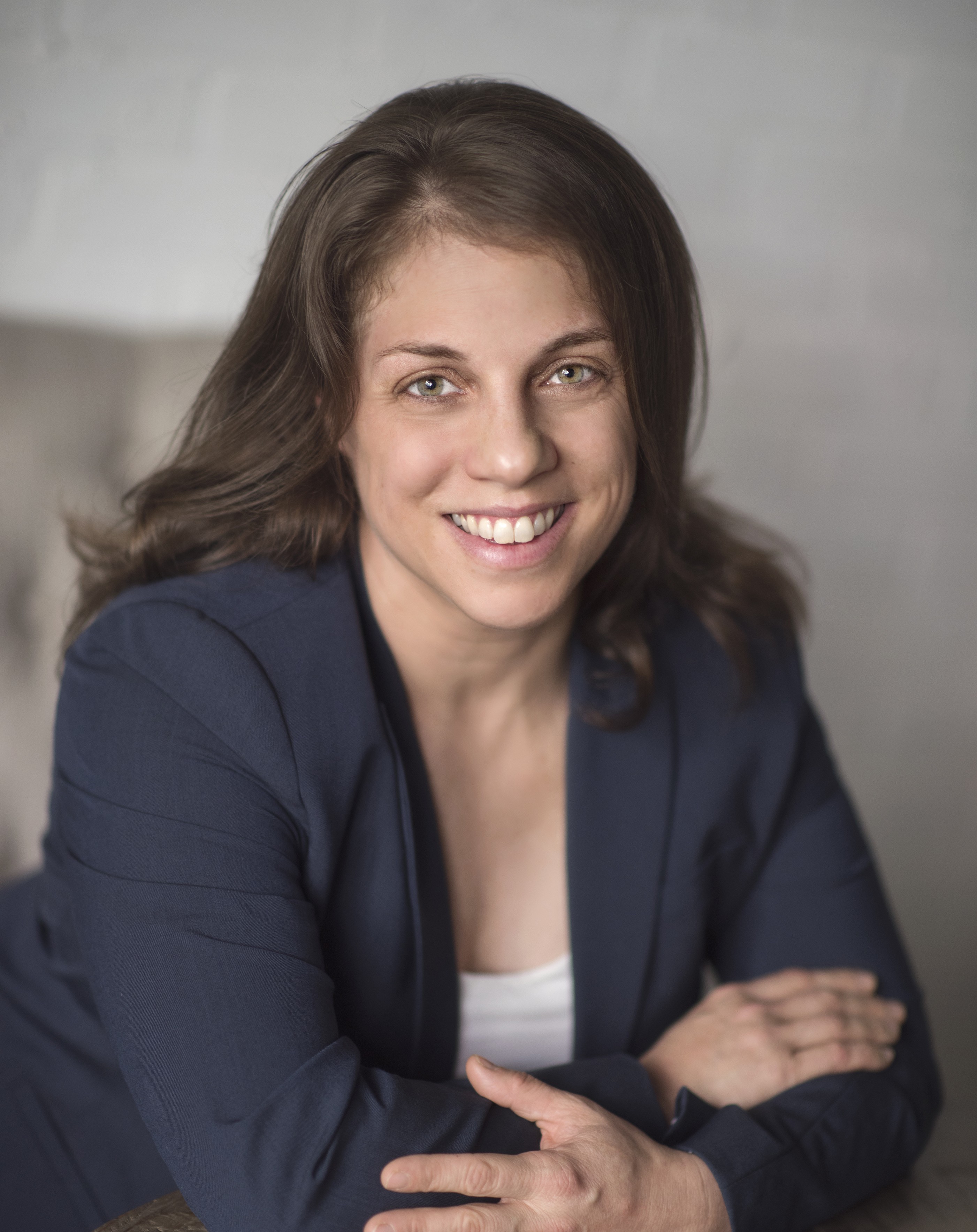
Beth Maldin, deputy commissioner for the Office of Emergency Preparedness and Response at the New York City Department of Health and Mental Hygiene, reflects on her experience responding to 9/11, the anthrax attacks that followed, and how the events helped transform public health emergency preparedness.

 Spotify
 Apple Podcasts
 Amazon Music
 Twenty-five years after 9/11, public health preparedness has evolved from an emerging function into a dedicated discipline with trained professionals, established response systems, and infrastructure designed to protect communities during emergencies. In this episode, part of a series commemorating 9/11, Beth Maldin, deputy commissioner for the Office of Emergency Preparedness and Response at the New York City Department of Health and Mental Hygiene, reflects on her experience responding to 9/11 and the anthrax attacks that followed. She discusses how these events shaped her career and helped transform public health emergency preparedness in New York City and across the country.
How 9/11 Shaped the Future of Public Health Preparedness: Q&A with Meredith Allen | ASTHO

JOHN SHEEHAN:
This is Public Health Review Morning Edition for Thursday, September 10, 2026. I'm John Sheehan for the Association of State and Territorial Health Officials, and this is part one of a two-part series commemorating 9/11.
In the last 25 years, public health preparedness has evolved by necessity. What was once an emerging function, has become a dedicated discipline with established response systems and infrastructure designed to protect communities during emergencies. Today, Beth Maldin, deputy commissioner for the Office of Emergency Preparedness and Response at the New York City Department of Health and Mental Hygiene, reflects on her experience responding to 9/11 and the anthrax attacks that followed. She discusses how those events shaped her career and helped transform public health emergency preparedness in New York City and across the country.
BETH MALDIN:
September 11th, 2001, I was working here at the New York City Health Department. I was actually at our offices. We were located at 125 Water Street, which is about 10 blocks from the World Trade Center. I was in very early that morning. At that time, I was working for the Bureau of Communicable Disease, which was led by Dr. Marci Layton, who was the assistant commissioner for that bureau during that time. She's now the Chief Medical Officer at CSTE. We were actually preparing for a bioterrorism exercise with the Mayor's Office of Emergency Management, which was meant to be held on September 12. I was sitting at my desk working on preparations for that, and I actually think I was supposed to go over to Seven World Trade Center that day for pre-exercise meetings when I heard a loud bang, which you know sounded loud, but in retrospect I realized that that was the first plane hitting the World Trade Center. Shortly after that, my supervisor at the time came running in, asked me to report to the Mayor's Office of Emergency Management. That's where the city's emergency operations center was, which happened to be located at Seven World Trade Center. So the assumption was that the city was going to mobilize immediately to respond to whatever just happened, which we at that point did not know. And I would be the health department rep in the Situation Room to facilitate interagency coordination. So I ran out of 125 Water Street, and ran down to World Trade Center. I got as far as WTC and Church Street, which most people maybe don't know. But if you're from the city, that's like right across from where the World Trade Centers are, everything was on fire, and things were falling from the sky. And someone pulled me into a building. I think it was the post office building, but I, you know, the days and weeks after 9/11 are very hazy. Someone pulled me into a building, saying another plane was coming. So in retrospect, that was probably the second plane. When I was in that building, you know, I was like, "Well, I'm the only one who's going to get down here because it was really everyone was running the opposite way. I gotta, you know, stay and get into the EOC. And Marci Layton was actually the only one. She called me on my Nextel, which is the device that we used at the time to communicate, and she communicated through the point-to-point radio that the Nextel had because I don't think the phones were probably working so well. But the point-to-point radio went through. She told me to come back to the Health Department, and then communication stopped working, so I ran back to the Health Department. I worked with my colleagues the rest of the day, setting up triage in the lobby of 125 Warren Street because everyone running or walking from World Trade Center was like going past many of our buildings. So we were trying to help people that were injured. Unfortunately, you know there were people that were injured because they were running away, but obviously no one from the buildings. We started figuring out how we were going to coordinate with the rest of the city. The city eventually set up a command center at the police academy, which is in in the 20s on the East Side, because the emergency operations center was in Seven World Trade Center, which collapsed shortly on this on 9/11 later in the day, and so I spent the rest of the day, the evening, and the night working at the police academy, being like the health department liaison there, helping to coordinate what the city's response was, what we were doing, what we know, what we don't know, what we needed to focus on. In the days after, and I, you know, try and piece this back together every, you know, 9/11. We were evacuated from 125 Warren Street shortly after 9/11. Maybe a few days after 9/11, because of the concerns about the air quality, we moved to the health department operations to the Public Health Lab at 455 First Avenue, and then I supported the communicable disease program, mobilizing and expanding hospital ED emergency department syndromic surveillance, and then it feels like the next day the anthrax attacks happened. In 2001, I was only at the health department. I started here in 1998 as an intern while I was doing my master's. So I'd been here for a few years, but really new to the health department, and there was no Office of Emergency Preparedness back then. A lot of the emergencies initiated from and were coordinated out of the Bureau of Communicable Disease. A lot of infectious disease emergencies were the focus, and I was fortunate to play a big role in the West Nile virus response in 1999, and so that really gave me a taste for what public health emergency preparedness could look like. So, and this is what I was doing on 9/11. I was preparing for an exercise that was supposed to, it was a bioterrorism exercise that was supposed to take place on September 12, 2001.
SHEEHAN:
So, when you look back over the last 25 years, what feels the most different about public health preparedness today compared with the 5-10 years after 9/11.
MALDIN:
I think first and foremost, what I was just hinting at before is that this is now public health preparedness and response is now an actual career path and a discipline, and we have lots of talented and experienced leaders and staff who are really dedicated to doing this work every day. I lead the Office of Emergency Preparedness and Response with a little over 100 staff who really focus 24/7 on preparing the health department, the city, the healthcare system, and our community partners to respond to the health impacts of emergencies. And not only do we have an amazing team here in Oprah, but staff across the agency, our epidemiologists, our laboratorians, risk comms, logisticians, mental health planners, all thinking about how we prepare for our next response, and just really building that knowledge and that experience across the agency is just so different from what it was back in 2001. We had incredibly smart, dedicated people who figured it out, right? And now we actually have plans that we can put in place for emergencies. You know, I think the other thing that's really important and became really obvious after 9/11, especially the anthrax response, is our first responders want and expect us to be at the table during an emergency, and I think public health emergency preparedness and response plays a unique role both within health departments, and I'm not just talking about my own, but many health departments and within their jurisdictions, we're the glue that brings these different disciplines together to solve problems. I think the other thing is, really, we've built across the country, but in particular across the agency, and we're continuing to build this culture that emergency preparedness and response is not just my job and the job of the, you know, 100 or so staff that work in my office. It's the job of every staff person and leader that works at the public health department.
SHEEHAN:
So, which preparedness investments over the last 25 years have really proved their value during real world responses?
MALDIN:
Staff, staff, staff, staff, staff, staff, staff. Right? So public health is people. Right? That is our greatest and most valuable asset. We have really smart, talented, and creative staff, both in my office and across the agency, who are constantly amazing me with their innovation, their dedication, and their ability to tackle really hard problems and never give up. Tenacity is something public health does really well. There are always people that are looking at the data to detect anomalies. So we're quickly detecting outbreaks. We have people arranging for samples to be tested. People testing those samples at the public health lab, developing risk communication materials, so the public and providers know how to protect themselves, and providers know how to report cases. And you know, all of this is so important. Each piece of this puzzle, if one is missing, it really hinders any sort of ability to detect and respond to any emergency, whether it's an infectious disease or a natural disaster.
SHEEHAN:
So, do you think the events of 9/11 changed your career trajectory? And if so, what keeps you doing the work?
MALDIN:
I think I was interested in emergency preparedness and response before this. I mentioned my experience during the West Nile virus 1999 outbreak, but certainly 9/11 was scary. And it really gave me this insight into sort of what I something much bigger than myself that I could be part of and make a difference, and that was really exciting. I think one of the challenges and exciting pieces is being in it from the beginning. Like there was no roadmap. There still, you could argue, isn't so much of a roadmap. This is what we heard a lot during COVID. We're building the plane as we're flying it. I mean, this is what public health preparedness has been doing the past 24-25, years. You know, really building this discipline as we're doing it. There's no time to stop. Every no emergencies. Let us figure out like how to do this well, and then we'll like we can start with emergencies again. So yes, it absolutely changed my career trajectory. And what has kept me doing this work for all these years? I think this is pretty simple. It's the mission of our agency, the mission of my office, and the peers I work with across the country and in this agency, and most of all, the inspiration that my staff gives me- they're amazing- and it's all about the people that are working with. And it's pretty incredible to work in a discipline and in an organization that is so mission-driven and dedicated to protecting and promoting the health of all New Yorkers.
SHEEHAN:
Has the role of preparedness director changed as threats have expanded from bioterrorism and infectious disease, and now including climate, cyber, supply chain issues, health care system disruptions?
MALDIN:
This has been particularly challenging, and really is one of the biggest challenges for preparedness programs is that we're constantly responding. So the frequency and complexity of emergencies are stretching our limited resources and time. So we have less time to plan; we have less resources to plan, train, and exercise because these emergencies are just happening one after the other, sometimes at the same time. And I also think part of this is we've also proven our worth, and so lots of agencies, mine, but also across the country, want the preparedness program to be involved. We often bring a lot of structure and organization to solving problems, which is wonderful. But there's also a lot of work that we need to do, and so these constant emergencies really don't-they really challenge giving us the space and time we need to plan for the future because we can't control the emergencies. We know they're going to keep coming.
SHEEHAN:
And if you could describe public health preparedness 25 years from now, what words would you use to describe what it looks like?
MALDIN:
One of the challenges with public health is that we're often invisible until something goes wrong, right? We know what the fire department does. We know what the police department does. We know what they look like. They wear uniforms. They drive these vehicles, right? People, public health is so many different things. I think people don't know what we do, and therefore they're not necessarily advocating for us, right? So if someone shuts down a firehouse in a neighborhood, like the community is going to be really upset about that. But like when the health department gets a cut and can't do things anymore to keep the community safe, I don't know, you know, if the community is known to advocate, right? I don't know if they're taking to the streets to like advocate for public health funding, so a combination of like recognized our importance is recognized, our our role and important importance is recognized that we're funded, stable funding, and that we're, you know, respected. Our work is respected by our peers and by our federal partners. I think that's what I would. Those are the few words that come to mind.
SHEEHAN:
What advice do you have for someone entering the DPHP role today?
MALDIN:
I think my advice is to ask for help. I feel, and particularly asking for help from the other preparedness directors across the country, I would want people to lean on their other preparedness directors to, you know, help solve problems to just soak up as much information as you can, and you know the last thing is like to remember, which is hard when you're starting a new role, that it's not only about building and supporting your program; it's also building and supporting the program nationally, and making sure that this discipline continues to improve, and that we're working collaboratively with our federal partners to make it the best possible program it can be. It's a cooperative agreement. We're meant to be working together, and they really, you know, we're at the local level; they really need our input and our feedback, and so that's a really important part of being a director of public health preparedness.
SHEEHAN:
Beth Maldon Morgenthau is deputy commissioner for the Office of Emergency Preparedness and Response at the New York City Department of Health and Mental Hygiene.
Tomorrow, we'll hear part two of our 9/11 commemoration with ASTHO CEO Joseph Kanter and Vice President for Government Affairs Jeffrey Ekoma. For more on public health's role in the response, the immediate and long-term effects on the field, and how lessons from 9/11 continue to shape coordination, resources, and readiness for future emergencies, and the future of public health preparedness, review a new ASTHO resource titled "How 9/11 Shaped the Future of Public Health Preparedness, a Q&A with Meredith Allen, Vice President of Health Security." The link is in the show notes.
This has been Public Health Review Morning Edition. I'm John Sheehan for the Association of State and Territorial Health Officials.