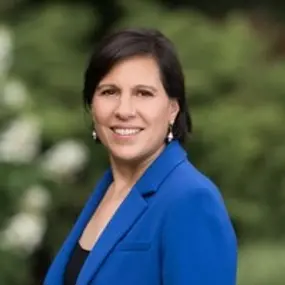
ASTHO's Catherine Jones discusses Congress’s first hearing devoted to menopause and the Advancing Menopause Care and Midlife Women’s Health Act. She outlines additional federal proposals focused on medical education, hormone research, workplace accommodations, and more.

 Spotify

 Apple Podcasts

 Amazon Music
Menopause is gaining long-overdue attention as a public health issue, with new federal legislation aiming to address gaps in research, education, and access to care. On today's episode, Catherine Jones, senior analyst for Government Affairs at ASTHO, discusses the significance of Congress’s first hearing devoted entirely to menopause and the bipartisan Advancing Menopause Care and Midlife Women’s Health Act, the focus of a recent Federal Health Policy Update. She outlines other federal proposals focused on medical education, hormone research, workplace accommodations, and the health of servicewomen and veterans. Jones also explains how public health agencies can help translate emerging evidence into trusted information, strengthen workforce training, and ensure women in rural and underserved communities are included in efforts to improve midlife health.
Power Hour PLUS: Expand Your Impact - Session 3 - Steady Leadership: Building Trust
Power Hour PLUS: Expand Your Impact | ASTHO
Finding and Framing Your Public Health Success Stories

JOHN SHEEHAN:
This is Public Health Review Morning Edition for Monday, November 2, 2026. I'm John Sheehan with news from the Association of State and Territorial Health Officials.
Menopause is receiving growing attention from policymakers as gaps in research, medical training, public awareness, and access to care come into focus. Catherine Jones, senior analyst for Government Affairs at ASTHO, discusses new federal legislation aimed at advancing menopause care and midlife women's health, along with the role public health agencies can play in supporting women through this stage of life. She recently authored a Federal Health Policy Update blog on these topics.
Catherine Jones, welcome back to the show.
CATHERINE JONES:
Thank you.
SHEEHAN:
So, Catherine, Congress recently held its first hearing devoted entirely to menopause. Why is that significant?
JONES:
The main reason Congress is focused on menopause is that menopause affects half the population. So this is an issue that really can't be ignored, and gaps exist. The hearing examined some of those gaps in research, professional training, public awareness, and access to care. And most importantly, perhaps it also marked a change in how policymakers talk about menopause, from a mostly private medical matter to a broader public health issue.
SHEEHAN:
And what has been the state of menopause, by which I mean, how has it been discussed? What has treatment been like in the broader medical community?
JONES:
Sure. So let's set the stage. About 46 million women aged 50 and older are postmenopausal, and that population is expected to exceed 80 million by 2050. So approximately 1.3 million women in the U.S. enter menopause each year, and an estimated eight to 10 million experience symptoms annually. So, as you can see, we're talking about a really large percentage of the population here, and the math shows that many women will spend 1/3 of their lives postmenopause. We know that midlife onward is an important time to monitor and screen for cardiovascular, metabolic, bone, and cognitive health.
SHEEHAN:
Yeah, it's a major life stage for half of the population, and you know, now we're deciding to talk about it. Why is menopause having a moment now?
JONES:
That's a great question, and I think we can agree that this moment is long past due. You know, we reached a point when women, men, families, and friends are all talking more openly about menopause. You see it on social media, in the news, among health care professionals, and now in Congress; it's a huge advancement. So you ask, what's changed? Well, several factors are coming together. A large portion of the female population are reaching midlife, as I just outlined. Women now compose about half of the job market, so their ability to continue to work is important. Plus, we're at a place where we have attention on federal legislation and real action. Just this month, apart from the congressional hearing, CDC published a report on menopause symptoms and treatment, and the administration issued an executive order on women's health in all phases of life, including menopause.
SHEEHAN:
And so, what is Congress talking about? What is the federal legislation that's being discussed?
JONES:
The bipartisan bill that was brought up in the hearing held by the Senate Special Committee on Aging covers a range of areas. It's appropriately called the Advancing Menopause Care and Midlife Women's Health Act. It would authorize $275 million over five years for research, public education, health care professional training, data collection, and centers of excellence. It would also examine barriers in rural and low-resource communities and improve coordination among federal agencies.
SHEEHAN:
Are there any other bills being discussed? Anything more targeted?
JONES:
Yeah, in 2026, there were quite a few bills on menopause, including specific bills, and I'll mention a few here. The Menopause Education for Medical Students Act would strengthen training at federally supported public medical schools; the Hormone Health Data and Research Act obviously would focus on hormone research. The Menopausal Women's Fairness Act would allow workers to request reasonable workplace accommodations, and the Service Women and Veterans Menopause Research Act would evaluate existing research on perimenopause, menopause, and midlife health among service women and veterans; together, all of these bills have the ability to impact the health and wellness of millions of women.
SHEEHAN:
And where do public health agencies, individual agencies, fit into this?
JONES:
I think the best answer is that. Public health departments and health workers are a trusted source of information. At the end of the day, nothing beats trust. They know their communities. They can translate evolving evidence into clear public information. They can support clinical and public health workforce development, including continuing education and training. They can collect and disaggregate population data. They can connect residents with services, and they can ensure that rural communities, low-resource populations, as well as veterans and women in our U.S. territories, are all included in new federal initiatives.
SHEEHAN:
And as we mentioned at the top, this was Congress's first hearing devoted to menopause. What should we watch out for, and what movement can we expect at the federal level?
JONES:
All of these bills related to menopause remain at different stages of the legislative process. We'll be keeping an eye on them and any other bills and federal reports that emerge. Generally, this is a really exciting time for women's health, and the focus on healthy aging for women across the lifespan is really wonderful to see.
SHEEHAN:
Well, Catherine Jones, thanks as always.
JONES:
Thank you.
SHEEHAN:
Catherine Jones is a senior analyst for Government Affairs at ASTHO. You can find a link to her latest Federal Health Policy Update in the show notes.
ASTHO's Power Hour PLUS: Expand Your Impact series equips public health leaders with the strategic insights, practical tools, and real-world strategies needed to lead with confidence and drive meaningful change. The third session, happening November 5, "Steady Leadership: Building Trust Through Stronger Relationships," allows participants to explore the key behaviors and practices that foster trust in the workplace and strengthen relationships across teams. Drawing on leading trust-building frameworks and practical strategies, participants will learn how credibility, reliability, transparency, and accountability contribute to a high-trust culture. Register now at the link in the show notes.
Discover how compelling stories can bring public health data to life in an upcoming webinar on November 9, "Finding and Framing Your Public Health Success Stories." The session will explore strategies for identifying and shaping narratives that demonstrate impact, connect data with community experiences, resonate with diverse audiences, and showcase the value of public health investments. Register at the link in the show notes.
This has been Public Health Review Morning Edition. I'm John Sheehan for the Association of State and Territorial Health Officials.