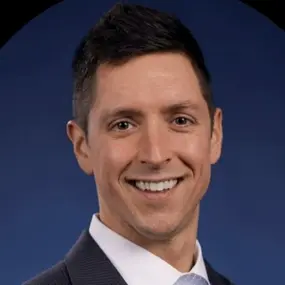
ASTHO's Brian Lentes discusses how performance management systems can help health departments with strategic plans and what health officials can learn from peers and technology vendors at ASTHO’s upcoming solutions showcase.

 Spotify

 Apple Podcasts

 Amazon Music
Public health agencies are looking for ways to measure progress, strengthen operations, and improve the services they provide to their communities. In this episode, Brian Lentes, senior director of Public Health Infrastructure and Improvement at ASTHO, discusses how performance management systems can help health departments connect day-to-day work with strategic plans and department-wide goals. He explains how to build staff buy-in, assess an agency’s needs before choosing a system, and what health officials can learn from peers and technology vendors at ASTHO’s solutions showcase.
Public Health Performance Management Solutions Showcase
Funding & Collaboration Opportunities | ASTHO
Understanding and Utilizing Public Health Authority for Suicide Prevention
ASTHO-ACPM-RFP-Reducing-Hypertension

JOHN SHEEHAN:
This is Public Health Review Morning Edition for Monday, October 26, 2026. I'm John Sheehan with news from the Association of State and Territorial Health Officials.
Public health agencies are looking for ways to measure progress, strengthen operations, and improve the services they provide to their communities. Today, Brian Lentes, senior director of Public Health Infrastructure and Improvement at ASTHO, discusses how performance management systems can help health departments connect day-to-day work with strategic plans and department-wide goals. He'll explain how to build staff buy-in, assess an agency's needs before choosing a system, and what health officials can learn from peers and technology vendors at ASTHO's solutions showcase.
Brian Lentes, welcome to the show.
BRIAN LENTES:
Thanks for having me.
SHEEHAN:
So, Brian, ASTHO is bringing together public health agencies and technology vendors for a solutions showcase. Why is now the time? And what were you hearing from departments about their concerns and their challenges?
LENTES:
Yeah, it's a tremendous opportunity for the agencies to come together and to listen to what not only vendors have to provide in the performance management space, but also to learn from one another. At this vendor showcase, you'll see many different systems that are available, but in addition to that, learning from the health departments as to what they're working on and how they're using performance management, the types of systems they're using to help move their activities along- is really important. I think we're seeing sort of the need for performance management right now, just not only to to measure where they are and where they want to go, but it's also to assist with sort of planning and and looking at for ways to improve the essential services that are being provided to the community. They understand, you know, maybe where they're not performing as well or as they want to be performing, and they can set goals around that and through the use for performance management system. I also think we're hearing a lot around alignment and making sure that performance management is tied to some of the larger department plans. And when I say that, I'm talking about strategic plans, community health assessments, community health improvement plans, and being able to show progress in that space. And ultimately, I mean, communication is key, and I think that agencies really want to be able to communicate better, more effectively with stakeholders, with the community, and even with their staff. So, by using these performance management systems, they're able to see how they're performing within specific projects, all the way up through larger mission-driven initiatives that are tied to the strategic plan.
SHEEHAN:
Yeah, and performance management can sound kind of jargon-y and maybe maybe internal, but it is the idea behind it is to drive better outcomes. Is there an example of a system or a tool that a health department has used to drive those better outcomes?
LENTES:
Right. So we see health departments using anything from homegrown systems to, you know, fully purchased systems that are available from vendors. So there's a variety of activity in the field. I think a great example when you talk about the different types of performance management systems and their use is not just focusing on the use of a performance management system to measure progress of a project or a quality improvement effort or initiative, but it's actually taking full objectives from an operations plan that ties back to a strategic plan. So taking it one level higher, pulling those objectives and those goals into the performance management system, and being able to show how the agency is really steering the ship, how they're progressing in the community, how different services are being provided in a more efficient and effective way. So many times, like I said, you think of performance management as well. We're going to measure just this specific project. We have these specific actions we're taking place to drive maybe something small in this area, which is great. But at the same time, I think some good examples that we're starting to see is alignment more with the operations plans and strategic plans and driving whole department-level activities. And by being able to do that, leaders are really able to make better decisions and to see what types of steps they want to do and make adjustments in new budget years, new programmatic activities, and so on.
SHEEHAN:
Sure, and that all leads to a healthier organization, which leads to better outcomes for communities. Another part of the challenge, though, is getting an organization's buy-in internally. So making the case for these systems to get implemented and getting everyone to sort of participate in them. Can you help make that case and explain why it is important to install rather than just like another layer of administrative burden?
LENTES:
Sure. Yeah, I think that when we're talking about performance management internally, it starts with working with the front-line staff and helping them understand. You know, this is a basic part of a culture of continuous quality improvement, and without a way to measure, I mean, how do we really know where we are and where we want to be? By being able to measure those, you know, periodic events. Look for outliers. Look for the regular progress that's happening over a certain period of time, and being able to communicate that to the staff, I think, has really been able to to really help drive some of their ideas with trying to make better improvements within their program areas. I think it creates excitement. It creates some healthy competition, right, within the offices or within program areas too. To say we want to perform up to a certain amount, and they continue to do that. So I think it's sort of continuing to build that culture and help them understand that we are ultimately working towards a goal, maybe at the department level, and it all trickles down really to the front-line staff, and they drive a lot of this. That sort of gains some attraction and excitement. I also think it's a great way for staff to be more involved and see themselves within the strategic plan of agencies, and also within a state health improvement plan, for example. Staff can see how they're performing and how their activities tie back to a certain measure that maybe all the way up at the department level. So by being able to do that and show them the results and things they're doing in the day-to-day activities, I really think it it it it grows a helps grow a lot of camaraderie and a lot of excitement.
SHEEHAN:
And for health departments who are considering implementing one of these performance management tools or systems, where should they start?
LENTES:
Sure. So I think by starting again with an understanding as to what the department needs are with basic assessment. So it's very important not to jump into the purchase of a performance management system and then try to mold your activities around the system. But it's looking at what are the needs of the health agency. So starting with an assessment, looking at gaps, what type of system could maybe benefit the agency better than others? Where are staff's understanding of performance management in general, and have they've used systems in the past? Maybe it would be easier to start with a homegrown build system that's maybe an application through an existing application in a program. So it's sort of looking at what the needs are of the health department and not jumping into something too quickly. You know, I think we've seen that in trying to, you know, force a system and the use of the system by program area, it may not be the best approach. So starting is sort of understanding what the needs are. How would a system work best for a health department? And then ultimately trying to understand where does the agency want to end? What is the end goal? What are we trying to measure? How do they want to communicate? So, the system they're considering, does it provide good communication and output? Are you able to present it to leaders, to stakeholders, to the community to help them understand the performance of some of the services that are being provided?
SHEEHAN:
And lastly, Brian, for health departments or officials who are considering going to the showcase, what can they expect to learn or hear from, you know, vendors or from fellow health departments?
LENTES:
Yeah, so I think by having a chance to sit with these vendors, you're not only going to have a chance to see the systems in use, but you'll be able to understand what are the types of outcomes that come out of this after several maybe years of use. So learning from the vendors, different use scenarios, different maybe modules or ways that the system can be accessed, and then communication methods that come out of the systems. I think it's all important, sort of like the full circle of performance management. In addition to that, and maybe even more important than learning about individual systems, but it's learning from the other agencies that are going to be presenting at this showcase as well. So there are many health departments that are going to be presenting there on the different systems they use, the steps they've taken to pursue performance management systems, how they planned to onboard the system, and then how it has proven success, or what the gaps are that still exist in the health department. So it helps these other agencies to think about, you know, as an attendee, what can I learn from my peers. What can also I learn from the vendors that are and the systems that are out there available for consideration purchase?
SHEEHAN:
Well, Brian Lentes, thanks so much.
LENTES:
Thank you.
SHEEHAN:
Brian Lentes is the senior director of Public Health Infrastructure and Improvement at ASTHO.
The Brain Health and Caregiving (BHC) Learning Community is a cohort-based learning experience that will support state teams in learning about and implementing promising policies, models, and strategies for advancing brain health and caregiving. BHC learning community participants will engage in a series of virtual learning sessions and receive technical assistance from ASTHO to help identify and execute sustainable actions to support brain health and caregiving in their state. Learn more at the link in the show notes.
Public health authority is one of the tools available to health departments as they work to advance suicide prevention policy and practice. Join ASTHO for a webinar examining how public health authority can be leveraged to support policy goals. This session will explore how statutes, rules, and agency policies can be used to advance suicide prevention efforts, including data sharing, fatality review, and other formalized partnerships. Learn more at the link in the show notes.
ASTHO, with support from the Division for Heart Disease and Stroke Prevention at the Centers for Disease Control and Prevention, and in partnership with the American College of Preventive Medicine, aims to increase physician awareness and practices to prevent, detect, and control hypertension among those at risk and among those with uncontrolled hypertension through a process of referral to evidence-based self-measured blood pressure monitoring programs with clinical support and other related healthy behavior support services. Learn more about the Short-Term Hypertension Prevention and Management Opportunity at the link in the show notes.
This has been Public Health Review Morning Edition. I'm John Sheehan for the Association of State and Territorial Health Officials.