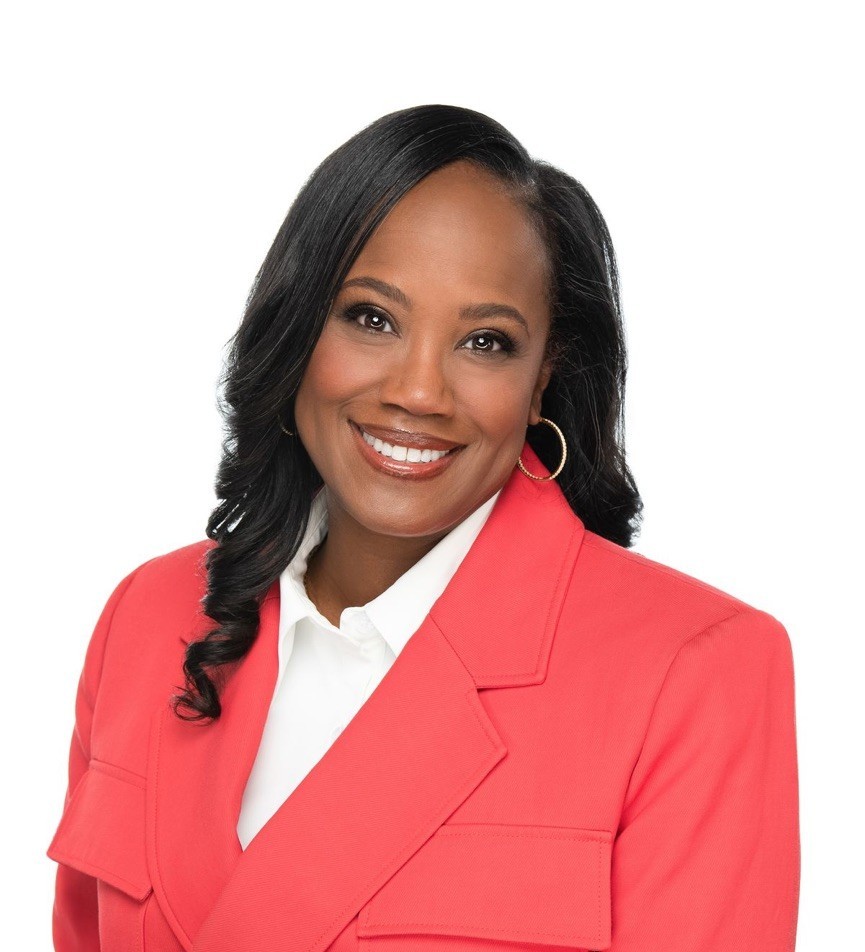
Lisa Saul, chief medical officer of Women’s Health at UnitedHealth Group, discusses findings from the America’s Health Rankings “Health of Women and Children Report.” From improvements in preventive care and breastfeeding, to concerning trends in maternal outcomes, Saul shares why state and territorial health officials should take a life-course approach to women’s health and use data to identify the areas with the greatest impact.

 Spotify

 Apple Podcasts

 Amazon Music
A decade of data shows progress in several measures of women’s and children’s health, but rising maternal morbidity and mortality reveal persistent gaps in care. In this episode, Lisa Saul, chief medical officer of Women’s Health at UnitedHealth Group, discusses findings from the 10th edition of the America’s Health Rankings “Health of Women and Children Report.” She highlights improvements in preventive care, breastfeeding, smoking during pregnancy, and neonatal abstinence syndrome, as well as some concerning trends in maternal outcomes, food insecurity, and housing costs. Saul explains why state and territorial health officials should take a life-course approach to women’s health, strengthen connections between maternity care, primary care, and behavioral health, and use data to identify where interventions can have the greatest impact.
Innovation Advisory Council | ASTHO
Women, Infant, and Family Health | ASTHO

JOHN SHEEHAN:
This is Public Health Review Morning Edition for Thursday, November 5, 2026. I'm John Sheehan with news from the Association of State and Territorial Health Officials.
A decade of data shows progress in several measures of women's and children's health, but rising maternal morbidity and mortality point to persistent challenges. Today, Dr. Lisa Saul, chief medical officer of Women's Health at UnitedHealth Group, discusses findings from the 10th edition of the America's Health Rankings' "Health of Women and Children Report." She highlights improvements in preventive care, breastfeeding, and smoking during pregnancy, as well as some troubling trends in maternal outcomes and social conditions that shape health.
Dr. Lisa Saul, welcome to the show.
LISA SAUL:
Thanks for having me.
SHEEHAN:
So, Dr. Saul, before we get into it, tell us about America's Health Rankings and the Health of Women and Children Report.
SAUL:
America's Health Rankings is published by the United Health Foundation, and it has been in place for more than 35 years. And the purpose of the America's Health Rankings is to assess the health of the nation on a state-by-state basis. And for the last 10 years, the Health of Women and Children's Report has done the same thing, but focused on women and children. And it examines 125 measures of health and well-being, which include health behaviors, clinical care and outcomes, as well as socioeconomic conditions. It's quite comprehensive.
SHEEHAN:
How did you become an advisor?
SAUL:
Well, I joined the UnitedHealth Group organization about four and a half years ago, and I was invited to be an advisor based on the experience that I brought to the organization. I came to the company from Allina Health in Minnesota, where I led the mother-baby clinical service line, and that was a joint venture between Allina Health, the adult organization, and Children's Minnesota, which is, of course, the children's organization. And in that role, I, though I am a maternal-fetal medicine specialist by background and focus on obstetrics clinically, in that role I was able to really look at the continuum of women's healthcare and develop all sorts of programs and services from midwifery to fetal surgery to urogynecology, and so that's what I brought to United Health Group. And I get to do in my role today as chief medical officer for Women's Health. I lead the work to improve women's health across the full life course, and so that is how I became an advisor for America's Health Rankings' Women and Children's Report.
SHEEHAN:
And this is the 10th edition of the report, so 10 years of data. What are the big takeaways for state and territorial health officials?
SAUL:
Well, as we look across the last 10 years, I think it's important that we look at the progress that we've made, as well as continuing to look at the opportunities, and that's a big reason for the existence of the report itself. And what we've seen is that the percentage of women who are receiving recommended preventative care through a well-woman visit has increased by 10%, which is great. The percentage of infants who are exclusively breastfed for six months has increased by 27%. And one of the key areas that I focused on and continue to focus on in my clinical practice is that smoking during pregnancy declined by 71%, which is huge and something that I worked with my patients on when I was in clinical practice. And then the last thing that stood out to me is neonatal abstinence syndrome, which is when infants have withdrawal syndromes, with withdrawal symptoms rather due to prenatal substance exposure, that incidence has decreased by 25%. So there's a lot to celebrate over the last 10 years. These gains are hard; they are not easily won, and they certainly didn't happen on their own. But it's because of public health agencies, health care providers, community organizations, and the rest that have been working together to allow us to see these gains.
SHEEHAN:
Yeah, gains in childhood health is so important. To contrast that, however, there has been a rise in maternal morbidity and mortality. How do you square those two trends?
SAUL:
Yeah, this is really one of the most important findings in the report. And as I mentioned, I'm a maternal-fetal medicine specialist, so this is an area that is very important. To me, the contrast is hard to ignore. So, on the one hand, we are seeing improvements in terms of care that women are receiving and the behaviors that they are exhibiting, but it's not translating to better maternal outcomes. And in fact, severe maternal morbidity increased 36% between 2016 and 2023, and maternal mortality, which is an area that we are really still behind in the United States on, is it increased 34%, and so it doesn't tell us why the maternal morbidity and mortality increased. We know that these factors are shaped by many things, including chronic disease, behavioral health, access to care. But I do think what the report does show us is that we have to look past pregnancy, the episode of pregnancy and delivery- to understand fully what maternal health means, in order to improve maternal outcomes.
SHEEHAN:
Absolutely, and that gets back to something you mentioned earlier, which is support for women's health across the lifespan. Can you dig into that a little more?
SAUL:
Yeah, absolutely. It's a really important concept to me, and it's a big part of the work that I'm doing as an advisor to the United Health Foundation. The life course approach is a really simple idea. We need to be looking at the continuum of women's health. We need to be looking as far upstream as possible because there are things that can impact an 18-year-old that will impact her pregnancy, will impact her midlife, and will impact her postmenopausal life. And so, we need to start thinking about women's health not as individual encounters, but we need to be thinking about it as a continuum. So a woman's health is shaped throughout her everyday life. So whether she can access regular preventative care, whether she is being diagnosed with high blood pressure or diabetes, and then once that diagnosis occurs, if that is be if those conditions are being managed, if we're really looking at mental health care, and it comes down to basic needs like food and housing. And so when we think about the time that women spend in a doctor's office. It's very small, and when we think about the time that women spend in certain episodes of care, like pregnancy, that's really a short period of time when we think about the entire lifespan. So we need to be thinking about where health is shaped, where it's in your house, where you work, your community, your place of worship, and think about how far upstream we can get in that in that line to impact health as a woman progresses through her lifespan.
SHEEHAN:
And what can state and territorial officials do to implement that life course approach in their departments?
SAUL:
I think it's important for state and territorial health leaders to think about maternal health as part of a broader system of care. And as I just mentioned, the continuum of care is really important, but it is also trying to identify what I call the in-between times: the times in between the appointment, the times between the diagnosis. How do we think about accessing women in those in-between times when, as we know, women are juggling a lot of things, and so women don't generally put their healthcare at the top of their list. And so, as we think about where women are in addressing their health, we need to think about examining a woman's experience across the services that are providing her health care, and I think that will be really revealing. It'll reveal where the gaps are. It will reveal where access is lacking. It'll reveal where the transitions break down, and it will also reveal where programs serving the same women could work towards shared goals, so I think that using these data too to identify women and communities at the highest risk, thinking about strengthening referral pathways between maternity care, primary care, and behavioral health. I think that those are some of the things that states can be thinking about to begin to try to tackle the discrepancy that we're seeing between women who are actually accessing care, but we're not seeing the results match those good data.
SHEEHAN:
Yeah, absolutely. Any other big takeaways from the report, especially looking across these 10 years of data and the somewhat worrisome trends?
SAUL:
Well, one thing I want to mention too is that we've already talked about the conditions beyond the healthcare system that shape health. These are the things that happen outside of the doctor's office or outside of the hospital, and one of the things that the report has called out for us is that food insecurity improved over the full decade, but it rose by about 28% between 2019 and 2024. And the other thing that we talked about before is housing and just shelter, and the housing cost burden improved, but it also increased by 3%. And so these are the trends that we need to address that are affecting people every day. And I think one of the final takeaways that I would mention is that 10 years of findings show that sustained attention can improve health, but progress isn't automatic. It's not evenly shared, and we have some lessons to learn about where we can make impact and where we can connect with women to improve health, and I think that state officials can use these findings alongside what women, families, and communities are experiencing to identify where progress is taking hold, where disparities still remain, and where greater attention is still needed, so improving maternal outcomes can happen, but we have to we have to identify where the impact is going to be greatest. And I think that we'll see, over the next, hopefully, shorter than 10 years, meaningful gains in that area.
SHEEHAN:
Well, Dr. Lisa Saul, thanks so much.
SAUL:
Thanks, John. Thanks for having me.
SHEEHAN:
Dr. Lisa Saul is the chief medical officer of Women's Health at UnitedHealth Group and an advisor to the America's Health Rankings' "Health of Women and Children Report." United Health Foundation is a founding member of ASTHO's Innovation Advisory Council, a multi-sector forum that brings state and territorial health leaders across industries to advance public health innovation.
This has been Public Health Review Morning Edition. I'm John Sheehan for the Association of State and Territorial Health Officials.