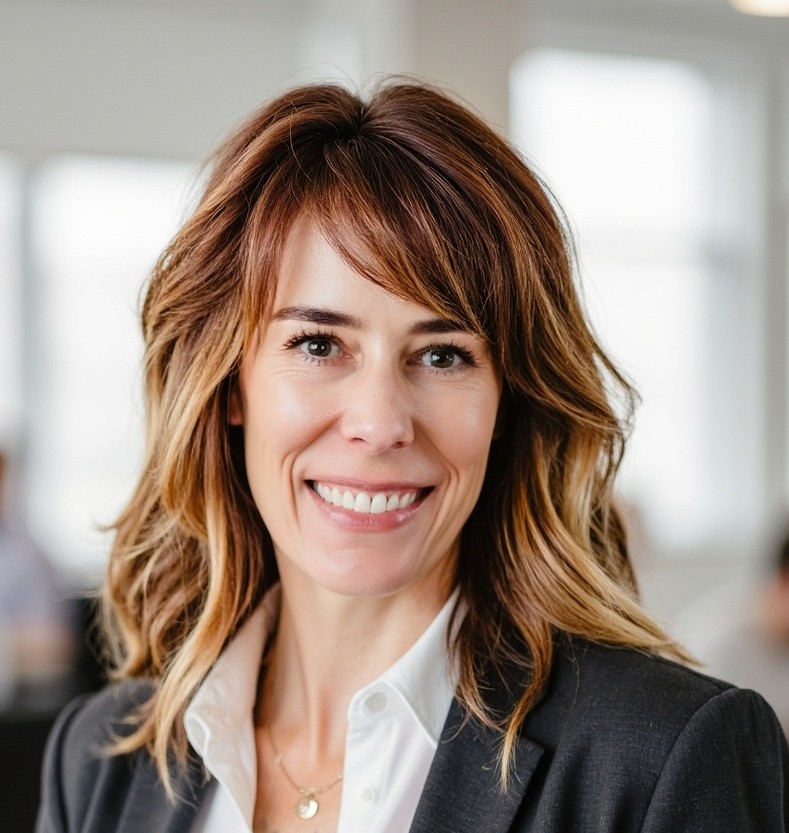
Angela Cochran, division director of Health Promotion and Community Services at St. Mary’s County Health Department, explains why skills such as empathy, communication, and intellectual humility are essential to effective leadership. She also reflects on her time in the Developing Executive Leaders in Public Health (DELPH) program and shares how the experience helps public health leaders build psychological safety, anchor decisions in organizational values, and strengthen collaboration.

 Spotify

 Apple Podcasts

 Amazon Music
Public health leadership often depends on technical expertise. But in this episode, Angela Cochran, division director of Health Promotion and Community Services at St. Mary’s County Health Department, explains why skills such as empathy, communication, adaptability, and intellectual humility are essential to effective leadership. She discusses how leaders can build psychological safety, pause before reacting, anchor decisions in organizational values, and strengthen collaboration through the Developing Executive Leaders in Public Health (DELPH) program.
ASTHO Announces Seventh Developing Executive Leaders in Public Health Cohort | ASTHO News Release
Rethinking “Soft” Leadership Skills in Public Health | ASTHO
Increasing the Lead-Safe Certified Workforce in North Dakota | ASTHO
Public Health Performance Management Solutions Showcase
Power Hour PLUS: Expand Your Impact - Session 3 - Steady Leadership: Building Trust
Power Hour PLUS: Expand Your Impact | ASTHO

JOHN SHEEHAN:
This is Public Health Review Morning Edition for Wednesday, October 28, 2026. I'm John Sheehan with news from the Association of State and Territorial Health Officials.
Public health leadership often depends on technical expertise, but today Angela Cochran, division director of Health Promotion and Community Services at St. Mary's County Health Department, explains why skills such as empathy, communication, adaptability, and intellectual humility are essential to effective leadership. She discusses how leaders can build psychological safety, pause before reacting, anchor decisions in organizational values, and strengthen collaboration through ASTHO's Developing Executive Leaders in Public Health, or DELPH program.
Angela Cochran, welcome to the show.
ANGELA COCHRAN:
Thank you, John. How are you?
SHEEHAN:
I'm good. So, Angela, in a blog you co-authored while participating in the DELPH program, you challenged us to rethink how we consider the term "soft skills," things like empathy, communication, adaptability, and critical thinking skills that maybe shouldn't be qualified as "soft." Why do you consider them essential to leadership?
COCHRAN:
Well, in the article, the co-author, JamIlia Sherls, and I wanted to challenge the term "soft skills" because the word "soft" can unintentionally suggest that the competency is somehow easier, or, you know, even less important than technical expertise. So I've kind of found that even though public health requires a lot of technical expertise, we do this work through people, with people. So we lead teams and, you know, work across sectors and different organizations, but the technical expertise isn't always what leads or moves the work forward. So I feel like you can have the strongest technical solution in the room, but if you can't communicate it, listen to another perspective, adapt, have that adaptability when circumstances change because that's kind of every day, all the time- and really building enough trust for people to work together. The solution, or whatever it is that you have that you're working on, it may actually never be implemented. So it's really about people, relationships, trust, and collaborating to create change, especially in the public health space.
SHEEHAN:
Sure, another skill you identify is humility, being able to challenge your own assumptions. Can you share a time that that has led to a better decision or outcome?
COCHRAN:
One example that comes to mind is really the example that I used in the article, and I referenced an initiative that our agency, the agency that I work at, we're always getting thrown different projects, different, you know, different work is always coming our way, and one of the things is I have to work across divisions, across units, and this is not abnormal to really, you know, any area of work, not just public health. But, you know, I went into this particular project with my own like assumptions and my own thoughts about where the work should live, and I had already kind of studied this project, and what happened was I came to the table to have the discussion. And my original assumptions were completely turned around because I didn't know what I didn't know. And so a lot of what I wrote about in the article was related back to one of the books that we had to read, or we read during the DELPH program, or the one called Think Again by Adam Grant, and it really kind of pulled out of me, 'What is it that you don't know?' And so I remember during this particular conversation at our agency as we started this project, is we tried to figure out, you know, who was owning what and what were the responsibilities that that we all had, and then all of a sudden, you know, what I thought, or my assumptions, or even what, you know, maybe I didn't want to take responsibility for, what I thought someone else should be, kind of got flipped around. And I knew that, you know, new initiatives, new funding, new legislative requirements, new community needs, we're always having to kind of take a step back and figure out. You know, being really clear about, like, who's doing the work and knowing sometimes that I need more information. So I feel like it happens every day when we're working on new public health problems, especially because things come so fast and so quickly at us. So really, my instinct can sometimes be to learn more about, like, this technical, you know, public health issue. But I, I had to. I often have to remind myself that I need to remember that maybe the issue that's happening within our agency or the relationship dynamic or, you know, other parts of the system. I just don't know what's going on, and I need to be able to listen as a leader and kind of take the information that I get and say, okay, what I came in with is maybe not always what's going to be the output on the other side. So I feel like in this collaborative workspace, we have to have conversations that help us kind of create some clarity and better understand responsibilities and recognize the pressures that we all have. So even though in that particular issue our goal didn't change, I think how we got there changed a little bit after we worked through all the little pieces that you don't think are going to come up as you figure out a path forward to work on a project.
SHEEHAN:
Another challenge can be for leaders to model that behavior. What strategies can leaders employ to sort of build that habit to display best practices?
COCHRAN:
Really, at the end of the day, I think the key is practicing, and it's almost, you know, it sounds like, okay well what am I doing? You know, what am I actually practicing? So it can't just be leadership principles that we agree with. It has to be kind of behaviors that we intentionally practice, especially around that, you know, intellectual humility is just being able to make the assumption, like, what am I missing, and is there another way for me to look at it, and what is someone else seeing that I might not be seeing? So I feel like practicing that in conversations and working through problems or working through projects, always kind of trying to bring that up to the forefront in our mind, and it does take practice to do that. To step back, to take that pause, and then kind of around the psychological safety piece, how do we, you know, do that when someone disagrees with us? We want to be able to say, you know, I want honest feedback, practicing not being defensive, practicing curiosity, and thanking people for raising concerns and raising issues because we want to just create that environment that that shows that leaders as leaders we're listening and we want to we want to make change. But we know that change doesn't happen in a vacuum, and we just have to practice those skills every day, and also, I think as leaders, reflecting, you know, thinking back, taking a moment, whether it's you know, journaling or even just kind of reprocessing the conversations in our head- you know, what went well, and where did I become reactive as a leader if I was working with someone or working through an issue or problem, and you know, how did I respond? And I think how we respond as leaders is all of the things. You know that's what we need to practice every day.
SHEEHAN:
The blog also, you know, prioritizes anchoring communication and values rather than reaction. Leaders you know should try to avoid just being reactive to a situation, and instead, you know, make sure that they're tying things back to your organization's values and goals. You know, how can a leader reorient a conversation after they've found themselves going down that reactive path?
COCHRAN:
That's a great question. I think as leaders, we have to recognize first that we're going to have reactions. These things, you know, we're going to have kind of initial feelings or maybe tense up when we hear something. And I think the goal is not to be emotionless or not recognize what's going on, but that is the skill in itself. Recognizing how you're feeling and not letting that reaction drive your response. So I think often we feel urgent, you know, that urgency to respond immediately. And for me, I think if I'm frustrated or I'm defensive, if I'm feeling like a certain way about something, I have got to force myself sometimes to pause and either not respond or take a moment. Maybe it's like not sending that email or writing the email out and not, you know, not hitting send, or just listening. And a lot of one thing that I use as a leader all the time is tell me more. So when I feel like I'm tensing up, those three words, I pull them out. They're easy. I'm like, okay, I'm reacting here. Why don't I just take some time for the other, you know, whoever- partner, community member or you know, a fellow coworker and just use that time and space to kind of recalibrate? But I use that all the time. You know, tell me more, and take a moment.
SHEEHAN:
Can you talk a little bit about striking the balance between your responsibilities to the community and making sure that, you know, the mission of public health comes first? While still, you know, protecting your organization's values, employees, partners, and stakeholders.
COCHRAN:
I feel like this question, or this thought, is in my mind almost every day as we're working, you know, working in a local health department. You know, right now, a lot of us across the country we're talking about measles, or we're you know dealing with you know some kind of environmental issue, and we are constantly having needs in the community that we need to come back to. So it's like, how how do we how do we work through it all, and what how do we prioritize? I think this is a very nuanced answer, and it can be answered in a lot of different ways. I think the kind of relating back to the article is I try to stay related to our values of our agency. And it's, for us, we kind of have this tagline for our agency, which is "Heart, Science, and Service." And what I love about that is that we are, you know, this issue that's coming up, maybe as a community member reaching out to us, and we're dealing with multiple other community needs, so is it something that we are responding to; the community, like compassionately, respectfully, with empathy you know, are we using science? That's the science part. Are we using evidence-based to kind of respond? Are we trying to lead with data and innovation? And then are we focusing on how we're going to understand what we don't know that we still need to understand? So it's kind of like running some of the needs through this filter, so to speak, or our values to say, you know, how are we responding to this particular issue, and where does it go, and the priority, you know, what is the data, and are we holding ourselves accountable to the community for addressing the needs? So I feel like those values connected to the needs and keeping those at the forefront of our minds really helps us drive our work forward.
SHEEHAN:
And lastly, you mentioned the DELPH program earlier. How has the program impacted the way you lead?
COCHRAN:
So I can't say enough great things about the DELPH program and how it has really helped my leadership evolve in ways that I think I didn't know maybe it needed to. Or the path that I was on, I came to the table kind of thinking I would just learn more about other folks in public health across the nation and what they were doing, but really, I learned that the DELPH program reinforced that we need community, we need each other, we, you know, we need to learn how we show up in certain situations. It taught us that you know how to reflect, and what does my team or my fellow coworkers, what do they experience from me as a leader when things are difficult and how am I creating clarity and building trust? I feel like the DELPH program just dove really deep into these leadership areas that we don't talk a lot about in public health, and also, how it brought us together as a group of public health professionals that wanted to connect and be better at what we do every day. So I feel like it has changed a lot about how I lead and how I lean into my own values, and how I try to stay grounded and rely upon my team, and the DELPH cohort that I was connected with. It's been amazing.
SHEEHAN:
Well, Angela Cochran, thanks so much.
COCHRAN:
Thank you.
SHEEHAN:
Angela Cochran is the division director of Health Promotion and Community Services at St. Mary's County Health Department. She recently co-authored, "Rethinking Soft Leadership Skills in Public Health," with fellow DELPH alum, Jamilia Sherls. A link is in the show notes.
Also, ASTHO just announced the seventh DELPH cohort. Learn more from the news release in the show notes.
Lead-based paint can be found in pre-1978 homes and buildings. The EPA requires that any contractor performing a renovation, repair, or painting job done on a pre-1978 home, child care center, daycare, or preschool should be lead-safe certified by an EPA-approved training course. North Dakota continues to face a shortage of lead-certified contractors, limiting capacity to address lead hazards and support lead-safe renovation work across the state. Read more about increasing the lead-safe certified workforce in North Dakota at the link in the show notes.
ASTHO's Public Health Performance Management Solutions Showcase offers public health professionals an opportunity to explore solutions that can strengthen and support their agency's performance management efforts. Participants will hear from vendors and public health agencies about how different platforms and systems are being used in real-world settings, while gaining insights into key considerations for selecting and implementing a solution. Register at the link in the show notes.
ASTHO's Power Hour PLUS: Expand Your Impact series equips public health leaders with strategic insights, practical tools, and real-world strategies needed to lead with confidence and drive meaningful change. The third session, Steady Leadership: Building Trust Through Stronger Relationships, allows participants to explore the key behaviors and practices that foster trust in the workplace and strengthen relationships across teams. Learn more and register at the link in the show notes.
The Developing Executive Leaders in Public Health program has supported the leadership development of more than 100 public health professionals from across the country. Each scholar brings a unique perspective, professional journey, and dedication to improving the health of their communities. Explore the stories behind these emerging leaders, meet the DELPH scholars, and discover how their leadership journey, experiences, and commitment to public health are making an impact. Find out more in the show notes.
This has been Public Health Review Morning Edition. I'm John Sheehan for the Association of State and Territorial Health Officials.