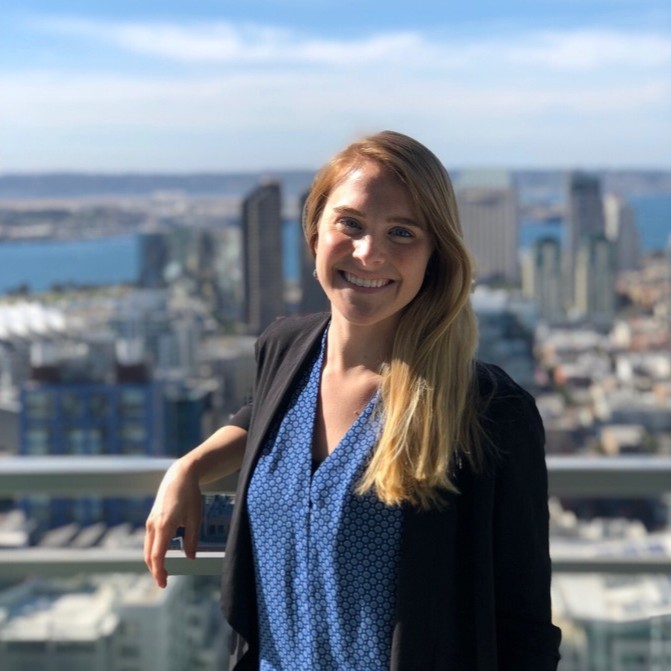
ASTHO's Erin Laird, director of Emerging Infections, shares how wastewater monitoring complements traditional disease surveillance and can help identify threats like measles and avian influenza. She also highlights ASTHO's framework for addressing ethical considerations in wastewater surveillance.

 Spotify

 Apple Podcasts

 Amazon Music
Wastewater surveillance is helping public health agencies detect infectious diseases before they appear in clinical case reports, providing an early warning system that can help communities prepare for and respond to emerging threats. Erin Laird, director of Emerging Infections at ASTHO, explains how wastewater monitoring complements traditional disease surveillance, supports more strategic allocation of limited public health resources, and can help identify threats like measles and avian influenza. She also discusses ASTHO's framework for addressing ethical considerations in wastewater surveillance, including privacy, stigma, and data stewardship, and why building public trust will be essential to making wastewater monitoring a sustainable part of public health practice.
Advancing Wastewater Surveillance for Public Health Impact | ASTHO
Prioritizing Community-Clinical Linkages to Prevent Falls in Older Adults | ASTHO
Strengthening Policies to Prevent Older Adult Falls | ASTHO
Bridging Silos: Aligning State Health... | Journal of Public Health Management & Practice
The Boundary Spanning Leadership Framework’s Impact on Public Health | ASTHO
Aligning Strategic Plans Across Health, Aging, and Dementia
From Policy to Practice: Supporting Brain Health and Caregiving at the State Level | ASTHO

JOHN SHEEHAN:
This is Public Health Review Morning Edition for Monday, November 9, 2026. I'm John Sheehan with news from the Association of State and Territorial Health Officials.
Wastewater surveillance has become an increasingly important tool for public health agencies looking to identify and track infectious diseases. Today, we're talking about the benefits and ethical considerations of wastewater surveillance with Erin Laird, director of Emerging Infections at ASTHO. By testing wastewater samples, health officials can detect pathogens circulating in a community, sometimes before infections are reported through traditional healthcare channels. But as the use of wastewater surveillance expands, public health leaders also need to consider questions around privacy, stigma, and how surveillance data is collected and shared.
Erin Laird, welcome to the show.
ERIN LAIRD:
Thank you for having me.
So, Erin, can we just start off with what is wastewater surveillance and why is it so useful?
LAIRD:
Sure. Wastewater surveillance is a public health tool that can help communities monitor and address infectious diseases. Essentially, people with certain infections can shed pieces of the virus or bacteria when they use the bathroom, shower, wash their hands, even if they don't have symptoms. We can then take samples before wastewater is treated and test those samples to detect infectious diseases that may be circulating in a community, so it's a really useful public health tool because it can sort of serve as an early warning system.
SHEEHAN:
Yeah, and ASTHO has been supporting health agencies in a variety of ways related to wastewater. Can you talk about some of those efforts?
LAIRD:
You know, while wastewater surveillance has been around for a long time, its use really expanded during the COVID-19 pandemic response as a tool that public health could use to help monitor levels of COVID-19 circulating through communities. So this led to increased funding and infrastructure for wastewater surveillance to support our response to COVID-19, and the investment into that infrastructure means that we can then expand beyond COVID-19. So ASTHO's work has really been focused on kind of as we expand the use of this really helpful public health tool. What are the ethical considerations that we need to be mindful of, and how can we ensure that we're weighing these ethical considerations in our decision-making around wastewater surveillance? So ASTHO developed a framework for addressing ethical considerations in wastewater surveillance of infectious diseases to provide strategies for how to identify and address ethical issues in infectious disease wastewater surveillance. Then this past winter, ASTHO hosted a series of workshops to provide a facilitated space for health departments to collaboratively practice using these strategies, and we are now developing and finalizing a toolkit to share tools and resources to help wastewater surveillance programs navigate things like engaging communities, engaging partners, creating plans, and communicating about wastewater surveillance. All of which have sort of ethical considerations as well.
SHEEHAN:
Yeah, and let's talk more about that framework you mentioned. The framework for addressing ethical considerations in infectious disease, public health, and wastewater surveillance. What is the resource, and what's in it?
LAIRD:
Sure. So public health professionals face situations with ethical dimensions regularly in the work that we do, right, just by the nature of public health work, but despite this, there really are not a lot of ethics tools designed for public health practitioners. When we think about ethics, we often think about things like IRBs, and ethics, and research, and these are important. But we wanted to create a resource that had practical information and strategies for folks working in wastewater surveillance in the field. So the framework really describes some key ethical issues in wastewater surveillance and provides applied public health ethics tools to help people in the field identify and address ethical issues in infectious disease wastewater surveillance. Public health professionals can use this framework to help build their own kind of ethical preparedness. The framework includes questions public health professionals can use to analyze a program or activity under consideration, and case studies health agency staff can use to proactively practice thinking through a scenario from an ethical analysis lens.
SHEEHAN:
And you referred to it earlier as an early warning system. How does wastewater surveillance complement other, more traditional disease monitoring programs?
LAIRD:
Wastewater surveillance can provide us with information that can fill surveillance gaps in a couple of ways. So we can see things that folks may not go to a healthcare provider for, for example, thinking back to COVID-19. Once at-home testing became available, that really changed the amount of information that was being reported to public health. But wastewater surveillance was able to kind of complete that picture. Or for something like norovirus. Often ride that out at home, and we may not see it, or we people may not seek care unless it gets pretty severe. So again, that's an area where wastewater surveillance can provide us with more information. And then even for things that people do tend to seek care for, we can sometimes see things in the wastewater before we see it showing up in health care settings. And so that's what we mean when we say that kind of it's an early warning system.
SHEEHAN:
Yeah, and you can definitely extrapolate how that would be really useful in cases like COVID and norovirus. Are there other examples of things that were or diseases that were identified in wastewater before they turned into a larger threat?
LAIRD:
Absolutely, I have a few examples, but measles in particular comes to mind. In August of 2025, for example, measles virus was detected in wastewater samples from a wastewater treatment plant in Mesa County, Colorado, and the next week, two measles cases were reported in the area served by that treatment plant, so wastewater surveillance alerted public health to transmission before cases were reported, allowing dissemination of messaging to healthcare providers regarding transmission signs and symptoms and recommendations for vaccination. So in this way, wastewater surveillance also really complements the data for clinical cases, again, just alerting public health and supporting thoughtful resource allocation for outbreak prevention and control. And there are other examples. Wastewater surveillance has also been used to support H5 investigations and has enabled earlier communication, informed the testing and containment of birds, and improved messaging efforts in that case.
SHEEHAN:
You mentioned resource allocation. Can the case be made that wastewater surveillance helps agencies in those decision-making processes, especially when funding can be tight?
LAIRD:
I certainly think so. You know, wastewater surveillance allows public health departments to direct limited resources to areas where they may be most impactful, and again, can also kind of allow us to get a jump start before we might see clinical cases. So another example in Texas, in Houston, back in 2022-23, they did manhole-level sampling and testing for SARS-CoV-2, influenza virus, and RSV from manholes associated with selected schools. And when we sample at the manhole level, we can get more geographically-specific information. So they then used that data to strategically deploy prevention efforts like school vaccination clinics and education for school staff members on relevant disease prevention strategies. So basically, wastewater surveillance can both help us get that early start, depending and depending on the sampling strategies, can help us focus on the most impacted areas and better allocate resources.
SHEEHAN:
And you know that example of schools being sampled: can you talk a little about the ethical considerations for wastewater surveillance and what health leaders should keep in mind when employing it?
LAIRD:
Sure. So three key ethical considerations that we address in the framework are privacy, stigma, and data stewardship. So when it comes to privacy, we most commonly think about individuals, and that's important. But groups also have an interest in controlling and protecting health information about themselves; wastewater surveillance could impact group privacy if it reveals information that potentially identifies or stigmatizes them. In wastewater surveillance, privacy is a particularly key consideration when we think about the scale or geographic level at which to do surveillance. So, for example, we can collect samples at the wastewater treatment facility level, which would encompass a large scale, or as I just talked about, we can do surveillance at something like a manhole level, which is more granular. Obviously, that larger scale can minimize intrusions on privacy, but sometimes public health purposes for wastewater surveillance may require testing on a smaller scale, and in those cases, it's particularly important to weigh privacy considerations. Wastewater surveillance can also impact stigma if detecting certain pathogens results in a particular group or community being labeled or otherwise stigmatized due to an association with a specific disease, and this disease-associated stigma can be exacerbated by knowledge gaps and misinformation. So, anticipating and addressing misinformation is an essential aspect of wastewater surveillance planning. And then, the last thing I'll mention here is around data stewardship, which includes collecting, using, sharing, and storing really the full, late life cycle for wastewater surveillance data, and it requires attention to potential uses and misuses of data, including harms associated with not using the data or with using it beyond what it was initially intended for. So it's really important that we have clear expectations around things like who owns the data and who owns the samples, and regardless of the pathogens that we use wastewater surveillance to monitor, it's going to be critical that wastewater surveillance programs continue to center public health purpose as a guiding light in their decision-making. So, what I mean here is, you know, do we have a legitimate public health purpose for conducting that wastewater surveillance?
SHEEHAN:
And finally, do you see wastewater surveillance use increasing or growing? What's on the horizon for it, and what should public health leaders keep in mind when employing it?
LAIRD:
You know, I certainly don't have a crystal ball, but what I will say is what I'd love to see, and that is for wastewater surveillance to be a sustained part of the standard toolbox for public health. And I think we're moving in that direction. There is a lot of really great academic research and public health piloting going on right now to build our shared knowledge for the most sort of fruitful applications of wastewater surveillance, and I think, as you alluded to earlier, we in public health often find ourselves working in resource-constrained environments. And so, I would love to see wastewater surveillance applied strategically to help us continue to fill those critical surveillance gaps. I think, in terms of key takeaways, I will say we don't have a ton of data on public perceptions on wastewater surveillance, but we do have some. And what we shows what we have shows that for the subset of the general public who is aware of wastewater surveillance, they're generally supportive of it. Public trust is one of our most precious resources in public health. So the more we can proactively prepare to face and address ethical concerns, the more likely we are going to be able to continue to build and sustain that trust. So that means taking the time to convene partners, discuss the issues, and, wherever possible, develop plans so we aren't in the position of having to deliberate these issues under the pressure of urgency or a public health emergency, I think ethics can sometimes be seen as punitive, but in reality, ethics is is just a core part of the business of public health, and it's it's really all of our jobs, and behooves us to treat it more like ethical preparedness, and to the extent possible, have the conversations and create the plans before we're faced with the issues.
SHEEHAN:
Well, Erin Laird, thanks so much.
LAIRD:
Thank you.
SHEEHAN:
Erin Laird is director of Emerging Infections at ASTHO.
ASTHO welcomes Innovation Advisory Council member Inductive Health on November 17 for "Foundations of a Modern Public Health System: Multi-Program Use Cases, Local Access, Practical AI" webinar. Attendees will develop a clear understanding of the core concepts and capabilities of a modern public health system. Understand the foundational requirements for an integrated system that enables platform-sharing across programs, secure data exchange, and practical AI. Plus, explore real-world use cases where public health departments are leveraging these solutions to reduce costs and improve efficiency. Register at the link in the show notes.
November is Alzheimer's Awareness Month, and ASTHO has helpful resources. You can find articles on topics like preventing falls in older adults and aligning state health improvement, aging, and dementia plans. Look for links in the show notes.
This has been Public Health Review Morning Edition. I'm John Sheehan for the Association of State and Territorial Health Officials.