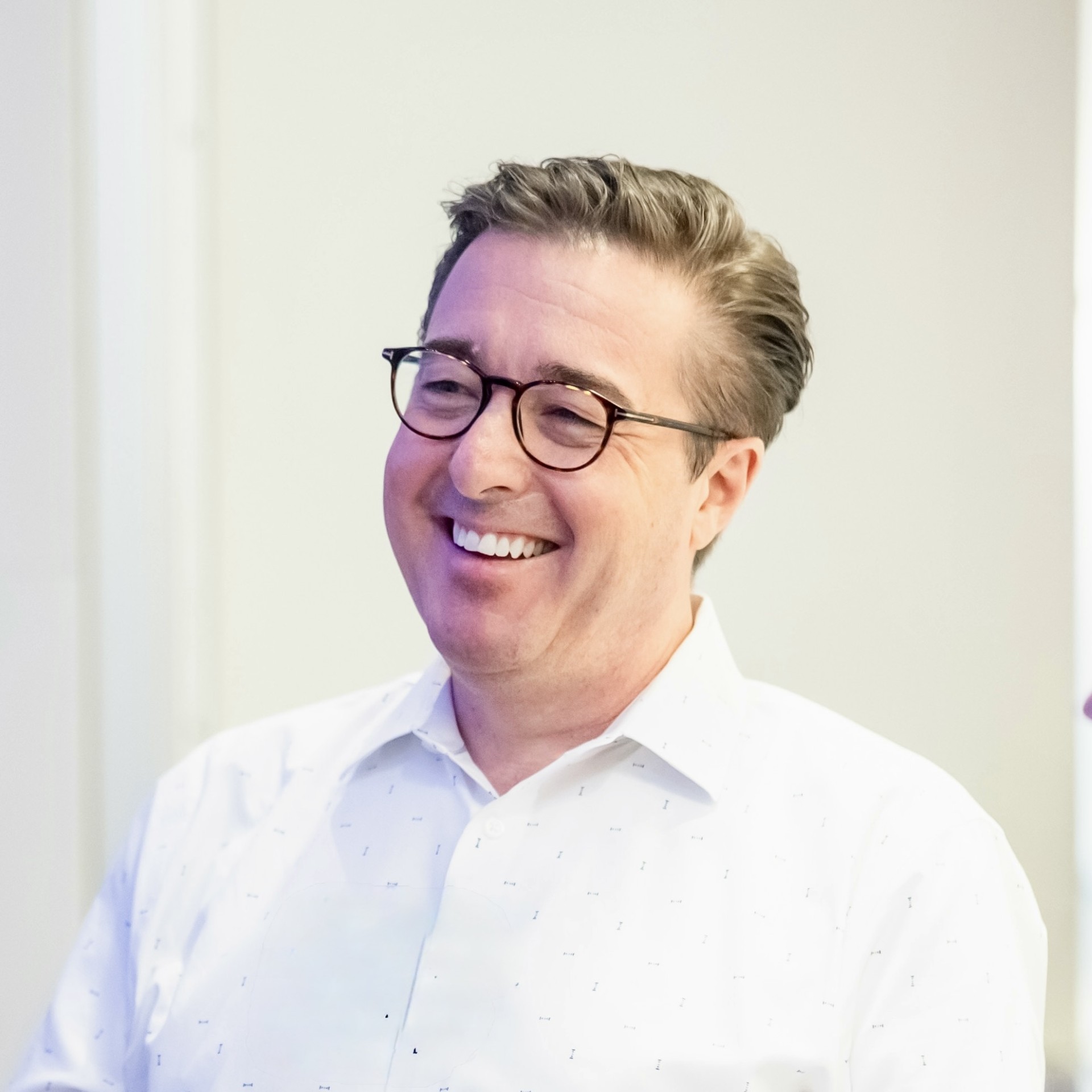
Steve Holloway, director of the Primary Care Office for the Colorado Department of Public Health and Environment, shares how his team uses data to identify communities with provider shortages.

 Spotify
 Apple Podcasts
 Amazon Music
 Health care workforce shortages aren’t experienced the same way in every community and deciding where to invest limited resources requires more than just counting clinicians. Steve Holloway, director of the Primary Care Office for the Colorado Department of Public Health and Environment, explains how his team uses data and geospatial analysis to identify communities with the greatest need for primary, oral and behavioral health providers. Holloway discusses the role of Health Professional Shortage Area designations, Colorado’s state-specific approach to measuring access, and the Colorado Health Service Corps, which has supported hundreds of clinicians serving underserved communities. He also explains how partnerships with philanthropy have helped Colorado stretch public workforce investments further, directing resources toward communities where they can make the biggest difference.
2026 Primary Care Office Annual Technical Assistance Assessment | ASTHO
Voices From the Field: Public Health Success Stories | ASTHO
Using Data-Driven Strategy to Prevent ACEs and Improve Health Outcomes | ASTHO

JOHN SHEEHAN:
This is Public Health Review Morning Edition for Monday, August 17, 2026. I'm John Sheehan with news from the Association of State and Territorial Health Officials.
Healthcare workforce shortages aren't experienced the same way in every community, and deciding where to invest limited resources requires more than just counting clinicians. Steve Holloway, director of the Primary Care Office for the Colorado Department of Public Health and Environment, explains how his team uses data and geospatial analysis to identify communities with the greatest need for primary, oral, and behavioral health providers.
STEVE HOLLOWAY:
I've been serving in the role of Primary Care Office director for Colorado for about 19 years. We are funded by the Health Resources and Services Administration, so all states and four territories have a primary care office. My primary function, as I see it, is to create an evidence basis for decision-makers and clinical safety net organizations to make good decisions about where to invest in health professional shortage areas and in the clinicians that serve them. We do a lot of work to aggregate data across many different data sources. We provide a lot of analysis. Some of that analysis is under the federal health professional shortage area designation methodology, but we have also created some state methods in Colorado to serve in companion to that.
SHEEHAN:
And what do those job duties look like, and what responsibilities are sort of placed on you by the HRSA cooperative agreement?
HOLLOWAY:
In Colorado, we've actually created state statute that describes the role of the Primary Care Office here that is independent to the federal cooperative agreement. So I'll start with what the cooperative agreement requires of us. We always begin there, and then I can follow up with what we have added in Colorado to broaden and enhance the work of the Primary Care Office. For the federal responsibilities, our first responsibility is collecting data and submitting applications for health professional shortage areas. The three areas of federal health professional shortage area include primary care, oral health, and mental health. And then more recently, there is an addition for a maternal care target area, which is a subset of primary care, health professional shortage areas. We also do designations called medically underserved areas and medically underserved populations. And these are a bit older designations. They are related more to clinical safety net applications like community health centers and the like. Also, under the federal cooperative agreement, we support the National Health Service Corps and Nurse Corps, and these are two federal workforce investment programs that create incentives for clinicians to work in areas that we've determined to be short under that federal criteria. And then we provide general technical assistance to other workforce partners that are also funded by the Health Resources and Services Administration, so that may include the primary care associations, which are the state associations of federally qualified health centers. We partner with state offices of rural health. In some states, that work is co-located with the primary care office, in other states it is not. And then, we also partner with university partners. For the Colorado statute, we have really organized the work of the office, I think, in three categories. The first is analysis. The second's is technical assistance on access to care, and the third is organization and support of practice incentives. So a range of projects that promote the practice of primary oral and behavioral health services in areas determined to have a shortage, and under those three kind of columns of work that we do, we have a number of responsibilities.
SHEEHAN:
Sure, and I think you just gave sort of an overview, but that's a very wide range of responsibilities, of sort of jurisdictions that you fall into. Who, would you say, are your sort of key partners, either within government or externally, partners that you find yourself interacting with the most?
STEVE HOLLOWAY:
I would say our most essential partnership is with the state's primary care association. As I mentioned previously, every state has a statewide association that is the organization of each of their federally qualified health centers. In Colorado, their name is the Colorado Community Health Network, and they are a strong primary care association. The federal appropriation that creates the base grant for the primary care associations is also the same appropriation that creates the primary care offices. And the reason, as I understand it, that those two functions are separated is primary care associations are supposed to work as advocates for community health centers, but there is some analytical work that needs to be conducted objectively and through data and evidence, and 30 or 40 years or so ago, it was recognized that these functions are essential to one another, but they should operate independently, and that's when the primary care offices were created to really do that data work associated with shortage designation. We also are strong partners with our State Office of Rural Health. In Colorado, that happens to be an independent 501(c)(3), which is unusual. The majority of states have the State Office of Rural Health and the primary care office co-located in the same part of government. Some states have them separated in separate state agencies, a few states have them organized with the primary care office in the public health agency and the State Office of Rural Health in a university setting, and then I think there's just one or two or perhaps three examples nationwide where the State Office of Rural Health has become an independent 501(c)(3). So they are a close second in terms of our partnership responsibilities. We also work with the area health education centers, which are organizations that promote pipelines to health professions. We work with our Region 8 office of HHS pretty regularly. We happen to be both in the same town and so we have a personal relationship. We partner with academic organizations, many of which have HRSA funding for the development of nursing and oral health and physicians in a range of health professions. Our governmental partners include our state Medicaid agency, which is known as Health Care Policy and Financing in Colorado. We also work with our Behavioral Health Administration and our Department of Labor and Employment, but we have additional relationships with the Community College System, the Department of Higher Education, even the Department of Corrections, and the Office of Economic Development. So our work touches each of those parts of state government periodically. And then most recently, we've engaged in a deeper relationship with our Division of Insurance, which does regulatory work in small and individual group market plans. They're very interested in network adequacy, so how many clinicians are serving regions of the state, and it is work that is quite analogous to Health Professional Shortage Area designation, and so we are looking at ways to more regularly work together on those projects.
SHEEHAN:
Yeah. And, you know, again, in light of how many different agencies and organizations you have touchpoints with and, you know, the number of responsibilities you have, is there an overarching responsibility or opportunity or priority for your office?
HOLLOWAY:
You know, I often say that we bring an important public health frame to the questions of workforce. That's not to say that our frame is the proper or exclusive frame, but it's different. So our Department of Labor and Employment is very much thinking about the labor market and whether employers can attract enough nurses or physicians to meet the needs of our hospital system. Our Department of Higher Education is very much thinking about: Are we training and producing enough health professions students in Colorado to meet current and future needs? Also important, our primary care association and State Office of Rural Health are very much thinking about safety net organizations and how to meet the needs of those employers that provide access to care for underserved people. The public health frame that we bring to this work is really the perspective of community need. So we attempt to answer the question of workforce shortage from the perspective of an individual in Colorado, and I often simplify it to an individual experiences a shortage if they cannot get the care that they need for themselves or their family within a reasonable distance from their home, when they need it, for a price they can afford. So if each of those four conditions are not well met, they're going to understand their community to have a shortage, and that's kind of independent from an analysis of a patient-provider ratio or a supply-demand market analysis. It's a very personal experience. So, what we bring to the table is that essential public health perspective. And I would also say that we bring a level of data analysis and sophistication that is not as easily found in other sectors doing this work or in our non-governmental partners. So we more recently brought in information from our all-payer claims database in Colorado and are using that as an important tool to map the landscape of geospatial access and be able to report with precision which communities are in the most need for investment, for recruitment and retention of health professionals to meet the needs of those communities.
SHEEHAN:
And speaking of these communities or populations that may be feeling those shortages you referenced, has there been any one community or population that you would say your work has shown these tangible improvements?
HOLLOWAY:
We, like all of public sector work, don't really have enough resources to do everything that's possible. So as stewards of limited public dollars, I feel that we have a really essential obligation to accurately determine which communities will benefit most from these limited dollars. We define that broadly as people who are publicly insured, Medicare, Medicaid, the child health plan, people who are uninsured, people who are very low income regardless of their insurance status because income plays an important role in barriers to care, whether it be copays, deductibles, paid time off of work, transportation and childcare. We think about the needs of geographically remote communities, rural and frontier, and we also think about people that have certain cultural barriers related to language, culture, in a range of other things. So those are the folks that I think benefit the most from our investments, but through our state designation, health professional shortage area analysis, we further attempt to refine locations in the state where the needs are in fact greatest. Those tend to be in communities that are remote, and they also tend to be from families and individuals that are very low wage earning or low income. You can find examples of those folks all across kind of the urban-rural spectrum, but in Colorado, I would say that probably like most other states, you find people who are both geographically isolated in rural communities and also experience financial barriers to access, and so we tend to lean more rural in some of those investments. For Colorado Health Service Corps, which is our state-based loan repayment program, we have been administering that program for about 15 years, and we collect evaluation data every six months to try and determine its impact and one of the I think critical impacts of that program is that about 80% of more than 6 million patient visits over 15 years are to people who are uninsured or publicly insured by Medicare, Medicaid, or the Child Health Plan. So four out of five people we know have really acute barriers to care and of that remaining 20% probably the vast majority of those folks have other experiences of barriers whether it just be geographic isolation or language or culture or the like.
SHEEHAN:
Yeah. If you had more flexibility in in those in those funds and in that those funding mechanisms, where would you put your resources to have the most impact?
HOLLOWAY:
I think one of our primary obligations as stewards of these public dollars is to identify with precision which communities would have the greatest benefit. We've been developing a state model for health professional shortage areas for about the last 10 years, not because we intend to replace the federal model, but really to operate as a companion. The federal methodologies were first created in 1975 and a lot's changed about how healthcare is delivered and allocated. It is also difficult to be able to change federal rules. The federal government has attempted three times to update those methodologies and were unable to do so. I actually coincidentally happened to be involved in one of those processes about 14 or so years ago. Our state model is an attempt to create greater resolution on need. So, today I think we can predict almost down to the address which communities would benefit most from, say, an additional family medicine physician or an additional dentist or an additional clinical psychologist to meet the needs of those communities. Through Colorado Health Service Corps, we have a large application process and in part we try and select candidates that we think will be retainable, that is they'll stay in those communities after the contract is complete. But also we further refine those decisions by that very granular specific geospatial analysis that says this community is furthest from the capacity needed for adequate support for the primary care needs of those communities, and those communities tend to be prioritized for investment. We have built a large, robust program. At our peak, we had 575 clinicians under contract, which I believe is among the largest programs of its kind in the country. But like so many states and with federal investment changing, our program is shrinking again. So we're down to about 400 now, but I think that that reinforces our obligation as a primary care office to do the best job that we can to recommend where those resources are most efficiently allocated.
SHEEHAN:
Steve Holloway is director of the Primary Care Office for the Colorado Department of Public Health and Environment.
Last week, the Centers for Disease Control and Prevention issued a Health Alert Network Health Advisory to share information and notify clinicians, public health authorities, and the public about the risk of severe arboviral neuroinvasive disease among patients who are receiving B-cell-depleting or B-cell-modulating medications, particularly anti-CD20 monoclonal antibodies (mAbs). Patients and their providers should be aware of this risk to help patients protect themselves against the bites of mosquitoes and ticks, which can increase patients' risk of arboviral disease. Learn more through the link in the show notes.
Using data-driven strategy to prevent ACEs and improve health outcomes, and strengthening partnerships to prevent overdose: key actions in a multi-state learning collaborative are two entries in ASTHO's Voices from the Field series, a curated collection of stories that highlight how public health agencies are addressing and preventing adverse childhood experiences, suicide, overdose, mental health-related concerns, and more. Find jurisdictional examples, relevant resources, and considerations to take back to your teams. Learn more and find the latest entries at the link in the show notes.
This has been Public Health Review Morning Edition. I'm John Sheehan for the Association of State and Territorial Health Officials.