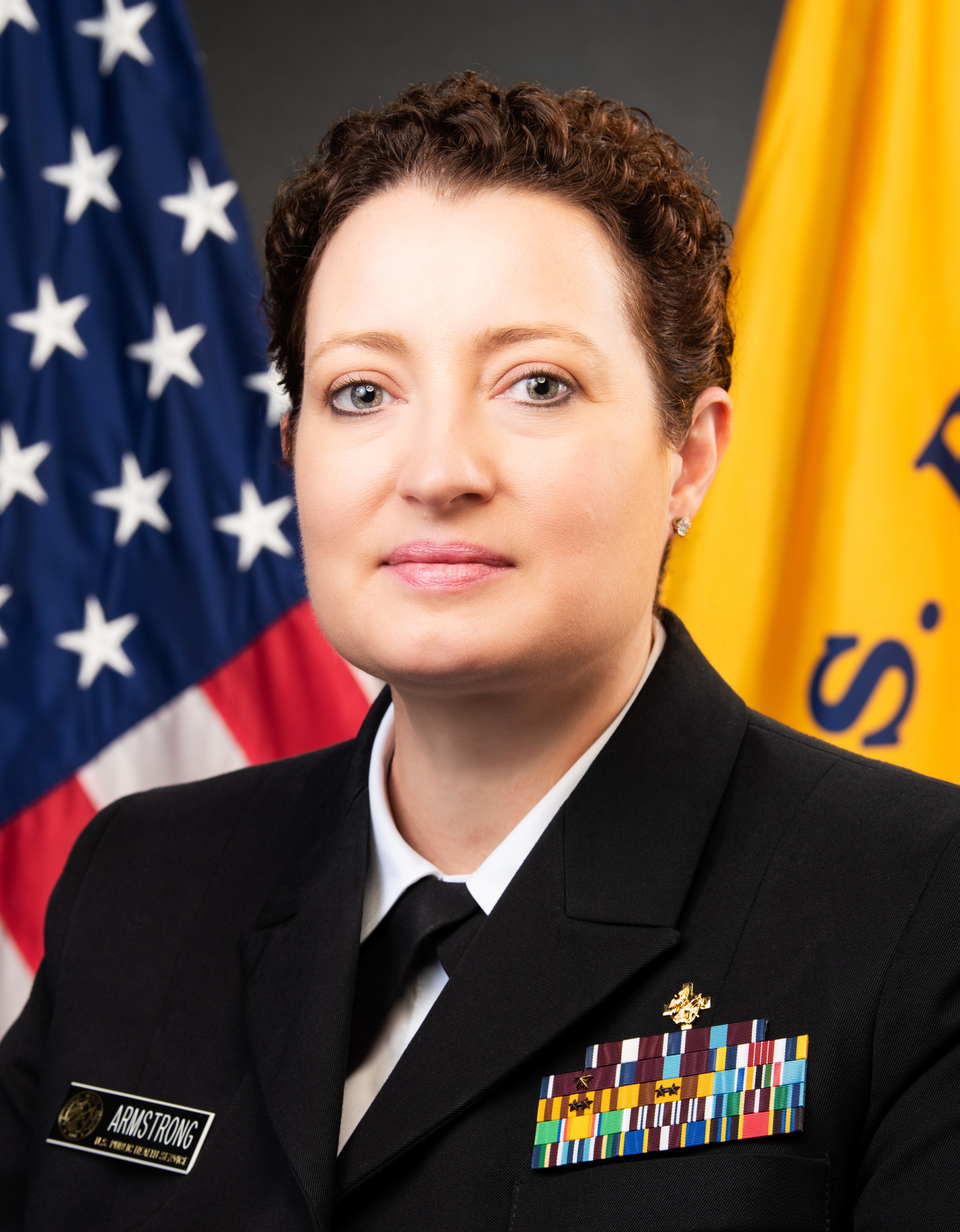
On today's episode, CDC's Paige Armstrong explains how the organization works with partners around the world to detect and contain emerging health threats before they reach U.S. communities. Also, Marcus Plescia from the Fulton County Board of Health in Atlanta discusses preparations underway for the FIFA World Cup.

 Spotify
 Apple Podcasts
 Amazon Music
 What happens when a deadly outbreak is stopped before most people ever hear about it? Paige Armstrong, director of CDC’s Global Health Center, explains how CDC works with partners around the world to detect and contain emerging health threats before they reach U.S. communities. From Ebola in Uganda to Marburg virus in Tanzania, Armstrong shares real-world examples of how surveillance systems, laboratory networks, trained public health workers, and trusted international partnerships help stop outbreaks at their source. Also, Marcus Plescia, former ASTHO chief medical officer and district health director for the Fulton County Board of Health in Atlanta, discusses the massive public health preparations underway for the FIFA World Cup. We’ll hear about the complex planning required to protect millions of visitors during one of the world’s largest sporting events.
Outbreaks You Never Heard About: Because CDC Was There | Global Health Protection | CDC
Developing a Policy Action Plan to Improve Access to STI Medications Webinar

JOHN SHEEHAN:
This is Public Health Review Morning Edition for Monday, June 8, 2026. I'm John Sheehan, with news from the Association of State and Territorial Health Officials.
Today: stopping outbreaks before they spread. Dr. Paige Armstrong, director for the Global Health Center, CDC, explains how the Centers for Disease Control and Prevention works with partners around the world to detect and contain emerging health threats before they reach U.S. communities. From Ebola in Uganda to Marsburg [virus] in Tanzania, Dr. Armstrong shares real-world examples of how surveillance systems, laboratory networks, trained public health workers, and trusted international partnerships help stop outbreaks at their source. Later, Dr. Marcus Plescia, ASTHO's former chief medical officer and current district health director for the Fulton Health District, District 32 [Fulton County Board of Health] in Atlanta, Georgia, discusses the massive public health preparations underway for the FIFA World Cup in Atlanta. We'll hear about the complex planning required to protect millions of visitors during one of the world's largest sporting events.
A quick note: this interview was recorded on April 27, prior to two recent outbreaks: a hantavirus outbreak on a Dutch cruise ship in the Atlantic Ocean, reported on May 2, 2026 and a deadly Ebola outbreak in the Democratic Republic of the Congo and Uganda, that the World Health Organization determined to be a public health emergency of international concern on May 17, 2026. CDC says it's working with other federal agencies, international partners, and other countries' health ministries on this evolving situation and supporting response efforts through its country offices in DRC and Uganda. CDC also says the surveillance systems, laboratory networks, trained public health workers, and trusted international partnerships that Dr. Armstrong addresses on the podcast have been instrumental in quickly addressing these current outbreaks.
Dr. Armstrong, could you sort of give us an overview of CDC's role in global health and global health security?
PAIGE ARMSTRONG:
Absolutely, so CDC's global work is an extension of our domestic mission. Really, the bottom line is that global health security is national security. As Ebola taught us, in today's interconnected world, a disease can travel across continents in less than 36 hours. CDC's global presence protects Americans by detecting and containing disease threats at their source before they ever reach the United States. Addressing these threats at their source is more effective and less costly than responding once they arrive. CDC operates in more than 60 countries, and we leverage longstanding relationships with ministries of health and multiple other public health partners. These peer-to-peer partnerships enable us to detect early. It gives us real-time data sharing and coordinated responses, which helps all of the United States government. CDC's work to prevent outbreaks overseas protects not only Americans' lives, but also trade, travel, and reduces economic disruption at home.
SHEEHAN:
Yeah, and to sort of help spread that message, CDC has a new campaign titled, 'Outbreaks You Never Heard About: Because CDC Was There," which is a very nice direct message, which I appreciate. What are a few of these outbreaks that we've never heard of?
ARMSTRONG:
The "Outbreaks You Never Heard About" campaign is a great overview of our global response efforts, and our mission overseas is really to stop disease threats at their source. So, we define success as containing them early, before they ever spread across borders, and before they reach the United States. For example, in Uganda last year, there was an Ebola outbreak that was detected within 24 hours and contained at just nine cases, thanks to CDC's trained responders and systems that we've built over years of partnership. In Tanzania, there was an outbreak of Marburg [virus] in 2023, which is identified early through something we call event-based surveillance, supported by CDC and contained with no international spread. So, these are the outbreaks that could have become regional or global crises very quickly, and ultimately reached U.S. communities, but didn't. So, success for us is really the fewer cases, fewer deaths, and no cross-border spread, especially to the U.S.
SHEEHAN:
And you mentioned sort of what success looks like in several of those cases, and it was keeping infection or spread low.
ARMSTRONG:
Yeah, correct. Really, what we focus on is trying to contain outbreaks at their source. And so, by containing them early, it means fewer cases, fewer deaths, less cross-border spread, less area that we need to cover with everything from contact tracing to, you know, making sure we have people there, labs, you name it. And so, by containing them early, again, it just prevents that cross-border spread, prevents the spread to the U.S., and really again, contains that potential for economic disruption that we don't want to see again.
SHEEHAN:
Right. And so, some of those factors that lead to that early containment, it's geographical, it's time, it's keeping it contained to a certain area ,and locating it quickly.
ARMSTRONG:
Absolutely, and so, we have a lot of systems that we work on, from surveillance to laboratory to workforce, all of these things help to do that. They help with the early detection, the early notification, and response, and they ultimately all land on containing things quickly, which is really what we're after, and I think we do a fantastic job at it.
SHEEHAN:
When these threats can present locally or domestically, how can state or local agencies, you know, be prepared to sort of deal with them in that short of a timeframe, within 36 hours?
ARMSTRONG:
The key lesson here is that speed comes from systems that are already in place, not from reacting in the moment. So, that's why domestically, CDC also helps state, local, and territorial health departments prepare for, respond to, and recover from emergencies and disasters in advance. We have initiatives such as the Public Health Emergency Preparedness program, and because CDC plays such a critical role in identifying emerging threats overseas, we're also able to warn states and local health departments early, so they can act quickly, be prepared in the event that it ever comes here, and ultimately also prevent spread should they see a case themselves. For example, when CDC-supported systems identified a new monkeypox clade in the Democratic Republic of Congo, that early warning allowed the U.S. to scale up testing capabilities, expand surveillance, and issue some health alerts before the threat spread widely. So, many of these tools and approaches that we develop globally, from surveillance techniques to new diagnostics, lab innovations, and the like, are all adapted and then ultimately used here in the U.S., should we see those same threats. For example, there was also a case of loss of fever that appeared in Iowa after someone traveled back from another country, where we see it more regularly, and lessons learned from controlling that, from dealing with that, from diagnostics, testing, all that kind of stuff. We were able to very quickly relay to state and local health departments our preparedness capabilities. And they were crucial for some of the domestic guidance, and again, containing that to just one case, ultimately.
SHEEHAN:
Yeah, and we never heard about it, because CDC took care of it.
ARMSTRONG:
It's one of the outbreaks you've never heard about: in our campaign. Absolutely.
SHEEHAN:
So, in the first 24 to 48 hours, what are the most critical actions? What are those first steps that really need to happen?
ARMSTRONG:
The first 24 to 48 hours can really determine how large an outbreak becomes and how quickly it's contained. I think the priority here is moving fast, confirming the pathogen through lab testing, notifying authorities immediately, isolating cases, protecting health care workers. So, there's not further spread. And then beginning contact tracing right away. Other medical and non-medical countermeasures, like vaccines or therapeutics, can also be mobilized quickly in those early stages, CDC works with partners using approaches like the 7-1-7 framework, which calls for detecting outbreaks within seven days, notifying public health authorities within one day, and responding within seven days to compress the timeline between the first case and an effective response. We've seen the difference that this has made in just the last decade. Uganda's 2025 Ebola outbreak was kept to only nine cases and no-cross border spread. By contrast, with the 2014 to 2016 West Africa epidemic, delayed detection and response contributed to more than 11,000 deaths. So, the ability to move quickly in those first hours can really change the outcome pretty substantially.
SHEEHAN:
And you highlighted the importance of surveillance of labs, of workforce, you know, all working together in this system. Is there a link in the chain that you think is most critical?
ARMSTRONG:
Yeah, honestly, it would be really hard to say which matters most. All are really important. High-quality surveillance, lab capability all help identify signals that need to be investigated. In turn, these investigations rely on a well-trained, dedicated workforce to initiate that rapid response as well. So, all of these capabilities are connected and they work together in real time. Just like in state health departments, it's critical that country governments across the globe have these capabilities. That's why we work hand in hand with partner governments to make sure that their systems can reliably perform under stress. Some of that is testing them, even when there isn't an outbreak going on. For example, going back to the Marburg outbreak in Tanzania that I mentioned earlier, it was a community health worker trained through CDC-supported programs who recognized unusual clinical symptoms early. That signal then moved through surveillance, was confirmed in the lab, and ultimately triggered a coordinated response that contained the threat before it spread internationally and to the U.S.
SHEEHAN:
That's great. So, in that case, that was really another example of the system working, not necessarily any, you know, not some happenstance of luck. It was, you know, someone spotted it, and there were procedures in place to then swallow up and take care of it.
ARMSTRONG:
Absolutely. And also benefited from the trusted relationships that we've built over many, many years, where we're the first call in many cases when these outbreaks emerge, and when there's even just a question about, is this threat real? Is this something to be concerned about? CDC staff on the ground often get that first call.
SHEEHAN:
I think that really illustrates sort of the importance of public health vis-a-vis national security. Your imagination doesn't need to go far to imagine what happens if these systems break down. We all know. Can you make the case why that message needs to be loud and clear?
ARMSTRONG:
CDC's global surveillance lab, workforce, and emergency response capabilities are truly core national security assets, like you mentioned. They provide the early warning systems, strengthen preparedness at home, and reduce the chance that outbreaks ever become crises. Here, at the end of the day, this is about protecting Americans' lives and livelihoods. And when outbreaks aren't contained early, they disrupt economies and supply chains. For instance, Ebola cost the US $3.6 billion and 1,000s of jobs, COVID more than $14 trillion. So, by contrast, investing in global health security pays off. It helps stop threats at their source and really delivers strong economic returns. We see about $4 saved to the U.S. economy for every dollar that we invest in our global health security portfolio.
SHEEHAN:
And you illustrated so clearly how sort of the global system works with partners in other countries, being able to quickly work with CDC, and that those change of communication seem really well-established. Are there lessons that can be taken away from that for within states here in the U.S.?
ARMSTRONG:
Yeah, you're absolutely right, there's such a good link here, and partnership is critical to all of these efforts, both domestically and globally. I think the biggest lesson here is that speed and effectiveness of a response depend on the trust built before a crisis hits. So, as I said earlier, CDC is often the first call in these situations because of our long-standing relationships, deep expertise, and a proven ability to act quickly and effectively. I think another key lesson is building sustainable country-led capacity through programs like our field epidemiology training program, or FETP. CDC has actually trained more than 25,000 disease detectives across 90 countries that are working every day to learn about the epidemiology to control an outbreak. They can go to the site when something might pop up, and they help these countries develop and sustain their own abilities to detect, investigate, and contain outbreaks quickly. So, at the state and local level, I think the same principles apply, as we've seen through countless domestic examples. When systems are strong and partnerships are in place before an emergency happens, detection happens earlier, response happens faster, and then ultimately outbreaks are contained more quickly, and the impact to life, livelihoods, and the economy is reduced.
SHEEHAN:
And just like that worker in Tanzania, we can all play a role in preventing global outbreaks.
ARMSTRONG:
100%. I think it's all this interconnected web, like I said, you know, anyone can travel from anywhere in under 36 hours. We talk about this continuum between domestic and global. I think the reality is, you know, anything that happens somewhere could come to our shores, and we don't want that to happen. We don't want it to impact the lives in other countries. We don't want to cross borders. We don't want it to come to the United States, and so everything we're doing on a daily basis really is around that early detection, that rapid control, and preventing things from spreading beyond their source.
SHEEHAN:
Dr. Paige Armstrong, director for the Global Health Center, CDC.
Now let's hear from Dr. Marcus Plescia. He's former ASTHO chief medical officer and current district health director for the [Fulton County Board of Health], Georgia, where massive public health preparations are underway for the FIFA World Cup in Atlanta.
MARCUS PLESCIA:
There are, I think, eight sites across the nation that will be hosts for the FIFA World Cup, and Atlanta's one of them. We will have eight games played in Atlanta, and as the local public health department, we're very engaged in the planning for that. Now, it's also a pretty significant response and involvement from the Georgia State Public Health Department. And for some of your, for some of ASTHO's membership, I'm going to speak a little bit to kind of the role that they're playing and how we're working with them. Because I think that's important as well. But from a local-level point of view, the main things, there's probably two things that we will be first-line on. One is that the county health department will be in charge with inspect. Permitting and inspecting all of the food-based vendors that participate in the World Cup, so that's going to be the vendors in the various stadiums, which we already have relationships with, but it's also going to be a significant number of vendors who set up sort of street side in the fan festival area, or potentially in other parts of the city, so that's going to be a heavy lift for us. If you're in a state public health leadership role, sort of knowing which of your counties are taking on those kinds of responsibilities and looking for ways to be supportive, I think would be a really good thing to do. The issue for us in Georgia, because of our food regulatory laws, is that we will have to permit all of the sort of street-side vendors, but we will also have to go out and inspect them every day that they're in operation. So, you know, you can see how that's kind of a heavy lift, and you know, these events take place during the weekdays, during the weekday evenings, during the weekends, so we've done quite a bit of work with the state to make sure our staff are ready. But also, the state has helped us find food inspectors from other districts who are going to come in and help out, just so our folks don't get too burned out. The other thing is we would have some kind of role if there were some kind of infectious disease outbreak. And the thing [is], it's hard to really anticipate what that could be, because there's lots of things that could happen. But given what's going on in the nation right now, the one thing we are very specifically trying to be ready for is if there might be a measles outbreak. And again, I think this has some local relevance, because we would be kind of first-line to begin to investigate that, but something like a measles outbreak, we would, defer immediately to the state for help with that. And so again, for for ASTHO's membership, I think for state health officials and others in leadership positions to really be thinking about, you know, how would you help a local jurisdiction handle something like this with, you know, with people at the event, who are from other countries, who may not have very good documentation of any kind of immunization, who may not be used to, you know, having a regulatory agency sort of coming in and instructing them what to do. So, all of that could, and also if we really needed a lot of vaccine or a lot of immunoglobulin, we, you know, the state might want to be thinking a little bit about, could you get sources of that if we began to run low.
SHEEHAN:
And just the sheer size of the event and the number of people involved just creates its own logistical headaches of how do you, you know, navigate a site with this many people, many of whom may be speaking other languages. Are there, other sorts of considerations that might be surprising from a public health perspective?
PLESCIA:
Well, let me talk for a minute about the scale. I mean, I personally have never been to a World Cup, but my understanding is it's going to be like nothing we've ever seen. I mean, we've hosted several Super Bowls in Atlanta, so we know how to do that, but that's kind of a one day or weekend kind of thing. We've had the Olympics in Atlanta, and we've had the Olympics in other parts of the United States, but you know, I think it's a very different fan base for something like the Olympics than for World Cup soccer. I mean, you know, World Cup soccer, the whole event is a very big party atmosphere. I mean, people are coming from all kinds of countries, they're there to celebrate their teams, but they're also there to have a good time. And my sense is it's just a very different crowd than what you might get, say, in an Olympics, which is maybe a little bit more sort of family-oriented. So, you know people are going to be out and about, and on the street, and in the bars, and in the restaurants, you know, an enormous amount of the time. And so, you know with us, I think it's just the food inspection, and then if there were some kind of infectious disease outgrowth, but this is a big, big undertaking for the city of Atlanta, and for, you know, Georgia in general. Just kind of keeping all that stuff organized. T,he other issue, the big issue that we all are thinking a little bit about is safety, and you know, safety can sort of take a number of different issues. For us, it would be in public health, it would be as if there were some kind of event where there were significant numbers of casualties, and particularly if that event involves some kind of radiological exposure or some exposure to some kind of biological agents. Now we would go straight to the state with that, and so, that's another thing that I would assume the states that are having this event in one of their jurisdictions are kind of getting ready for. We're lucky in Atlanta, because we have the CDC in our backyard, you know, other states wouldn't have that and would need to think about how they would interface with the CDC if something happened.
SHEEHAN:
Yeah, and it seems like you've got to sort of have each of those scenarios accounted for.
PLESCIA:
Yeah, I mean, the thing that's complicated about this is it's not, you know, it's not a Fulton County event. This is an event that is really being planned and run by the City of Atlanta, and you know that goes beyond the jurisdictions of just my county. It's also got a whole different sort of government organization to it. And then it's also organized by FIFA, which is the organization that runs the World Cup, and they very much run the World Cup. I mean, do you know, they have a lot of rules and sort of protocols about how things are done that we have to follow. So, you know one of the challenges is we're just kind of one of the responders or one of the entities that would be involved, and you know, again, I think that's a place where someone in the state health department may be able to help kind of negotiate some of those kind of relationships and planning.
SHEEHAN:
Yeah. Do you have advice for other states who are staring down the same sorts of scenarios you are?
PLESCIA:
You know, one of the things that they may need to be thinking about is, you know, what is in their jurisdiction. So, you know, in Georgia, Georgia runs the Emerging Medical Services system, so the ambulance system. So, you know, we would not be involved in some kind of mass casualty events unless it had some kind of public health implications. But obviously EMS and the local hospitals would be. And so, that's all being organized outside of our purview. But that's the kind of thing that if the state has some kind of controlling interest in hospital systems or emergency response, then you know, I'm sure they are already kind of aware of this, but that's something you know, I think one of the things we have learned in unfortunate events where something like that happens is that, you know, particularly in past years we haven't been quite as ready for that. And we haven't had sort of the triage systems, and the sort of sense of how you're going to get people to hospitals and what you do if some of your hospitals start to get to capacity. So, you know, we got some experience with that, unfortunately, with COVID. So, I think most states have a good plan for that, but that's something to, you know, really be aware of, because you don't want to get into the situation where you're having to plan for that right in the middle of an event.
SHEEHAN:
Of course. Yeah, that's the last time you want to. Hopefully, you have most of that stuff gamed out ahead of time.
PLESCIA:
But I think most of these communities and states do. I think the big advice I would give to state leadership is just to be checking in with the jurisdiction, don't just assume they've got everything under control. Sometimes jurisdictions try to take on more than they really should, at the risk of burning their staff out or becoming overwhelmed. And that's where it was very helpful in Georgia that they helped us organize where we can bring in some other food inspectors from other counties. We've already had conversations about what are we going to do if there's some kind of outbreak, we sort of have the lines of communications open on that, and we've had some discussion about what would we do if there were some kind of sort of mass injury scenario.
SHEEHAN:
Sure, and as you say, there are so many participants and so many actors and agencies that all have to coordinate; public health is certainly a slice of it, but by no means the coordinating force. Do you have any final thoughts?
PLESCIA:
The only other thing, I have mentioned this a little bit, if you don't have much experience with the World Cup, that's something to pay attention to. Because I just think it's going to be very, very different than anything, any kind of event that we've had here in the United States before. So, you know, spend a little time just kind of familiarizing yourself with what the culture is, what kind of fan base comes in, you know, what are sort of some of the potential issues that have happened in previous World Cups.
SHEEHAN:
Dr. Marcus Plescia is district health director for the [Fulton County Board of Health], Georgia, and former ASTHO chief medical officer. Earlier, we heard from Dr. Paige Armstrong, director for the Global Health Center, CDC.
Ensuring reliable access to STI medications requires coordinated policy action, and practical policy tools exist to help jurisdictions respond to shortages and strengthen access. Join ASTHO for a webinar focused on policy options jurisdictions can leverage to navigate STI drug shortages and medication access barriers. This webinar will walk attendees through action plan development to address key challenges, including supply disruptions, access barriers, and considerations related to the 340B Drug Pricing Program. Register at the link in the show notes.
For more than 80 years, ASTHO has championed public health and supported the work of state and territorial health agencies across the nation. Stay ahead of the curve on emerging health policy trends and legislative developments at both the state and federal levels. Subscribe to ASTHO's Legislative Alerts, and get timely updates delivered directly to your inbox. The link is in the show notes.
This has been Public Health Review Morning Edition. I'm John Sheehan for the Association of State and Territorial Health Officials.