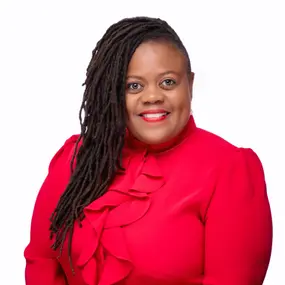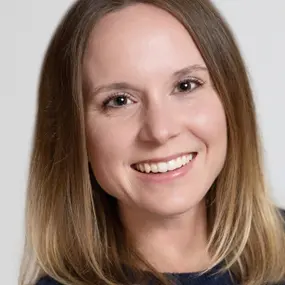
On today's episode, ASTHO's Sara Bell and Alice Schenall discuss how public health agencies can turn strategic plans into measurable progress and lead through change and uncertainty.

 Spotify
 Apple Podcasts
 Amazon Music
 Strategic plans are only as effective as an organization’s ability to put them into action. In this episode, ASTHO's Sara Bell, a senior analyst for public health systems and planning, and Alice Schenall, a senior advisor for cross sector leadership and change management, discuss two critical challenges facing public health agencies: turning plans into measurable progress and leading teams through uncertainty. Sara Bell explains why implementation often stalls after the planning process ends and shares practical strategies for operationalizing priorities, clarifying roles and responsibilities, and creating sustainable structures that help teams move from vision to action. And Alice Schenall explores how public health leaders can navigate organizational change, build trust during uncertain times, and address resistance while keeping teams focused on their mission.
From Plan to Action: Tools to Support Public Health Implementation | ASTHO
Leading Change Workshops | ASTHO
Exercise Excellence: Michigan Reflects on a National Level Exercise | ASTHO
Imelda Garcia Bio | ASTHO Member

JOHN SHEEHAN:
This is Public Health Review Morning Edition for Thursday, June 25, 2026. I'm John Sheehan, with news from the Association of State and Territorial Health Officials.
Strategic plans are only as effective as an organization's ability to put them into action. Today, ASTHO's Sara Bell, a senior analyst for public health systems and planning, and Alice Schenall, a senior advisor for cross sector leadership and change management, discussed two critical challenges facing public health agencies: turning plans into measurable progress and leading teams through uncertainty. Sara Bell explains why implementation often stalls after the planning process ends and shares practical strategies for operationalizing priorities, clarifying roles and responsibilities, and creating sustainable structures that help teams move from vision to action. Later, Alice Schenall explores how public health leaders can navigate organizational change, build trust during uncertain times, and address resistance while keeping teams focused on their mission.
Let's start with Sara Bell.
SARA BELL:
I think planning and implementation often require a little bit different muscles, and public health has traditionally invested a lot of energy into helping people build those strong plans. So, we've really gotten great at the assessment, engagement, data gathering, and strategy development, but that implementation is a little bit messier. Implementation happens in the context of convening priorities, so staff turnover, changing leadership, funding shifts, emergencies, and you're trying to move work forward while that ground beneath you keeps shifting. So, I really think that there's that tendency to assume that once a plan is complete, that path forward becomes obvious, but a strategic plan or a health improvement plan often answers what we want to do, and it doesn't always answer who's doing what, how decisions will be made, how progress gets monitored, or what happens when things change. And implementation is really about that organizational behavior change. It's that day-to-day work of translating aspiration into routines and relationships, and even decisions.
SHEEHAN:
Yeah, and the suite of tools that you've put together really helps agencies, public health agencies, get from point A, to point B, to point C. Can you talk about what you were seeing in different agencies that sort of led to the need for these tools?
BELL:
Yeah, what we were consistently hearing from folks was that they weren't struggling because they lacked commitment or those good ideas. Many agencies had already put together those thoughtful plans, they had engaged partners, collected data, built priorities, but once the excitement of planning wrapped up, the teams would then ask, "Okay, now what?" And we kept seeing these things emerge, so things like the plans were feeling too high-level to operationalize, there was unclear ownership, the collaborative groups were without clear structures, people wanting implementation support that wasn't another lengthy guide or webinar. So, there is often this assumption again that implementation failure means that people didn't execute well enough, but I really think that teams simply weren't given that practical structure to support implementation. So, these resources were intentionally designed as usable tools, things that teams could pull off the shelf and adapt immediately, and more broadly, I think they also acknowledge something important, and that's really the implementation isn't just a linear stage after planning, it's really that ongoing practice.
SHEEHAN:
Sure, sure, organization doesn't stop once you've put something in place. And what does effective operationalization look like? And where do a lot of agencies get tripped up?
BELL:
To me, effective operationalization is when someone across the organization can answer a few very simple questions. So, what are we trying to accomplish? What does success actually look like, who owns what, and what happens next? Also, how will we know if we're making that progress? Simple questions like this can be surprisingly hard for folks, and one common challenge is really jumping from broad vision directly into activities. A plan says improve workforce well-being or strengthen partnerships, and teams immediately begin creating task lists, but activities alone aren't just implementation without clarifying outcomes, sequencing work, identifying dependencies, or discussing capacity. Teams can end up very busy and not necessarily moving strategically. Another challenge is creating implementation structures that are so detailed that they become impossible to sustain, and sometimes simplicity wins in this space. The most successful teams I've seen create those small feedback loops, like short check-ins, regular reflection points, and opportunities to adjust as they learn.
SHEEHAN:
And another aspect that is so, sort of critical, but doesn't maybe get the thought that it should, is who owns what, who's responsible for what, and who has the authority to actually do things? Can you talk about that importance of clarifying roles and responsibilities?
BELL:
Absolutely, so ambiguity really creates friction, and it's not an obvious friction. People assume someone else is leading a task, or two groups unknowingly duplicate work, or even teams are waiting for decisions, because no one knows who actually has authority. Public health work is collaborative and cross-functional in nature, and that's a strength, but collaboration without clarity can become exhausting. So, I think one of the biggest misconceptions is that discussing roles and decision-making can feel rigid or hierarchical, but in reality, that clarity really creates that flexibility within your planning, and when people understand their lane where decisions happen, and how to contribute, it really builds trust throughout the partnerships. So, these tools aren't really trying to prescribe organizational charts or anything like that. They're creating structured opportunities for those conversations to happen amongst teams, and often just avoiding those late-stage conversations because those can really feel uncomfortable. So, these are answering questions like, "Who owns this? Who needs to be consulted? What decisions can this group make?" And these conversations again can feel very awkward upfront, but avoiding them usually helps avoid some of those pain points later on in the process.
SHEEHAN:
And you also stress, as you have several times here, that really it is flexibility and being able to adapt structures to your own organization or your own team, however it may look, so that you can, you know, sort of take in the spirit of it and progress rather than being locked into one system. Can you talk more about how public health professionals specifically can sort of adapt these resources?
BELL:
Yeah, so the flexibility in that nature was really intentional in the process. And we were hoping that, you know, public health agencies, as they vary tremendously with different governance structures, different staffing models, different resources. We really wanted to reach all of the various organizations in those stages. So, a large jurisdiction and a more sparsely populated jurisdiction may have very different realities. So, we really wanted these tools to function more like building blocks than instructions. So, you don't need to use everything within this suite of resources, you can simply start by asking, what challenge are we trying to solve right now? So, maybe teams need role clarity, maybe they need better meeting structures, maybe they're struggling with accountability. Teams can start small and adapt pieces, and then even build over time from there. So, I think that implementation sometimes gets framed as reaching a finish line, but we can see it more as building those organizational habits,
SHEEHAN:
And lastly, for that ambitious public health professional who might have lofty goals, but not necessarily all the capacity, what is the takeaway that you're hoping people can take from these tools?
BELL:
Yeah, yeah, so we're really hoping to support the public health professionals because they are constantly being asked to do more with limited time and capacity. So, our hope is really not to add more work to the people; it's that these tools help reduce some of that hidden burden that implementation can create because unclear roles, inefficient meetings, duplication of work, stalled decisions all consume energy, too. And if these resources can create even just a little bit more clarity and make implementation conversations easier, that's meaningful to us. What we hope people come away realizing is that implementation isn't something organizations do well or don't do well. It's really a skill set, and like any skill set, it can be strengthened through practice, and reflection, and structures that support people doing that work
SHEEHAN:
Well, Sara Bell, thanks so much.
BELL:
Absolutely, thank you.
SHEEHAN:
Sara Bell is a senior analyst for public health systems and planning at ASTHO. Now, let's hear from ASTHO's Alice Schenall, a senior advisor for cross sector leadership and change management, about ASTHO's latest Leading Change workshop.
ALICE SCHENALL:
Being able to lead through uncertainty is an opportunity to reduce fear, to quiet the noise around what is and isn't true, and also to continue moving through whatever change or uncertainty that is occurring. If that Plan A does not work, then the Plan B to protect the public's health and prevent disease spread and treatable and preventable diseases.
SHEEHAN:
And what are some things, examples of challenges that people are working through that this addresses?
SCHENALL:
Yeah, often leaders and public health workforce, they're navigating multiple changes. They can range from changes in structural roles and responsibilities. Sometimes there's unplanned change, like an outbreak, people-centric changes, new staffing policies, remedial change often occurs as well when there's a problem and there's a need for a solution that often requires a change, and then there's ultimately always a change in software. So, when navigating multiple changes in this workshop, we often spend time looking at change that's within our control,
SHEEHAN:
And does the workshop address change like across levels, from sort of inter-team changes to organizational changes?
SCHENALL:
Absolutely, so we focus at the top of the workshop on readiness, and that readiness is about being ready personally, how you garnish support, move people in the right direction, and identify small wins from a team and organizational perspective, understanding roles and responsibilities, ensuring that the direction of the change is communicated frequently, and looking at what happens. Like, is there enough money to really implement this change, time, resources, people, skills, and also who's going to steward this change once the funding is over or has ended? So, even mechanisms of how to enact that change.
SHEEHAN:
And what kind of say, real-world outcomes can participants learn about that they can bring back to their organizations?
SCHENALL:
Yes, in our most recent cohort, which was March 2026, we first of all, we ask each participant to identify a change. And so, they leave with a concrete plan of action around next steps to navigate that change that they identified in the beginning of the planning process to join the cohort, and others are just looking at the importance of balancing the people and the processes of change. Often, people are skilled in the tools and the frameworks. It's the 'people' part that often can be out of balance, of you know, again, the fear factors, the uncertainty, the trust. And then there is just coaching and inspiration to use their own power to enact change. Again, that's within their control; resistance is a big one. Resistance to change is null, and so I often say to participants, it is not personal. And so, knowing one, the importance of responding to the resistance to change and responding appropriately, and to calm whatever fears, give better direction, and also following the workshop, we have what is considered office hours to at least two of those to support continuous development in their change area, and to be a part of a my.ASTHO community, which is an online platform to share tools.
SHEEHAN:
Have you seen, you know, leaders or organization members who have gone through the training come out different after the training?
SCHENALL:
Yes. So, results from our March 2026 training was that 100% of the participants reported an intent to apply their learning, a lot of attention to readiness assessment was amplified in that cohort, as well as the plan to go back and train their teams in areas around approaches and tools that they found helpful. One exciting change that we, I like to quote that we learned from the evaluation was, "I have identified some next steps to help accelerate my change in a positive direction," "I will be sharing some of the content and tools to be reviewed at a supervisor boot camp coming up." So, I think the ability to take what is applicable to the change in their jurisdiction and to spread that knowledge is a great outcome and a success to those that participate.
SHEEHAN:
Sure, and relatedly, have you heard that there's like a breakthrough moment, or like an 'a-ha' moment that participants come away talking about
SCHENALL:
Absolutely. Discovering the impact of trust in the change process is a breakthrough. Often, when we, you know, we talked about why is it important for the public health workforce to be able to lead through uncertainty, and often because of it, could be past experiences. Trust is often fractured or not at the highest level when there is a change, and there is uncertainty about the change. And so, one of the breakthroughs is, you know, one participant, and others agreeing that this is important, and it's a game- changer, and not just trust as, like, in general, but trust personally, like self-trust to be able to get this done, interpersonal trust, as well as organizational trust, and ways to even build that would be, of course, continuous communication, as well as having small wins that builds momentum and possibilities on the other side of the challenge.
SHEEHAN:
So, Alice, are there any big takeaways or real-world outcomes that participants can expect to take back to their organizations after the workshop?
SCHENALL:
Indeed, when participants register to participate in the Leading Change workshop, they are asked to identify a change area that they'd like to work through during the experience. And this gives an opportunity to have a 'next step plan' and identify tools that might be helpful when they return to work. One of the many outcomes that participants will experience is the importance of balancing the people and the process of change, and how often, if there are people skilled in different change frameworks, it's the people component that really can get sticky when not communicating what isn't clear or what needs to be clear, and communicating with frequency and clarity. And then also, they are expected to walk away owning their power as an outcome, and not always expecting all the direction, all the energy from the C-suite, their executive leaders. And so, this is about leading from where you are, and again, what you can control. Following the workshop, they are also invited to participate in an online community that gives the opportunity to share resources and ongoing support. Additionally, there are office hours offered following the course to support and explore specific change on a deeper level.
SHEEHAN:
And how can, how can people learn more?
SCHENALL:
Yes, so, visit the Leading Change workshops on ASTHO's website, and you will find that the upcoming dates and registration link for July 28-29 in Arlington, Virginia, as well as a very detailed frequently asked question section and a justification letter that can be modified to share with the employer for approval.
SHEEHAN:
Alice Schenall is a senior advisor for cross sector leadership and change management at ASTHO. The next Leading Change workshop is July 28-29. Find a link to register in the show notes. Earlier, we heard from ASTHO's Sara Bell, a senior analyst for public health systems and planning.
In March 2025, the Department of Energy hosted a national-level exercise designed to promote radiation readiness. This exercise brought together a wide variety of interdisciplinary partners from federal, state, local, and international governments, among other partners. Michigan hosted the exercise. ASTHO's Director of Preparedness, Annie Evans, sat down with representatives from the Michigan Department of Health and Human Services to learn about their experiences, how they've applied lessons learned one year later, and how those lessons might be applied to different threats. Find more at the link in the show notes.
ASTHO welcomes new member Imelda Garcia, interim commissioner for the Texas Department of State Health Services. Prior to her appointment, Garcia served as the Department's associate commissioner of the Laboratory and Infectious Disease Services Division, and also played a leadership role in the Department's strategy and oversight of data modernization and public health partnerships. Learn more about Commissioner Garcia in the show notes.
This has been Public Health Review Morning Edition. I'm John Sheehan for the Association of State and Territorial Health Officials.