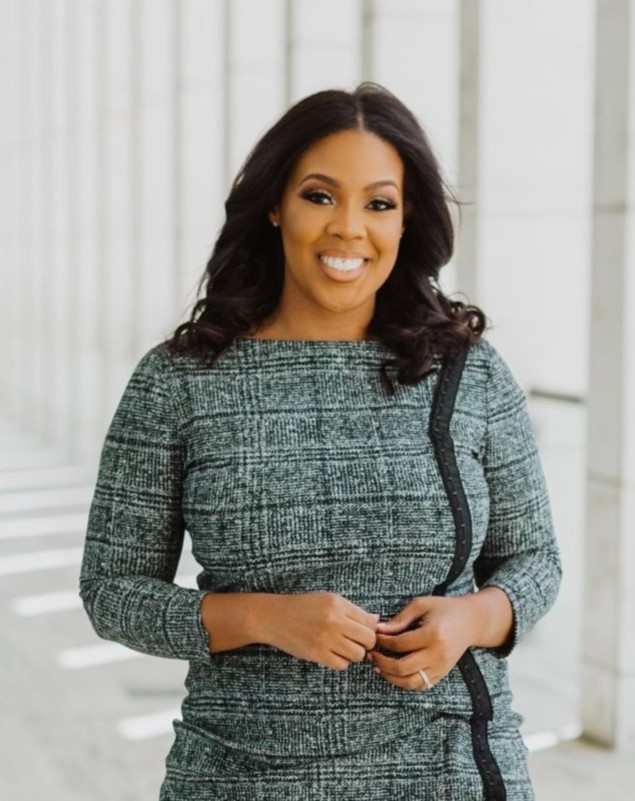
Brittany Cox, assistant commissioner of the Division of Health Disparities Elimination at the Tennessee Department of Health, shares about how attending an ASTHO Leading Change workshop helped her be a better leader.

 Spotify
 Apple Podcasts
 Amazon Music
 Public health leaders are navigating organizational changes, funding shifts, workforce reductions, and evolving community needs. Brittany Cox, assistant commissioner of the Division of Health Disparities Elimination at the Tennessee Department of Health, discusses how an ASTHO Leading Change workshop helped her develop practical strategies for guiding her team through uncertainty. She shares how an ASTHO Readiness for Change tool helps assess where teams are in the change process, how a visual exploration exercise opened up conversations about the challenges of change, and why connecting with public health leaders across the country has strengthened her approach to leadership.
Rethinking “Soft” Leadership Skills in Public Health | ASTHO

JOHN SHEEHAN:
This is Public Health Review Morning Edition for Wednesday, August 26, 2026. I'm John Sheehan for the Association of State and Territorial Health Officials.
Public health leaders are navigating organizational changes, funding shifts, workforce reductions, and evolving community needs. Today, Brittany Cox, assistant commissioner of the Division of Health Disparities Elimination at the Tennessee Department of Health, discusses how an ASTHO Leading Change workshop helped her develop practical strategies for guiding her team through uncertainty. She shares how an ASTHO Readiness for Change Tool helps assess where teams are in the change process, how a visual exploration exercise opened up conversations about the challenges of change, and why connecting with public health leaders across the country has strengthened her approach to leadership. Brittany Cox, welcome to the show.
BRITTANY COX:
Thank you for having me.
SHEEHAN:
So, Brittany, what was the reason behind originally going to the Leading Change Workshop? What were you trying to help?
COX:
So, originally, my Deputy Commissioner, Dr. Toby Amoson, actually encouraged me to attend the workshop. I believe she felt like it was an opportunity for me to really strengthen my leadership abilities, especially I'm currently leading a division that has experienced several changes in the past few years, specifically organizational changes, funding changes, workforce reductions. So, she really thought this was a great opportunity for me, and I'm really, really grateful that I do have a senior leadership team that really encourages us to pursue these types of professional development opportunities, such as the Leading Change Workshop. And then for me personally, I thought it was a great opportunity as well, just to be able to gain some strategies to better guide my team through this evolving landscape. And at the time, I actually was getting—we were getting ready, the Department of Health was getting ready to roll out and implement a brand-new food is medicine program pilot in two of our local health departments, so I really wanted to be able to gain some better skill sets to really help with that transition as well.
SHEEHAN:
Gotcha. And, you know, that does sound like a lot of change that your department had been going through. How had you responded to changes or challenges in your department?
COX:
In the past, honestly, prior to the workshop, I really just kind of accepted change as a constant within the field, within the public health field. I have been told by current team members, past team members, that I, you know, they've expressed their gratitude that I keep this level head and this this sense of calm when we are facing these shifting landscapes, and I do really do try to create an environment for my team specifically where change is communicated transparently, but we also have a space to really like process change together and also kind of develop a pathway forward. But all that being said, I am still human, so even with facing change and the uncertainty that comes along with it, it can be daunting at times, especially when you're trying to ensure that your team and the people that you're serving are always in the center of the decisions that you're making.
SHEEHAN:
Absolutely. And so, what were some what were some concepts or tools or activities that you that you learned during the session?
COX:
One of the greatest tools that I took away from this workshop was the Readiness for Change tool. So often within our field, change can be unexpected, abrupt. It doesn't really leave us with a lot of time to process changes and really identify if our department or our division is ready for the change that's to come, but my cohort really helped me understand that this tool that they provided in the workshop really allows you to really assess and gauge where your team is in that moment. So even if change is already underway, you've been told this change is happening, this tool really helps you gauge where they are in that space, and that kind of helps me revise how I approach communicating the change to my team as well as how do I help navigate them through that transition.
SHEEHAN:
Hm. Can you give an example of how you've applied that in in your specific workplace?
COX:
Yes. So, one of the exercises that really resonated with me personally during the workshop was a Visual Explorer exercise. We were able to select two images: one image was to represent what sustains us as we lead change and where we were personally in our leadership journey at the time. It really created this space within our cohort where we could have some open, honest conversations about how everyone was experiencing change and how they were navigating those changes, and that was some really meaningful conversations that came out of that. And immediately once I returned back home, I was able to implement this exercise into my division's Spring Learning Collaborative, and it really allowed for our team as well to really sit down and talk through what changes they were experiencing during in that space and the changes we've been experiencing for the past few years, which had seemed pretty constant. It really opened up the dialogue and allowed us to strengthen our connections across our division.
SHEEHAN:
And how has the workshop affected how you thought about change? It sounds to me like a lot of it is making sure that you're communicating with your teammates and making sure that everyone's on the same page.
COX:
The workshop specifically has really shifted how I thought about change, especially in a public health setting. I think one of the greatest benefits for me personally attending the workshop were all of the amazing connections that I made with several public health colleagues from across the country. So, once again, this created a space for us to have these conversations where you actually felt seen and understood by colleagues who were experiencing some of the very same challenges that you were in your state, they were experiencing the same things in their state as well, whether or not they were on the other side of the country, and it really gave me a greater perspective of how others were navigating these changes within the public health field, and that really inspired me and kind of shifted my thought process as well of how I can address change as it presents itself.
JOHN SHEEHAN:
Are you still feeling the workshop's impacts either on yourself as a leader or within your department?
COX:
For sure. I think the workshop has definitely had a meaningful and lasting impact on my leadership journey, it really allowed me again to connect with people from across the country. It gave me a deeper sense of knowledge. It gave me practical strategies of how to address change and how to lead through change and to really lead with intentionality and more confidence.
SHEEHAN:
Brittany Cox, thanks so much.
COX:
Thank you, John.
SHEEHAN:
Brittany Cox is the assistant commissioner of the Division of Health Disparities Elimination at the Tennessee Department of Health.
ASTHO's Leading Change workshop helps public health leaders build the skills to navigate uncertainty, inspire teams, and guide organizations through change. Through practical strategies, real-world examples, and actionable tools, participants gain insights they can apply right away. The next workshop takes place October 6 and 7 and enrollment is now open. Reserve your spot and strengthen your ability to lead meaningful change in public health organizations.
Public health professionals are facing unprecedented challenges, from budget cuts and staffing shortages to growing demands and uncertainty, and it's taking a toll on the workforce. In a recent blog, scholars from ASTHO's Developing Executive Leaders in Public Health program, or DELPH, explore why so-called soft skills like intellectual humility, psychological safety, and values-based communication may be the most essential leadership tools for reducing stress, strengthening collaboration, and preventing burnout. Read the blog today and discover practical leadership habits that can help your team thrive even in the toughest moments. The link is in the show notes.
This has been Public Health Review Morning Edition. I'm John Sheehan for the Association of State and Territorial Health Officials.