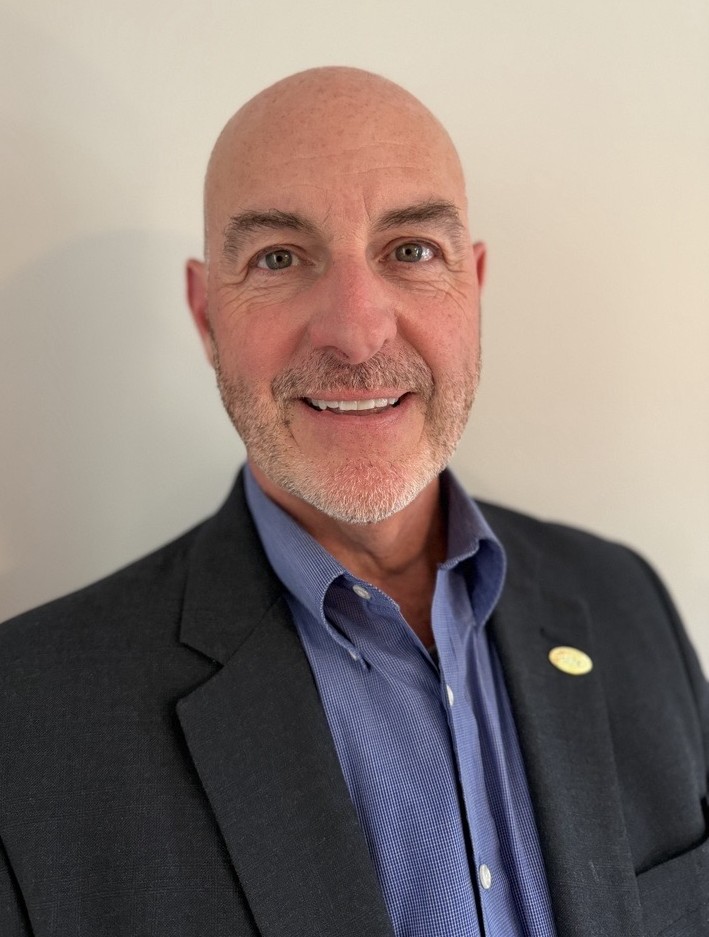
On today's episode, ASTHO's Danny Staley discusses how innovation and capacity building can help health departments adapt by strengthening the workforce and using data in new ways.

 Spotify
 Apple Podcasts
 Amazon Music
 Public health agencies are being asked to do more with less while responding to rapidly changing health threats, technologies, and community needs. Danny Staley, ASTHO senior vice president of Public Health Practice and Programs, discusses how innovation and capacity building can help health departments adapt by identifying successful practices, scaling proven solutions, strengthening the workforce, and using data in new ways. He also explores how artificial intelligence could help public health professionals make sense of massive amounts of data and information, and how measuring the impact of new tools and strategies will be critical to demonstrating their value by 2029.
ASTHO's Strategic Plan | ASTHO
It’s not just a gut feeling: Foodborne illness outbreaks are especially bad this summer | CNN

JOHN SHEEHAN:
This is Public Health Review Morning Edition for Tuesday, August 25, 2026. I'm John Sheehan with news from the Association of State and Territorial Health Officials.
Public health agencies are being asked to do more with less while responding to rapidly changing health threats, technologies, and community needs. Today, ASTHO's Senior Vice President of Public Health Practice and Programs, Danny Staley, discusses how innovation and capacity building can help health departments adapt by identifying successful practices, scaling proven solutions, strengthening the workforce, and using data in new ways.
Danny Staley, welcome to the show.
DANNY STALEY:
Good to be here today.
SHEEHAN:
So, Danny, innovation and capacity building. What is it that makes those two things important to stay agile for departments?
STALEY:
So, as we think about it, public health is, you know, constantly fighting the budget battle and also policies that seem to outdate quickly, and it's just a constant work that we have to do to innovate, to figure out ways to do more with less, and to figure out—and I always hate that term—but how that we truly stay ahead of the game, often behind the eight ball, as they say. You end up with not enough money, and if you have a new disease or new condition, new concern, the money's not there until later in the game usually. So the constant need to innovate, to build capacity, to take up the slack whenever you have those moments where you find yourself dealing with something new that you're not planned for, and you have to pull people together. So it is one of those things that it's at the forefront of health departments minds and all these agencies across the United States.
SHEEHAN:
Yeah, absolutely. Change will happen. Growth will need to happen. How do you plan for it?
STALEY:
Yeah.
SHEEHAN:
And so, what does that mean for health agencies, sort of on the ground in practical terms? What does it mean to strengthen capacity?
STALEY:
You know, a lot of the strengthening capacity is taking some of the best practices and innovative practices that we find in other states that people have found, hey, this actually works for us, and figuring out, can we scale this? Can we replicate it elsewhere? Can we bring a new technology or a new approach to health departments? Can we give you a new tool in the toolbox that will help you? Maybe you need a dashboard on vaccine-preventable diseases that may be more tailored to a regional level. So is there a way of looking at something like the data dashboard? Is there a practice on workforce that another state has adopted in training maybe the disease intervention specialists, or DIS, workers? Is that something that we can help you automate, or take that practice in another state and bring to you in your state to make it easier, quicker, and allow you to focus on whatever the new issues or problems that you're facing? And a lot of times, it can be how do you look at using data differently to, like in our opioid data-to-action, how do we, what practices are states doing and territories doing that maybe would work really well for you and help you address an issue that you really didn't think was a big issue, but when you look at it, oh my gosh, it's time to do something about this.
SHEEHAN:
Yeah, it sounds like you're helping agencies to sort of find the gaps in their own plans or their own thinking. How does the strategy sort of encourage those creative solutions?
STALEY:
It really does help because they are real-world problems that they're all facing, and so the strategies that we're bringing to them are things that do work or innovations that have been recognized, maybe even in other areas of our workforce that we can bring to a new problem.
SHEEHAN:
And, you know, you mentioned how you know, there are going to be there are going to crises are going to arise, things are going to change. And just as the pace of change is happening in a public health landscape, technology is changing so quickly around us as well as solutions to some of those problems. What is the role of technology in the strategy?
STALEY:
Oh, you know, it is so crazy. I always think about now, you know, in some of my graduate studies and back early in my student life, man, would I have loved to have had AI. I mean, you know, it's one of those things where you can take massive amounts of data, reports, I mean, like pulling out three to four different reports, or filling out three to four different plans, or even more than that, and putting them into an artificial intelligence tool that can help summarize or help categorize them for you. To me, it is amazing what we're seeing today as far as the tools at your fingertips that you can take and pull together and actually digest massive amounts of data or massive amounts of summaries, studies, and findings, or to survey, you know, lots of information that's out there that's already been done. And once that summary is done, it can sort of help point you in a direction to validate, to pull together ideas, rules, whatever it might be. It really shortcuts a lot of the initial work that you have to do to begin to define problems or to begin to define actions. So, to me, I am extremely excited about the new tools that we're actually able to use and bring into the world of public health.
SHEEHAN:
I completely agree. I think, you know, AI really flourishes when it has humongous amounts of data to work with. And one thing I think public health is good at generating is lots and lots and lots of data.
STALEY:
Oh yes. I used to laugh and tell my students that if there was one thing that's out there, if you if you're looking for something, I am sure if you do that search, you will find everything you would ever want to know, and some things you don't want to know about a topic.
SHEEHAN:
And so looking ahead to 2029, what advancements or what practices would be in place that would show that this this strategy has had an impact?
STALEY:
You know, I think there's a couple of things there. One, we're actually looking at the work that we do and saying, we're asking ourselves that question: What is the impact of this work? So we're early on in looking at it because we want to show the value of the work that we do. We want to show if you adopt this workforce practice, it really does help you in recruitment, retention, or your ability to actually accomplish, you know, project objectives at a quicker pace or more completely. So, you know, for us, looking at our impact individually on these individual work streams is going to be what gives us that success. It's the adoption of different dashboards that people use, the adoption of some of the workforce policies, the adoption of learning platforms that really can help us identify success.
SHEEHAN:
Well, Danny Staley, thanks so much.
STALEY:
It was great meeting you. Take care. We'll see you soon.
SHEEHAN:
Danny Staley is the senior vice president of Public Health Practice and Programs at ASTHO.
Community health workers, or CHWs, are frontline public health professionals that share life experience, trust, compassion, and cultural and value alignment with the communities where they live and serve. The goal of an ASTHO e-learning course titled, Equipping Community Health Workers to Address Alzheimer's Disease and Related Dementias in Their Communities, is to leverage the robust knowledge, skills, and expertise that CHWs already have and apply these to support brain health and address Alzheimer's disease and related dementias in their communities. Learn more and enroll by clicking the link in the show notes.
ASTHO President and Commissioner of the Connecticut Department of Public Health, Dr. Manisha Juthani, was quoted in a CNN article on foodborne illness outbreaks. Find the link in the show notes.
This has been Public Health Review Morning Edition. I'm John Sheehan for the Association of State and Territorial Health Officials.