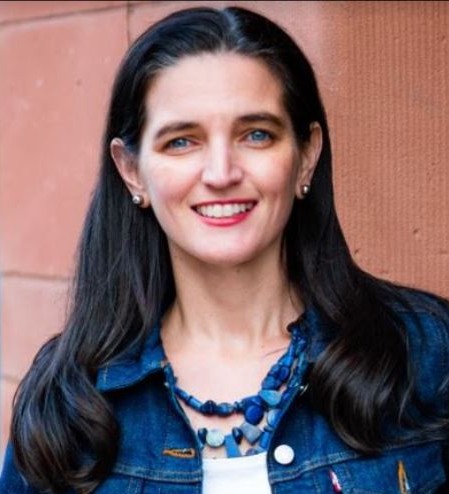
On today’s installment of the PHIG Impact Report, data modernization funding is producing tangible change across Minnesota's public health system. Hear from the Minnesota Department of Health's Wendy Underwood on how PHIG funding is supporting employee development, modernizing the state's laboratory information management system, and strengthening partnerships with local, tribal, and community health organizations.

 Spotify
 Apple Podcasts
 Amazon Music
 Data modernization funding can sound abstract, but in Minnesota, it’s producing tangible changes across the public health system. On today’s PHIG Impact Report, Wendy Underwood, deputy commissioner of the Minnesota Department of Health discusses how PHIG funding helped move cancer screening clinics from paper-based processes to digital systems, giving public health officials faster and more accurate access to critical information. She also explains how the funding is supporting employee development, modernizing Minnesota’s laboratory information management system, and strengthening partnerships with local, tribal, and community health organizations. Underwood shares lessons from Minnesota’s experience about using infrastructure investments to create improvements that can endure long after the funding ends.
This work is supported by funds made available from the Centers for Disease Control and Prevention (CDC) of the U.S. Department of Health and Human Services (HHS), National Center for STLT Public Health Infrastructure and Workforce, through OE22-2203: Strengthening U.S. Public Health Infrastructure, Workforce, and Data Systems grant. The contents are those of the author(s) and do not necessarily represent the official views of, nor an endorsement, by CDC/HHS, or the U.S. Government.
Public Health Infrastructure Grant: Resources & Impact - PHIG

JOHN SHEEHAN:
This is Public Health Review Morning Edition for Tuesday, August 18, 2026. I'm John Sheehan with news from the Association of State and Territorial Health Officials.
Data modernization funding can sound abstract, but in Minnesota, it's producing tangible changes across the public health system. On today's PHIG Impact Report, Wendy Underwood, deputy commissioner of the Minnesota Department of Health, discusses how PHIG funding helped move cancer screening clinics from paper-based processes to digital systems, giving public health officials faster and more accurate access to critical information.
Wendy Underwood, welcome to the show.
WENDY UNDERWOOD:
Thank you. Glad to be here.
SHEEHAN:
So, Wendy, PHIG funding, you know, can often sound a little bit abstract. It's used for data modernization and workforce development. But in Minnesota, you've done a lot of very concrete things with it. Can you describe sort of one use case that's really impacted real-world uses?
UNDERWOOD:
Yeah, absolutely, and we have a lot we could choose from, but really happy to talk about Minnesota's Sage Cancer Screening Program, or Sage for short. And this program improves access to breast and cervical cancer screening, diagnostic services, and referral to treatment for our low-income, uninsured, and underinsured Minnesotans. So, very much a life-saving system. And PHIG funds were used to launch a project to move four key partner clinics away from their paper-based, extremely manual entry and good old government fax systems to a digital process, which is incredible. And, you know, our partners, these clinics, wanted to progress and improve, but they don't have the capacity, the resources, or the ability to do that. They don't have the IT support, you know, to build out that kind of infrastructure. And so, PHIG funds allowed this modernization for our clinics to help them be more structured, efficient in submitting the information so that we could be using the data effectively and being that much more accurate in their submissions. So, PHIG was extremely successful in filling this gap by providing intense prep work, aligning these four clinics and their existing data management systems with how to support information to Sage. So, it was a real win-win for them, much less the people who are being served, right? And all of this paving the way for a faster tracking of cancer screening outcomes. So, just an incredible long-term permanent improvement with these funds.
SHEEHAN:
Yeah, and you can tell how that really can make a difference in day-to-day actions. Another change or another improvement has been a performance evaluation platform for staff. How has that advanced things?
UNDERWOOD:
Yeah, sure. I appreciate the question because I mean, in government, we don't get the opportunity to talk about our team members, you know, to talk about the real investment and development in our staff, which are the frontlines of this work. And so, it was a real great opportunity that PHIG provided to support our team member development. So, we have a lot of data. I mean, we're public health, right? And that includes data about our team members, and we leveraged employee engagement surveys to really hone in on the need and desire for career development and advancement opportunities within public health. And if we didn't provide these things, we would lose, you know, this really quality talent, and no employer wants to do that, especially in government. And so PHIG allowed our human resources team to really have the capacity to dig further into our needs and into the systems that could help us meet those needs and allow us to shift to a very intentional, development-oriented system and process and approach. And so our staff in human resources were able to vet a bunch of different systems and select one that best meets our needs. It's fun. We're we're in the throes of using it right now with our annual performance reviews and development plans and all that. So I literally have been on some trainings of how to use it effectively recently, which is awesome. But so I mean, but PHIG allowed us to really, you know, develop our, you know, modern competency models and really talk about training and really support our supervisors and managers. And I mean, any business or organization or government entity can have all the best intentions in the world to want to do this work, and PHIG gave us the resources to have the time and the ability to really lean into it and accomplish it and get it over the finish line. And it's something that we're using effectively today.
SHEEHAN:
So can I ask for any lessons learned as you've been sort of implementing these processes across, you know, whether it's collaboration with your clinical staff or with local partners? How is implementing, like a system-level change? What have you learned?
UNDERWOOD:
System-level changes are hard because of those words, right? Systems and change and the different levels. But I think what's, you know, what's key is that appreciating those opportunities like PHIG that are truly about the recipient and about investing in public health, which is what the structures are trying to do, the different levels of groups are trying to do, and what the individuals are all trying to do. And so meeting in that middle and leaning in and committing to it, I mean, is the first place to start. And then it's also important that to appreciate that state public health departments can't do it all themselves. We know that firsthand in Minnesota, and we lean into that. We just like the example with our Sage program, you know, working with and relying on those other the community clinics to want to improve with us is key, and having community voice and having our local public health and our tribal public health partners be at the table with us and and really being willing to listen and and to and to pause and make sure that we're moving in the best direction together for the health and well-being of the people we're serving, you know, you get there. Like, don't quit, and know you're all there for the same and right reason.
SHEEHAN:
And while you've been expanding things like digitizing paper records and, you know, continuing to expand electronic data capture, that work is not done. It's going to continue. What will it look like ultimately?
UNDERWOOD:
Key to that is, you know, is stable and ongoing funding. A great example of something that we have leveraged PHIG from the first day and aren't quite done yet, which is really important, it's very real-time work, is around our public health lab and our system called LIMS, or Laboratory Information Management System. So this is a massive overhaul of a very, we'll call it, historic system that's used to track, test, and rapidly report results that help in cases of outbreak, help in cases of guiding patient care, and, you know, these things happen all the time, and, frankly, seem to be happening more and more. And, you know, Minnesotans expect us to be able to respond quickly, and to do that, we need to be able to manage data quickly and effectively, and our LIMS system did its best, but was old. And then you can't just turn that off and let the IT architects in and build a new system and then turn it back on. You have to keep working while the new thing is being built. And so we will finish that through the life of our current PHIG funds, which is great, but really speaks to the significance of those funds being stable and being ongoing so we can tackle the next big thing.
SHEEHAN:
Sure, of course. And lastly, Wendy, do you have a takeaway from Minnesota's experience with PHIG funding? Something that would be useful for other jurisdictions?
UNDERWOOD:
I really do think a big piece of it is looking at the partnerships and looking at how our community partners and members, how our local public health and tribal public health partners can really benefit from this infrastructure funding to grow their base and to grow their work, so that that work can live on when and should this funding someday end. The lasting legacy of PHIG is very, very possible.
SHEEHAN:
Wendy Underwood is deputy commissioner of the Minnesota Department of Health.
This has been another PHIG Impact Report, part of Public Health Review Morning Edition. I'm John Sheehan for the Association of State and Territorial Health Officials.