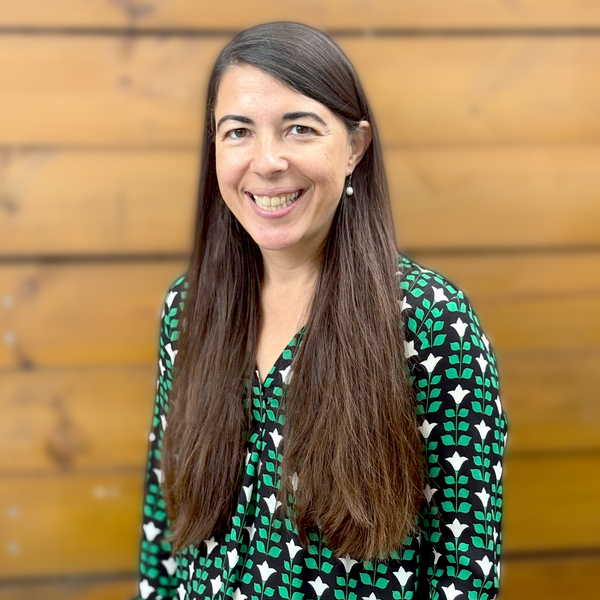
Christen Linke Young, cabinet secretary for the Delaware Department of Health and Social Services, discusses the collaborative, cross-agency approach Delaware has built to address PFAS contamination and other environmental health concerns in the state.

 Spotify
 Apple Podcasts
 Amazon Music
 Emerging contaminants such as PFAS (per- and polyfluoroalkyl substances) present a difficult challenge for public health agencies: the science is evolving, exposure pathways are complex, and communities want clear answers even when uncertainty remains. Christen Linke Young, cabinet secretary for the Delaware Department of Health and Social Services, talks about Delaware’s cross-agency approach to addressing PFAS contamination and other environmental health concerns. By bringing together experts from public health, environmental protection, and agriculture, the state has built a collaborative model that relies on scientific expertise and long-standing relationships rather than top-down coordination. The conversation explores how uncertainty surrounding PFAS can complicate public communication while also creating opportunities to rebuild trust in public health institutions. Linke Young discusses Delaware’s efforts to communicate transparently about what is known, what remains uncertain, and how residents can participate in the decision-making process.
About Environmental Public Health | ASTHO

JOHN SHEEHAN:
This is Public Health Review Morning Edition for Thursday, July 16, 2026. I'm John Sheehan with news from the Association of State and Territorial Health Officials.
Emerging contaminants such as PFAS present a difficult challenge for public health agencies. The science is evolving, exposure pathways are complex, and communities want clear answers, even when uncertainty remains. Today, Christen Linke Young, cabinet secretary for Delaware Department of Health and Social Services, talks about Delaware's cross-agency approach to addressing PFAS contamination and other environmental health concerns by bringing together experts from public health, environmental protection, and agriculture. The state has built a collaborative model that relies on scientific expertise and longstanding relationships, rather than top-down coordination.
CHRISTEN LINKE YOUNG:
I mean, this is really the heart of the way Delaware has approached this issue. We have scientists who are experts in these issues that exist in agencies across the state, in our Department of Agriculture, in our Department of Natural Resources, and with my team in the Department of Health and Social Services, and it is critical that they have built relationships over really the last two decades that are based on scientists working together as experts in their field that engage on these on these critical topics and those relationships, not as bureaucrats but as experts who are driven by their curiosity and their interest in using their knowledge to protect the people of Delaware. It's those relationships that really drive our ability to work together as a state. This is not top-down coordination, but really bottom-up partnership that is driven by the work that is happening inside of our agencies and with people who have real meaningful expertise in these compounds and how they affect our environment and how they affect the human body.
SHEEHAN:
Sure, and that's probably really helpful, especially given sort of the uncertain nature of some of these chemicals, and some of them lack any kind of regulatory standard, how does that uncertainty impact decisions about public health?
LINKE YOUNG:
You know, you are really getting at one of the major crises in public health generally right now. We are we are dealing with a collapse of public trust in public health, and a lot of that is driven by our historical inability to communicate well about uncertainty and to navigate uncertainty in ways that the public understands and appreciates and comes along on the journey. And you face a lot of that uncertainty in the work around PFAS. At the same time, I also think that environmental health is a key vector to think about rebuilding public trust in public health. People expect their government and their public health institutions to keep them safe from chemical contaminants. That is understood as a role that the government and that public health agencies, in particular, should have communicating and collaborating around these environmental contaminants is both a challenge because of the uncertainty, but also an opportunity to think about rebuilding trust. And so, the center of the work for us and the way we think about this is being clear about what we know and what we don't know, and really opening up a dialog with the public so that we are we are transparent about how we are making decisions and why, and people are really coming along with us on the journey.
SHEEHAN:
Yeah, and you know part of that opportunity to build trust has to do with some pretty scary topics. You know you're talking about these contaminants that can sneak in through drinking water, but also through the air, through food. How do you address exposure through these different environments?
LINKE YOUNG:
Yeah, absolutely. I mean, this is a real emerging area of research and understanding. Delaware conducted some of the first research that that helped us understand a little bit about the importance of contaminants outside of the drinking water context. So up in Newcastle County, which is where Wilmington is located, there research about five years ago that really looked at communities that had relatively low exposure to PFAS in drinking water, but we nonetheless found significant bioaccumulation in in humans, and we seem to understand from this research that there are clinically important and clinically relevant pathways of exposure that are outside of the drinking water context, whether from soil or from air or from other vectors, and so we are we are interested in both understanding more about what's going on in those communities, and also we are doing some work right now to replicate that research statewide to get more of a picture across the state of what role those vectors of exposure may play. We certainly think that that both airborne exposure and soil are important, and there is emerging literature here that underscores that these pathways can be clinically relevant. But there is so much more that we need to learn so that we can understand both what is going on, what the environmental pathways are, and also how we can mitigate and what steps we can take to protect people over time.
SHEEHAN:
Yeah, and talk a little bit more about statewide sampling. It's important to cover you know cover all areas of the state.
LINKE YOUNG:
Absolutely, absolutely, and you know that is an advantage we have here in Delaware, we are a small state. We have close partnerships with local officials and the ability to really have our arms around the full universe of data. And so we do have statewide sampling work that we do together, and we share information and responsibility closely, not just with our within our Department of Health and Social Services and the division of public health, but more broadly with our counterparts who work on environmental issues, we also have a pretty unique investment in in free sampling for private wells. And so, beyond just testing our municipal drinking water systems, we make available PFAS testing to all private well owners across the state, and that comes both with testing and with some support for remediation efforts. If there are high levels of PFAS that are found, we will fully subsidize remediation for lower income households and provide some support up the income spectrum. And so that the ability to remediate has really supported our ability to test because there is some place for families to go when they get this information, and what we see is that our drinking water exposure risk is highest in our rural communities. Not necessarily because there are higher levels of overall exposure there, but because there is much greater reliance on well water outside of municipal systems, and so that has really shaped the way we think about our public health response. That it is not just about the big systems, and it is not just about the historical manufacturing sites that are largely located in more concentrated urban areas. It really needs to be a statewide response that is including these private well-owners and thinking about remediation in the multi-source context.
SHEEHAN:
Yeah, and having that ability to remediate, as you mentioned, that really goes a long way towards building that trust that you're talking about earlier. Absolutely. What other methods have you found best work for building trust with the public?
LINKE YOUNG:
Yeah, so we work very closely with our partners and other agencies to speak with one voice about what we know and also what we what we don't know. But we also think it's critical that we are not the only people talking about these issues. We need to other communicators and engage them in these conversations. So we think it's really important that we get beyond people who have a .gov email address. We need to go to community partners as well, and we need to we need to work with a broader range of communicators. And so we have made grants available to nonprofit organizations in the state who want to partner with us and deliver messages around PFAS and PFAS exposure and opportunities in the state, and we think those partnerships will be critical over the long term in in how we talk to the people of Delaware and build that trust.
JOHN SHEEHAN:
Yeah, so we discuss how you know there's a lot of sort of uncertainty around PFAS and emerging contaminants, and that really sort of necessitates the ability to stay flexible and change up when you when you have new science. How do you how do you address that flexibility?
CHRISTEN LINKE YOUNG:
You know, I think it is critically important to let the scientists lead here and to have those relationships among scientists be the centerpiece of how the government agencies do their work, that we need to be guided by the people who are experts. And obviously this is a complicated space, and there is important rules for policy. This is not purely a scientific endeavor, but it is critical that that experts across agencies and across government lead the work and really drive how we how we approach these questions and how we approach engaging with the public and learning and understanding and having the broader conversations that we need to have about the work that we are doing.
SHEEHAN:
So, Kristen, you mentioned how you know exposure really isn't necessarily dependent on location. You know, it's not necessarily sites of old manufacturing, but they're really it can happen anywhere. Can you describe a little bit about Delaware's sort of unique history, particularly in manufacturing?
LINKE YOUNG:
Delaware obviously has, you know, has played a significant role throughout its history in chemical manufacturing and development of a number of products that contain PFAS. And so, you know, I think there is a unique degree of expertise. Delaware was really thinking about these issues very, very early in the life cycle of our understanding of the risks that that PFAS pose. That awareness of our long history of exposure, as well as our awareness of where these sites are throughout the state, I think has really shaped our response and has led us to this real commitment to statewide testing and to testing from a wide variety of sources that are critical to us. So that's one piece of it. We also have a have a major air force base located in the state, and we know that we have significant pathways of exposure through flame retardant chemicals, and so we see we see exposure in those communities, and that is a place where we also think about understanding our response. And again, it really emphasizes the need for that statewide testing and really comprehensive view into what our pathways of exposure are.
SHEEHAN:
Christen Linke Young is cabinet secretary for Delaware Department of Health and Social Services.
Our health is shaped by the world we live in, from the air we breathe to the food we eat, the water we drink, and the communities we live in. Our environment impacts our health and well-being. ASTHO is committed to supporting its members' environmental health initiatives through expert technical assistance and actionable resources. Find more at the link in the show notes.
ASTHO's newsletter subscription options feature updates, analysis, resources, and events on pressing issues in state and territorial public health. Subscribe to receive Legislative Alerts, news releases, Public Health Weekly, events, and PHIG connections through the link in the show notes.
This has been Public Health Review Morning Edition. I'm John Sheehan for the Association of State and Territorial Health Officials.