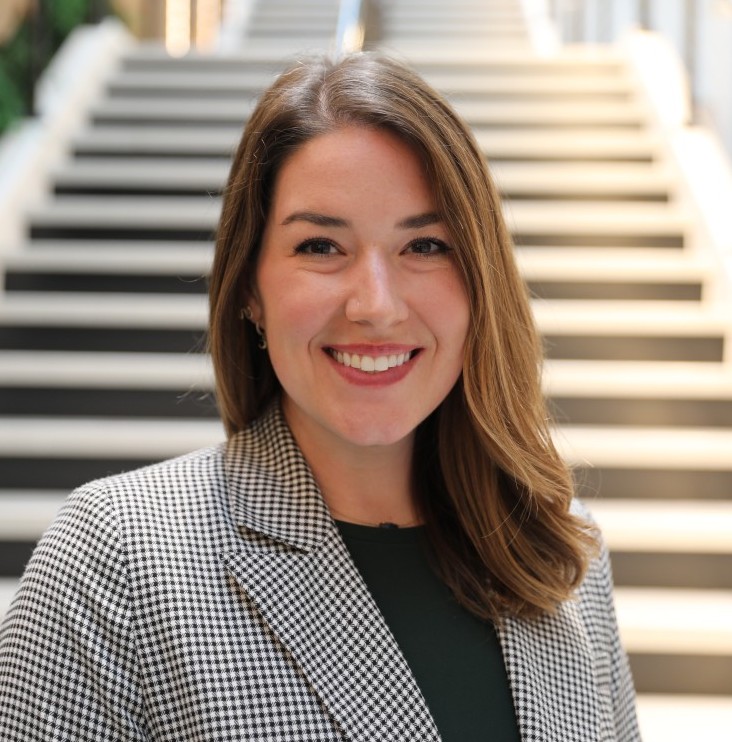
On today's episode, ASTHO's Catherine Murphy highlights the latest leadership changes across the U.S. Department of Health and Human Services, including nominations within CDC, FDA, and more.

 Spotify
 Apple Podcasts
 Amazon Music
 On today's episode, Senior Analyst for Government Affairs at ASTHO, Catherine Murphy, breaks down the latest leadership changes across the U.S. Department of Health and Human Services. She explains the nominations for CDC director and surgeon general, recent transitions at the FDA, and other key appointments shaping the federal public health landscape. Murphy also discusses why stable leadership is essential for public health agencies, what these changes could mean for collaboration with state and local health departments, and what to watch as Senate confirmation hearings move forward.
(More) Recent Shifts in HHS Leadership: June 2026 | ASTHO

JOHN SHEEHAN:
This is Public Health Review Morning Edition for Friday, July 10, 2026. I'm John Sheehan with news from the Association of State and Territorial Health Officials.
In this Federal Health Policy Update, Senior Analyst for Government Affairs at ASTHO, Catherine Murphy, breaks down the latest leadership changes across the U.S. Department of Health and Human Services. She explains the nominations for CDC Director and Surgeon General, recent transitions at the FDA, and other key appointments shaping the federal public health landscape. Murphy also discusses why stable leadership is essential for public health agencies, what these changes could mean for collaboration with state and local health departments, and what to watch as Senate confirmation hearings move forward. A quick note, as federal developments can happen quickly, we recorded this interview on June 30.
Catherine Murphy, welcome back to the show.
CATHERINE MURPHY:
Thanks so much for having me, John.
SHEEHAN:
So, Catherine, give us an overview of the leadership changes across HHS.
MURPHY:
Yeah, absolutely. Last time I was here, I was also having a very similar conversation about the handful of leadership changes, and we are once again here to talk about five different updates to HHS leadership positions. So, try to keep up. At CDC, President Trump announced his nomination of Erica Schwartz as his new pick for CDC Director, as well as his appointment of Jennifer Shuford, who's a former ASTHO member, as the CDC Deputy Director and Chief Medical Officer. He also announced Sean Slovenski as CDC deputy director and chief operating officer. The president also announced his nomination of Nicole Saphier, a radiologist and the director of breast imaging at Memorial Sloan Kettering, as surgeon general. In early May, it was announced that Commissioner Marty Makary would be leaving his role at FDA, and Kyle Diamantis, formerly FDA's deputy commissioner for human foods, has taken over as acting commissioner for the agency. A nominee has not yet been announced for FDA Commissioner. Also in April, Sean Kaufman was announced as the White House nominee to lead ASPR as the assistant secretary for preparedness and response, and finally, Sarah Brenner was announced as senior counselor for public health to Secretary Robert F. Kennedy Jr.
SHEEHAN:
Okay, that was a bunch. Let's let's break down a couple of them. Erica Schwartz nominated as CDC director, not confirmed. The CDC has been under, you know, acting leadership for a while. What has that meant for the agency?
MURPHY:
So, for a while, they lacked leadership, and it was announced that Dr. Bhattacharya, who's NIH director, would fill two roles. So, NIH director and also take on the delegable tasks for CDC director. And per reports, he's handling this workload really well and supporting the work of both agencies, and of course, staff are appreciative of this leadership. Still, a CDC Director will provide permanent leadership at the agency, which, as you mentioned, it has lacked since the departure of Dr. Monarez in August of 2025.
SHEEHAN:
And another high-profile position has been Surgeon General. The president is no longer nominating Casey Means. He's nominated Nicole Saphier. What does that indicate?
MURPHY:
During the confirmation hearing for Casey Means, legislators voiced concerns about her responses to vaccine-related questions, and this is what ultimately resulted in her nomination being pulled. Dr. Saphier is a bit more pro-vaccine and is viewed as a slightly more mainstream candidate. Her priorities also include building trust in public health recommendations, combating chronic disease, and reducing ultra-processed foods, which are in line with the Make America Healthy Again, or MAHA, movement. So, it seems a bit less contentious, and I think folks are hopeful that her nomination will make it through the HELP Committee.
SHEEHAN:
And you just mentioned, you know, this notion of building trust, rebuilding trust in some of these agencies, and you know, a big part of that is stability and transparency. That is a give and take for people to, sort of, trust their institutions. What should the new leaders what should they be thinking about as they prepare to possibly take charge of these agencies?
MURPHY:
As I said in my blog, minimizing leadership turnover bolsters stability in the public health continuum and allows for more robust response to current and emerging public health threats. Another piece of this is there is an immense amount of talent in our public health agencies and within the Department of Health and Human Services. These are dedicated career staffers who work regardless of the political parties in charge of the White House and Congress. And in the last year and a half, with these changes and with this turnover, they haven't had steady leadership to look towards. And some of the changes that the administration has made have changed the workflows as staffing changes and priorities change. So, having strong leadership that understand how these agencies work and how best to message public health to the broader public ensures the best outcomes to respond to these current and emerging public health threats. And in my meetings on the Hill, and in talking to stakeholders in the broader public health space, leaders win a lot of respect when they make time to come meet with lawmakers and their staff on the Hill and share about the work that their agencies are doing and the priorities that they are looking towards, but also, when they make time to hear from lawmakers and their staff about what's happening in their states and districts, and how the agencies can best support them, because there's such a firm relationship between these federal public health agencies and our state and local health departments.
SHEEHAN:
Yeah, and as we mentioned at the top, you know, this is all still in flux as these leadership transitions, you know, go towards confirmation. What should listeners be looking out for?
MURPHY:
We know that ensuring these leaders are in place is a priority both for the administration and for congressional leaders. We're hearing unofficially that HELP hearings for CDC Director and Surgeon General could be expected in July, and these nominees are likely to be confirmed, but stay tuned for updates. ASTHO is going to continue closely monitoring the space for changes, including a nomination for FDA Commissioner and a confirmation hearing for the Assistant Secretary for Preparedness and Response.
SHEEHAN:
Catherine Murphy, thanks, as always.
MURPHY:
Thank you so much for having me, John.
SHEEHAN:
Catherine Murphy is a senior analyst for government affairs at ASTHO.
Stay informed on the latest federal developments with the View from Washington, D.C. segment on this podcast, which offers timely updates from Capitol Hill. ASTHO's Government Affairs team provides public health policy updates, federal updates, and insights on emerging actions and what they mean for state and territorial public health. So, be sure to subscribe and never miss an episode.
The U.S. Virgin Islands Department of Health received national recognition for its work in epidemiology during this year's Council of State and Territorial Epidemiologists Conference. Epidemiologist Hannah Cranford received the Rising Leader Award, one of the organization's highest honors for emerging public health professionals. The department also showcased its work on disease surveillance, data modernization, and its investigation of Legionnaires' disease cases. Read more by visiting the link in the show notes.
This has been Public Health Review Morning Edition. I'm John Sheehan for the Association of State and Territorial Health Officials.