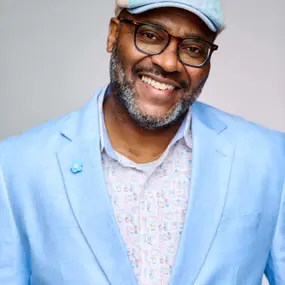
On today's episode, guest Luigi Leblanc, a doctoral student at the George Washington University Milken Institute School of Public Health, shares his research findings on data modernization across the territories. Leblanc highlights why data interoperability, governance, and workforce stability are critical to residents' health care in island areas.

 Spotify
 Apple Podcasts
 Amazon Music
 Data modernization is especially challenging in the U.S. territories and freely associated states, where geographic isolation, aging infrastructure, natural disasters and workforce shortages can complicate efforts to build and sustain modern public health systems. Today we hear from Luigi Leblanc, a doctoral student at the George Washington University Milken Institute School of Public Health, who will discuss lessons from his research into data modernization across the territories. He’ll explain how workforce development, procurement, governance and leadership can determine whether modernization efforts succeed, and why data interoperability is critical when residents must travel off-island for health care.
Data Modernization Strategies from Island Public Health Leaders | ASTHO
Supporting State and Local Health Policy Leaders Through High-Stakes Change | Milbank Memorial Fund

JOHN SHEEHAN:
This is Public Health Review Morning Edition for Tuesday, September 8, 2026. I'm John Sheehan with news from the Association of State and Territorial Health Officials.
Data modernization is especially challenging in the U.S. territories and freely associated states, where geographic isolation, aging infrastructure, natural disasters, and workforce shortages can complicate efforts to build and sustain modern public health systems. Today, we hear from Luigi Leblanc, a doctoral student at the George Washington University Milken School of Public Health, who will discuss lessons from his research into data modernization across the territories in collaboration with the Island Support Team at ASTHO.
LUIGI LEBLANC:
Just to begin with, the isolation and the dispersion amongst these island nations is a barrier to itself in terms of how they look. They implement systems that support the islands and their territories. For example, when you look at the Federated States of Micronesia, it's an island. It's a body of water that spans larger than the continental United States, and you can think about delivering public health infrastructure to support individuals who live on these different islands, multiple islands. It's unique in that way. Similarly, for the U.S. Virgin Islands, four islands, three of them are populated islands, two hospitals, one on each of the larger islands. Public health has to be present to service the people in each one of those islands, and so dealing with issues of access to services, infrastructure, all of those things combined make it challenging or create circumstances that are unique for delivering services and servicing the people of those territories. We heard from Guam that some of their public health systems actually operate on old legacy systems that are no longer supported or at end of life, and so the individuals and the resources that support those systems become very critical as part of the infrastructure, but also it makes, despite those types of challenges, the territories are able to provide key services, maintaining and, you know, keeping these legacy outdated systems operational, and the other part of it is just the resiliency of the territory. What they have to deal with annually in terms of disasters, natural disasters, whether it's typhoons on the Pacific side or on the east, on the Caribbean side, you know, hurricanes, which disrupts operations. And I think one thing that resonates with me is, you know, when you look at data modernization, when you think about it within the context of these island jurisdictions, you know, it's a five-year plan interrupted every 18 months because of these circumstances dealing with, you know, these climate events, so those are unique circumstances that affect public health delivery within the context of these islands and from the associated states.
SHEEHAN:
That spells out pretty clearly how this is more than simply a technology issue or access to technology, even. So, why does the people element matter?
LEBLANC:
Well, that's key. And several of the leaders, when we've spoken to them, both the territorial health officers, but also the data modernization lead. You know, you can't do this without committed on-the-ground people who have lived experience, cultural relevancy of it, the workforce part of it. And as the territorial health officer for Puerto Rico and Guam both shared, you know, they have to compete for skilled workforce because modernization requires a skilled workforce. You have to try to compete for that workforce with the commercial sector, the mainland, and often that's difficult. And with the time-bound nature of these modernization initiatives, these grant-funded initiatives, depending on how long it takes to onboard the workforce, you might be able to implement technology, and you know, in some timeline, some reasonable timeline-six months to a year, two years-but then a workforce, if you've got to build the workforce organically, that takes time, and so that's a factor that they have to deal with. And so there's been some creative ways and out-of-the-box thinking that the leaders have put in place in order to ensure that they can build from the ground up, that they can have people involved and the right types of people involved. For example, Santa Maya talked about bringing individuals early in the process as volunteers. They get on-the-job training, and then as they're acculturated into the process, then you naturally invest in these individuals, and when the implementation funding and dollars and the efforts start, now you've got a workforce that's already organically built in, and also will stay long term with you, and they've been successfully able to scale their workforce from investments in their people, from a team of three to over 21 technical and other staff supporting data modernization. I think that's great. Likewise, we've seen similarly in the Virgin Islands, where the leaders talked about it's not just about the IT workforce. To your point about these efforts not just being about technology, it's also about the governance and business process improvements and these other elements. And what they've been able to do in the Virgin Islands is leverage, through collaboration other efforts that are doing, for example, public health information technology upscaling and workforce development.
SHEEHAN:
Another challenge, even outside of just modernization, is sort of taking care of that data once it's been captured and, you know, making sure that it can follow patients when they travel off-island, for example, and protecting that data once it's it's in the cloud, taking into account cybersecurity, as you mentioned. Describe some more of those challenges.
LEBLANC:
Yeah, you know, and what I've learned from listening to leaders in the territories: a couple of things. One, a lot of care occurs off island because the specialty services may not be available on territory to provide the services, so there's a lot of off island traffic that occurs, and when that occurs, the individual who needs that specialty service and and the patterns in the Pacific, it either travels to you know Hawaii and sometimes the Philippines to get services, and then the Caribbean you're talking about the mainland, Florida, Texas, Georgia, and other places, and when that occurs as a cost to the local economy that is beyond the healthcare services, but also travel expenses and so on, but also the information, the data doesn't follow the individual, and so when they're arriving for services off-island, oftentimes where they present the provider who's providing the attending care may ask questions about medication histories and so on. And now you're depending on the individual with their memory recall to do that. So that can turn into a safety issue. So that's one part of it. The other side of that is it breaks the care coordination loose. So when you're done getting those services and you come back home, the information does not follow you there as well. And so the continuity of care makes it very difficult. So now when you come back home, they may repeat the same procedures over again just to get a handle on what has been done. And so in our discussions with these leaders, what has been a consistent sort of theme is the need for data interoperability and exchange, and making sure that systems are integrated. And as the Guam director Arriola shared, she actually said that a citizen or resident of the territory will encounter one or two or three of those systems in their lifetime. Be it a hospital, the public health system, be it a health system, and we'll have portions of their information in those systems that do not talk to each other. The other side of it is the cyber piece, which complements that in many of the territories, and this is endemic to the islands. This is happening around the country. Healthcare data is very valuable, so breaches are happening daily. But when that happens within the context of the islands, when they get a ransomware attack, that disrupts healthcare operations. We heard from the Federated States of Micronesia, for example, that their breach impacted their ability to deliver services for six months. I'd say that's a really long time. Other territories have had multiple breaches, and when they're trying to recover because of the risk of the legacy system and the inability to demonstrate that it is now safe, they can't get access to their data, and that data is needed for essential services like public health disease reporting and notification. So you have those two things complementing each other.
SHEEHAN:
So the blog data modernization strategies from island public health leaders are a product of your dissertation, your research at George Washington University. What was the basis of that? What was your research question, and how has that impacted? How have the blog and your dissertation impacted communities?
LEBLANC:
Yes, so I because of the work I've been doing, and in particular in the U.S. Virgin Islands, and the work that I do as a professional in health information technology and health information exchange, I really wanted to look at the study systems' approaches to leadership strategies. And in fact, that's the title of my dissertation in implementing these large sets of infrastructure initiatives like data modernization, and so the question that I'm actually asking is why they fail, and what's the role? What are the facilitators and barriers that impact that? And some of that we talked about, you know, the um the isolation, the infrastructure, the processes, but also what's the role of leadership, and how does leadership? What are their perspective and their insights in terms of these initiatives, and not just the territorial health officers, but the ones who are operationally responsible for implementing these innovations. So the data modernization leads, and so we've been doing mixed method convergence model, and what that in essence, is that we're looking at the actual profile surveys in two time points, 2016 and 2022, and we're combining those responses, those quantitative responses, with qualitative interviews, focus group interviews with health officers and with data management leads, and I've been focused on three really focal territories as my primary focus, and that's Northern Marian Islands, Guam, and the U.S. Virgin Islands, and then using the other islands as comparative. And what we're learning is that, to your point, this is not about just technology. In some ways, that might be the easy part. It's about the other components. It's about business process. It's about governance and the policy side. It's about the leadership, and it's about workforce. So all those things, complemented together, either enable or affect modernization, the technical part of the implementation, and it also provides an opportunity to see what jurisdictions are doing well, where there's many points where they converge. They have the same challenges, but there are some areas where they've had some unique approaches that are successful. And one of them we talked about around like building the workforce organically, but some areas around procurement, which is a big issue. And so, how do they do these things? And so, this provides, I think, an opportunity for territories to see what others are doing. It brings that visibility to the table, so they could see what they're doing, what's working well, and at the same time, I think it sets a lever for policy in terms of where to prioritize and how to speak as one voice around things like data interoperability and exchange. Make the case for that.
SHEEHAN:
And so, Luigi, I imagine just from your research, you probably heard some pretty compelling stories in talking with officials and community members. What are you going to take with you from the research?
LEBLANC:
One thing I'm going to take with me is that, again, this is not about technology. One of the biggest things that came out really clearly from the discussions is that the procurement inefficiency makes or breaks these development initiatives and these modernization programs. And so the way we look deeper, and this may require additional evaluation and sets. But when you look at the organizational makeup of these islands, for example, CNMI as a corporation versus others that are part of a public health agency of a state, you see the differences in terms of the ability and the speed to be able to get these projects done and done in a timely way and successfully.
SHEEHAN:
Absolutely, that's really interesting. And for people who maybe aren't as familiar with the experiences of the territories and freely associated states, what other kinds of surprising lessons did you learn in their efforts towards data modernization?
LEBLANC:
Well, I think the big a-ha for me was the issue of procurement and what leaders have to do to circumvent that inefficiency and how that impacts success or failure. And so, many times, you know, you never want to give the federal government dollars back, but sometimes the bureaucracy of procurement makes it so that they have to begin to think about carryover funding requests or other types of mechanisms to make sure that they can get this done because these grants are a moment in time. The other part of it is when you've got grant funding and that has an end date, like a lot of this these dollars for modernization will term in 2027, and procurement takes so long, it takes a very it becomes challenging on getting the right workforce because you don't get them early enough, and when you and if it takes two years, for example, we've heard stories that it takes up to two years to actually get through the acquisition cycle to get the system in place. Well, people are hesitant to take on employment for something that is short-term. So these types of that was an a-ha moment for me, and I think it will provide a lot of thought to transitioning governments. That's the other thing that's happening in these territories. You've got political transition that is happening, and one of the comments made by the Commissioner of the Virgin Islands, Commissioner Encarnation, is that this study kind of provides a blueprint for an incoming administration to understand what has been done, what works, and what doesn't work, and where to prioritize so that you can have this continuity of service. So those are things that I would like to perhaps leave behind, but also, for the rest of the mainland that is involved in modernization, the territories and the islands have a lot to offer in terms of lived experiences.
SHEEHAN:
Luigi Leblanc, speaking about his doctoral research at the George Washington University Milken Institute School of Public Health in collaboration with the Island Support Team at ASTHO.
SHEEHAN:
Join us for ASTHO's Leading Change Workshop, October 6 and 7, designed specifically for professionals in clinical and non-clinical public health roles. This two-day in-person opportunity equips participants with strategies and skills to navigate change and uncertainty as individuals, team members, and organization-wide leaders. Emphasizing actionable instruction and resources, it enables leaders to create and implement real-world initiatives at their agencies for 2026 and beyond. Participants will gain tools to design targeted initiatives and foster tangible organizational change. This experience prepares leaders to drive meaningful impact in their workplaces and communities. Registration closes September 14. Sign up through the link in the show notes.
Congratulations to ASTHO President Manisha Juthani, commissioner of Health for the Connecticut Department of Public Health, and ASTHO Member Keith Reed, commissioner of Health for the Oklahoma State Department of Health, who have been named members of the 2026-27 Millbank Fellows Program cohort. A link is in the show notes.
This has been Public Health Review Morning Edition. I'm John Sheehan for the Association of State and Territorial Health Officials.