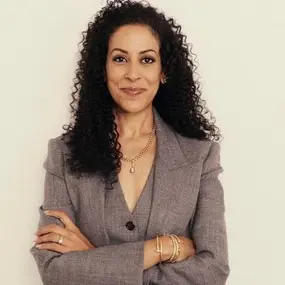
Jessica Malaty Rivera from The Public Good Projects discusses the questions and concerns emerging around the new mRNA flu vaccine and why communicators should focus on providing clear information to encourage questions while keeping evidence-based information front and center.

 Spotify
 Apple Podcasts
 Amazon Music
 The introduction of an mRNA seasonal flu vaccine is creating new questions for public health communicators about vaccine hesitancy, misinformation, and how to build confidence in vaccination. Jessica Malaty Rivera, executive director of the Infodemiology Initiative at The Public Good Projects, discusses the questions and concerns emerging around the new mRNA flu vaccine, including how existing doubts about mRNA vaccines may be influencing perceptions of flu vaccination. She explains why communicators should focus on providing clear information about who the vaccine is for, what people can expect, and what is known about its safety and side effects rather than trying to respond to every circulating false claim. Rivera also discusses communication strategies such as pre-bunking and the “truth sandwich,” and how public health agencies can encourage questions and curiosity while keeping evidence-based information at the center of the conversation.
First mRNA flu vaccine brings COVID-era concerns into flu vaccine conversations | Infodemiology.com
Power Hour PLUS: Expand Your Impact | ASTHO Webinar Series
ASTHO Welcomes Lindsey Myers, Jane Bigham, and Jeffrey Ekoma to New Leadership Roles | ASTHO

JOHN SHEEHAN:
This is Public Health Review Morning Edition for Monday, September 28, 2026. I'm John Sheehan with news from the Association of State and Territorial Health Officials.
The introduction of an mRNA seasonal flu vaccine is creating new questions for public health communicators about vaccine hesitancy, misinformation, and how to build confidence in vaccination. Today, Jessica Malaty Rivera, executive director of the Infodemiology Initiative at Public Good Projects, discusses the questions and concerns emerging around the new mRNA flu vaccine, including how existing doubts about mRNA vaccines may be influencing perceptions of flu vaccination.
Jessica Malaty Rivera, welcome to the show.
JESSICA MALATY RIVERA:
Thanks for having me.
SHEEHAN:
In August, the FDA released its first mRNA vaccine for a seasonal flu, and then the conversation went online. What did you start seeing?
MALATY RIVERA:
Yeah, we saw a lot of questions, which is to be expected. We see questions every single season when there are updated vaccines for flu and for COVID-19, but the mRNA factor for flu was an interesting one because this has been something that has been in conversation for quite a while. There's been a lot of talk of mRNA vaccines kind of being the future of many types of vaccines in the future, and the updated versions of vaccines that have existed and new vaccines, and so there were lots of questions. Questions about is it for everybody? Is it just for older people? Is it something that my insurance will cover because it's new? Is it going to be expensive if it even is partially covered? It asked questions about was it as effective? Is it going to be, you know, the same types of side effects, et cetera? So just lots and lots of questions.
SHEEHAN:
Certainly, questions and concerns to the point of, you know, sometimes even misinformation.
MALATY RIVERA:
Yeah.
SHEEHAN:
Are we seeing that now with this seasonal flu vaccine?
MALATY RIVERA:
Absolutely. There have been. I mean, we've recorded this for many, many years, but there's no surprise that there's long-standing doubt about the flu vaccine: whether or not it is effective, whether or not it can cause the flu, whether or not it is necessary for young and healthy people, and then, of course, because you hear mRNA, it immediately makes people kind of think back to the COVID-19 vaccines, and a lot of those COVID-19 vaccine narratives resurfaced. Questions and claims about spike protein shedding, and genetic changes, and cancer, and blood clots, or even just the cumulative harm of multiple mRNA vaccine doses all kind of got reintroduced with the conversation of doubt, and distrust, and skepticism.
SHEEHAN:
Yeah, and so now just being associated with the term mRNA has brought the flu vaccine into, you know, the same sort of circles of doubt and questions and maybe swirling misinformation, to the point where now some people are saying they're less likely to get the flu vaccine because of it. What do health departments do with that?
MALATY RIVERA:
Yeah. Well, you know, there were lots of questions, as I mentioned, about whether the existing flu vaccines will remain available or are they going to be phased out and replaced by mRNA types of vaccines. And the truth is that there's no, at least stated, intention for that to happen. The mRNA flu vaccine, as of right now, is available for folks who are 50 years and older. Whether or not mRNA options for flu vaccines will become available to younger people is in discussion, but that's not really kind of on the table at this moment, and so, it's from a communication standpoint, nothing really has changed when it comes to the flu vaccine and what is available to you and what has historically been covered by insurance for most people. But again, you hear new, you hear 'update,' you hear something that sounds like a type of vaccine that you have specifically tried to avoid, and people got a little panicked about what this means for the future of their flu vaccine appointments moving forward.
SHEEHAN:
Yeah, and to be clear, it's completely reasonable to have questions and to question like, what does this mean in terms of, like, what vaccine am I giving myself or my child? What questions should public health communicators really be taking seriously?
MALATY RIVERA:
Yeah, so you know, mRNA distrust is bigger than COVID-19, right? It is a distrust of a type of vaccine that, because of how it was communicated, because of how it was interpreted, because of how it was distorted in a lot of media ecosystems. Unfortunately, a lot of that damage can't just simply be undone by saying, "Oh, it's fine, or "Oh, this is, you know, safe and effective. We have to reassure folks who have made a decision, whether or not it's based on evidence or not, that if they choose to avoid mRNA vaccines, that is fine. Flu vaccines will still be available, too. Right? We also have to explain that, you know, mRNA vaccines are not going to replace all vaccines. Right. It is a type of intervention that we think is really transformative and can reduce costs and the timeliness. You know, improve the timeliness of something that needs to be updated every year, like the flu, because of how much it mutates. There's lots of information gaps about mRNA distrust that we can answer, and we can fill those with very clear facts about what it is and what it isn't. While encouraging folks to stay curious about these things, we can also talk about, you know, who this is for and who this is not for. There's just a lot of assumptions being made, and answering questions about that type of confusion as well can also be helpful to frame the context of why it was important for this to be prioritized for a population like people who are over 50 years old, who are at much greater risk of severe outcomes from a flu infection. It's also helpful to prioritize the information that people need, focusing on things about choice, about eligibility, about safety and side effects, instead of rebutting the false claims, which is going to be a lot more, you know, effective use of the resources that you have. It also helps reduce the risk of fanning the flames of things that are probably not going to get that sticky, and could potentially be more sticky if you spend too much time focusing on the myths and disinformation or the circulating rumors and claims. You know, explaining things about vaccine safety is a good thing, and I think we should always talk about the fact that adverse events happen. They can be rare, but they can happen. And so, saying that this is not separate from that either- that, you know, injection site pain and certain reactions after the vaccine are to be expected-but that's because, you know, your body is adapting to this antigen and building an immune response. So it's kind of not really reinventing the wheel, but it's framing, and it's making sure that people understand who it's for, what it's not, what it is, so that people are not going to jump to huge conclusions about the kind of vaccine landscape entirely changing because we've now introduced mRNA for a different disease, right?
SHEEHAN:
And you know, vaccine hesitancy has been an issue, and now adding a new twist- a new wrinkle to hesitancy over the seasonal vaccine is problematic. How can communicators, sort of, perform that communications jujitsu of avoiding that problematic information while trying to reinforce the good stuff?
MALATY RIVERA:
Yeah, I think there is a fine balance of encouraging curiosity and questions and, you know, not spending too much time focusing on the mis- and disinformation and the harmful information. And I think one very evidence-based example of helping kind of focus and redirect conversations is information inoculation or "prebunking." You know, leading with the truth and speaking with the truth based on evidence and citing your evidence instead of focusing on the harmful, bad, or untrue information. Because honestly, if we were doing that, you and I would never sleep. It would be an endless game of whack-a-mole to kind of constantly combat all of the circulating narratives and all the false claims. And so, focusing on what is true, what we have evidence for, and while also recognizing what we know and what we don't know, is a way to kind of build confidence in that information ecosystem. There's other examples like the truth sandwich or a fact sandwich, where you start with the truth, you recognize that there's some false claims, or recognize that there's some confusing narratives, and you finish with the truth. So that last kind of afterbite, that taste that's left in people's mouths or minds, is something that is hopefully memorable and repeatable and evidence-based.
SHEEHAN:
For listeners who want to do more of a deep dive on this, where can they find the Infodemiology Initiative's latest analysis?
MALATY RIVERA:
Yeah, so you can go to infodemology.com. We have a whole page that shares our reports and our findings from this type of research, and it's interactive, it's user-friendly, and it's freely accessible to anybody who wants to read it.
SHEEHAN:
Jessica Malaty Rivera, thanks so much.
MALATY RIVERA:
Thanks so much for having me, John.
SHEEHAN:
Jessica Malady Rivera is executive director of the Infodemology Initiative at Public Good Projects.
The Essentials of Leadership and Management Power Hour PLUS: Expand Your Impact series equips public health leaders with strategic insights, practical tools, and real-world strategies needed to lead with confidence and drive meaningful change. Building upon the success of the traditional 60-minute Power Hour format, Power Hour PLUS expands each session to 75 minutes, creating additional time for deeper exploration of leadership concepts, meaningful discussion, practical application, and peer-to-peer engagement. Session One: From Urgency to Action is this Wednesday. Register at the link in the show notes.
ASTHO recently announced two promotions and a new hire. Lindsey Myers was promoted to senior vice president for Leadership, Infrastructure, and Transformation; Jeffrey Ekoma was promoted to vice president of Government Affairs; and Jane Bigham was named as senior vice president for Government Affairs and Public Relations. Congrats to all.
This has been Public Health Review Morning Edition. I'm John Sheehan for the Association of State and Territorial Health Officials.