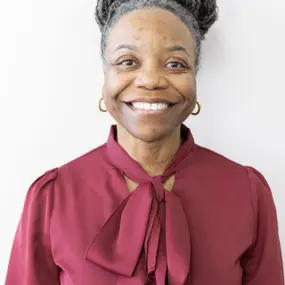
In this PHIG Impact Report, Christina Floyd, deputy public health director for the Detroit Health Department, discusses how the city has used PHIG funding to strengthen their community and workforce.

 Spotify
 Apple Podcasts
 Amazon Music
 Strong public health systems depend on trusted communication, a skilled workforce, and deep community connections. In this PHIG Impact Report, Christina Floyd, deputy public health director for the Detroit Health Department, talks about how PHIG funding has helped Detroit strengthen grant management, bring communications in-house, and transform outreach into a public health intervention. Floyd also discusses the department's growing internship and youth engagement programs, which are creating pathways into public health careers while building trust with the next generation.
This work is supported by funds made available from the Centers for Disease Control and Prevention (CDC) of the U.S. Department of Health and Human Services (HHS), National Center for STLT Public Health Infrastructure and Workforce, through OE22-2203: Strengthening U.S. Public Health Infrastructure, Workforce, and Data Systems grant. The contents are those of the author(s) and do not necessarily represent the official views of, nor an endorsement, by CDC/HHS, or the U.S. Government.
Public Health Infrastructure Grant: Resources & Impact - PHIG

JOHN SHEEHAN:
This is Public Health Review Morning Edition for Tuesday, August 4, 2026. I'm John Sheehan with news from the Association of State and Territorial Health Officials.
Strong public health systems depend on trusted communication, a skilled workforce, and deep community connections. In this PHIG Impact report, Christina Floyd, deputy public health director for the Detroit Health Department, talks about how PHIG funding has helped Detroit strengthen grant management, bring communications in-house, and transform outreach into a public health intervention. Floyd also discusses the department's growing internship and youth engagement programs, which are creating pathways into public health careers while building trust with the next generation. Christina Floyd, welcome to the show.
CHRISTINA FLOYD:
Thank you so much for having me, John.
SHEEHAN:
So, Christina, PHIG funding-- what has it helped the Detroit Public Health Department do?
FLOYD:
So, we have been able to, over the past several years, integrate a lot of our services really into the community, as well as be far better fiscal stewards of our funding that we receive across the board, and so being able to bring certain processes internally, especially with regards to grant management, but then also with our community health workers being more strategic and in deploying them out into the community more. So that's what PHIG has been allowing us to be able to do, along with some other special projects that we have in Hopper that I know we'll talk more about.
SHEEHAN:
Yeah, let's talk about one of them. Your communications department, your communications functions, you've started thinking of as less of marketing and more of an intervention tool. Talk about that.
FLOYD:
Definitely. So, like most public health departments, using reels to give community information has been the structure that we've used for quite some time. And so, now, as we look to have communication to be more intervention based by providing more hands-on approach of the staff who actually do the work, provide the information, give the guidance, but then also being able to be more community-driven, and so some targeted messaging for seniors, our youth, and so on. And so just like now with Cyclospora infections that have been going around, we've been truly able to enhance our communication messaging fairly quickly as well, deploying those messages out, but then also being able to speak to various groups, so community members, medical providers, and so on.
SHEEHAN:
Yeah, and you were able to bring communications professionals in house. What does that enable?
FLOYD:
That definitely provides us the ability to be more tailored to the community that we serve versus, and again, the time frame that it takes. And so, where we used to have to, you know, wait a few weeks to get certain things published, get campaigned. We're able to now structure those processes in house, develop those ourselves, and then, like I said, quickly deploy them. So, for instance, when we have emergencies, we don't have to wait for approvals, external approvals. We can have those in house and get those out really strategic, especially in the times of emergencies.
SHEEHAN:
Yeah, for sure. Another program that you've been able to implement has been an internship program. Tell us about that.
FLOYD:
So, the health department has always had interns and fellows and things like that, but with the PHIG funding, we've been able to structure a process where we process agreements now with a plethora of universities and academic affiliates, but then also being able to have paid internships. We know how important that really is, and especially for students who may not have the experience they need to be able to go into the workforce right after they finish graduating. This provides them with an opportunity to be able to get hands-on experience working in public health workforce, along with actually being able to get paid. Now, not all of our internships are paid, but we are able, through PHIG, to be able to provide some substance with not only our internships but our mayoral fellows that we get and some of our residents. So, we really were intentional about making sure that each year we have funding to support our interns. And on average, we have roughly between 30 or 40 interns within the health department a year.
SHEEHAN:
Wow!
FLOYD:
If not more.
SHEEHAN:
Yeah. Was there was there an example or a moment that really sort of exemplified the benefits of the program?
FLOYD:
I'm going to say yes. And so last year we had a few of our what's called youth affair shadows who came through the health department. Now even though those were not paid internships in a way; they were provided to be able to have experience throughout the entire department. Those individuals are now several of them. We had about I think a total of six or seven for that year. There were at least two that are now full-time staff members within the Health Department. One is a George Lewis Fellow in D.C., and so we're seeing how we are really getting a return on our investment. For it may not be the funding that's backing them up, but it's the time that we are able to take with them. Both of those shadow-ees were a part of my rotation last year, so it was great to be downstairs and hear their voices and go, "What are you doing here?" And they're like, "We work here now", and so it was really great to see them flourish and and go beyond the scope of just being you know shadow-ees or interns.
SHEEHAN:
That's really nice, and the interns help stand up a summer camp, right?
FLOYD:
So, this year, last year we had our first summer camp, and so it was very small. This year we have a huge production that is put on by our workforce director, Dr. Alicia Farr, and it is just simply amazing. And we have two interns that have worked with her, she turned it in from a one-week summer camp from last year to three weeks this year, and so there are three different areas of the city through last week, was the first week in July. We have our second cohort this week, and next week is our last cohort. And those interns really provide Dr. Farr the ability to be able to explore, be open with the kids because they're seven years old to 12, and so that's a really formative age group. And I think they have the ability to kind of connect with the kids as well, but then also show them that you know, hey, you could be just like us one day, and so I think they are really excited to be a part of this project.
SHEEHAN:
What have you heard from the young campers?
FLOYD:
They are amazing. Every week, I get to start off by talking to them for the first day, 10, 15 minutes of being able to just sit and listen to them and have them ask questions, and they're very excited to to know that they can be disease preventionists or find ways to look for infections. And so, when they realize that you know by washing their hands that they are preventing diseases, or by you know getting vaccinations, they're protecting their families. When they start to learn that, they kind of really soak that in, and so you see the enthusiasm in their faces, and so it's really exciting. And then when you ask them questions, and they answer them, or they're actually like jumping over each other trying to get the answer, it really speaks volumes as to what they do. And so I know we think of program evaluation, especially in public health, it's very stern of us do pre- and post-tests, but these are the really quantitative type responses that really resonate when we're doing these type of things because they're so young. But we can tell that they are really truly excited and they come back each day with a new excitement.
JOHN SHEEHAN:
Yeah, and that's a real investment in the community moving forward. Speaking of which, what do you hope to be the lasting impact of the funding, and how do you see those impacts playing out with your communication and workforce efforts?
FLOYD:
What we really hope to see is that the community will understand that it's not a matter of just being able to train our staff, or you know, provide well-being type workshops, or you know, being able to, you know, do certain things in the community. But what we're trying to see is that we're really growing the community to be able to be a part of the workforce as a whole. And so, starting from seven years old and up, but then also making sure that we're having our= homegrown interns, which’ll always be able to be a part of the workforce as we go through this. What we really want the community to understand is that we're here to stay. We understand that the health department has been through for the city of Detroit quite a bit over these past years, and so having that re-establishment of who we are, what we're doing, and why we're doing the work is really important. And we hope that the community sees that we are here to stay, and that they can truly trust the information that we provide to them, but also be, you know, a trusted messenger, and making sure that they can have a place to be able to be a part of as well, if they so choose to go into public health or any other genre or industry that connects to public health.
SHEEHAN:
Well, Christina Floyd, thanks so much.
FLOYD:
Thank you.
SHEEHAN:
Christina Floyd is deputy public health director for the Detroit Health Department.
This has been another PHIG Impact Report, part of Public Health Review Morning Edition. I'm John Sheehan for the Association of State and Territorial Health Officials.