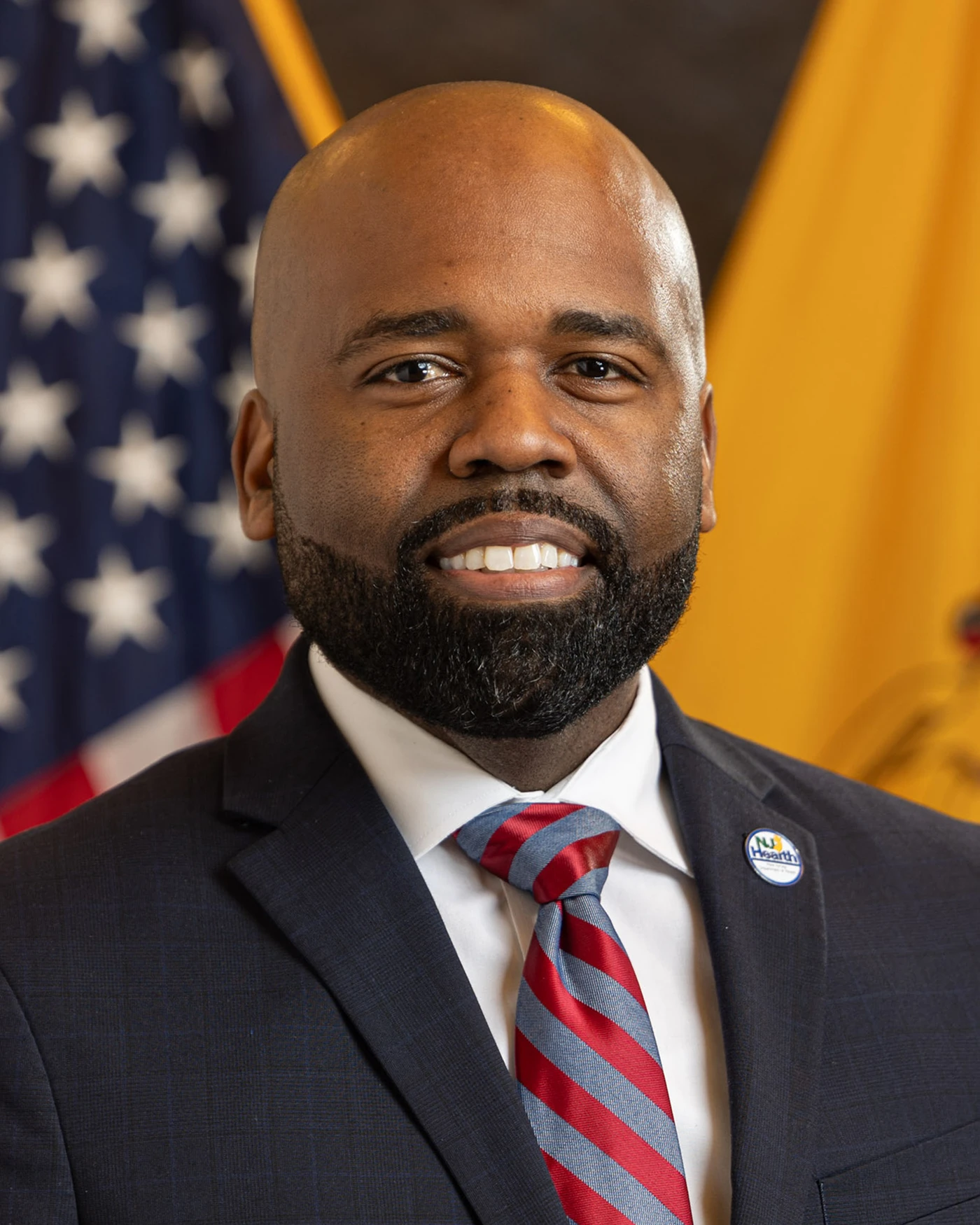
ASTHO member and New Jersey Department of Health Commissioner Raynard Washington discusses his plans to strengthen the state's public health infrastructure, pulling from his past experience in North Carolina and Philadelphia.

 Spotify
 Apple Podcasts
 Amazon Music
 As public health agencies face growing demands to prepare for emergencies while maintaining essential services, strong infrastructure, data, and community partnerships are more important than ever. ASTHO member and New Jersey Department of Health Commissioner Raynard Washington discusses his priorities for strengthening the state’s public health system, drawing on his experience leading public health efforts in Philadelphia and Mecklenburg County, North Carolina. He explains why sustained investment in public health infrastructure and the workforce is critical to preparing for the next emergency, and how data can help leaders set priorities, direct resources, and measure progress.
Demystifying Succession Planning | ASTHO

JOHN SHEEHAN:
This is Public Health Review Morning Edition for Monday, September 14, 2026. I'm John Sheehan with news from the Association of State and Territorial Health Officials.
As public health agencies face growing demands to prepare for emergencies while maintaining essential services, strong infrastructure, data, and community partnerships are more important than ever. Today, New Jersey Department of Health Commissioner and ASTHO member Dr. Raynard Washington discusses his priorities for strengthening the state's public health system, drawing on his experience leading public health efforts in Philadelphia and Mecklenburg County, North Carolina. He explains why sustained investment in public health infrastructure and the workforce is critical to preparing for the next emergency, and how data can help leaders set priorities, direct resources, and measure progress.
RAYNARD WASHINGTON:
I think it's really important where we are right now as a country that, as our federal public health system, it continues to be challenged. That states have strong leadership, and that as the role of state public health is even more critical now than it ever has been to ensure that we are protecting the health of residents. And so, very excited to be here in Jersey. The governor, Cheryl, is an inspirational leader, and it's an honor to be a part of her team as well.
SHEEHAN:
And you have an extensive background in counties like Philadelphia and Mecklenburg County, North Carolina. What about those experiences prepared you for New Jersey?
WASHINGTON:
Yeah, you know, I think you know obviously public health has had an interesting decade. You know, we've had a pandemic. We are dealing with continue to deal with the opiate epidemic and its impact across communities, and we have longstanding disparities that have occurred. And I think local public health is really at the front line of our response as a field to be able to ensure that people are getting what they need, and that we're able as a field to meet people where they are. And so, in Philadelphia, of course, it's a big city; lots happening there. And so my time there was really at the height of the opioid epidemic, and at that time we were still figuring out our local on the ground sort of response to harm reduction and how we were going to tackle what was what we were seeing as really accelerated deaths across the community, and then of course I spent most of the COVID pandemic in Charlotte, and then I think what's been most helpful actually was the period after the pandemic because after we got out of the height of the COVID-19 pandemic, it really was about trying to rebuild public health workforces and trying to ensure and plan for the future to make sure that we as a field were prepared for the next crisis that comes our way.
SHEEHAN:
And you also have a background as an epidemiologist. What role does data play in guiding your priorities?
WASHINGTON:
You know, data is at the foundation of everything we do. It is essential to being able to not just make decisions, but for us to actually know what's happening on the ground and what's happening in communities. We need information, and so you wouldn't it's like trying to cook for the first time without a recipe you wouldn't do that and so I think data for us is really essential it helps us understand what's happening and not just to understand what's happening but that information then we are able to use to set our priorities to figure out what's most important for us to be focusing on? How we invest our resources, and the other really essential part of data is actually helping us measure our progress. I remember when I was in Philadelphia, the police chief used to always say, "What gets measured gets done. Right, and so our ability to be able to demonstrate impact, what's working, what's not working, is also really important, and data is the key to us being able to do that.
SHEEHAN:
And turning now to your pandemic experience, what did you take away from that in terms of how you should approach preparedness, how you should approach workforce investments in preparation for the next emergency?
RAYNARD WASHINGTON:
Yeah, you know, I think the really important message about COVID and responding to the pandemic was that it's just a reminder of why it's so important that we are prepared prior to something happening. There's so much I can say about our lessons learned throughout the pandemic, but I would say that the most important one is that we have to invest in public health infrastructure before emergencies happen, because once the emergency is here, it's too late for us to do it, and so it's really essential that we invest on the front end to make sure that our systems are prepared for whatever the hazard might be, whether it be an infectious disease like COVID, or if it's smoke coming from across the world, or if it is an some other kind of natural disaster, it's super essential that we are prepared before emergencies happen. It's like a fire department, right? Like you can't create a fire department when the fire happens, right? You have to actually have the fire truck and the staff, and you have to have the technology to be able to deploy. And we treat public health the same way, right? It just like any other public safety or measure that we might have, we have to have that infrastructure in place before the emergency happens, so that we can respond. It's too late once the fire is here to try to sort of hire firemen and get a truck, and so we need to be thinking about public health in the same way. I think some of the federal investments in public health infrastructure have been very helpful to be able to allow us to be prepared in that way. The problem is we often go through these boom and bust sort of cycles with public health funding, where when there's an emergency, we get all this extra funding, and then when the emergency goes away, people forget and we start to lose funding, or the funding is short term. What I think all of us should have learned from the pandemic is that we have to continue to invest in infrastructure along the way.
SHEEHAN:
Yep. Relatedly, you've named access to care, affordable physical and mental health care, as a big priority. What does progress in that area look like to you?
WASHINGTON:
Yeah, you know, our healthcare system and our country is it continues to be more difficult than it is to navigate than it is easy to figure out. And so, I think one of the things that we are hopeful to do as a part of our tenure here is to make healthcare easier. We I recognize fully that that healthcare is not this the the only or the primary driver of health in our communities. Obviously, we know there's so much more that contributes to a person's ability to live a healthy life, including the context in which they live, their communities, their neighborhoods, what they have access to in those communities beyond healthcare. But it is essential if, as we think about it, that everyone has access to basic healthcare. You know, people should be able to see a doctor, not in a hospital. And so, one of the things that we're thinking about very intentionally is how to make sure that people in our communities are able to access just basic primary care where they live in their communities to try to keep folks one out of the hospital, but to give people as the best possible chance of taking control of their health and having all the information they need in terms of receiving preventive care and having early diagnosis when they have chronic illness. And so, we are thinking a lot about sort of where we have opportunities as a state to again make sure that our residents are able to access that care. And look, what's happening with HR one and federal policy, our healthcare systems are going to receive are going to be at a huge loss, and the state cannot fill the hole that's being created by federal policy. But certainly, we think that our ability to be able to again try to reduce the cost in the system by getting people healthier is one of those ways that we can help prepare for what's coming with again the changes in federal policy.
SHEEHAN:
Yeah, what motivates you in your new role, and what advice do you have for other public health officials who are listening now?
WASHINGTON:
Yeah, I mean, so for me, my life has always been motivation, and so as I reflect on even my confirmation hearing at the at the very top of my remarks, you know, it is my own experiences that have really sort of drive me to. It's my personal family, my own life experiences have really as I see, you know that some people have a chance to be healthy and some people don't, right? And there, there are opportunities that that folks don't have, and the ability to be able to leverage both policy and program and state, federal, and local resources to be able to make it possible for everyone to be healthy is really my north star. As we think about sort of what public health is about, how do we make sure we protect people from threats that that they may not see or know are there, and how do we make sure people have a chance again to just live a healthy life? And so that's my north star, and I try to sort of continue to always lead with that. My advice to other public health leaders is to keep our mission at their core. There's you know public health has gotten into a lot of controversy lately, and sometimes it gets very, very difficult to navigate some of the controversy that that none of us really desire to be a part of. But I think if we keep our mission at our core and keep that as our central focus, and do the right thing. I think that's essentially what my advice would be to folks who are in roles like mine, but also folks who are working in agencies across the country.
SHEEHAN:
So, Dr. Washington, switching gears here, New Jersey as well as the rest of the country experienced a lot of extreme heat events over the summer. What was the New Jersey Department of Health's response?
RAYNARD
Yeah, so you know, I think as many of our communities across the country are experiencing extreme weather events, it's really important that we continue to have all-hazards preparedness at the forefront of our planning. You know, it is really about the partnerships across the whole ecosystem. System of agencies who support families and individuals to ensure that we are again prepared. Obviously, communication is at the core of what we do when it comes to emergencies, and so ensuring that we are getting timely information out to individuals, both statewide, but really on the ground and in communities. We have a wonderful network of municipalities and counties who work on the front lines to ensure that our residents have resources, so that we have cooling centers and that there's infrastructure to be able to ensure that people are kept safe in these in these kinds of events. And so we continue to learn from our experiences again and plan accordingly to make sure that all of our residents know when we're having extreme weather events, and then that there are resources available on the ground to help people stay safe.
SHEEHAN:
And do we know what kinds of factors are contributing to the rise in the occurrence of these extreme heat events?
WASHINGTON:
Well, I think obviously we know climate change is clearly driving more extreme weather events across our country, and for communities that have historically not had certain types of weather patterns, it' certainly is a shift in behavior when these kinds of extreme events happen. People are accustomed to for example being at the beach in the summertime, right, and staying outside all day long, and just not taking not accustomed to sort of taking as many precautions, but when the weather is more extreme, of course, people have to take those precautions. Which is why we are really trying to over communicate to residents to make sure that people understand and know, you know, what they can do to keep themselves safe while we're having these extreme events, and it's you know it's tough. People, you know, have to make shifts and change their hydration patterns, and there are some folks as well who are in circumstances, for example, they might have occupational hazards, like they work outside, right? They have to again be prepared, and so just getting people who may not be accustomed and trying to change behaviors is a really important part of again us being prepared to make sure that our residents can stay safe.
SHEEHAN:
What are some other strategies that you're using to reduce the effects?
WASHINGTON:
Yeah, you know, I think you know again, I would just not to be repetitive, but I think messaging is the most important thing we can do. Right, is making sure people know when we're experiencing extreme weather events that they can prepare and plan ahead, and making sure folks just are aware that folks individuals have heat plans. So you know, you know, for your own family that you know when extreme weather happens, here is how we're going to respond. Our governor convened multiple press conferences during the heat extreme heat we had earlier this summer are really to just communicate some basic tools to residents about how to help us as a state navigate through it. You know, having folks reduce their use of energy, right, is an important step. Making sure people check on their neighbors and check on folks that they don't know, as well as you know checking on you know, folks who might be in a park or public place that might not look well, and not leaving kids in cars, and not leaving pets in cars. So really, I think messaging and communication is super essential to our ability to be able to navigate through. And then, as I mentioned earlier, having that infrastructure on the ground to make sure that resources are there for folks who need it, like cooling centers, air conditioners, and fans are really also essential to making sure individuals are safe.
SHEEHAN:
Yep. Any success stories or lessons learned that are specific to New Jersey as you know the densest populated state?
WASHINGTON:
Yeah. I mean, I think the biggest thing you know one of the things that we have really tried to ensure that we are starting And this administration off with this is partnership. I think it's essential that our agencies are working together. You know, health is everybody's sort of challenge, I would say. And so, working with our Department of Human Services and our Department of Children and Family, as well as our other state agencies like agriculture, even to make sure that we are working across the entire whole of government to ensure that all of our various constituencies are aware of this really what they can do to keep themselves safe and healthy, and so I think for sure for us the partnership with across state agencies to really have a unified response to make sure we're not missing any constituency is super important.
SHEEHAN:
Dr. Raynard Washington is the commissioner of the New Jersey Department of Health and an ASTHO member.
Septic Smart Week is an annual event that occurs the third week of September. Communities, national organizations, local groups, and state governments can bring attention to the importance of caring for and maintaining septic systems by organizing homeowner education events, sponsoring workshops, or sharing social media from the Septic Smart program. Learn more at the link in the show notes.
The public health workforce is experiencing ongoing retirements and staff turnover challenges, often outside of agency control. Rather than reactively filling. Vacancies. Agencies are turning to succession planning as a proactive strategy to develop future leaders and retain institutional knowledge. This long-term transparent approach strengthens agency culture and builds resilience. The brief demystifying succession planning explains succession planning and provides resources to help agencies implement this vital retention strategy. Find a link in the show notes.
This has been Public Health Review Morning Edition. I'm John Sheehan for the Association of State and Territorial Health Officials.