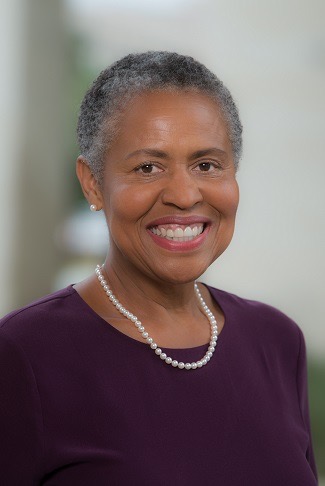
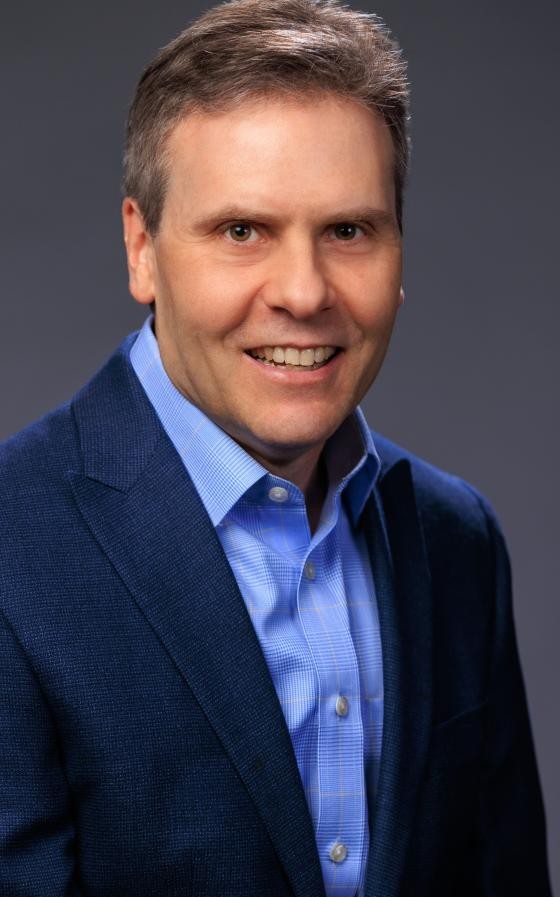
In today's episode, Lawrence Greenblatt, an ASTHO member and state health director of the North Carolina Department of Health and Human Services, discusses the state's approach to healthy aging. Later, hear from Jewel Mullen, an ASTHO alum and associate professor at Dell Medical School, about the importance of boundary-spanning leadership in addressing public health challenges.

 Spotify
 Apple Podcasts
 Amazon Music
 Healthy aging means creating the conditions that help people remain healthy, connected, independent, and engaged throughout the life course. September is Healthy Aging Month, and today Lawrence Greenblatt, state health director and chief medical officer for the North Carolina Department of Health and Human Services and ASTHO member, discusses North Carolina’s approach to healthy aging, brain health, and caregiving. Later we’ll hear from Jewel Mullen, associate professor at Dell Medical School and ASTHO alum, about the importance of boundary-spanning leadership in addressing complex public health challenges.
ASTHO Telehealth Project Initiation and Scoping Assessment | ASTHO

JOHN SHEEHAN:
This is Public Health Review Morning Edition for Thursday, September 24, 2026. I'm John Sheehan with news from the Association of State and Territorial Health Officials.
Healthy aging means creating the conditions that help people remain healthy, connected, independent, and engaged throughout the life course. September is Healthy Aging Month, and today, Larry Greenblatt, state health director, chief medical officer, and state health officer for the North Carolina Department of Health and Human Services, and an ASTHO member, discusses North Carolina's approach to healthy aging, brain health, and caregiving. Later, we'll hear from Dr. Jewel Mullen, associate professor at Dell Medical School, about the importance of boundary-spanning leadership in addressing complex public health challenges.
First, here's Larry Greenblatt.
LAWRENCE GREENBLATT:
I believe healthy aging means supporting individuals in maintaining physical, cognitive, and emotional well-being as they grow older, so all can remain independent, engaged, and connected to their families and communities. It not only means the absence or optimal management of disease, but also includes having safe environments, the choice to age in place, availability of social supports, access to preventive care, and opportunities to thrive. Healthy aging is important to public health in North Carolina because our older adult population is growing rapidly, due in part to our popularity as a retirement destination. With that comes the necessities mentioned above, as well as needs related to chronic disease, dementia, caregiving, and long-term services and supports. By focusing on healthy aging throughout life, we can reduce potentially preventable health issues, support caregivers, strengthen community resilience, and improve the quality of life for older adults across our diverse state. Healthy aging is not something that begins at 65. It's the result of conditions we create throughout the life course.
SHEEHAN:
Sure. And what do you see as public health's role in advancing healthy aging and related initiatives similar to what you talked about?
GREENBLATT:
Aging and brain health should be treated as public health priorities at both the state and national level. As people age, many face chronic conditions, while declining function and cognitive changes place growing pressure on the unpaid caregivers who support them. Public health can make a real difference, just as it did with tobacco cessation, and education is the key. We have to remember that what's good for the heart is good for the brain. First, public health can strengthen cross-sector collaboration by working more closely with aging services, health care systems, other state departments, and community-based organizations. This coordination is essential for addressing the needs of older adults, especially in rural areas where resources may be limited. Second, public health can play a leading role in expanding evidence-based programs that support dementia prevention, fall prevention, cognitive health, and caregiver well-being. By integrating these programs into existing public health infrastructure, we can reach more older adults and build consistency across the state. Third, there is a critical opportunity to improve data sharing. Better data on cognitive health, caregiver needs, social isolation, and disparities will help the state target interventions more effectively and ensure resources reach the communities with the greatest need. Fourth, public health can elevate equity by ensuring healthy aging effects are culturally responsive and accessible to historically underserved populations, including rural communities, minority populations, and those with limited access to health care or transportation. Public health in North Carolina can help operationalize our all-ages, all-stages multi-sector plan on aging framework by promoting policies and programs that support individuals throughout the lifespan. This includes creating environments where people of all ages can thrive, supporting caregivers, and ensuring that healthy aging is integrated into all aspects of public health planning and practice. Public health can move us from treating aging as a downstream service issue to treating it as an upstream population health strategy.
SHEEHAN:
Larry, this year your team participated in ASTHO's virtual Brain Health and Caregiving Learning Community. What were the big takeaways?
GREENBLATT:
Well, one of the most valuable takeaways for our team was the importance of integrating brain health into broader public health strategies. The sessions reinforced how cognitive health, caregiver support, and chronic disease prevention are deeply interconnected, especially for aging populations in North Carolina. Our team gained practical insights into evidence-based approaches for supporting caregivers, including strengthening coordination across state and local partners. We also benefited from learning how other states are building cross-sector partnerships, which helped us identify opportunities to enhance our own collaboration with community organizations, healthcare providers, and aging services here in North Carolina. Brain health is not only about what happens in the brain; it's about the conditions around a person that allow them to remain healthy, connected, and engaged.
SHEEHAN:
And lastly, Larry, what is North Carolina doing to, you know, keep building on the momentum around healthy aging, around brain health, and caregiving?
GREENBLATT:
Supporting the Dementia Capable North Carolina initiative will help sustain the momentum North Carolina has built since September 2025 around healthy aging, brain health, and caregiving. The Dementia Capable North Carolina is focusing its work on four key areas through dedicated work groups, one of which I will chair: brain health and diagnosis, dementia capable workforce, caregiver well-being, policy, and communication. We are trying to modernize dementia policy, unify strategy and metrics, normalize early detection, support workforce growth, and prioritize caregiver well-being. The goal is not to create a separate system for older adults. It's to build systems and communities that help people stay healthy, connected, and engaged throughout the life course.
SHEEHAN:
Larry Greenblatt is state health director, chief medical officer, and state health officer for the North Carolina Department of Health and Human Services, and an ASTHO member.
Now, let's hear from Dr. Jewel Mullen, associate professor at Dell Medical School.
JEWEL MULLEN:
One thing that we've known for a long time is that in the U.S., society continues to age very dramatically, and it's estimated that over 40% of Americans over the age of 55 will eventually develop dementia. Couple that with the reality that the United States population is expected to have the number of dementia cases double by 2060. These are concerns for all of us, and a place where public health can play an essential role, particularly if we collaborate well with others who also must address these issues.
SHEEHAN:
Yeah, and so, let's focus on that. No one agency can really tackle healthy aging alone or brain health alone. What is the importance of leadership in sort of motivating partners?
MULLEN:
A few things: I really always go to trying to help people think about being a leader as being the visionary, not just the person showing up with their own vision, but the person who's able to sit with others and create a shared vision. There are so many issues that touch healthy aging, public health, and brain health-that no one group can do it together. We need the expertise and resources of a number of entities. We don't all come with these same incentives, resources, or expertise, and we don't all have the same authorities. What we do have is a desire to impact the issue in some way. Brain health and healthy aging are life course issues, so addressing them doesn't just mean coming together to think about adults at one point in time or one particular issue that contributes to aging well or losing one's cognitive abilities. So we need people coming together who can work across lifespans and who can touch the various sectors that impact people's well-being.
SHEEHAN:
And ASTHO's Healthy Aging and Older Adult Health team has worked alongside state agencies and other health agencies to build partnerships, to build leadership capacity, and really focus on integrating brain health. Why is that investment so important moving forward?
MULLEN:
This is a really important time and a really key opportunity for ASTHO and public health to be involved in this work. I mean, let's just think about how much people are talking about what is the future of public health. How do individuals and communities think about public health right now? Are we even relevant? What does public health have to offer at a time when so many people are looking to technical solutions or hearing public health, but still thinking about health care? We in public health know the roles that we play-not just health promotion and disease prevention, but really thinking in a broad and holistic way about how people can address the risk factors that we know contribute to disease. When it comes to brain health and healthy aging, then we have increasing refinement of the research that tells us that there really are modifiable risk factors; the risk factors for brain health that are very familiar to us because we think about them when we think about diseases such as heart disease or cancer, but it's still a transition for us to consider those risk factors as they relate to the brain and to aging. So, for the future of public health, another thing to recall is that there's a rightful move in science to think about how to be precise in addressing those factors. People talk about precision public health. We need to ask ourselves how we contribute to that thinking, how we make sure there are some guardrails around the application of that thinking, when we in public health also know that scientific advances don't necessarily improve the well-being of all people equitably; a lot of that work entails something that we've heard talk about some over the past decade or so, and that relates to, for example, polygenic risk scores. So how we look at the biologic compositions and someone's gene pool, but think about how social and environmental issues actually influence disease development and expression, so that we can pinpoint who needs interventions. Now I know I'm saying a lot, but that's because the a lot is the way in which I want public health to be thinking about how we participate going into the future. We have standard approaches that we ought not abandon, but we need to be able to adapt them into the ways in which others in industry, in medicine, in other biosciences, in the private sector, and in private equity are also claiming a stake in addressing aging and brain health. That takes a lot. It takes some new skill sets, but it's an important way for us to consider our future, so that we double down on what we do well, but even think about how we do that better and in a collaborative way.
SHEEHAN:
And lastly, Dr. Mullen, you mentioned earlier how influence isn't necessarily tied to authority. For someone who wants to, you know, create change, affect change in their organization, what's a lesson from boundary spanning leadership that they can take away?
MULLEN:
You know, it's really interesting. You know, I've spent a lot of time as a leader telling people that just because I'm a leader doesn't mean I'm in charge. It also doesn't mean I have all the answers. Some people hear boundary spanning leadership, and they say nice words. What's different between that and cross-sector collaboration or visionary leadership, community engagement, and other terms- coordination, collaboration- and, at some points, I'm inclined to say maybe not a whole lot, when we consider what we want to affect, which is to get people to collaborate more, to work across their disciplines within organizations, work across their disciplines, across different organizations, but to also collaborate up and down hierarchies in a certain way. That's not new, but if we think about boundary spanning leadership with those words, then what I want people to consider first of all is that the way they show up can eliminate the boundaries. The boundaries are sometimes institutional, but they're also in our heads if we're not predisposed to put down some of what our vision is, to think about how to create a collective vision. No one entity can do this work alone. The other thing that I think is really important to remember is that as we work across our different expertise and resources and authorities, we have to remember who we're working on behalf of, and that's people and communities. That's population well-being. One thing that I believe that public health brings more so than many other organizations is that we're closer to those people and those organizations. So part of what we can do working with others is really help be a glue, a translator, but also a connector, as we humbly learn more about them. And then the last thing that I'll say is that in doing this work in boundary spanning, consider that whether it's across organizations and/or within our organizations, we have the opportunity. Opportunity to create a culture that is a lasting one, where people are inspired to work together, feel respected, or, as some might say, feel seen and heard, where we have that chance to engage communities and to measure and document the impact of our collective work; all of that creates legacy. It's a legacy that we might not be around to see, because public health progress is oftentimes so incremental. But if we can enter this knowing that we are legacy-building on behalf of communities, on behalf of the people with whom we've created a shared vision, then we ought to believe with some confidence that over time we will have left an impact.
SHEEHAN:
Dr. Jewel Mullen is an associate professor at Dell Medical School. Earlier, we heard from Larry Greenblatt, state health director, chief medical officer, and state health officer for the North Carolina Department of Health and Human Services, and an ASTHO member.
ASTHO is currently accepting applications for participation in the third cohort of the Leadership Exchange for Adolescent Health Promotion Plus Community of Practice, which will support education and health agencies to work together to improve health education, connect schools to services, and support safe and supportive school environments. Participants will develop state-level action plans that utilize evidence-based practices in schools to improve adolescent health. Find more at the link in the show notes.
This has been Public Health Review Morning Edition. I'm John Sheehan for the Association of State and Territorial Health Officials.