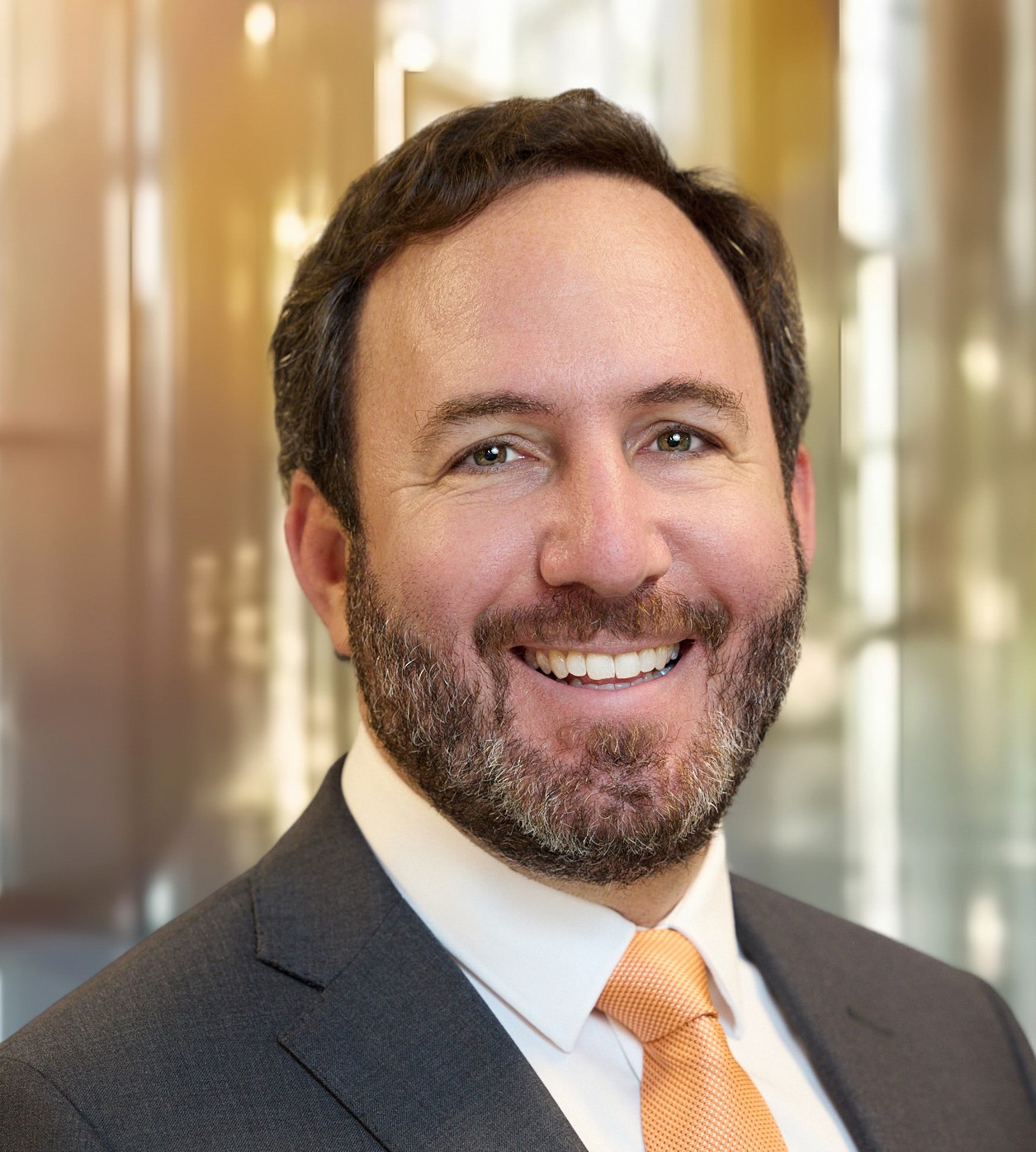
ASTHO CEO, Dr. Joseph Kanter, and Vice President for Government Affairs, Jeffrey Ekoma, reflect on the effects of 9/11 and subsequent health emergencies on creating our modern public health preparedness system.

 Spotify
 Apple Podcasts
 Amazon Music
 The public health preparedness system in the United States looks fundamentally different than it did before 9/11, shaped by the attacks, the anthrax events that followed, Hurricane Katrina, and subsequent public health emergencies. ASTHO CEO Dr. Joseph Kanter and Vice President for Government Affairs, Jeffrey Ekoma, reflect on how 9/11 transformed the nation’s approach to emergency preparedness, including the shift from a focus on bioterrorism toward an all-hazards framework and the development of stronger coordination, surveillance, laboratory, workforce, and medical countermeasure capabilities.

JOHN SHEEHAN:
This is Public Health Review Morning Edition for Friday, September 11, 2026. I'm John Sheehan for the Association of State and Territorial Health Officials, and this is part two of a special series commemorating 9/11, 25 years later.
The public health preparedness system in the United States looks fundamentally different than it did before 9/11, shaped by the attacks, the anthrax events that followed, Hurricane Katrina, and subsequent public health emergencies. Today, ASTHO CEO Dr. Joseph Kanter and Vice President for Government Affairs Jeffrey Ekoma reflect on how 9/11 transformed the nation's approach to emergency preparedness, including the shift from a focus on bioterrorism toward an all-hazards framework and the development of stronger coordination, surveillance, laboratory, workforce, and medical countermeasure capabilities.
First, we'll hear from Dr. Joseph Kanter. Dr. Kanter, we're commemorating the 25th anniversary of 9/11. Looking back over these two and a half decades. How has public health preparedness changed?
JOSEPH KANTER:
It's a great question, and it's a good time to be reflecting on that. You know, first I would commemorate and acknowledge the nearly 3,000 lives that were lost in 9/11, and I would like to think that we're better at emergency preparedness after their sacrifice.
I tend to think of 9/11 in conjunction with Hurricane Katrina five years later, in in really transforming the public health preparedness framework that we use, those two events, and really the anthrax event one month after 9/11 as well, really led to a complete rehash of how we organize around public health, what type of resources we marshal, how we coordinate. You know, prior to 9/11, it was disjointed, largely the auspices of law enforcement agencies, and public health did not have a prominent role. We didn't really have a concept of the all hazards approach, and following you know those tragic events, and and then Hurricane Katrina, five years later, we got the passage of the Pandemic and All Hazards Preparedness Act (PAPA) We got a complete reorganization of the federal emergency response infrastructure, and we got a coordinated program to help states and locals organize themselves, and completely changed how we think about emergency preparedness in this country. So those two events really transformed what emergency preparedness is for public health and led to a much more modern and sophisticated approach.
SHEEHAN:
Certainly, and as we all know, we've continued to face challenges over the years. What do you see as the next horizon for preparedness?
KANTER:
I think it's continuing to be more interconnected, and we saw in the pandemic the challenges of lack of effective connectivity- you know everything from laboratories faxing test results into public health departments in an antiquated fashion to hospitals not being as connected, at least at the onset of the pandemic, to preparedness coordinators as we would have liked, to some disjointed communications between local states and the federal government. A lot of that got improved through the pandemic, you know, by necessity. Going forward, I think the next horizon for us is to continue to work on interconnectivity, and we have tools now with AI and the data space that we just didn't have even five years ago. So really, the sky is a limit in what we can do to to become better connected and ensure that communications at all levels in a pandemic are smooth, efficient, and certainly not the weak link in response.
SHEEHAN:
Yeah, and you know, looking back over the sort of the breadth of these emergencies, they've been you know large in scale, hugely different in their challenges. What lessons have you learned as a public health leader grappling with change and with these emergencies?
KANTER:
I think the one thing that I've taken away personally is the importance of community and and healthy communities. In my medical training, coincided with the aftermath of Hurricane Katrina and and the efforts to rebuild in New Orleans, and and I think back to my experiences there and what I've taken away, and you can't underestimate how important it is to support communities and to do all you can to ensure communities are as healthy as they possibly can be. Of all the public health emergencies I've been a part of, one constant in retrospect is that vulnerable communities are vulnerable, and it doesn't matter what the hazard is. Vulnerable communities will fare worse, and part of our preparedness, a big part of our preparedness, needs to be acknowledging that and exerting effort where we can to one decrease that vulnerability where it's possible, and two acknowledge and account for it in our preparedness plans. I think you know looking ahead, you know any any dollar spent improving the health of a community is a is a dollar well spent in my mind,
SHEEHAN:
And you know, with that in mind, how do you, as a public health leader, and other you know state officials and health leaders, how do you continue to push for support for preparedness nationally?
KANTER:
Well, we do need resources. We need resources in federal coordination. It's long overdue for Congress to reauthorize fully reauthorize and fund the Pandemic and All Hazards Preparedness Act (PAPA) That's been a need for some time now, and will continue to be a need. So that's part of the agenda going forward. States and locals need resources. They need federal resources, and they need coordination to do this job well. And certainly, the federal agencies need appropriate resources. You know, beyond that, I think we try and support at ASTHO where we can, in many ways, through coordination, through peer networks like the public health preparedness directors. We make sure that emergency response preparedness leaders throughout the country are connected to each other, have open lines of communication, can share stories, can talk frankly and confidentially with each other about what's working well, what's not, what threats do they come down. That's really important. We try to ensure that success stories are shared widely, and on the flip side, we try and make sure that when there are examples that the rest of the country can learn from, that that experience and sharing takes place. No one jurisdiction, no no state or local public health department should feel like they're on their own in this type of work. And one of our jobs is to make sure that those lines of communication are robust.
SHEEHAN:
Dr. Joseph Kanter is ASTHO's CEO.
Now let's hear from Jeffrey Ekoma, ASTHO's vice president for government affairs. So, on on this sobering memorial, how did 9/11 change the way that Congress and policymakers think about emergencies and preparedness?
JEFFREY EKOMA:
Yeah, you know, 9/11 was a remarkable tragedy that truly will never be forgotten. You know, it truly shook our nation and profoundly changed many aspects of our society that we still see today. One of the lasting impacts was the fundamental change in how Congress thought about public health preparedness. If you think back, there were several anthrax-related attacks that followed 9/11 and truly demonstrated that public health capacity was also national security capacity. Congress also provided significant support, public health preparedness, and truly sought to transition over time from solely bioterrorism to an all-hazards preparedness approach, where things such as surveillance, laboratories, workforce, emergency operations, communications, medical countermeasures, healthcare surge capacity, and the coordination that exists between federal, state, territorial, and local public health was at the forefront.
SHEEHAN:
And can you give us a sense of sort of the dangers of or the implications of of preparedness when capabilities are put at risk when federal funding is either delayed or lapses?
EKOMA:
Yeah, there are really lots of things that are at risk with a lack of stability in public health preparedness. For one, workforce, you know, funding for preparedness supports many folks within health departments, spanning epidemiologists and emergency planners and communication staff and other personnel are responsible for response. You know, you think about disease detection, surveillance, and lab capacity. Preparedness funding supports maintenance of systems that allow health departments to identify and respond to known and unknown threats. And you can also think of things such as emergency operations or coordination are also challenged as well, and the ability to plan logistics necessary to receive, distribute, and dispense medical countermeasures during public health emergencies are also severely impacted.
SHEEHAN:
Yeah, and let's take a minute to remember or remind ourselves. About the PAHPA, what is that act, and why is it so important?
EKOMA:
Yeah, I mean I can't overstate how incredibly important PAHPA is of public health preparedness. Now, Congress didn't build the preparedness system that we know today through just one law. You know, Congress began building state, territorial, and local preparedness capacity through legislation such as the 2002 Bioterrorism Preparedness Act. Then you have Project Bio Shield that was created in 2004, which strengthened medical countermeasures preparedness. Then came PAHPA or the Pandemic Enhanced Preparedness Act, which brought previous efforts in bioterrorism into a broader all-hazards preparedness framework in 2006, Congress then strengthened and reauthorized PAHPA in 2013 and in 2019. Now, although the current authorization for PAHPA expired in 2023, Congress continues to fund its programs, and we're incredibly optimistic about potential other state of activity to address another reauthorization of PAHPA. Hopefully, later this year, you know, reauthorizing PAHPA provides an opportunity for Congress to strengthen our nation's health security, strengthen existing programs, while also adapting and improving them to be able to respond to new and future challenges.
SHEEHAN:
And along those lines, as we you know remember what happened on 9/11, what should policymakers and legislators be thinking about as they look to the future of preparedness, and what should they be committing to?
EKOMA:
Yeah, you know, preparedness cannot begin when an emergency does. Therefore, it's really imperative that we proactively fund and sustain investments in preparedness before an emergency, and not just in response to an emergency. It's also important that we continue efforts to modernize and invest in interoperable public health data systems, lab capacity, and disease surveillance. It would be really great if Congress reauthorizes PAHPA. Also, reiterating a really important point from ASPR is that preparedness is at its strongest when complementary capabilities exist at all levels of government, with state, territorial, local, and tribal jurisdictions on the forefront. Preparedness involves taking a proactive approach that considers all key stakeholders with response to an emergency.
SHEEHAN:
Any final thoughts?
EKOMA:
You know, every time I think about 9/11, you know, personally, it's actually my sister, my little sister's birthday. So, 9/11 brings a lot of sadness, but also joy in our family. You know, it's hard not to think about the lives that were lost on 9/11, where I was on 9/11, and I'm hopeful that you know this opportunity for reflection will allow us to continue to think about ways that we continue to protect our interests on our homeland.
SHEEHAN:
Jeffrey Ekoma is ASTHO's vice president for government affairs. Earlier, we heard from ASTHO's CEO, Dr. Joseph Kanter.
This has been a special two-part series commemorating 9/11 on this 25th anniversary.
You can find reflections on the role of public health preparedness in the new ASTHO blog, how 9/11 shaped the future of public health preparedness, a Q&A with Meredith Alan, vice president of Health Security. The link is in the show notes.
This has been Public Health Review Morning Edition. I'm John Sheehan for the Association of State and Territorial Health Officials.