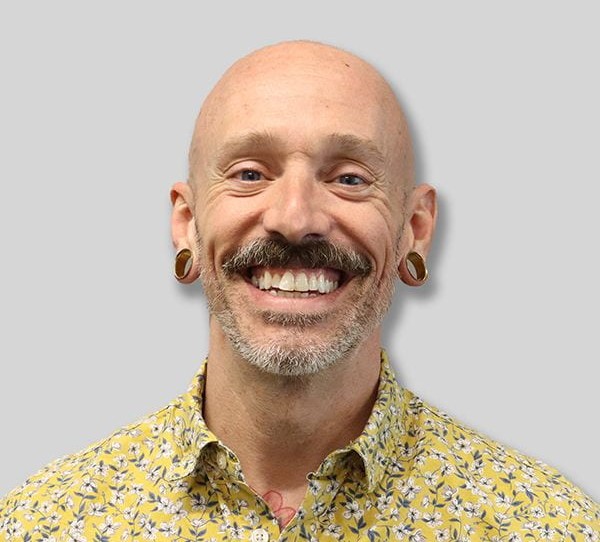
On today's episode, Thomas Dobbs from the University of Mississippi discusses syphilis in the U.S., from the use of antibiotics and public health interventions to the rising case rates over the past decade. Later, Joshua O’Neal from the Southeast STD/HIV Prevention Training Center discusses how prevention training centers are helping health departments and local providers respond to the crisis.

 Spotify
 Apple Podcasts
 Amazon Music
 Syphilis cases are rising at alarming rates across the American South, especially congenital syphilis, which can be passed from pregnant mothers to their babies. Thomas Dobbs, dean of the John D. Bower School of Population Health at the University of Mississippi, traces the history of syphilis in the United States, from the dramatic declines made possible by antibiotics and public health interventions to the sharp resurgence seen over the last decade. He explains how gaps in prenatal care, rural health care deserts, insurance barriers, medication shortages, and the erosion of public health infrastructure have combined to fuel rising infections, particularly among pregnant women and newborns. Later, Joshua O’Neal, program director, Southeast STD/HIV Prevention Training Center, discusses how prevention training centers across the country are helping state health departments and local providers respond to the crisis. O’Neal describes the hands-on work being done to strengthen syphilis prevention and improve access to testing and treatment, like mobile testing programs, provider education, and statewide collaboration efforts. He also shares insights from the “Syphilis in the South” summit, where clinicians, public health leaders, and outreach workers came together to tackle one of the region’s most urgent public health challenges.
Sustaining Services and Outbreak Response for HIV, Viral Hepatitis, STIs, and TB | ASTHO

JOHN SHEEHAN:
This is Public Health Review Morning Edition for Friday, June 12, 2026. I'm John Sheehan for the Association of State and Territorial Health Officials.
Today, a special long-form bonus episode about the syphilis crisis in the South. Syphilis cases are rising at alarming rates across the American South, especially congenital syphilis, which can be passed from pregnant mothers to their babies. Dr. Thomas Dobbs, dean of the John D. Bower School of Population Health at the University of Mississippi, will trace the history of syphilis in the United States, from the dramatic declines made possible by antibiotics and public health interventions to the sharp resurgence seen over the last decade. Later, Joshua O'Neal, program director for the Southeast STD/HIV Prevention Training Center, will discuss how prevention training centers across the country are helping state health departments and local providers respond to the crisis. He'll also share insights from the Syphilis in the South Summit, where clinicians, public health leaders, and outreach workers came together to tackle one of the region's most urgent public health challenges. First, here's Dr. Thomas Dobbs.
So, Thomas, what have been the trends in syphilis going back 20-30 years?
THOMAS DOBBS:
So, you know, after World War II, we had a pretty remarkable number of syphilis cases in the United States, you know, related to the war. But since that time, especially with the discovery of penicillin and antibiotics, we've been able to effectively control syphilis in the population. You know, using traditional public health measures, right? Making sure that we diagnose cases, we treat adequately, and make sure that contacts and other infected folks are treated, and so, we had done really quite well going into the '90s. In the early 2000s, we had a bit of a surge, and then we had sort of like a redoubling of our public health effort. But what we've seen over the past decade has really been a frightening and alarming increase in the number of syphilis cases, not only in, you know, young adults or in older adults too, to be honest, but also in pregnant women, and then that translates into the babies, too.
SHEEHAN:
Yeah, congenital syphilis is passed down to babies.
DOBBS:
Yeah, and what we know is that if a pregnant woman actually has syphilis in pregnancy, right, or if she catches it just before or during pregnancy, the chances of her passing it along right within that pregnancy to the baby is very high, right? It's going to be, you know, the majority of cases. And the thing that's really kind of, kind of crazy about the syphilis situation is if we can find it early enough, and we, you know, can find the women who need to be treated, most of the time a single shot of penicillin can cure the mom and protect the pregnancy.
SHEEHAN:
My goodness, that is heartbreaking. So, what is going on here? That is, we're seeing this rise, particularly with in babies, I mean, you just mentioned how treatable it is. So, what's going on?
DOBBS:
Yeah, so, there's a lot of factors that are sort of overlapping, and if we look at what's happening within the lives of women who are pregnant right now, we see that, you know, there's a lot of syphilis out there, right? So, the risk of exposure is going to be high, and obviously, this is reproductive age people, right, who are going to be having sexual relationships. And so, we're seeing a risk of transmission, but what we're also seeing are a couple of points of failure that are very key. One of the points of failure that's really worrisome is this: when the health care context, right, is women not being tested, right? Well, not accessing care is going to be one of the main reasons we're not accessing care early enough, because of, you know, barriers that may exist, and then also to the health system, the doctors, the NPS, the whole system, not doing the test right. So, if we don't do the test, we can't identify it, and that's really unfortunate, even though testing has been recommended universally in pregnancy at the first trimester, and then in certain areas at the third trimester, and at birth. You know, we do know that in many places it's not routine to check women for syphilis, and we miss a lot of infections that way.
SHEEHAN:
And so, what is preventing these pregnant women from getting that care?
DOBBS:
Yeah, you know, it's going to vary a lot by state and locality. I mean, some of it's going to be, like in places like Mississippi in the South and other rural areas, we have these care deserts, right? Health care deserts, OB deserts, and that's going to be a big contributor because it's hard to get into prenatal care. So, that's certainly going to be one of the barriers. The other barrier may be financial, you know, in a lot of states where women don't have insurance routinely, there's a procedure to get on on insurance, right? Even though pretty much every state will provide some sort of support, maybe Medicaid eligibility for for women who are pregnant, we've seen here. That there are so many procedural barriers and even time gaps that it's almost impossible to get into prenatal care in the first trimester if you don't have insurance when you first, you know, identify the pregnancy. So, those are some of the procedural barriers. And then we know that Bicillin has been in shortage and it's been insanely expensive, even though it's a generic medication that's been around for decades, because of the way that our, you know, our medication production environment is, and you know, sort of monopolies of production. If, you know, a treatment that costs, you know, probably just a, you know, a few cents, a quarter, whatever, is going to cost $1,000, hundreds of dollars, and so it's not accessible, and it's not easy for physicians to keep it in the office. And then we've seen barriers specifically where the cost of the medication is not covered by insurance. And so, anyway, those normal sort of health system barriers that are really problematic. But one of the things that's really probably in my mind, driving this more than anything, is the degradation of public health capabilities, and I think this is going to be, you know, the thing that most of our listeners are really sort of focused on. There is a very specific type of professional called a disease investigation specialist, or a DIS, and these individuals are experts at getting into the community, identifying people who've been exposed to a contagious disease. It could be syphilis, it could be HIV, it could be tuberculosis, could be anything, and they are invaluable because if we don't sort of clip off these branches of transmission, we know it's going to continue to spread in the community, right? Well, in the country, we have seen a massive reduction in the number of these specialists serving public health entities. And in Mississippi, I know when this was going on, two-thirds of the DIS workforce had disappeared. So, you can imagine if you don't have the workforce to prevent people from spreading it from those subsequent chains of transmission, or from making sure a woman doesn't get it again from her same partner. We see that a lot, because the partner is not treated right. It's not the job of the private doctor to make sure that the spouse is treated. There can be some communication, but there's no sort of mandate or even authority to make that happen. So, you know this sort of combination of the health system not doing as much as it can, although I think we're seeing some progress, but also the main thing is, I hate to say it, but I think we've kind of, as a country, turned our back on public health a little bit, and we've allowed it to decline to such a level that we're paying the consequences in this sort of scenario with syphilis, and genital syphilis is a very obvious example.
SHEEHAN:
So, you've got this multi-layer problem where there's a failure at the policy and structural level of health care getting provided, but then the one-two punch of it being that the first line of defense once these cases start emerging, that these public health officials aren't there to stop it, or at least find it.
DOBBS:
Yeah, no, you're exactly right. And you know, I kind of cover both sides of it, and I'm the medical director of a couple of clinics that treat sexual transmitted infections, and also I do care for people who live with HIV, and I see it all the time, where we see these sort of breakdowns and transmission prevention, and it's really sad. And we've seen several babies, several babies born with devastating consequences, maybe it's going to be, maybe a stillbirth, or maybe it's going to be, you know, babies born with syphilis. And when we look back, we see that the husband, the boyfriend was never treated right, and so we just missed a phenomenal opportunity there. You know, it takes investment, it takes infrastructure to do anything well. And I know we're sort of like in this post-COVID haze, and people are tired about talking about public health, and you know, one of the things that unfortunately was cut in sort of the early part of the administration when they were, you know, trying to cut back on some of the federal expenditures, a lot of that money was going toward reinforcing the DIS infrastructure, right? And so, there was really a grand opportunity to rebuild that, and we lost that momentum, unfortunately. So, yeah, no, it's really sad, but it's not something that can't be overcome, right? And, and even though we have less resources, we're happy to report that in Mississippi, even though we've had sort of an astounding increase in congenital syphilis over the past eight or nine years, we'd seen over a, we had seen over 1,000% increase in congenital syphilis, we've been working really hard, both at the University of Mississippi Medical Center, the State Department of Health, other partners, community health centers, whole bunch of folks throughout the state, and we're starting to turn the corner. We still have way too many syphilis cases, right? We have more than we would like to see, but this last year, we saw a 48% decline in health department reporting cases of congenital syphilis.
SHEEHAN:
There is a bright side there that you know it is so treatable, and it just takes, you said it, that investment in infrastructure to catch it when it starts cropping up.
DOBBS:
Yeah, and the partnerships too, right? So, everybody has a role. If we think about the health department, it has its role, right? It can't be the health care environment, it can't be the primary care physician, it can't be the OB-GYN. But the OB-GYN cannot make sure that community transmission is being curtailed, right? You got to have that partnership, and even though I know we're operating in a very resource-constrained environment, the health department here and in other places has done a really great job of sort of directing their resources where they need to, but you know it's kind of like a balloon. If you squeeze it somewhere, it's going to pop out somewhere else, it's not like, you know, there's other things that folks need to be doing, we're talking about HIV transmission. HIV is entirely preventable, right, transmission of HIV. And so, we could do a lot better with that, but it does take these basic investments, and without a doubt, the return on investment is so worth it, and would make such a great difference, not only in terms of health, but also in financing.
SHEEHAN:
And Thomas, what about community health centers? You spoke about the importance of the DIS investigators. What role do these community centers play?
DOBBS:
Yeah, so we're fortunate in our country to have a network of community health centers, or another term for these is like federally-qualified health centers, and these are locations that are supported by by HRSA, by federal funding to make sure that we have access to care for vulnerable populations. And sometimes this is rural, sometimes it's urban, but it's very often the Medicaid uninsured population where people can have access to care, and this has been a phenomenal network of access that's been just extremely helpful. Now, there is some cost associated, because these clinics usually operate on sort of like a sliding scale fee, based on what people can pay. And so, there are still some barriers, but this is really a critical piece of our country's health care infrastructure that people don't think about, because they're taking care of the most vulnerable. And for people who don't have, you know, insurance or resources, it is a way to actually access treatment. So, especially here in Mississippi and other states surrounding, I know they've played an invaluable role in being an outlet for care. One of the things that community health centers can do, and they don't all, and it'd be better, you know, be great to have more involved, is they can also provide prenatal care, the main circumstances, and have the personnel, the professionals, OBs, nurse practitioners, that sort of thing, that can provide prenatal care. And, especially in rural areas or in underserved communities, it can fill an absolutely critical gap.
SHEEHAN:
Yeah, talking about that infrastructure once again, and how important it is, just that when infectious diseases start popping up in the community, it is the entire community's responsibility. It's not going to go away.
DOBBS:
Yeah, and with this hantavirus thing going on, we don't have any grand expectation that this is going to be the next pandemic, right? But it's these professionals who are out there making the difference, making sure that folks are quarantined, that we're not having ongoing transmission. We need these professionals, we need epidemiologists, we need DIS, we need public health nurses, we need public health laboratories, right? Because we're always going to be vulnerable, just because we're tired of public health, because COVID was such a, such a multi-year nightmare, right? It was, it was horrible. I mean, lots of people died, and it was very disruptive. But public health challenges, emerging diseases are not going away. They're only going to be worse. We have more people in the country, in the world, right? We have easier mechanisms of transportation, and we have more and more encounters between people and these zoonotic reservoirs of infection, like we're seeing with the hantavirus. There's a big outbreak of Ebola right now in the DRC. So we need to be really mindful of what we're doing to our vulnerability, to our national security, by allowing these core bits of infrastructure to deteriorate, because if COVID happened today, we are far less prepared than we were just a few years ago.
SHEEHAN:
Thomas Dobbs, thanks so much.
DOBBS:
Yeah, thanks for having me. It's always great to chat with you.
SHEEHAN:
Dr. Thomas Dobbs is dean of the John D. Bower School of Population Health at the University of Mississippi. Now, let's hear from Joshua O'Neal, program director for the Southeast STD/HIV Prevention Training Center.
JOSHUA O'NEAL:
As the national collective of STI and HIV Prevention Training Centers, there's eight of them, each of us have a region that we oversee and that we work closely with. We're situated specifically in the South; the STD Prevention Training Center in the Southeast, so our region is Alabama, Georgia, Florida, and the Carolinas, and we do things differently in the South. I think each region has its own sort of culture and approach to doing the work, as well as like funding streams and politics, and all the other things that influence health in their regions. And so, what we do is we train providers, so they're doctors, nurses, nurse practitioners, as well as public health staff, disease intervention specialists, people who are on the ground doing the work, case managers, for example, on STI-everything. So, it could be prevention messaging, it could be testing, treatment, anything that comes up that's related to STIs, especially related to like new trends or epidemiology, and what's happening. Who are the people most impacted, and how we can kind of help prepare them to respond given their role. More specifically, in the South, what the STI Prevention Training Center is doing, that is, I think, noteworthy, and also just exciting is, for example, right now we're doing what's called the 'State of Epi' for the State of Georgia, where we have a series of three different epidemiology presentations, kind of a release of the data. So, the first series was all the STIs, the second one was hepatitis strains, and then the third one will be HIV. So, the people who are in the realms that are interested in understanding what are the numbers and the trends, and who's impacted, and where's this information coming from, and also what do we do with it, like how do we make sense of it? We also, in the Southeast PTC, are helping like the state of South Carolina roll out a mobile testing program throughout their state. Each one of the regions in the state got a new mobile testing unit. And so, we want to make sure that they're activated, that they have like model programs that they can use; procedures, policies, and protocols to help ramp them up, so that we can minimize the delays and activating these and get them, you know, up and running in a kind of a streamlined and impactful manner. We also help with prepped injectables, that's kind of a new thing in the sexual health realm, where someone gets an injection; it's an HIV treatment and/or prevention injection. Some of them you get bi-monthly, some of them you get once every six months, but in public health departments, we're usually slow to take on new technologies, especially when they're not very affordable, so we help with patient navigation and drug assistance programs, we help train the staff there on how to deliver the injections, we help with communication processes, so people in communities even know about these programs and can kind of like be aware of what's available around them. And then finally, especially related to our relation to syphilis specifically, like I'm helping the state of Tennessee create a an extended interview for people who are mothers that have experienced syphilis during their pregnancy to better understand, like, where are the gaps in services? Why is it that we didn't recognize this syphilis infection earlier? How do we minimize this in the future? How do we get people on board who are involved in the pregnancy process? So, maybe it's WIC programming, or maybe it's substance use treatment programming, or other social and clinical programs that might be able to contribute to syphilis prevention from their own perspectives, even though that's not really what it is that they focus on.
SHEEHAN:
Yeah, let's talk about another one of your big initiatives, the "Syphilis in the South" event. What can you tell us?
O'NEAL:
Sure, so we call it the "Syphilis in the South Summit," and it is bringing key stakeholders that were handpicked and invited from each state in the South, and this is just beyond the Southeast region that I mentioned previously. This is Southern states, including Virginia, Texas, and Oklahoma, where we wanted to make sure we got at least two or three individuals from those states who are content experts, whose job is focused on syphilis; whether it's prevention, treatment, education, whatever. So, these are folks that are leading statewide efforts in state health systems, or clinicians, or people who are doing prevention and outreach work. And we got them all in the same room over a two-day period of time to talk about not just an overview of what are the trends and happening with syphilis, and what can we do about it, but to really get a sense of how we create community and collaboration, because syphilis is happening in all of these places simultaneously, but because we're so overwhelmed and burdened by it, I think we tend to just stick with our jobs and not think about all the ways that we can partner with other people, or not repeating the wheel, remaking the wheel that's already been made for a long time, but like, how do we actually use these other programs as inspiration and influencers? And how do we learn from one another, and how do we work smarter instead of working harder? And that was really a special opportunity in this space to learn from others about what's working from them as well as to connect and build networks that I think allow for better reach that's more consistent in its approach in terms of syphilis.
SHEEHAN:
Absolutely, and so, what are some major takeaways?
O'NEAL:
Good question. So, you know, in this space we talked a lot about, you know, syphilis trends. Congenital syphilis, especially, is big because we're seeing huge rises of pregnant people with syphilis that then pass it on to their babies, and we're talking about mobile outreach beyond just what HIV is. So, traditional mobile outreach is HIV-centered. We're talking about the overlap of HIV PrEP and Doxy-PEP, you know, post-exposure prophylaxis, because they go hand in hand, even though they do different things. There's often confusion about the two, which are pre-exposure prophylaxis and post-exposure prophylaxis. So, talking to clinicians and professionals about how to create messaging that's streamlined, we talked a lot about, you know, Alabama, for example, to be more specific, it does this really special jail health project where they got into the jails and prison systems in the state of Alabama and did mass testing, where I think they reached over 80% of the people who were incarcerated in the state of Alabama. And the amount of HIV and STIs, including syphilis, that they found was major, you know, unexpected, I guess, unexpected to some people. I think we, as health professionals, we know better, and we knew this is the perfect place, because not only if we get positive tests, you know, testing is accessible in these realms, but also we can treat people, whereas in traditional settings, people come in for a test, and then when they get the results a week later, sometimes we can't get a hold of them. They might not have a phone, they might be marginally housed, they might, you know, have a relationship with substances and don't come back. So, this is a perfect opportunity to really engage people with testing and treatment. So, getting a sense of how we can roll that out on a bigger scale nationally, and who are the partners? What is the process for that? Another really special takeaway for me personally was the syphilis policy. You know, I think about policy as being something that we have to get state and national legislators to buy-in, and they have to create a bill, and then they have to enact this bill. And that seems way beyond me, because I'm a public health professional. I don't know anything about politics, nor do I even really want to be participating in politics, like at that level. But what we know is that actually, there are syphilis testing policies and laws across the South. They're pretty inconsistent, in terms of, you know, here in Georgia is different than Alabama, is different than the Carolinas, which is problematic because we just need one policy, which is you test people you know, three times during their pregnancy to ensure that they do not have syphilis, and then you treat accordingly if there's anything positive. But the problem with the law is that also, how do we enforce laws or even let people know that this has become a law in the first place? And so, although there are syphilis laws that are passed, what we have to do as public health, you know, entity is we have to make sure that people know about the laws and that they're abiding by the laws, and that if they can't, then we need to do some technical assistance to make sure that they have what they need in order to, you know, make sure that they're meeting these expectations, but also, policy isn't just about law, it is about like state, local, even institutional policy, in terms of your procedures. Who are you testing? When are you testing them? You know, how do you identify people who are potentially "at risk," quote unquote, for syphilis? And so, reframing policy so that it is not out of our hands, but it is actually something that we can control as people in the sexual health realm. And then another takeaway for me that's worth, you know, pointing out is infographics. We did this really special design project where we got people who are content experts at a table with the designer, and there were five different, you know, topics. So, one of them was congenital syphilis awareness, one was syphilis prevention, and one that was really impactful was how to read syphilis titers. So, if you know anything about testing for syphilis, it's complicated. There's a couple different syphilis tests that you get, they're both kind of different, and you need both of them in order to really understand what someone's, you know, status is in relation to syphilis. So, not only is it complicated for providers, but for community members, even for someone myself who knows a lot about syphilis, has trouble reading titers and understanding syphilis testing and explaining it to clients who have gotten the test and maybe have a positive result. So, we had these clinicians get together with this designer to talk about, like, how do we explain this in an accessible manner, in a visual manner, so that people can engage in these conversations with their providers, and feel informed and empowered to understand their test results, and that was special. We come up with this flyer that then we shared with everybody who participated in the program, so that they can use it in their clinics or share with other organizations to explain syphilis testing. So, the takeaways are like, if we come together as a community, there's some really special and engaging opportunities that we can participate in, so that we don't feel like we're holding it ourselves, but that it's shared and collective, and that is actually more impactful in terms of its reach.
SHEEHAN:
Joshua O'Neal is program director for the Southeast STD/HIV Prevention Training Center. Earlier, we heard from Dr. Thomas Dobbs, dean of the John D. Bower School of Population Health at the University of Mississippi.
Amid evolving funding and health care policy landscapes, a new ASTHO toolkit provides state health agencies with strategies to maintain and expand access to prevention and care for HIV, viral hepatitis, sexually transmitted infections, or STIs, and tuberculosis. Core strategies include aligning funding, strengthening partnerships and service delivery, and optimizing operations. The toolkit highlights examples of successful state-based approaches for navigating shifting priorities, streamlining service delivery, and leveraging innovative models. Find a link in the show notes.
This has been a special, long-form episode of Public Health Review Morning Edition. I'm John Sheehan for the Association of State and Territorial Health Officials.