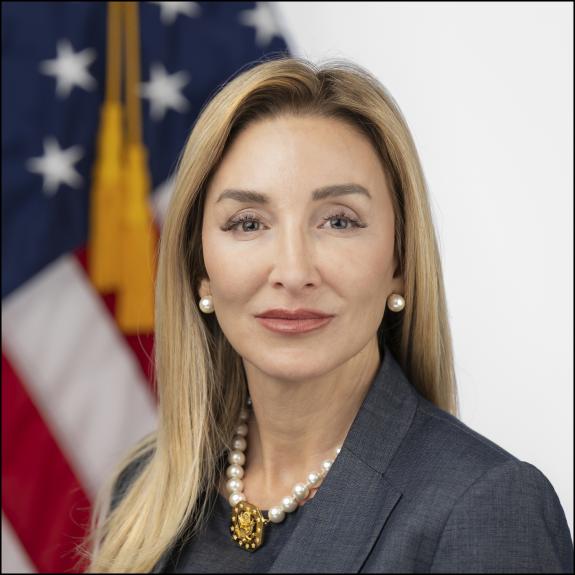
Principal Deputy Assistant Secretary for Health and Director of National Health Communications in the Office of the Surgeon General, Stephanie Haridopolos, shares about the U.S. Surgeon General's new evidence-based toolkit on harmful screen use and the "Live Real Life" campaign.

 Spotify
 Apple Podcasts
 Amazon Music
 Helping children build a healthy relationship with technology requires buy-in from families, health care providers, educators, policymakers, and technology companies. In this episode, Principal Deputy Assistant Secretary for Health and Director of National Health Communications in the Office of the Surgeon General, Stephanie Haridopolos discusses the U.S. Surgeon General's new evidence-based toolkit on harmful screen use and the "Live Real Life" campaign. She explains the physical, cognitive, academic, and mental health impacts associated with excessive or unhealthy screen use, introduces practical strategies like the "Five D's" for families, and outlines how healthcare providers can incorporate conversations about digital habits into routine care. The conversation also explores the role of tech companies, the importance of digital citizenship, and how small changes can help children spend more time sleeping, learning, connecting, and thriving offline.
A Step-by-Step Guide for Supporting Adolescent Health in Schools | ASTHO
Voices From the Field: Public Health Success Stories | ASTHO
Strategic Funding Helps Reduce Suicide Rates in Colorado | ASTHO

JOHN SHEEHAN:
This is Public Health Review Morning Edition for Wednesday, August 12, 2026. I'm John Sheehan with news from the Association of State and Territorial Health Officials.
Helping children build a healthy relationship with technology requires buy-in from families, healthcare providers, educators, policymakers, and technology companies. Today, Principal Deputy Assistant Secretary for Health and Director of National Health Communications in the Office of the Surgeon General, Stephanie Haridopolos, discusses the U.S. Surgeon General's new evidence-based toolkit on harmful screen use and the "Live Real Life" campaign. She explains the physical, cognitive, academic, and mental health impacts associated with excessive or unhealthy screen use, introduces practical strategies like the "Five Ds" for families, and outlines how healthcare providers can incorporate conversations about digital habits into routine care. Dr. Stephanie Haridopolos, welcome to the show.
STEPHANIE HARIDOPOLIS:
Well, thank you so much, John. This is so exciting to be able to use your platform to educate so many providers.
SHEEHAN:
Absolutely, and it's a pretty pervasive and, I think, very topical subject. Describe this new toolkit for us from the Surgeon General in terms of harmful screen use.
HARIDOPOLIS:
The Surgeon General's advisory on the warnings of the harms of screen use, I know I talked to ASTHO before, we decided to do an evidence-based review on the latest 70 citations worth of, you know, just really rigorous science to put together to talk about it over four domains: the harms of screen use neurocognitively, physically, academically, as well as mental health and addiction harms. So, in addition to describing the problem, we wanted to also then give advice. And we did it to seven different stakeholders in the toolkit that you're referring to, and our tagline is "Live Real Life". Getting off of those screens and cell phones and just being in the real. So, we went specifically to the youth first. We wanted to talk to the youth, not down to them, but lift them up. I just talked to a big group of kids yesterday about this and gave them that advice, but also families, researchers, policymakers, tech companies, healthcare providers, in just saying, What can you do? So it was really a very large and ambitious toolkit that we gave best practices to the different stakeholders that I mentioned.
SHEEHAN:
Sure. And what are some examples of resources or guidance in the toolkit?
HARIDOPOLIS:
Well, it depends on the stakeholder that you're talking to. You know, I, if we are talking to families, the best thing they could do is create a family media plan and talking with the family about overall screen use and ask about joys and concerns around digital media, both time and content, and discover healthy family priorities together. So we describe the "Five Ds", and that's number one, the discuss, the family plan, do, that's like modeling behavior. If you are always on your screens, your children will probably learn that behavior from you, and so modeling good behavior and leading by example. We do find that the third D, delay, delaying the phones as long as possible or screens, especially in the very young, really nothing up to 18 months, one hour up to age six, and then two hours up to age 18, but delaying it as long as possible. And then diverting, if the kids are showing that they're having compulsive behavior and losing control and you're trying to like get them to cut back, but unsuccessfully, they have irritable distress or withdrawal, you probably need to divert them to healthier activities that don't involve screens. And occasionally, the fifth D, we just need to disconnect, sometimes, like in the family media plan, during family meals, no phones, maybe in the car, right before bed, you are charging the cell phone outside of the area. We know that blue light late at night does affect melatonin and can affect your sleep. We see that lack of sleep crowds out healthy activities the next day and can cause problems. So, we just think that the "Five Ds" are a good, healthy start, discuss, do, delay, divert, and disconnect, for healthy use of screens in children.
SHEEHAN:
Absolutely. And how about advice for some of those other stakeholders you mentioned, say educators or policymakers or tech professionals?
HARIDOPOLIS:
Yeah. Well, there's a lot to it. By the way, for your listeners, just in case they want to read the full report and toolkit, it's on surgeongeneral.gov. And so that could be a place where they could find it and read about it. Of course, we printed out a bunch of physical copies to hand out to people because we want people to read more books and, you know, do pen to paper and be more engaged. But for healthcare providers, specifically, I think that these questions should be asked at annual well-child visits, and I recommend that the providers keep up with the latest and greatest because it's an evolving, technology is evolving very rapidly. We need to come up with, with that. So ask questions, about a child's use on online life. For the younger child, ask parents about their rules regarding time limits and content, alternative play activities, and we will very soon announce that there'll be free continuing medical education credits, 2 hours, for reading and taking some quiz test questions on the advisory that we will offer providers to renew their medical license. This will be really exciting to offer as, you know, free CME. I know when I renew my medical license every 2 years in the state of Florida, I have to have a certain number of hours, and this would be a really great way for providers to keep up with the latest and greatest evidence right now that they could bake into their healthcare. They are the frontline to a lot of families, and they can educate them.
SHEEHAN:
Sure. And what are some examples of harmful screen use? What should providers and families be watching out for as signs of harmful use?
HARIDOPOLIS:
Well, it's not only the hours that they're spending on there, but it's also the content that kids are being exposed to. We really just need to shift the culture away from the pervasiveness. But, you know, one statistic that we describe in there is that 5 out of 10 teenagers have experienced cyberbullying, that is a huge issue, you know, being exposed to unfortunately, drugs online, human trafficking, exploitation, where with deepfakes are created from pictures and they are exploited for money with bad actors out there. So, those are huge concerns, and we, you know, there's a lot of emerging evidence about that. And we also describe, you know, the cognitive risks of in the very young, where, you know, it affects memory, attention, language skills, and executive functioning, which, you know, the kids at a very young age that are exposed to. So, I think that that is a huge concern. And the physical, I mean, when you are on the screens, you're not as active. You're not maybe doing as much sports. You're not going outside and riding a bike and being in, you know, normal activities, and then that can be dietary habits can come from that, meaning you have increased ultra-processed foods that we know increase obesity due to that. So, and not to mention anxiety and depression and low self-esteem and body image concerns and behavioral problems and aggression. I don't know if you saw the teens that were doing these like mob things that where they are encouraged to have these teen takeovers from social media, I mean, this is violent behavior that's being encouraged, unfortunately, online. So, I think that parents need to understand this is happening and have more control. But the tech companies have a huge role. They were designed for engagement and not for the protection of children. We know that with the algorithms and the infinite scroll, and they could do display warnings about harmful screen use. They could nudge children to engage in other activities that have health benefits, going outside and engaging in physical activity, or eliminate some of the features that are designed to maximize screen time, such as autoplay, infinite scroll, and the reward notifications. We also worry about the gaming and gambling aspects of it for especially young men. So, lots of harms, and we put it all in one place for you to find at SurgeonGeneral.gov, which can, you know, flesh out a lot of questions that you might have after this interview for your listeners.
SHEEHAN:
So, yeah. You just mentioned quite a few negative outcomes, negative behaviors. What does a balanced or healthier relationship with screens look like?
HARIDOPOLIS:
Definitely, we know technology is here to stay. There are benefits, of course, to being having access to information that you can learn from. We need to teach digital citizenry. Kids can use technology to their advantage while averting and mitigating the harms. We need educators to help with that. We need, of course, families, and the tech companies to engage in that. We know AI, just gave a talk about AI yesterday. I mean, there's benefits to AI. We can have rapid innovation for medical treatments from machine learning and AI, as you can see through the HHS. So, if you have positive intent and you are on and trying to learn something, that is far different than just going on there and doomscrolling and crowding out normal activities in your life. So, if you use it to your advantage, but keep it to a minimum where it's not bleeding out where you're not having social connections with friends, that it's not increasing loneliness, that you're not just laying in your bed doing it for hours and losing track of time, like most kids. Most kids say that they have at least 8 to 10 hours on a screen per day, which is maybe more than they go to school or sleep, and that if it's crowding out normal activities, then you're not creating a holistic person, right? We need to be doing things like dance or arts and crafts, reading real books, going out, being with our family, and being able to connect and having eye contact, and being able to have a conversation, participate in the community. I think all of those things are really crucial for the overall health and wellness of a child and adolescent.
SHEEHAN:
Yeah, I do, too. Any final thoughts regarding the toolkit or about screen use?
HARIDOPOLIS:
Well, I'd like to say small changes can restore meaningful parts of daily life. And just like we saw with the changing the culture around smoking and tobacco, we could change the culture of screens that are everywhere. And, you know, a journey of 1,000 miles begins with a single step, and I really do think that this little real life campaign that we're having is that first step. We need to all have a shared responsibility if we're going to change the culture across families and schools and health professionals, technology companies, and policymakers. And the larger goal is to help children sleep well, move their bodies well, learn, build relationships, and just live in the real life.
SHEEHAN:
Well, Dr. Stephanie Haridopolos, thanks so much.
HARIDOPOLIS:
Thank you for having me, anytime.
SHEEHAN:
Dr. Stephanie Haridopolos is principal deputy assistant secretary for health and director of the National Health Communications in the Office of the Surgeon General.
ASTHO has a practical guide designed to help state and territorial health agencies, education partners, school districts, and community stakeholders improve adolescent health outcomes through school-based strategies. Recognizing that schools are a critical setting for promoting health, prevention, and early intervention, this guide provides a structured, step-by-step process for using data to identify adolescent health needs, selecting priority areas, and developing actionable plans to support student well-being. Find a link to this ASTHO resource in the show notes.
What does it take to build a sustainable statewide suicide prevention infrastructure? In Colorado, the answer lies in a robust prevention infrastructure fueled not by a single source, but by a strategic layering of state and federal funding that maximizes the reach and impact of critical programs like the Colorado National Collaborative. The Colorado National Collaborative is the state of Colorado's comprehensive suicide prevention program funded by both federal and state dollars. You can read about it in the blog, part of ASTHO's Voices from the Field Public Health Success Stories Hub. Learn more at the link in the show notes.
This has been Public Health Review Morning Edition. I'm John Sheehan for the Association of State and Territorial Health Officials.