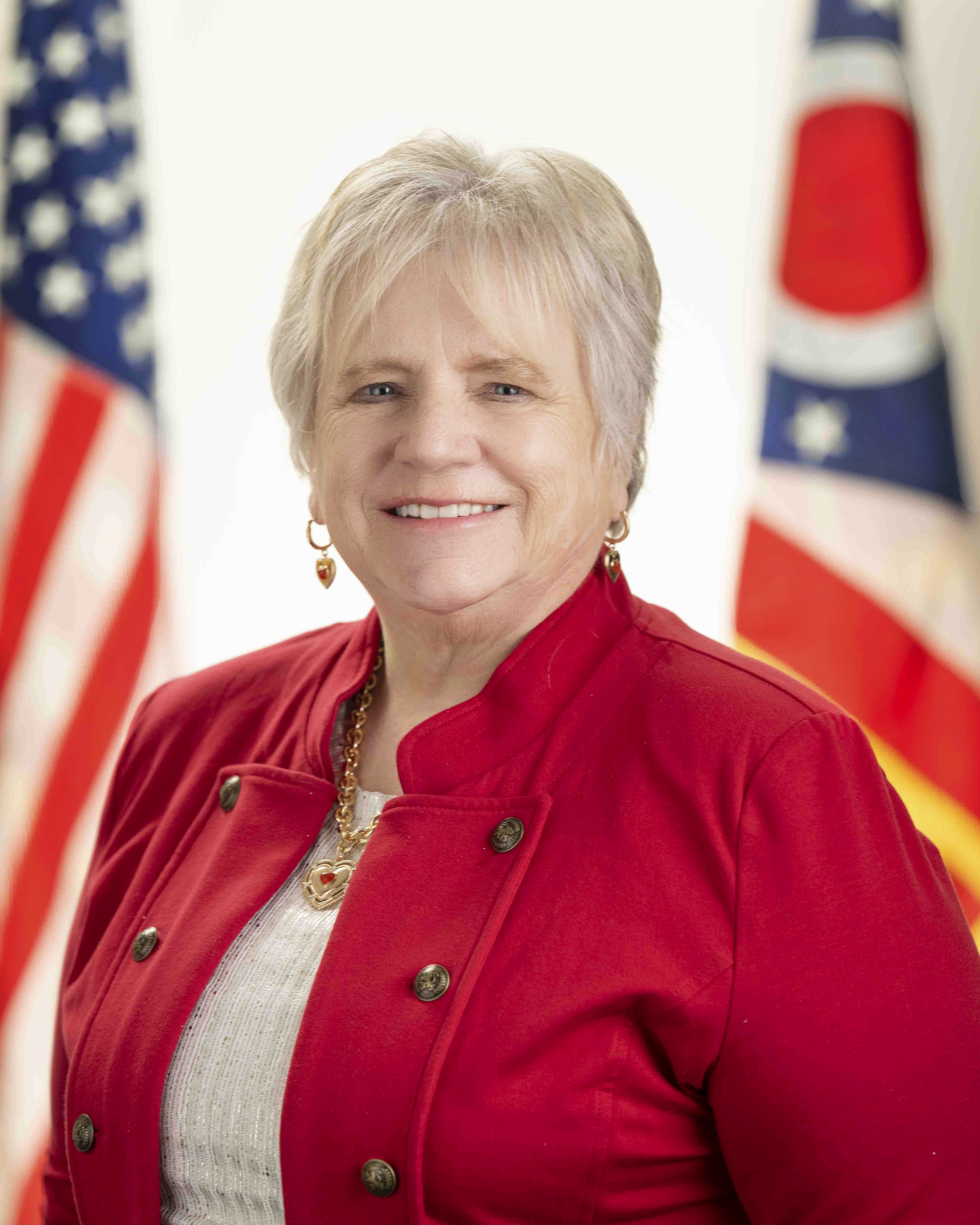
Jennifer Lloyd, assistant director for RecoveryOhio in the office of Governor Mike DeWine, shares about RecoveryRachel, an AI-powered treatment finder designed to help people quickly identify appropriate mental health and substance use treatment providers.

 Spotify
 Apple Podcasts
 Amazon Music
 Finding the right mental health or substance use treatment can be difficult, especially for people in crisis who may not know where to turn or may encounter outdated provider information and confusing terminology. Ohio is using technology and artificial intelligence to make that process easier. Today, Jennifer Lloyd, assistant director for RecoveryOhio in the office of Governor Mike DeWine, discusses RecoveryRachel, an AI-powered treatment finder designed to help people quickly identify appropriate mental health and substance use treatment providers. Lloyd explains how conversations with families, treatment providers, and other stakeholders helped shape the tool, including a focus on making provider information easier to understand and keeping it accurate and up to date.
Funding & Collaboration Opportunities | ASTHO

JOHN SHEEHAN:
This is Public Health Review Morning Edition for Wednesday, September 16, 2026. I'm John Sheehan with news from the Association of State and Territorial Health Officials.
Finding the right mental health or substance use treatment can be difficult, especially for people in crisis who may not know where to turn or may encounter outdated provider information and confusing terminology. Ohio is using technology and artificial intelligence to make that process easier. Today, Jennifer Lloyd, assistant director for RecoveryOhio in the office of Governor Mike DeWine, discusses RecoveryRachel, an AI-powered treatment finder designed to help people quickly identify appropriate mental health and substance use treatment providers. Jennifer Lloyd explains how conversations with families, treatment providers, and other stakeholders helped shape the tool, including a focus on making provider information easier to understand and keeping it accurate and up to date. Jennifer Lloyd, welcome to the show.
JENNIFER LLOYD:
Thank you. Great to be here.
SHEEHAN:
So, Jennifer, what is RecoveryRachel? What is it? Who was it designed for?
LLOYD:
Well, basically, it's a treatment finder to help people find treatment providers who specialize in either mental health or substance use treatment.
SHEEHAN:
Gotcha. And it takes a different approach than maybe traditional provider directories. How does it work, and how does it connect people with services?
LLOYD:
Yeah, we took a different approach primarily because traditionally, when people searched for help, they could maybe be met with not finding the right place, or finding a place that was no longer there, or things had changed, or the search engine used jargon that wasn't understandable, particularly for parents in crisis. Just was confusing for people, and so we really need to come at this a different way, so that people could find the right place for what they needed easily.
SHEEHAN:
And so, it sounds like in the process of designing the tool, you had to figure out what wasn't working for people, and so what did the process teach you about these barriers to access, and how did that go into how you design the tool?
LLOYD:
It's a good question. We had a big discovery period, and we do a lot of research of what was already existing out there because we don't want to, you know, copy something else or do something that's not needed. We spend a lot of time talking to people who've been through the experience. We talking to provider treatment providers, families to try to understand what their challenges have been historically, and I think also we've been in this space a long time, and so we've heard through the years from, in particularly, family members who would find that their child was, you know, using fentanyl and have just absolutely no idea where to go for help.
SHEEHAN:
Wow, and so it sounds like in addition to working with stakeholders, it was also an exercise in working with partners across agencies and external partners to help design and implement the tool. What did you learn about collaboration?
LLOYD:
Collaboration is so needed. It can be challenging, but it also is rewarding. So, it's worth the challenge. I think that people's time is very limited, and it's not that they don't want to help you. It's difficult to find the time, and everybody has their own priority. So, there is a bit of a sell pitch when we when we do collaboration, and so that they understand that it does benefit them, it benefits all Ohioans, but there really needs to be a benefit to the people that they care about and support, or it is hard to get people to invest time into what you're working on.
SHEEHAN:
Sure, maybe relatedly, once you've had the tool up and running, what is the process like of maintaining it and making sure that you know you mentioned in earlier searches it's hard to keep that information up to date. How do you, how does your tool do it?
LLOYD:
So, we wanted to make sure that as much as we can that in particular the treatment provider’s information was accurate. So, within recovery, Rachel, we added a field that says information validated by providers. So, we worked long time with treatment providers to understand how to design this system to make it easy for them to update the information, because they spent a lot of time historically updating databases that then haven't produced results for them, so they were a little frustrated by that. And what we ended up doing was, first of all, using AI to populate their provider profile, and then had in there kind of just areas that they could just check a box. And we paid attention to the most important items to help somebody find service, so they're not having to check, you know, 400 boxes. We want to limit it, but allow free space where they could add in, say, a specialty. But the verifiable provider means that they've gone in and looked at all of that information, and when you scroll over that, it actually shows when they made that update. The motivation to do it is when someone does a search; those providers who have verified their profiles appear first. So, there's some interest in showing up first in a search by providers.
SHEEHAN:
How do you measure if people are using the tool and if it's having an impact?
LLOYD:
Having an effect is harder than if they're using it, right? Because we have you know statistics on how many people have come in, and I can tell you that our social media on Facebook for RecoveryOhio, which that's who developed RecoveryRachel. The first two weeks when we were promoting Rachel, it went up 5,000% the number of hits that we had, and then in the first week we probably had about 1400 users, and that was really a soft promotion through some social media to know if it's working is harder because we don't track people through getting to treatment and how it worked. That's just not something that is doable in this phase of this. We've had a lot of very positive feedback, so that's kind of you know, data people would say, "Well, that's you know, kind of soft. But at this point, that's kind of what we have, and the reception has been so much more positive than I even anticipated, and because it spread primarily through people and peers in in this space to other peers saying this is a great tool. You really need to use it. Those are all really good signs for us. I mean, it's still early in the launch, and we do have lots of feedback mechanisms. So, if people weren't happy, we'd sure hear about that.
SHEEHAN:
And do you have any advice for other states that are considering this kind of, you know, technologically driven more modern directory service.
LLOYD:
Yeah, I mean, I think that initially, you have to first understand how receptive people will be to AI, and every place is different that way because it really did allow us to provide the solution. You know, we have Rachel is you know is AI, and she's you know Rachel is basically talking to people, and they don't they could just say, well, I'm just worried about this person because they're sad and I don't know what to do, and it's a conversation, and they don't need to know lingo, and then the ability to respond quickly and get back and have quality updates, it matters so much. But I think you have to make sure that in your state you have good AI policy. It's a little new, right? And we have a in Ohio an AI security council, and we met with them regularly to make sure that we were following pretty strict guidelines because there's still a lot of conversation in the mental health space and concerns, right? So we weren't going to be a place where Rachel was having a conversation with someone that went off the rails, right? It has to be very strict. So, I think you need good guidelines, but really the most important thing is you have to figure out a way to get people to help when they need it, because in this space, if you get somebody to a place they find and it's closed, that may be their sign to go to the bar instead, right? So, it really is critical to get people help when they need it, and that's what should be the driver, and you can figure out everything else around that if you keep in mind that this can save people's lives, and that's why we're doing it. And I was in Pennsylvania recently, and I met with a couple people who are have been through a lot of issues lately. And he said, "Can I just see it? Because we've really struggled, and you know, his wife is having hallucinations, and he doesn't know what to do, or where to go, or who to talk to, and you know, they're broken by that, and she's broken. Doesn't, and then they go place, and they didn't have her insurance." So now they have massive insurance bills, so, and that's just one conversation, right? So, there's loads of those people that if they could just go and get direction and show up and get help, it's really life changing for them.
SHEEHAN:
Yeah, absolutely. Are there plans to expand Rachel? Like a Rachel version two?
LLOYD:
Well, we really have finished phase one, and we're in phase two now. And I'll give you one little project we're working on. We always worry about mental health of first responders, right? They're under tremendous stress, and that they also can be reluctant to come forward to share their stress, and so we're going to be training Rachel based on some discovery sessions on kind of language to listen for, and then we have in Ohio some of our providers have been through training on how to best support first responders. So, we will identify those providers with a little badge that, if you scroll over it, it says this is what who they are, and then we will try to get Rachel trained so that she, when she identifies that they are first responders, to get them to someone who's actually had the training to service them, and I mean that could be a huge benefit. And so we, you know, you can only do so much at once, right? So we also probably want to do that for military families, and but you have to kind of pick who you start with. There's really been it's a very small team on a pretty small budget, so we could do more with more people and more money. But that's just not the reality of what we've been dealing with, and so we really kind of look at, or anybody can in their own state, what are your top issues, right? So, if suicide is a massive issue, so let's focus on that, and we are doing that too. So, I don't know how much that varies across states, but look at the data and let it tell you who are the people that really need the support, and then work on whatever this is to get them the support that they need.
SHEEHAN:
That sounds like a lesson learned from just Ohio's, you know, venture into trying to expand access to care in in whatever ways you can.
LLOYD:
Yeah, I mean that you know what's been interesting is for a very long, you know, people will say there's not enough treatment. I think there's quite a bit of treatment. It's just that people don't know where to go and how to find it. There's quite a bit. I mean, we have right now 1400 providers in this database, and that doesn't include independence, which we'll also add. We're going to add additional provider types, and what's really great too is you know there's areas in Ohio that are kind of more deserts for some treatment. You know, there's some gap areas, but there's a lot of virtual care, right? So we can add that too, and fill the gaps. And so, we'll also through the data be able to look at as an example. You could say, oh, we've noticed that there's a bunch of people calling and looking for bipolar disorder treatment in this area, and there's no providers that are coming up. Well, we can tell that to treatment providers, and they can maybe hire somebody who can help provide that support. It's not just getting people to treatment; it's paying attention to the data and then improving the treatment where needed.
SHEEHAN:
And Jennifer, lastly, what was what was sort of the entry point to this project? What was the impetus for getting it started?
LLOYD:
It actually goes back quite a ways, and you know we're very thankful in Ohio to our governor, the governor Mike DeWine, because this has always been such a priority of his, and I was fortunate to work for him when he was attorney general, and we used to go across the state and do town halls, and he would ask parents. And this, you know, 12 years ago, when things were still kind of new, and he'd say, "What did you do? You know, when you found out your child was using heroin, and because it was heroin then, now it's other things, and they'd say, "What? We didn't know what to do, and it really, really upset him that that was the reality. That you have a child that's suffering, and they have no idea what to do and nobody to talk to because it was stigma, and we lost kids, and so we never could really solve it until we had technology that would allow for doing what we can now do, and making sure that there's a conversation that's easy, understood, and then connected to appropriate care, and we can do that now. So, I mean, it goes back. It seems like well, that took a long time, but people have tried. And tried and tried, but to keep this information updated and accurate, you can't do with people. It's just too time consuming and costly. But with technology, you can. So, as soon as that those things came together, it was clearly that something we needed to do.
SHEEHAN:
Jennifer Lloyd is assistant director for RecoveryOhio in the office of Governor Mike DeWine.
ASTHO is pleased to announce a funding opportunity to support up to three state and territorial health agencies in implementing activities that advance their long-COVID priorities and contribute to the growing body of knowledge and lessons learned across jurisdictions, through this opportunity, awardees will implement strategies to address jurisdiction-specific needs like strategic planning, resource development, public or provider education, and other activities that strengthen long-COVID response efforts. Find out more at the link in the show notes.
ASTHO is currently accepting applications for participation in the third cohort of the Leadership Exchange for Adolescent Health Promotion Plus Community of Practice, which will support education and health agencies to work together to improve health education, connect schools to services, and support safe and supportive school environments. Participants will develop state-level action plans that utilize evidence-based practices in schools to improve adolescent health. Learn more about the initiative at the link in the show notes.
This has been Public Health Review Morning Edition. I'm John Sheehan for the Association of State and Territorial Health Officials.