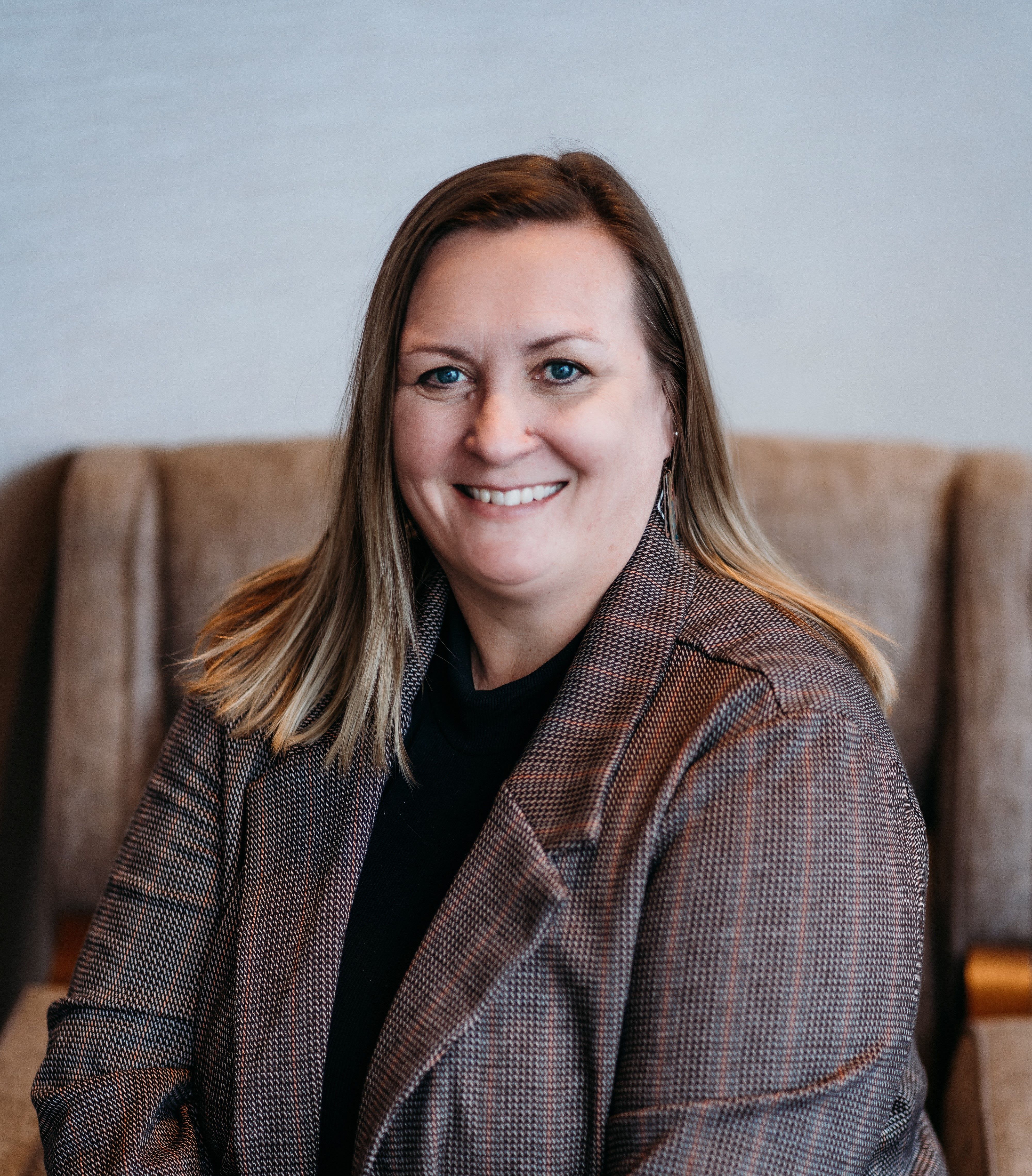
On today's episode, Lindsey Myers, ASTHO vice president for public health workforce and infrastructure, discusses the Insight and Inspiration webinar series featuring bestselling author Dan Heath and why his books resonate with public health professionals navigating today’s complex environment.

 Spotify
 Apple Podcasts
 Amazon Music
 How can public health leaders make meaningful progress when priorities, funding pressures, and public expectations are constantly shifting? Lindsey Myers, ASTHO vice president for public health workforce and infrastructure, talks about a new installment of the Insight and Inspiration webinar series featuring New York Times bestselling author Dan Heath. Myers shares why Heath’s work, including his books Made to Stick, Upstream, and Reset, could resonate so strongly with public health professionals navigating today’s complex environment. The conversation explores ideas like “ruthless prioritization,” finding leverage points for change, and why building alignment may matter more than seeking “buy-in.”
Developing a Policy Action Plan to Improve Access to STI Medications Webinar
Leading Change Workshop - July 2026

JOHN SHEEHAN:
This is Public Health Review Morning Edition for Tuesday, June 2, 2026. I'm John Sheehan, with news from the Association of State and Territorial Health Officials.
Today: how public health leaders can make meaningful progress when priorities, funding pressures, and public expectations are constantly shifting. Lindsey Myers, ASTHO vice president for public health workforce and infrastructure talks about a new installment of the Insight and Inspiration webinar series featuring New York Times bestselling author Dan Heath. Meyers shares why Heath's work, including his books Made to Stick, Upstream, and Reset, could resonate so strongly with public health professionals navigating today's complex environment.
LINDSEY MYERS:
First, I'm just thrilled to have the opportunity to interview Dan Heath, or moderate the session coming up. I've been a big fan of his work since his early days. In fact, his book, Made to Stick, which I don't know, came out in mid-2000s, was kind of the first book I got at a public health conference that I attended, and so it's really a great opportunity to be able to chat with him in this segment. I think what makes his work really resonate with me and with other public health practitioners is just, it's really practical. I think he has some really great insights, you know. One of his books is actually called Upstream, which is basically all of public health tried to, you know, get at problems, the root causes of problems before they occur, and he has a new book out called Reset, and there's just a lot of concepts in there that I think are particularly interesting for this period of time. Governmental public health leaders, who I think will be in the audience for this session, are, you know, kind of at this pivotal point in time, you know, they're continuing to address all of the regular public health issues that that we all work on and have worked on, but now the environment is shifting a little bit, the federal funding landscape is different than it used to be. There's a need to regain public trust and with communities in different ways, and you know, some of our traditional bread and butter ways of speaking about public health just aren't resonating in the same ways, and so, you know, I think bringing someone like Dan into the conversation will just hopefully help us push our ideas and think of new ways to approach the work, and he's really accessible, and sometimes funny, you know, in his books. And I think it's a great opportunity for people to learn from someone who's interviewed a lot of people, and pulling from a lot of great stories and ideas across multiple sectors.
SHEEHAN:
Yeah, is there an idea from his new book, Reset, that you think is really appropriate for the moment?
MYERS:
Yeah, I, you know, he starts the book by talking about the challenge of moving a big boulder up the hill, and has some good, you know, visuals in his book about that. And sometimes, honestly, it's what public health feels like, you know, we were always dealing with these big systemic issues, and it seems impossible to make traction in the way that you want, and what he reminds us in his book is that it is possible to move a boulder, but you've got to find the right leverage points, and you've got to think about how you prioritize your work, how you can really identify some of those important things that you need to stop doing in order to free up your time to really address the thing that might move the boulder up the hill. He also talks about the need to really set your goals appropriately and to know what those goals are, which I think is important in public health. We're pulled in lots of different directions all the time, and you have lots of priorities and lots of direction from governors, from your funders, from community members, etc. And trying to figure out what is the best thing to focus on at this moment in time to actually make progress is something that I think we all need reminders about. So, lots of good concepts really encourage people to participate, because I think a lot of what he'll talk about will resonate with the audience.
SHEEHAN:
He's made the case that the idea of getting buy-in is the wrong way to think about change. Can you describe his thinking on that, and is it something that you think, does that work for public health?
MYERS:
I don't know. It was interesting. I had a chance to chat with Dan yesterday in preparation for the session, and he asked me this question too, around, "Do I think- what do I think the public health audience will think about it," and I think it's going to be a great discussion, because at face value, I, you know, I've worked in public health for a really long time, and that word "buy-in" is something we talk about all the time. I need to get, you know, buy-in from communities, we need to engage them, we need to do all those things, and it's true, but when you think about it, I think that this will resonate. I'm curious to hear the debate and what questions we get from the audience, but what he argues is, you know, you need to, sometimes, meet communities and people where they're at, where there's motivation, and not just because it's something you want to do. So, what it reminded me of, coming from my time at local and state public health agencies, is we often are creating coalitions of community members to get input on a certain topic area, but we're doing it because you know we have a grant that says we have to have a community coalition that we need to bring together to do it, and that isn't always successful, right? Because we're making it about our agenda instead of the community's agenda, instead of the agenda of where there's momentum now to make progress, and so, I think it'll be a really good conversation with him. He argues that rather than buy-in, you should focus on alignment: alignment of your goals, alignment of that momentum, and if you build a shared direction rather than, sort of, selling a decision downward, it can really lead to better progress and quicker progress. So, I think it's an interesting concept that we'll be curious to hear how the audience receives it.
SHEEHAN:
Yeah, that is interesting. It seems like more of a shift in thinking rather than necessarily throwing out a concept. Are there other ideas like that that you found yourself grappling with that maybe he's made you think of differently?
MYERS:
Yeah, you know, he makes the case in the book that in order to find leverage points, you have to ruthlessly prioritize. And I think it's really hard in the government sector for public health agencies, like I was saying, because you have priorities coming at you from lots of different directions. And sometimes it doesn't feel like you have the ability to ruthlessly prioritize, because they are being put on you. And so I think it's - it was challenging me to think about where you do have control. So, it might be true that you have a leader above you, whether it's the governor or it's the state health official or it's your manager who, you know, wants you to prioritize in certain ways, and that may be, you know, a reality that you have to address. And you also have a lot of choice in terms of how that work gets done and how you do it. And so, I think people do have a lot more agency to ruthlessly prioritize, and it might seem at face value, but I'm particularly interested in hearing his thoughts on, you know, how you do that when you're not the CEO of a company that gets to ruthlessly prioritize what the direction is? Where you might be in a position where you know you've got to balance some, you know, priorities that are coming at you from different directions. So, I'm curious to see in the conversation if he has some ideas around that.
SHEEHAN:
For maybe an overworked or overscheduled public health official or public health member who is considering going to this meeting, can you make the case why they should ruthlessly prioritize coming to this webinar?
MYERS:
Yeah. Well, I always am a big fan of taking the time to ruthlessly prioritize your own development and thinking, and you know, taking a step back and really being introduced to some different ideas, some of which you might agree with, some of which you might not. But it helps you, you know, sort of think of your work in different ways and different concepts. So, Dan has a whole lot of research and many, many interviews over decades, you know, from different industry leaders across lots of sectors, including the public sector, and you know, just hearing, sort of, to me, where there might be a bright spot happening in an industry that's completely unrelated to public health, but we can borrow that idea, and we can try something. So, I would say that this session really promises some simple, immediately applicable approaches to get unstuck and translate, you know, insight into action. And that's kind of what this whole series is about, is giving people, you know, those immediate tools. So, I hope that people will come away from the session with some ideas around how to better identify those leverage points, how to reframe some thinking, like you were saying, around, you know, shifting not maybe what the ultimate goal is, but how we approach it, and how we maybe think of the problem, or the partners that we need to help us solve it. And an ability to sort of reflect on where the lack of direction might be diffusing your ability to meet results rather than driving the results. And I, you know, am a long-term passionate public health person. And you know, I know that the listeners will, you're all trying to achieve these great things, and sometimes we just need to take a step back and think about some new ways of approaching the work.
SHEEHAN:
Lindsey Myers is ASTHO vice president for public health workforce and infrastructure. She'll be moderating the third installment of the Insight and Inspiration webinar series featuring New York Times bestselling author Dan Heath.
Ensuring reliable access to STI medications requires coordinated policy action, and practical policy tools exist to help jurisdictions respond to shortages and strengthen access. Join ASTHO on June 10 for a webinar focused on policy options jurisdictions can leverage to navigate STI drug shortages and medication access barriers. This webinar will walk attendees through action plan development to address key challenges, including supply disruptions, access barriers, and considerations related to the 340B drug pricing program. Find more at the link in the show notes.
Leading Change is an ASTHO workshop designed specifically for professionals in clinical and non-clinical public health roles. This two-day, in-person opportunity equips participants with strategies and skills to navigate change and uncertainty as individuals, team members, and organization-wide leaders, emphasizing actionable instruction and resources. It enables leaders to create and implement real-world initiatives in their agencies for 2026 and beyond. Find more at the link in the show notes.
This has been Public Health Review Morning Edition. I'm John Sheehan for the Association of State and Territorial Health Officials.