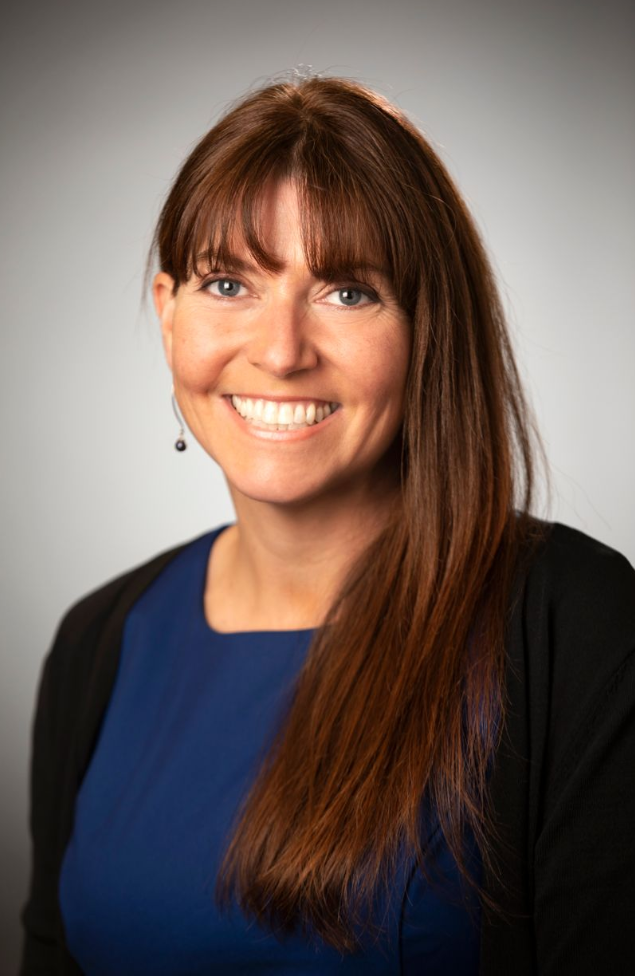
Sarah Shaw, senior informatics analyst at the Public Health Informatics Institute, discusses a new Data Modernization Communications Toolkit designed to help public health professionals explain complex initiatives in ways that resonate with colleagues, leaders, and communities.

 Spotify
 Apple Podcasts
 Amazon Music
 Successful data modernization depends on more than new technology, it requires people to understand, trust, and support the change. In this episode, Sarah Shaw, senior informatics analyst at the Public Health Informatics Institute, discusses a new Data Modernization Communications Toolkit designed to help public health professionals explain complex initiatives in ways that resonate with colleagues, leaders, and communities. Shaw explains how the toolkit is built around three core communication strategies: active listening, storytelling, and audience-centered messaging. She also shares practical examples from health departments across the country that demonstrate how effective communication can turn technical concepts into meaningful improvements for public health, helping agencies strengthen data systems and ultimately make better decisions for the communities they serve.
Data Modernization Communications Toolkit - PHII

JOHN SHEEHAN:
This is Public Health Review Morning Edition for Wednesday, July 22, 2026. I'm John Sheehan with news from the Association of State and Territorial Health Officials.
Successful data modernization depends on more than new technology. It requires people to understand, trust, and support the change. Today, Sarah Shaw, senior informatics analyst at the Public Health Informatics Institute, discusses a new data modernization communications toolkit designed to help public health professionals explain complex initiatives in ways that resonate with colleagues, leaders, and communities.
SARAH SHAW:
Really, by now, everyone across public health has heard of the term data modernization. You know, it was first introduced through the Data Modernization Initiative, supported by the Center for Disease Control, and since then it's really evolved into a culture shift across public health. Efforts of this scale require buy-in across all levels of the public health ecosystem to be successful, and that's where kind of we recognized that this work around communication was just so essential. So, through our work to support data modernization for the last five or six years, communication has really been a constant topic of interest for the community. Data modernization leaders are looking to clearly explain the value of data modernization. They want to build strong cases of for prioritizing resources, and they want to tell compelling stories about the work they're doing to their colleagues and their peers and the community. And we were really excited to be able to partner with the Public Health Infrastructure Grant and the national partners on this project and really bring our expertise in building toolkits and communicating complex topics, and people may be familiar with our work with a similar toolkit. So, back in 2016, the Public Health Informatics Institute worked with an organization called the Frameworks Institute, and they really focused on helping us to communicate about public health informatics, which is a similarly obscure and complex term. And we really leveraged those learnings and that toolkit when we were building out a similar model for making data modernization approachable and relatable to people across public health.
SHEEHAN:
And who is this for in public health? Is it for people strictly in IT, or is it for people that need to talk about data modernization too?
SHAW:
It's for really when it comes down to it, this toolkit is designed to support anyone in public health. I think what you'll find is not everybody calls data modernization "data modernization". It's really for anyone making innovative changes across their agency and is looking to support how to best communicate those initiatives, because of the broad scope of data modernization activities, this toolkit is really designed to help professionals at any stage at any agency. So, for example, there are guides on how to communicate with leadership about strategic goals, there are tools for building trust through active listening, and there are resources that allow for you to make complex topics more approachable and understandable. So, it's really for everyone in public health who's looking to build excitement and enthusiasm around innovative ideas.
SHEEHAN:
Yeah, and the toolkit is broken into sort of three big buckets or three pillars or based on three pillars. And you mentioned one of them, which was active listening; the other two being storytelling and customizing messages. Was what was the idea behind those three pillars, if you will?
SHAW:
So, to inform the direction and the content for this toolkit, PHII conducted a desk review of existing resources, and we held conversations with public health professionals. As a result of these activities, we learned that achieving data modernization goals really relies on building trust, making concepts relatable, and reaching intended audiences. So, we took those learnings and really framed the toolkit around those three concepts. So, we not only designed the toolkit around these themes, but we also crafted new resources focused on these ideas. We really wanted to start by providing practical tools for building trust. There, this is where we wanted active listening to come in, and it's really about shifting the focus from simply convincing people of an idea and really understanding deeply what their needs are and how these solutions can meet those needs, and how you may actually need to pivot and really ensure that your solutions are meeting those needs. I really loved a concept that came up during our conversations. Someone said the challenge is as big as the relationship is small, and I think that's really true and critical when you're trying to build out these big initiatives, you really need to remember that at the end of the day, it's impacting people, and you need to connect with those people in order to ensure that everyone's on board and that there is that level of enthusiasm needed for these big changes to happen.
So, the next step after you've built that trust is really making these abstract concepts relatable, and that's where the storytelling aspect comes in. So, this really helps people see themselves in the work, shifts the focus from dense jargon to real world examples, and there's another great quote that came out of these conversations we were having that said, numbers tell why it happened. Stories tell why it matters, and I think that's incredibly true, and something we can all relate to.
So, the last step is around really focusing on your audience. So, data modernization efforts impact a huge range of partners, and one message is not going to fit all. So, really tailoring that message to ensure that the communication is relevant to a specific audience's values and priorities.
SHEEHAN:
So, along those lines, can you make the case, or rather, I should ask: Is there sort of an overarching theme in the toolkit that sort of speaks to why data modernization-the sort of, as you said, jargony, abstract phrase that we've now heard a million times-how that translates to making communities healthier?
SHAW:
Well, I entirely agree that this phrase is kind of nebulous and hard to understand, and there really is no one definition for data modernization. So, I personally like to describe it as a coordinated effort to build public health capacity. It's really about having the people, the processes, the technology that enables that effective decision making, and really allows for you to understand how best to serve your communities. It's about putting data into the hands of skilled professionals so they can take meaningful action. At PHII, we love to say data flows at the speed of trust, and communication is really key to building that trust in your leaders, in your peers, and within your community. So, this toolkit is really able to provide public health professionals, hopefully, with resources that build that broad support for data modernization efforts. And to your point, John, can connect those efforts to meaningful action within their community and really put the the heart behind the initiative.
SHEEHAN:
Does the toolkit call out any specific examples from other health departments who have been who have been successful in implementing some of these techniques?
SHAW:
It absolutely does. This toolkit is really designed to provide different modalities to people so that they can learn and adapt these resources for their own needs. And one of those is specific, relatable real-world examples. So, every section includes videos, reference guides, brand new resources, as well as those public health agency spotlights. So, you'll see examples from the state of Louisiana, Seattle, King County, Utah, and my personal favorite, which is Nebraska. They have this incredible video where they really take a playful approach to explaining a data warehouse, and it really makes it relatable to the audience and almost makes them sound fun, which you know is quite a feat. So, it's examples like that that allow for those looking at the toolkit and using the toolkit to have something to go off of that they could build from in their own agencies.
SHEEHAN:
Sarah Shaw is senior informatics analyst at the Public Health Informatics Institute.
ASTHO and the Satcher Health Leadership Institute at Morehouse School of Medicine, with support from CDC, invites qualified professionals to apply to the next cohort of the Developing Executive Leaders in Public Health or DELPH program. The Leadership Development Program will increase and strengthen participants' visibility and exposure in public health systems, access to key networks, and leadership development opportunities. The DELPH program is focused on the development of mid-senior-level leaders in public health from the communities they serve. It serves public health professionals across the nation with a wide range of experiences, including public health disciplines and a mix of local, state, tribal, and island representatives. Program participants are selected from experienced public health professionals who can bring a data-driven, community-based perspective to the cohort based on their personal adaptability, cultural fluency, resilience, and lived experience. Register the link in the show notes.
Congratulations to ASTHO alum Matthew Christiansen of Valley Health Systems, elected to serve on the Epic Federally Qualified Health Center Advisory board. The advisory board provides a forum for federally qualified health centers to share feedback, identify opportunities for improvement, and help shape electronic health record functionality to support patient needs. Previously, Dr. Christiansen served as West Virginia's state health officer and commissioner for the Bureau for Public Health.
This has been Public Health Review Morning Edition. I'm John Sheehan for the Association of State and Territorial Health Officials.