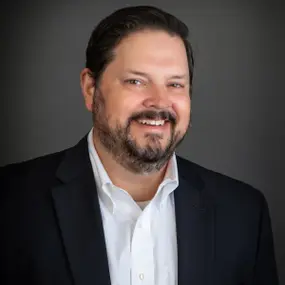
On today's installment of the PHIG Impact Report, hear from ASTHO's Colton Anderson and DeMatt Harkins from the Mississippi State Department of Health on how a Quality Advisory Group creates a space to share challenges, exchange tools, and build stronger systems for performance management.

 Spotify
 Apple Podcasts
 Amazon Music
 Strong public health infrastructure depends on systems and tools, and an organizational culture that promotes using them effectively. On this PHIG Impact Report, Colton Anderson, senior analyst for Infrastructure and Improvement at ASTHO, discusses the Quality Advisory Group, or QAG, a network of performance improvement professionals from state and territorial health departments. He explains how the group creates a space for members to share challenges, exchange practical tools, and learn from one another as they work to build stronger systems for quality improvement and performance management. Later, DeMatt Harkins, director of quality improvement at the Mississippi State Department of Health, shares his experience participating in the QAG and explains how ideas from the group have informed his agency’s work.
This work is supported by funds made available from the Centers for Disease Control and Prevention (CDC) of the U.S. Department of Health and Human Services (HHS), National Center for STLT Public Health Infrastructure and Workforce, through OE22-2203: Strengthening U.S. Public Health Infrastructure, Workforce, and Data Systems grant. The contents are those of the author(s) and do not necessarily represent the official views of, nor an endorsement, by CDC/HHS, or the U.S. Government.
Public Health Infrastructure Grant: Resources & Impact - PHIG

JOHN SHEEHAN:
This is Public Health Review Morning Edition for Tuesday, September 15, 2026. I'm John Sheehan with news from the Association of State and Territorial Health Officials.
Strong public health infrastructure depends on systems and tools and an organizational culture that promotes using them effectively. On today's PHIG Impact Report, Colton Anderson, senior analyst for Infrastructure and Improvement at ASTHO, discusses how PHIG funds allowed for establishing the Quality Advisory Group, or the QAG, a network of performance improvement professionals from state and territorial health departments. He explains how the group creates a space for members to share challenges, exchange practical tools, and learn from one another as they work to build stronger systems for quality improvement and performance management. Later, DeMatt Harkins, director of Quality Improvement at the Mississippi State Department of Health, shares his experience participating in the QAG and explains how ideas from the group have informed his agency's work.
Let's start with Colton Anderson.
COLTON ANDERSON:
The Quality Advisory Group, or what we call the QAG, it was established back in the summer of 2023, and it's made up of performance improvement professionals from all over state and territorial health departments, and so we have people working in quality improvement, performance management, accreditation, and other areas related to overall public health infrastructure.
SHEEHAN:
Right. And this is all supported by PHIG.
ANDERSON:
It is.
SHEEHAN:
And so, why is a group like the QAG important for infrastructure?
ANDERSON:
Yeah, the QAG is important because infrastructure really isn't just about having a system or a tool in place. You can have performance management systems. You can have QI processes. You can have dashboards and strategic plans. But ultimately, you really need people who know how to use these things and make improvement part of how the organization operates. And that's really difficult work. And performance improvement professionals are often trying to influence change across the entire department, and they're not necessarily the people who have direct authority over all those programs. So having a group like the QAG gives them a place to learn from people who are facing similar challenges, and they can come to the group saying things like, "Here's what we're trying. Here's where we're getting stuck. Has anyone else dealt with anything like this?" And it brings a lot of value to the group. And I think that kind of peer learning helps build the workforce and the organizational capacity that you need for performance improvement to actually be sustained.
SHEEHAN:
And the QAG recently had its first in-person meeting. What was the significance and importance of having it in person? What was accomplished there that couldn't be accomplished virtually?
ANDERSON:
It was a really good meetup. We had a day and a half meeting with a small select number of participants who came from all over, and one of the biggest things that emerged was just the depth of conversations that were had at this day and a half meeting. You know, we've been meeting virtually for a few years now, and we've all built some really good relationships with one another through those meetings, but there's just something different about being in the room together. I think what really stood out was how much people were willing to share about some of the challenges that come along with this work that they do, and people were able to talk really openly and get ideas from people who have been through something similar like they have. I think that's going to influence the QAG moving forward with future virtual meetings by helping us focus less on just sharing information, but more about creating opportunities for people to actually work through problems together. That's something I'm going to continue to put into the group as we go forward with future meetings.
SHEEHAN:
Yeah, what progress have you made so far?
ANDERSON:
I would say, to go off of not only the convening, but just our virtual meetings that we have. One of the biggest signs of progression is just the conversations that have evolved from these meetings and from this group. When we first started, there was a lot of sharing around. Here's what we're doing in our state, and just getting to know what other agencies were doing. And now the conversations are much more focused on things like: how do we actually sustain this, and how do we get leadership buy-in, and how do we connect QI to our strategic priorities? And we've also heard from members about taking ideas from QAG back to their own agencies. Someone will share a tool or an approach that they're using, and another member can adapt it for their own environment. And I think that's one of the more valuable parts of the group because we're not trying to create a single model that every department has to adopt. We're creating that space for people to come and learn from each other and adapt ideas for their own agencies.
SHEEHAN:
Yeah, and so building off of that, where do you see the group contributing in the future?
ANDERSON:
Well, overall, I think ultimately, I want performance improvement, just as a part of public health, I want performance improvement to become less of a separate function and more of how public health agencies do their work. I don't want QI to be something that just happens because there's a particular initiative or because someone's saying that they need to accomplish some QI project. I don't want performance management to just be about producing reports or maintaining dashboards. Ideally, we have an agency where leaders are asking, "What does the data tell us?" And staff are comfortable with identifying problems and testing changes, and teams are routinely looking for ways to improve how they're doing their work. And I really think that the QAG can help move us toward that by giving people responsible for performance improvement some sort of community, practical tools, and a place to learn from each other. If we can help more health departments get to the point where improvement is just part of their organizational culture rather than something that's layered on top of their work, I think that's a pretty significant contribution to the public health infrastructure.
SHEEHAN:
Colton Anderson is a senior analyst for Infrastructure and Improvement at ASTHO.
Now let's hear from DeMatt Harkins, director of Quality Improvement at the Mississippi State Department of Health.
So, what first drew you to the Quality Advisory Group, and what were you hoping to get out of it?
DEMATT HARKINS:
When I first joined our agency, there was already a habit of going to these national conferences, and so by going to these various national conferences of you know Open Forum, PHIT, etc., you kind of quickly understood that kind of the beauty of quality improvement and performance management in public health is that it's non-competitive, and so everybody is willing to share everything that they know, and that is incredibly supportive and informative, and it kind of helps us, you know, with the development of cultures of quality in our agencies. It also lets you know that you're not alone; that kind of everybody's in the same boat. It's like you know, surely they're doing you know great guns in in the state next to me or across the country, and then you find out that kind of everybody's dealing with the same barriers and successes at the same time, and and so it's kind of nice to know that you're not alone on an island, and so when this opportunity came up, I liked the notion of you know let's let's get an even more concentrated collection of folks to talk about quality and performance management on a regular basis.
SHEEHAN:
Absolutely. What's an example of something that you learned, or you discussed, or talked through at the group that you brought back to your health department?
HARKINS:
Well, first of all, you know, credit to those who allow those open communication lines. So, thank you to ASTHO, and NPHI, and the Public Health Foundation for providing these opportunities. But there's always something new to learn, even if you think you know it all, and you know it could just be a simple matter of, like, oh, I've never thought of that concept that way, you know, or like a new analogy. So every time we meet, you know, there's always like a new spin that I'm going to start using, or I've never thought of it that way, or I've never thought to connect those two dots. But kind of a second one specifically for this is a reminder of all the ASTHO resources. And so, you know, one day, offhandedly, I think Colton was talking about, you know, it's like we've updated the, you know, the toolkit for a strategic plan. And that was right when we were, you know, restarting a new five-year cycle where we needed a new strategic plan, so hey, that gave us, you know, a roadmap to work through, and then also I was able to ask the bunch on the quality online forum and was like, hey, can anybody recommend any consultants that you used for the strategic plan? So there's always something new to learn, and that's just one example of how, you know, an offhand comment can start this whole string of assistance and help through a new process.
SHEEHAN:
Yeah, that sounds really helpful. The group had its first in-person meeting not too long ago. Was there a benefit to the in-person setting, and if so, why?
HARKINS:
Well, first of all, just I mean, yes, absolutely yes. The time was kind of the most valuable. You know, it's great to be able to meet for an hour every six weeks. It was even more amazing to, you know, be around a single conference table for a day and a half; like that was great. You know, you'd add, and you know, it's an exponential benefit of being able to, you know, everybody's just kind of bouncing back and forth with, you know, these are the ideas that I had. You know, this is what we've done. This is what you can do, too. So it's nice to have some kind of hyper-analytical extroverts all around one table for a day and a half, you know, to kind of support each other. There's actually four big takeaways that I had. One was, you know, I mentioned that ASTHO has, you know, this kind of library of references. And it was great. They used us as a sounding board. They're like, okay, this is what's going to be in our new toolkit, you know, or this is in our new preparation pack, you know. Does this say everything that it needs to say? And we spent 30 minutes talking about, like, you know, here's some things that you may want to add. So, that was great to see a QI principle in action; there's always two-way communication that's always bottom-up as far as information flow. So that was really rewarding and complimentary. But then as far as takeaways, one of the things that they were asking us about was the dream state of quality improvement, and it was the classic like overhead view; it was a one sentence each of about you know eight different topics of like this is what leaders need to do this is what everybody in the agency needs to do you know this is how this is the lens that people need to look through their daily processes, and it made me realize like it probably needs to be the first paragraph of our QI plan. So that made me, you know, realize like, okay, you know, again, you know, we've revised our QI plan several times since I've been here. There's always something new that needs to go in it, and that's a great way to introduce folks to QI. The other one was this notion that we got introduced to called the golden thread, and what that was is it shows how, starting with, in our case, a SHA and a SHIP, and how it aligns with everything that goes below it, leading to QI projects. So you know, you take information from your SHA, it becomes a strategy in your SHIP, which becomes a, you know, facet of your agency strategic plan, which turns into quality improvement projects. and this creates new standards for your performance management, so that's going to be a great communication tool for us going to leadership. And then the last thing that was incredibly valuable was the peer consultation, where we were all supposed to come to the conference with an issue that we needed some advice or some help on, and they broke us up in twos, so that it was smaller, manageable groups. And it was the, it was cool. It was, we each got to take turns, you know, like five minutes explaining what our issue was, and then the rest of the group had five minutes of clarifying questions. So they make sure that they got all the facts right, and then we literally turned around in our chairs, and then they had a discussion of suggestions of what we should do to remedy that issue. And we had to sit there silently, but it was great because you got to be a fly on the wall, and then, you know after about 10 or so minutes, we turned back around, and we were able to to talk about it. So, those four things were incredibly valuable.
SHEEHAN:
That's really cool. Can I ask you to expand the connection further to explain how improvements that you've made in performance has led to better outcomes for communities?
HARKINS:
So we're actually, we're in that process. So again, talking about how information is so freely learned, going into it might have been a year and a half or two years ago, we signed up for a free webinar from Public Health Foundation on getting performance management launched in your agency are the maturity of our quality improvement mechanisms and infrastructure was much stronger than our performance management, and so that day it was a Sonja Armbruster, and I don't remember if anybody else, but I definitely want to give her credit. She presented this form that kind of helps people go through establishing what their performance measures should be and why. And it was all kind of part of this national narrative that we had been learning from these national conferences, especially in Chicago at Open Forum, was getting ahead of justification. So, the idea of: if you can establish how well, not only what do you do, you know, because we're a statewide agency, obviously, but you know, it's like a college campus. You know, there are dozens of programs that do different things that people might not know about, and so the idea of getting performance management in line not only, it can communicate what separate programs do, but also demonstrate via data how good they are at doing it. And so we were taught the notion of: this is an opportunity to brag. So let's help you tell your story, so that if you know anybody from around the state, or anybody in agency leadership, anybody on the board, or you know any legislators have any questions about, like, you know, why are we doing this? You can say like this is why we're doing this, and this is how well we are at doing it, and so being able to not only you know give programs a voice, but also kind of create alignment, because our form at the bottom asks how does what you do align with the the state health improvement plan, the agency strategic plan, the CDC's 10 essential health services, as well as the Healthy People 2030, to show anybody who's asking like we're not doing this for no reason. It's because it's in alignment with these various strategies,
SHEEHAN:
Absolutely. And you made the case there pretty clearly. But do you have any other advice for public health leaders who are looking to strengthen their own quality improvement or performance improvement systems?
HARKINS:
Yeah, it's kind of a stair step, kind of snowball effect. It starts with signing up for all of the email newsletters. So you know, sign up for everything from ASTHO, everything from NACCHO, even if you're a state, you know, Public Health Foundation, NNPHI, everything, and because there's always going to be a free online webinar or a training or a conference that you can learn about. And again, you know, because of that two-way street and of being non-competitive, you're always going to meet somebody from another state who either you can help, or they will seek your help. And then it's just not an issue setting up a Zoom with somebody from another state, and just saying, like, you know, it's like, I could really use some help with this. So I've met with, like, someone presented at a conference, and two years later we were doing our QI self-assessment, and I was like, there were those people from Iowa that presented about their self-assessment. Let me get in touch with them and see if they're willing to meet. We had two Zooms. There was a period where we were developing our training for QI and performance management, and so I was meeting with folks from different parts of the country. And it was, you know, we'd set one appointment; I would give my training. We'd set another appointment. They would give their training, and then also there's there was a time where someone was asking about you know what are the leaders' roles in QI, and it just so happened that you know a few years earlier we sat down with one of our leaders who was a early adopter of QI, and said, you know, like what are the things that leaders need to do in order to support QI, and what do they need to know about it? And so I was able to share that and met with several other states with that. So once you get on that email groove, then all the opportunities just kind of appear, and you see how generous people are with their time and their knowledge.
SHEEHAN:
DeMatt Harkins is director of Quality Improvement at the Mississippi State Department of Health. Earlier, we heard from Colton Anderson, a senior analyst for Infrastructure and Improvement at ASTHO.
This has been another PHIG Impact Report, part of Public Health Review Morning Edition. I'm John Sheehan for the Association of State and Territorial Health Officials.