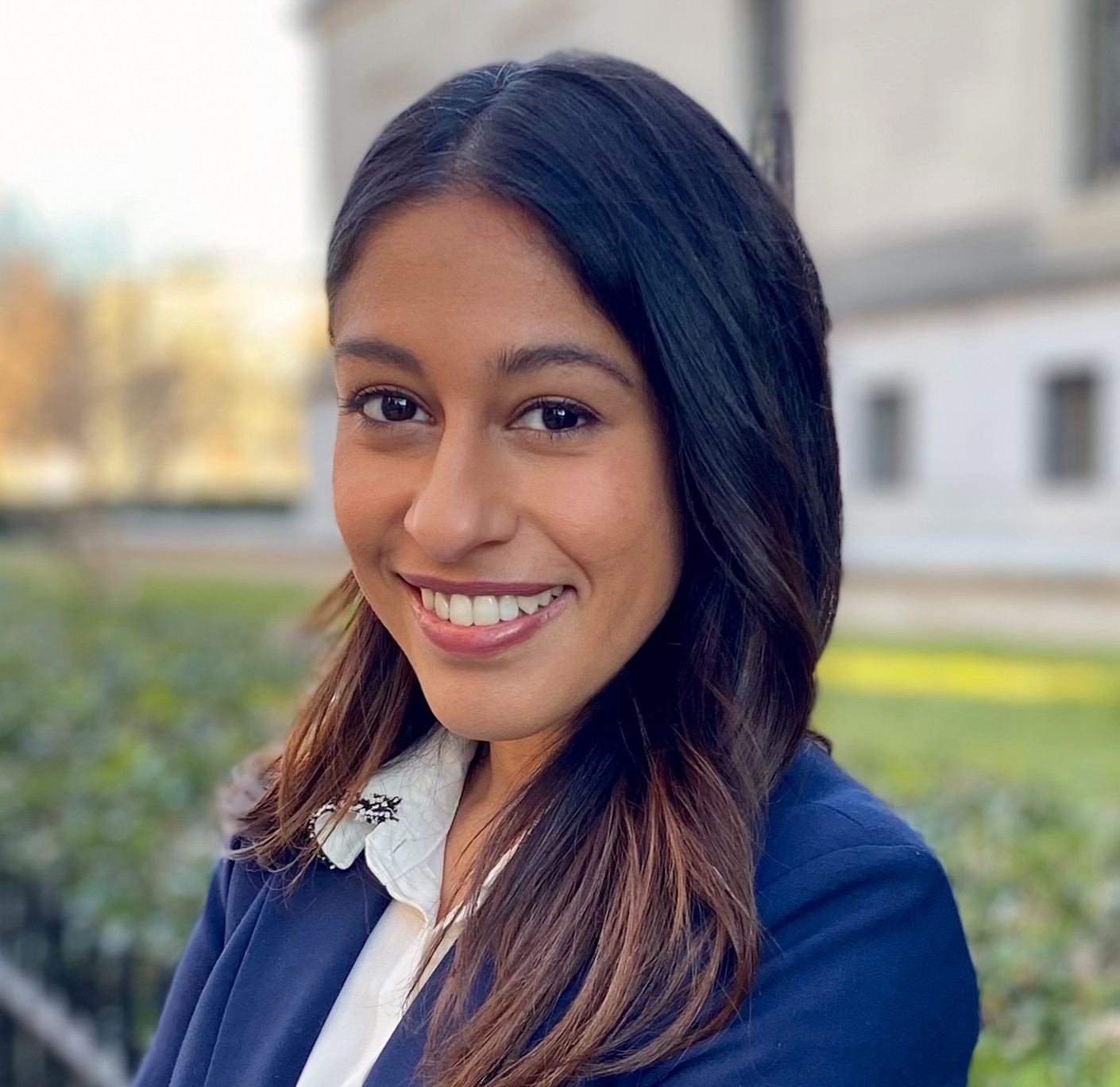
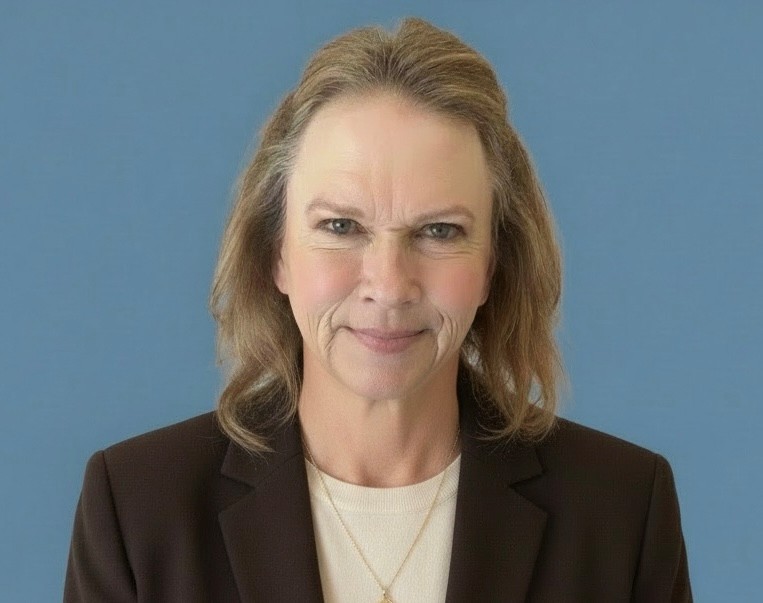
On today's episode, Denise Hanisch from the South Dakota Department of Health shares the state's maternal and infant health priorities, and ASTHO's Sanaa Akbarali highlights takeaways from the Region 7 Maternal Health ECHO Summit.

 Spotify
 Apple Podcasts
 Amazon Music
 Improving maternal and infant health outcomes requires more than quality clinical care, it takes strong partnerships, community engagement, and a commitment to addressing barriers that extend far beyond the exam room. Today, Denise Hanisch, chief medical officer for the South Dakota Department of Health, discusses the state's maternal and infant health priorities, including postpartum care, safe sleep initiatives, fatherhood engagement, and efforts to reduce disparities affecting American Indian families. She also explains how South Dakota is using data, workforce development, and rural health investments to strengthen care for mothers and babies across the state. Later, Sanaa Akbarali, senior director of maternal and child health at ASTHO, highlights lessons from the Region 7 Maternal Health ECHO Summit. She explores how public health agencies, health care providers, community organizations, and families are working together to address workforce shortages, expand access through telehealth, support community-based care models, and ensure that lived experience helps shape maternal health policies and programs.
Women, Infant, and Family Health Resources | ASTHO

JOHN SHEEHAN:
This is Public Health Review Morning Edition for Monday, June 29, 2026. I'm John Sheehan, with news from the Association of State and Territorial Health Officials.
Improving maternal and infant health outcomes requires more than quality clinical care. It takes strong partnerships, community engagement, and a commitment to addressing barriers that extend far beyond the exam room. Today, Dr. Denise Hanisch, chief medical officer for the South Dakota Department of Health, discusses the state's maternal and infant health priorities, including postpartum care, safe sleep initiatives, fatherhood engagement, and efforts to reduce disparities affecting American Indian families. Later, ASTHO's Senior Director of Maternal and Child Health, Sanaa Akbarali, highlights lessons from the Region Seven Maternal Health ECHO Summit. She explores how public health agencies, health care providers, community organizations, and families are working together to address workforce shortages, expand access to care, and ensure that lived experience helps shape maternal health policies and programs. First, here's Dr. Denise Hanisch.
Let's start with South Dakota's maternal and infant state plan. It emphasizes postpartum care, safe sleep, and systems of care. And why are these three the priorities in addressing maternal and infant health outcomes?
DENISE HANISCH:
We have a Maternal Mortality Review Committee and an Infant Child Death Review Committee, and through these committees we look at data to tell us what we can improve on to help reduce maternal deaths and infant deaths in our state, and these three areas represent the greatest opportunity for prevention for our state.
SHEEHAN:
And pretty tragically, deaths often occur in that first year, you know, not necessarily at time of birth. What are you doing to improve care for mothers and babies, you know, into that first year?
HANISCH:
You're absolutely right, that first year is the most critical part of the mom's life and the baby's life, that's where we find most of our deaths. I love the state of South Dakota. We are a great state, but unfortunately, we do have the second highest infant death rate in the country, and we are aware of this and working very hard at solving this problem. So, we've divided it into two separate areas: postpartum care for the mothers, and then the safe sleep initiatives for the infants. 58% of pregnancy-associated deaths in our state occur at that 43-days to one-year-postpartum time period. So, you're absolutely right, it happens within that year after delivery. Most of the deaths we've reviewed that occur during that time period are usually because of suicide or drug overdoses. So, we're really trying to focus our efforts on improving mental health and substance use disorder support for those moms.
SHEEHAN:
Yeah, and on the baby side, what are the strategies for safe sleep that you're prioritizing?
HANISCH:
We have quite a few, actually. 87% of our deaths that occur to our babies after birth are determined to be preventable and usually related to unsafe sleep practices. So, we have a couple initiatives we work really hard on. We have crib distribution sites across our state. What we have found, though, is some of those sites are really not accessible to a lot of our moms and babies. They're a long distance, so we're trying to improve access to those crib distribution sites. One of the other things that we have found when we're looking at our recent data is that there are increased death rates for infants who do not have a father in the picture. So, we focus a lot on the moms and the babies, but we're kind of forgetting a piece of the puzzle when we don't talk about the dads. For example, in our state, if there is a dad involved, the death rate is 6.6 deaths per 1,000 births. If there's no dad involved, that jumps up to 17.2 deaths in 1,000, and that's like, 2.5 times more deaths, just because a dad is not listed on the birth certificate. So, we're working on fatherhood initiatives, trying to get those dads engaged, be being a part of the family, understanding that they are a very important part of the family. We're doing lots of other things. We have our safe sleep messaging that we are just canvassing across the state. We're trying to get as many people as we can to take a Safe Sleep Ambassador Training offered through the American Academy of Pediatrics. We had a goal of 100 people to take this training within a year, and within six months we had 107 that took the training. And so, that's great, and we're trying to get that word out to not only parents and family, but like the community in general, the community health workers, the EMS providers, anybody that might be involved in taking care of families in our small rural towns.
SHEEHAN:
There are some real disparities among the American Indian mothers and babies in South Dakota. How are you reaching out to the native nations that share geography with South Dakota to make that connection?
HANISCH:
That's a really good question, and it continues to be a difficult one, but we just never give up, and we're always trying for our postpartum moms across the state. 89% of those women will have a postpartum visit, but in our tribe, on our tribal lands, it's that only 64% of women will have a postpartum visit. So, we're really trying to encourage and make connections and relationships, and to improve access to care, so that those women can get to those postpartum visits. One of the other things that we're trying to do is, a lot of times we think of a postpartum visit is at one visit at 12 weeks, and we're really trying to broaden the idea of postpartum care to include that up to one year after delivery, and really improve access for up to one year after delivery. We did a women's health needs assessment several years ago, and one of the biggest things that came out of that was just lack of transportation. So, if a mom's at home with two or three kids and doesn't have a vehicle, she's not going to make it to those postpartum visits that are so critical. So, we're really trying to figure out ways to improve that connection, improve that care coordination to make sure those moms are seen throughout that year after they deliver.
SHEEHAN:
Absolutely, and there are so many factors contributing as well; transportation, child care, you know, helping in the home. How, you know, these have been really salient examples of, you know, you've been able to track this stuff because of your, your records and your data keeping. Can you talk more about the importance of tracking progress?
HANISCH:
Yes, and we have several safe sleep initiatives where we are tracking the progress, and that includes reaching out to as many organizations, communities, tribes that we can on the postpartum care side, we are just beginning a maternal health access and services assessment, and that's through our Rural Health Transformation Funds And we're hopefully going to find more information and discover more information to help us kind of close those gaps and improve that access to care with that assessment, so that is just in the beginning phases. On the maternal side, the infant side, what we would really like to see, as far as its improvement in statistics, is to reduce that infant death mortality rate, and we are following that very closely, especially as you said, there are disparities with our Native American population, and we would really like to reduce those deaths that we're seeing on the reservations because of unsafe sleep practices.
SHEEHAN:
And on the public health end of the equation, a big challenge, I think, everywhere has been workforce capacity and just the ability to coordinate care. How are you addressing those challenges?
HANISCH:
Again, we hopefully get a lot of information when we have this assessment done on the maternal side. One of the other initiatives that we have is to really develop the workforce at the ground level, if that makes any sense. For example, in the tribal communities, we are supporting doula education with doulas in those areas. We think it's best if people who grow up in their communities, live in their communities, get trained in their communities, and then provide care to their community, are the best resources we have. So, if we can build up those resources within those small rural communities, we think that's the best way to go. So, a lot of our support is in developing those programs, especially for doulas.
SHEEHAN:
Yeah, and you made mention of the Rural Health Transformation Program. How are you using those funds to play a role in, like, you mentioned the doula and improving the doula workforce and infant health hubs?
HANISCH:
So, that is our goal, is to develop maternal and infant health hubs across the state where we can really improve that care coordination and access to care for those women and babies in these rural areas. One of the other initiatives we're working on is what we're calling the Rural Health Forward Initiative, and that's going to be an education kind of hub for providers across the state. We have found that a lot of our rural providers feel pretty isolated. They are looking for opportunities to improve their skills, their education, their knowledge, and they feel pretty isolated. So, we're hoping that this hub will kind of bring our urban providers and our rural providers closer together, kind of create that connection, provide education, support. We're even hoping there will be some mentorship involved in that initiative, and that's really exciting to me. I worked in rural areas forever, and I just think that's a great idea to help support those rural docs and other providers.
SHEEHAN:
Well, Dr. Denise Hanisch, thanks so much.
HANISCH:
I've enjoyed it. Thank you for inviting me.
SHEEHAN:
Dr. Denise Hanisch is chief medical officer for the South Dakota Department of Health. Now, let's hear from Sanaa Akbarali, senior director of maternal and child health at ASTHO, with some information about a maternal health summit from the Kansas Health Institute.
SANAA AKBARALI:
The Kansas Health Institute hosts a Region Seven Maternal Health ECHO Summit, an ongoing virtual series, and really, it's designed to strengthen cross-state partnerships and improve maternal outcomes across Missouri, Iowa, Nebraska, and Kansas. And the goal of the series is to really bridge community perspectives with clinical expertise and address barriers while also creating a space for regional resource sharing.
SHEEHAN:
Gotcha, and cross-sector partnerships, which is so key to success.
AKBARALI:
Exactly, exactly.
SHEEHAN:
So, some of those partnerships have to take place across public health, health care, community organizations. What does successful partnering look like?
AKBARALI:
Yeah, so maternal health outcomes are influenced by far more than clinical care alone, which is why no single organization can solve these challenges in isolation. Some of the most successful efforts we've seen bring together public health agencies, Medicaid programs, hospitals, and health systems, community-based organizations, and individuals with lived experience. One example I highlighted at the Summit was Missouri's participation in ASTHO's Boundary Spanning Leadership initiative, and what made that effort so powerful was the diversity of partners involved. So, public health, social services, mental health education, academia, and of course, community-based organizations, and together they identified shared barriers aligned around common goals, and really began to build stronger systems of support for maternal and child health. And that's really what successful collaboration looks like: not organizations working side by side, but working toward a shared vision with shared accountability, and public health agencies are uniquely positioned to convene these partners and create a shared vision for improving maternal outcomes.
SHEEHAN:
And Region Seven states specifically continue to face maternal health disparities, workforce shortages, access challenges. Why is that? And what are the specific challenges that's going on?
AKBARALI:
Yeah, so many of the challenges facing Region Seven actually mirror what we're seeing nationally, but they can be particularly pronounced in rural communities. So, one challenge that came up repeatedly through ASTHO's work on risk-appropriate care was the impact of hospital and labor and delivery unit closures, especially in rural communities, and these closures don't just reduce access to delivery services; they also disrupt referral networks, they strain transport systems, and they make it harder to maintain regionalized systems of care. And as a result, many states are asking how they can ensure that pregnant people are still receiving the right care at the right place at the right time, even when specialty services may be hours away. Another significant issue are workforce shortages, so states are facing shortages of obstetric providers, maternal-fetal medicine specialists, nurses, behavioral health professionals, and other members of the perinatal workforce, and again, these shortages are often most acute in rural and underserved areas. But the encouraging part is that states across Region Seven are actively working to address these challenges through innovative partnerships, workforce investments, and also systems-level approaches.
SHEEHAN:
Are there any examples or recommendations of actions that have supported workforce development specifically in Region Seven?
AKBARALI:
Yeah, so one thing we heard consistently from states is that workforce challenges extend just beyond provider shortages. Public health agencies themselves often have limited staffing to support maternal health initiatives and sustain programs over time. And when we think about workforce development, we also need to include both the clinical workforce and the public health workforce to really help coordinate, implement, and sustain efforts related to maternal health outcomes. And workforce development has to be approached broadly, because addressing shortages isn't simply about training more providers; it's about building a sustainable, multidisciplinary workforce that can meet families where they are. Additionally, across the country, we're seeing states invest in community health workers, doulas, peer support specialists, lactation consultants, and community-based care models alongside your traditional clinical providers, and these providers can play an important role in improving access, building trust, and supporting the continuity of care. We're also seeing efforts to expand telehealth, strengthening provider training, supporting rural clinicians through mentorship and consultation models like ECHO programs and exploring strategies to both recruit and retain providers in underserved areas. And then, one last recommendation I'd like to offer is that workforce strategy should be developed in partnership with communities. States need to assess where gaps exist across the continuum from prenatal care through postpartum care, and really consider how different workforce models can complement one another rather than relying on a single solution.
SHEEHAN:
Sure, and let's talk about a couple more of those solutions you mentioned, telehealth and things like community-based options, sort of expanding. Tell us more about those initiatives.
AKBARALI:
Yeah, so, one of the most exciting things happening right now is the willingness of states to test new approaches while also building long-term sustainability. So, telehealth has expanded opportunities to connect patients with specialty services, behavioral health supports, prenatal and postpartum care, again, particularly where, in areas where provider shortages exist. Many states have also expanded postpartum Medicaid coverage to 12 months, recognizing that maternal health doesn't end at delivery, and this expansion creates opportunities to improve the continuity of care and address ongoing physical and behavioral health needs during the postpartum period. We're also seeing growing interest in community-centered models that integrate trusted community providers into maternal health systems. And so, these approaches really recognize that improving maternal health outcomes requires addressing not only clinical care, but also transportation, housing, nutrition, social support, and other factors that may influence health. Additionally, jurisdictions are leveraging their broader rural health transformation efforts to really rethink how maternal health services are delivered, which also includes telehealth integration, innovative workforce models, and really stronger regional partnerships, which is what is happening in Region Seven. And the most promising strategies we see are often those that combine policy change, systems improvement, and community engagement, rather than focusing on one single intervention.
SHEEHAN:
And across those solutions, there's been a focus on incorporating community voices and lived experiences, making sure that the community is heard, and whatever initiatives are kind of rolled out. Talk about the importance of that. I mean, it makes sense that you want your community to have input, but it goes beyond that.
AKBARALI:
Yeah, yeah, that's a great question, John. So, the people most affected by maternal health challenges are often the ones that have the clearest understanding of where systems are working and where they're falling short. You know, data can tell us what's happening, but lived experience helps us understand why it's happening, and what meaningful solutions may look like. You know, community members can identify barriers that may not be visible through traditional data sources. So, incorporating lived experience also helps ensure that programs, policies, and interventions are responsive to the needs of the community that they're intended to serve, and it moves us from designing solutions FOR communities, to designing solutions WITH communities, and ultimately, when community voices are meaningfully engaged from planning through implementation and evaluation, the resulting initiatives are often the most effective and most sustainable,
SHEEHAN:
Sanaa Akbarali is senior director of maternal and child health at ASTHO. Earlier, we heard from Dr. Denise Hanisch, chief medical officer for the South Dakota Department of Health.
Join ASTHO and the Public Health Foundation for their next webinar on June 30, focused on academic health department partnerships. In this session, participants will gain a foundational understanding of AHD partnerships and hear how North Dakota Health and Human Services, in partnership with North Dakota State University, created a student assistantship program. This initiative offers Master of Public Health students hands-on experience, builds the leadership skills of early-career staff, and strengthens overall public health capacity. Learn more at the link in the show notes.
For more than 80 years, ASTHO has championed public health and supported the work of state and territorial health agencies across the nation. Stay ahead of the curve on emerging health policy trends and legislative developments at both the state and federal levels. Subscribe to ASTHO's Legislative Alerts and get timely updates delivered directly to your inbox. The link is in the show notes.
This has been Public Health Review Morning Edition. I'm John Sheehan for the Association of State and Territorial Health Officials.