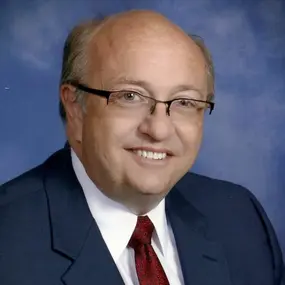
On today's episode, Tim Wiedrich from the North Dakota Department of Health and Human Services tells us how the state developed a unified public-private partnership that supports hospitals, public health agencies, EMS providers, and long-term care facilities.

 Spotify
 Apple Podcasts
 Amazon Music
 North Dakota’s statewide preparedness system grew out of lessons learned from disasters, public health emergencies, and the realities of serving rural and frontier communities. Tim Wiedrich, section director of health response and licensure for the North Dakota Department of Health and Human Services, tells us about how the state developed a unified public-private partnership that supports hospitals, public health agencies, EMS providers, and long-term care facilities across North Dakota. Tim explains how the events of September 11 and the anthrax attacks reshaped preparedness planning, leading to the creation of a centralized statewide medical cache stocked with critical medical equipment, supplies, pharmaceuticals, generators, and infrastructure support resources.
Prioritizing Emerging Infectious Disease Cases and Contacts for Follow-Up | ASTHO

JOHN SHEEHAN:
This is Public Health Review Morning Edition for Thursday, June 4, 2026. I'm John Sheehan, with news from the Association of State and Territorial Health Officials.
Today: how North Dakota built a statewide medical cache for emergencies and everyday needs. Tim Wiedrich, the [section] director of health response and licensure for the North Dakota Department of Health and Human Services, tells us about how the state developed a unified public-private partnership that supports hospitals, public health agencies, EMS providers, and long-term care facilities across North Dakota.
So, Tim, let's talk about your statewide preparedness system in North Dakota. What helped you bring all those partners on board?
TIM WIEDRICH:
Well, frankly, what spurred what we have today were the events that happened in September 11, 2001, and the subsequent anthrax attacks. Obviously, there was a large infusion of federal money that came across all of the states, including North Dakota. I was a state EMS director prior to those events, and while we were aware of large-scale emergencies and disasters is always a possibility, and we frankly even had some of those in North Dakota. For example, in 1997 we had a significant flood that caused us to evacuate the city of Grand Forks, and we were not, despite our very firm efforts, and we did a yeoman's job in terms of that response. We really didn't learn from that in terms of the impact of really large-scale disasters, and it wasn't until September 11, 2001, and this national recognition that public health and medical systems were not adequately prepared. And so, that then shifted that perspective pretty substantially.
SHEEHAN:
Wow, that's incredible. And to remember back to that time, it was a scary moment. There were anthrax alarms, alerts, people were receiving, you know, unknown substances in the mail.
WIEDRICH:
It was, and, you know, very, very, very concerning, it really made us take stock of just how poorly we were prepared. Again, it was never an intentional process. But all the warning signs that had happened prior to September 11, 2001, and as I reflected back in my career as state EMS director, I was too busy taking care of daily emergencies, cardiac arrests, and so forth, with ambulance systems and trauma centers, that this concern really ended up kind of being a side concern, and never really attained the level of attention that it should have. And September 11 really brought that into view.
SHEEHAN:
Wow, can you explain how your medical cache supports hospitals and health care systems, in, as you mentioned, sort of those everyday challenges, and not necessarily for, you know, statewide, nationwide emergencies.
WIEDRICH:
So, as we began these planning processes, going back to that time, I need to kind of tell this in the story format. We didn't know what we were facing. And before we even had our very first federal grants for either the Public Health Emergency Preparedness, the PHEP grant, or the hospital preparedness programs, we brought together all of the stakeholders that we could think of in what became a public-private partnership. And I realize that this is basically the formation of what we were envisioning at that time is a coalition within North Dakota, and that really exists to this day. So, we've taken some pretty unique approaches, in my view, from the traditional emergency management processes to say all the resources need to be consumed at a local level. First, meaning a city or a county, and then you bump it up to the state level, and once those resources are exhausted, then you bump it up to either federal resources or other state resources brought in. We really turned that on its head to say no, we're a rural frontier state, very large geographic area, very sparse population, and so, we treated this as one system. Now that one statewide system is still kind of the foundation in terms of what we do today. So, we have multiple medical systems within this, but relative to emergency response, they function under one system. We have multiple local public health units and a state health department, but that functions as one public-private partnership, and so, we really hit three separate, kind of what I would call our core competencies, or our strategic pillars for response. One of those is having a unified business process or response protocols throughout the entire state, and as we were doing that, we then centered on having local public health and local hospitals, EMS services, and other partners develop those protocols. So, it didn't matter what part of the state you were in, whether you were in the extreme east or the extreme west, wherever these emergencies were occurring, we would have similar response protocols. So, that we could transplant, regardless where we were, one response entity into another part of it. So, those response capabilities, those protocols were very, very important and are to this day. The secondary is having trained adequate staff, and we then created a medical reserve corps for the entire state, as opposed to doing this individual city or county levels. And so, roughly about 1600 people through the life of this program have signed up, and we can still rely on those individuals. About 450 of those are people that we call Verify, these are people are we're in regular communication with, and we've got another group of 50 that are the leadership of that. So, that's where those individuals come from, and if we have responses such as COVID, where we have to begin hiring people, we pull them out of the medical reserve corps, if they're available for hire, and actually make them temporary state employees as part of that response. The third part, the third pillar, is really what we're talking about today, and that's to have an adequate supply of durable and disposable medical equipment, major medical assets, and then also pharmaceuticals, and also the disposable supplies that go along with it. And so to that end, rather than giving individual grants, as many had done at the very beginning of the programs, we really developed the systems that led to what we have today, and the state medical cache was then conceptualized at that point, so this is a statewide medical cache. It doesn't matter whether there are needs in a local hospital that is a critical access hospital in one part of the state, or it's a major tertiary care center in another part, or local public health unit or a pharmacy. All of the medical system, all the public health system draws from the state-centralized medical cache, but again, it is a partnership. And so, what informs us is the ability to really try and meet the needs, the operational needs for these large-scale disasters, and then also where we have ongoing medical shortages, whether those are for pieces of durable medical equipment or disposable supplies that they can be drawing on those resources even when there's not a declared emergency.
SHEEHAN:
And can you describe how this system, how this statewide approach has best benefited these smaller communities that you mentioned? As you stated, North Dakota is far and wide, and there are a lot of smaller communities that are hard to reach and that don't have regular access to the larger cities.
WIEDRICH:
There are many ways that the state medical cache, as we've constructed it in North Dakota, really does meet our rural and frontier needs. Having this sparse population, we had a number of things to confront as we kind of analyzed, how will this system exist, and how is it best performed. And so, there are several components that we've established for this. Number one, there has to be a process for having an ordering mechanism, and so, to that end, whether you're local public health or your local hospital or any other long-term care facility, any other medical entity that's part of this coalition, you basically have an online shopping experience very similar to amazon.com. So, you go to our website, there's an electronic storefront there, you'll see product descriptions that will tell you what it is, and then you're able to fill your cart, your shopping cart, and that then does a notification when you send that into the medical cache. And then 24 hours a day, seven days a week, that is monitored, and when those requests come in, we then have staff that will make contact back with the facility that's doing the requesting. It depends on what the urgency is of whatever that is that's being requested. If it's something that's needed immediately, if we have a hospital that needs a ventilator at 2 a.m. on a Saturday morning, and they can't get it from what their normal supplier is for surge ventilators, that comes into the state medical cache, and we will deploy that with our own couriers to that facility at 2 a.m. in the morning. If, on the other hand, it's a local public health unit that needs syringes, and they can't get it through their normal supplier because of a disruption, but they've got a vaccination clinic that's coming up, they can reach into the state medical cache, and if that's a week in advance, we then would use third-party carriers like FedEx or UPS, or so forth. So, that the distribution process is dependent on whatever the specific need is, and that is how that gets fulfilled. I will say that there are a wide variety of fronts in terms of how that then gets applied. So, when we have a large scale disaster, and we have a large, large need, it could be activation of a 53-foot semi tractor trailer combinations to send those quantities of supplies out in an emergency response process. When we talk about what types of things have we had large scale emergencies, for example, when we have had flood disruptions, we have had situations where we've had tornadoes that have occurred. Most of our ongoing events are environmentally-related, they're weather-related. Could be heat emergencies, the things I've already mentioned. Those are the types of things that happen, but it can also be things like utility disruptions. Going back a while, there was a significant fire that happened in Winnipeg. Winnipeg is a natural gas supplier along the eastern side of our state, where we have major population centers for us. And there were roughly about 3,000 people in nursing homes and hospitals whose heat supply was threatened by this fire in Winnipeg. And those 3,000 individuals that were in those facilities, frankly, would have needed to have been evacuated in a process, if we weren't able to actually sustain the types of infrastructures that we have now. Fortunately, in this situation, we didn't actually have to deploy, but we had medical shelters that were available and were prepared to respond if we would have had to evacuate those facilities. Because unfortunately, it happened in the middle of the winter when we had very cold temperatures and those facilities could not have been sustained if the heat had not been restored. They're just examples after examples like that in terms of large-scale. But I also want to talk about kind of the utility of this medical cache and this approach that we've taken. Because we're carrying things that normally wouldn't be associated with a medical cache, but are really profoundly important in the environment we're functioning in. Because whether it's something that's truly medical, like a ventilator, or whether it's something that's needed for the infrastructure support of a facility, we also have to have access to those types of things. So, to that end, we have generators that are 650k generators, down to little portable briefcase-size generators, and a lot of things in between. I know that one of the things that I hear very frequently is, "Well, why is that a medical cache issue? Can't you be relying on other entities, emergency management, or private rental companies, and so forth?" But the reality is, when things get very, very serious, those things are not available exclusively to the medical system, and our experience had been, when we had other situations, we generally could not acquire what we actually needed to support the public health and medical systems from those other entities, unless they were actually adequately supplied within our own infrastructure.
SHEEHAN:
And speaking of, sort of, this importance of state and private partnerships, what advice would you give to agencies or other organizations that are trying to maintain those kinds of partnerships over a length of time? This has been decades.
WIEDRICH:
It's important to realize that the roughly 900 unique items that we have in the state medical cache. And it has a value of about $32 million, and our square footage is about 80,000 square feet. So, it's for us a substantial asset relied heavily on by the state as part of our response, by local entities as part of their responses. The main key I would say is that to maintain it, it has to be a value added. It has to be something that cannot be up on the shelf, that is 'only break glass in case of,' and then have some very unique event that occurs. And so, for us it really was fundamentally to build this into large and small emergency responses that really show value added from the perspective of the local entities who were serving in this environment, and then fundamentally going back to the very beginning, what you know, what controls what we put in the medical cache. Because, so, again, $32 million is a lot of money, but when you look at over the roughly 20 years that it's taken us to build the system as it currently exists, and I can tell you, we could not start today and say two years from now we're going to have this same asset. It takes a while, but I think, as I'm encouraging others and wanting others to look at, if you're interested in doing something, and it certainly doesn't have to be the model I'm talking about, but it is not all going to happen overnight. There's not going to be some situation that it presents itself that says, "And now we're going to build this substantial medical cache." But I think fundamentally, if we come back and we look at what's the environment that you're responding to in your jurisdiction. For us, when we did that environment analysis, we looked at what were the circumstances that lead to our delivery issues for medical supplies and materials, and what are transportation assets, and the rural and frontier nature of our state really drove the fact that we've got a centralized process. We have 53-foot trailers that are spread throughout the state, so, it doesn't all come from just one city, but that we pre-positioned those medical supplies in those areas because of the time distance that we have. Those are all factors that have to be considered, but the root cause of what it is, the problem that you're trying to solve is the foundation to begin with. Funding should not be the first part of it. The root problem should be the part of the first part of it, and then look at incrementally building, "What are the priorities that you have for us?" That's driven by the assessments that we do, like THIRA or other forms of assessment, looking at past medical emergencies that we've had impact that are large-scale and small-scale. So, the historical process is a large part of what informs what we're doing, and then really trying to keep an eye on, "What's the current environment that may not be answered by the historical processes that we can anticipate?" May be things that we need to respond to in the future.
SHEEHAN:
Tim Wiedrich is the [section] director of health response and licensure for the North Dakota Department of Health and Human Services.
Prioritizing infectious disease cases and contacts for health department follow-up is essential for controlling outbreaks, particularly when public health resources are stretched. A new five-step framework guides health agencies through developing a prioritization strategy, embedding interest holder engagement, data collection and evaluation, and reflection. Find a link to the blog post in the show notes.
For more than 80 years, ASTHO has championed public health and supported the work of state and territorial health agencies across the nation. Stay ahead of the curve on emerging health policy trends and legislative developments at both the state and federal levels. Subscribe to ASTHO's Legislative Alerts and get timely updates delivered directly to your inbox. The link is in the show notes.
This has been Public Health Review Morning Edition. I'm John Sheehan for the Association of State and Territorial Health Officials.