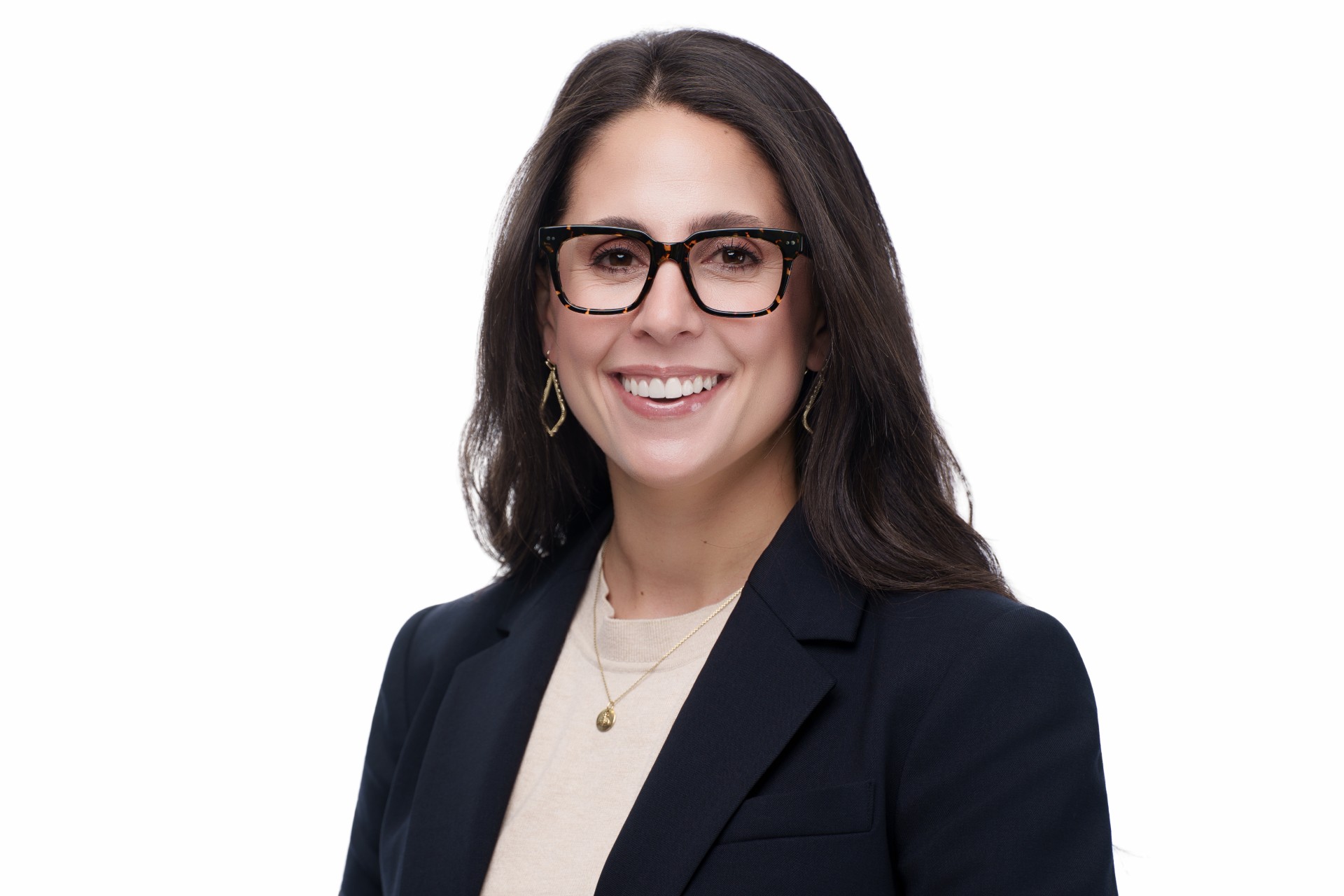
On today's episode, Gabby Hadly, emergency preparedness and response manager for the Snohomish County Health Department in Washington state, reflects on her experience in ASTHO's Developing Executives Leading in Public Health (DELPH) program.

 Spotify
 Apple Podcasts
 Amazon Music
 Technical expertise can open doors in public health, but effective leadership requires a different set of skills: communication, self-awareness, adaptability, and the confidence to lead authentically. Gabby Hadly, emergency preparedness and response manager for the Snohomish County Health Department in Washington state, reflects on her experience in ASTHO's Developing Executives Leading in Public Health (DELPH) program. She discusses how the program helped her develop a leadership style rooted in authenticity rather than imitation and why creating supportive spaces for emerging leaders is critical for the future of public health. Hadley shares how DELPH strengthened her public speaking and communication skills, connected her with peers and mentors from across the country, and provided practical tools for navigating change, conflict, and uncertainty. She also highlights the value of accountability partnerships, professional networks, and learning alongside colleagues facing many of the same challenges reshaping public health today.
Developing Executive Leaders in Public Health | ASTHO
Performance Management | ASTHO

JOHN SHEEHAN:
This is Public Health Review Morning Edition for Wednesday, July 8, 2026. I'm John Sheehan with news from the Association of State and Territorial Health Officials.
Technical expertise can open doors in public health, but effective leadership requires a different set of skills. Today, Gabby Hadly, emergency preparedness and response manager. for the Snohomish County Health Department in Washington state reflects on her experience in ASTHO's Developing Executives Leading in Public Health (DELPH) program, and tells us how the program helped her develop a leadership style rooted in authenticity rather than imitation, and why creating supportive spaces for emerging leaders is critical for the future of public health.
GABBY HADLY:
I'm the emergency preparedness and response manager for the Snohomish County Health Department in Washington state. So, we are just north of Seattle, and my job is making sure that we are ready to respond to anything that threatens the health of our 860,000 residents, whether that's disease outbreaks or natural disasters or things that we never see coming. I applied to DELPH because I've found that as you move into senior and executive roles in public health, a lot of this support for actually leading that work tends to really thin out. So, there's typically plenty of training for the technical aspects of our work, but far less for being an effective leader in this space, and almost nothing that puts you in a room with peers from across the country that are working on similar problem sets as you. So, I really wanted to continue to grow as a leader in a way that felt true and authentic to me, not like I was trying to copy someone else's leadership style, and the DELPH program was honestly one of the few spaces that was offering that.
SHEEHAN:
And the program is designed to create a supportive, inclusive, and empowering environment. I'm wondering, how that impacted what is becoming your leadership style?
HADLY:
I don't think there's a single right way to lead in public health, and right now I think we just really need people who can think differently and hold the space that their teams need to do the amazing work that they do, even when everything around them is chaotic and changing, and I think a big part of that, at least in this moment, is being willing to speak up and advocate for public health and for our teams and the communities that we serve, even when it's uncomfortable or unpopular, and I think the cohort really gave me room to explore and test different ways of doing that effectively, and then really gave me the confidence and support to keep doing that when I got back home to Washington.
SHEEHAN:
When you began the program, was there an aspect of leadership or training that you really wanted to focus on, and if so, is it has that stayed constant through the experience?
HADLY:
Honestly, I think there's probably some irony in saying this on a podcast, but for me it was actually public speaking, so as I moved into more senior roles, I was suddenly speaking far more often, and typically not just for my department, but for our entire sector, and I feel like when the stakes are that high, you really want to be good at it. So, DELPH gave me a lot of ways to practice that, from being paired with an accountability partner whose background is actually in communications to recording and analyzing video of myself speaking, and then learning from speakers who taught us what effective communication actually looks like for the audiences that we're trying to influence or talk with. So, I think it's honestly the reason that I say "yes" to things that I probably used to talk myself out of, probably this conversation included, honestly, and I think it'll probably be something that I continue to work on for years to come, but I've definitely gotten a lot more comfortable through the program with that.
SHEEHAN:
Can you share anything that your accountability partner shared with you about communications, or just as an approach to to your career?
HADLY:
Yeah, absolutely. So, my accountability partner is actually my counterpart in Philadelphia. So, alongside working on the leadership aspects of the program, we've also gotten to trade a lot of kind of practical lessons from our roles and best practices from across the country, and I think in public health it's really easy to get tunnel vision on, you know, your own jurisdiction, which you absolutely should be focused on, but the program really does an amazing job of helping you keep your head up, so that you're seeing and learning from what's happening across the country and other counties, states, and territories, and for me, with my accountability partner and his background in communications, it's been really amazing. He's given me a lot of kind of tips and suggestions, whether that's, you know, how you prepare for public speaking events, or how you actually present yourself in that space. I'm typically someone who speaks way too fast, so I think he's given me a lot of tips and tricks to kind of slow down the cadence of. But then there's also kind of more practical pieces, and you know, recently I was hiring for a risk communications role on my team, and I actually was able to have him sit in on the interview panel and lend his expertise to helping us ensure that we got the right candidate for the role, so I think, you know, being able to have that kind of expertise just a phone call away is one of the amazing things of the program, and part of the cohort that we have, with everyone having such diverse backgrounds, and I think it's also just been a really good reminder that as you move into more and more senior or executive roles, you don't have to hold all of that subject matter expertise yourself, you really just need a team and people who you can turn to, who are subject matter experts, and who you can trust to advise you. And so that's really been amazing, and that's part of what I found in the program.
SHEEHAN:
Has that perspective played a role in how you've approached, you know, seeking promotions, or even how you sort of handle priorities within your department?
HADLY:
Yeah, I think it's probably helped me with both, honestly, and maybe in different ways. I think on the confidence side, for you know, seeking promotions or, you know, applying to higher level leadership roles, one of the first things that you do in the program is map out where you want to go and how you think that you can get there, so what trainings or opportunities do you want to pursue? What networks do you want to build, and what are the exact roles that you're aiming for? And I think for me that was a really clarifying exercise, because it helped me get really clear on the kind of impact that I want to have, both for the people I serve in my department, but then also for the public health field as a whole, and so I think it's helped me feel a lot more confident in putting my name forward for roles that are on that path, and to handle shifting priorities. Our cohort has worked through some of the biggest changes public health has probably seen in decades. We weren't learning about frameworks in an abstract sense, we were learning about them and then actively applying them in real time, whether that was communications, change management, governance, or conflict resolution. We learned about them and then had to put them to practice and test them right away. So I think everyone in our cohort probably came out a lot better prepared for whatever comes next in public health.
SHEEHAN:
Do you have a big takeaway from the program?
HADLY:
I think the big takeaway for me really comes down to the people you leave with a network and a community, and by the end of the program you have peers across the country who you can call whenever you hit a problem that you've never seen before, or you just need to talk something through. So, I think for anyone that's maybe on the fence about applying, that's the part that I'd say I've really found the most valuable and the most unique to the program. And, honestly, for a field that's taken so many hits over the last few years, I think being around people who show up for each other every day and still show up for their teams and their communities, it's really been something that gives me a sense of hope, and that's probably the part of the program that I found the most surprising, and it was maybe one of the things that I needed the most right now.
SHEEHAN:
Gabby Hadly is emergency preparedness and response manager for the Snohomish County Health Department in Washington State.
ASTHO and the Satcher Health Leadership Institute at Morehouse School of Medicine, with support from CDC, invite qualified professionals to apply to the next cohort of the Developing Executive Leaders in Public Health (DELPH) program applicants must be currently employed at a local island, territory, tribal, or state public health department. Federal employees are not eligible to participate in the DELPH program. The deadline for applying is July 31. Learn more at the link in the show notes.
ASTHO helps states and territories strengthen public health systems, so they are aligned, data-driven, and focused on outcomes. Support is provided to health agencies through resources, capacity building, and technical assistance to help build and sustain strong performance management systems. Find more at the link in the show notes.
This has been Public Health Review Morning edition. I'm John Sheehan for the Association of State and Territorial Health Officials.