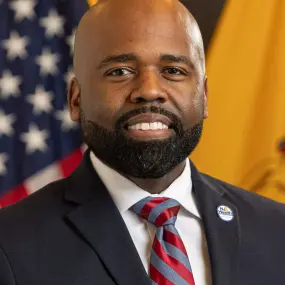
On today's installment of the PHIG Impact Report, Raynard Washington, ASTHO member and commissioner of the New Jersey Department of Health, discusses how PHIG funding supports local health departments, strengthens the state’s public health workforce, and enhances communications infrastructure.

 Spotify
 Apple Podcasts
 Amazon Music
 Public health systems need sustained investment in the workforce, infrastructure, data and technology that allow them to protect communities. In New Jersey, PHIG funding is helping strengthen those foundations. In this PHIG Impact Report, Raynard Washington, ASTHO member and commissioner of the New Jersey Department of Health, discusses how the state is using PHIG funding to support local health departments, rebuild and develop the public health workforce, improve succession planning and modernize fragmented data systems. He also explains how New Jersey is making more public health data accessible to residents, including immunization coverage at the municipal level, and strengthening its communications infrastructure to better reach communities in an increasingly crowded information environment.
This work is supported by funds made available from the Centers for Disease Control and Prevention (CDC) of the U.S. Department of Health and Human Services (HHS), National Center for STLT Public Health Infrastructure and Workforce, through OE22-2203: Strengthening U.S. Public Health Infrastructure, Workforce, and Data Systems grant. The contents are those of the author(s) and do not necessarily represent the official views of, nor an endorsement, by CDC/HHS, or the U.S. Government.
Public Health Infrastructure Grant: Resources & Impact - PHIG

JOHN SHEEHAN:
This is Public Health Review Morning Edition for Tuesday, September 1, 2026. I'm John Sheehan with news from the Association of State and Territorial Health Officials.
Public health systems need sustained investment in workforce, infrastructure, and data technology to protect communities. In New Jersey, PHIG funding is helping strengthen those foundations. In this PHIG Impact Report, Dr. Raynard Washington, ASTHO member and commissioner of the New Jersey Department of Health, discusses how the state is using PHIG funding to support local health departments, rebuild and develop the public health workforce, improve succession planning, and modernize fragmented data systems. He also explains how New Jersey is making more public health data accessible to residents, including immunization coverage at the municipal level, and strengthening its communications infrastructure to better reach communities in an increasingly crowded information environment.
Dr. Raynard Washington, welcome to the show.
RAYNARD WASHINGTON:
Thanks.
SHEEHAN:
Dr. Washington, New Jersey has used PHIG funding for a variety of uses. In general, how is it using PHIG funding to strengthen its ability to serve communities?
WASHINGTON:
Yeah, so I think the Public Health Infrastructure [Grant] funds have really been transformative for public health across our country. It has allowed us to be able to, I think, really importantly, support our local public health agencies that are on the front lines of responding to the various public health needs of our communities across the state, and so a large portion of that is really going to bolster the infrastructure of our local health departments to ensure that they have adequate workforce and staffing to be able to respond on the ground, whether that be communicable disease nurses or individuals who are out doing environmental health inspections. That core infrastructure in their workforce is being supported at the state level. Similarly, we are supporting a wide variety of, I would say, critical public health functions that have been underinvested in for too long, frankly. And so I think we are really trying to leverage the funds in a way that allows us to do public health better and to meet the needs of the folks across our state. Some specific examples, obviously, one that is top of mind for many of us in public health is is our workforce, and so ensuring that we have adequate staffing to be able to meet the demand, and that's that's staffing from folks who are working in our public health laboratory to our folks who are on the front lines and our epidemiology team who are responding to communicable disease threats to folks who are out in the community every day working to connect New Jerseyans to health information and health resources, and so we have tried to leverage it in a way that allows us again to do the the core public health functions in a better way.
SHEEHAN:
And another area of improvement has been data modernization. Can you give an example of how New Jersey has has improved that functionality?
WASHINGTON:
Sure. Yeah. So data modernization has, you know, our data systems across public health have, for too long, sort of suffered from fragmentation, where we've built systems around specific diseases and built systems around specific populations, but haven't been able to have sort of that total global view. So here in Jersey, much of our data modernization has focused on trying to bring connectivity to those fragmented systems, so that we can have a whole picture of the health and well-being of New Jersey. And so we've been able to make some significant enhancements to our data warehouse and expand how we are able to integrate the various types of data that we collect as an agency, from communicable disease data to biostatistics, into a central warehouse where we're able to look again across. We're able to view New Jerseyans as New Jerseyans and not by condition and not by or functionality, but sort of be able to look at the data sets together to be able to tell a more holistic picture, we've also made some investments in our ability to be able to analyze the data in a more robust way and make more data transparent for the public. So some of our public health infrastructure funds have gone into building additional capacity among our teams to be able to, for example, build Tableau dashboards and then actually take those skills and put them to use in real time to allow us to be able to leverage data and make it available to the public for awareness. So one example I can think of right now is our team has been working on making immunization coverage rates by municipality available to the public, so that folks can see sort of where and how immunization coverage looks at the municipal level. We traditionally have only viewed that at the county level, which of course is a huge geographic boundary. But being able to sort of drill down further allows residents to see sort of how their communities are. But also, it allows our local public health partners to use that data to drive action on the ground to focus their their efforts around vaccines and immunization uptake, and so those kinds of of skills building on our workforce side, but also bringing in the using you know PHIG funding to support the tools that are able to to to make that data more accessible to our residents has been has been transformative.
SHEEHAN:
On the flip side, from technology is personnel and workforce development, workforce planning, professional development. Can you share a story of how that has made a difference?
WASHINGTON:
Sure. Yeah. So, so, so many stories to share. Even not just from my time here in Jersey, but even when, as I reflect on my local government, where I was previously, was also a grantee, a grantee. You know, our workforce across public health across this country was, you know, really I would say, significantly devastated as a result of the pandemic, both because folks were exhausted from the work that went into pandemic response, but also we lost a lot of our team members for a variety of different reasons. Whether it be sort of natural attrition, folks retiring, retiring early, or people choosing to exit the field because of the extensive politics that got involved in the work, and so we really had to rebuild following, once we transitioned out of the pandemic phase of COVID. And so I think part of that, what PHIG has allowed us to do, is to actually bring in initiatives that support the well-being of our workforce and the development of our workforce. And so here in Jersey, we've established an office that's focused specifically on workforce development. That team has been able to bring in really extensive training resources. We're making additional education support available to our teams, such that they can go back and get more training. And in state government, that's essential because, as we all know, government is not the most competitive payer. And so, in terms of being able to offer our teams skills building as well as additional education, you know, training that we can then take advantage of as an agency to give folks promotional opportunities is the way that we're able to again keep a healthy, trained workforce. We've also been leveraging some of the resources to think more strategically about succession planning as an agency. We have a large share of our workforce who are eligible to retire, and so that's a lot of knowledge that needs to be retained within the agency if folks decide to leave state government, and so just making sure that we have strong succession plans in some of those very key areas has also been a priority for us. And we've been able to leverage our Office of Workforce Development to help us both lead those training and educational opportunities, but also to help us think strategically about succession planning as an agency.
SHEEHAN:
The Local Health Liaison Program connects 103 local health departments across the state. Can you illustrate how those local partnerships and and relationships have also contributed to your success?
WASHINGTON:
Sure. Yeah. So as I started talking, you know, a large share of our PHIG funds went out the door to support our local public health agencies, and so our Office of Local Public Health works with our more than 100 local health departments' health officers across the state to ensure that they are also prepared to be able to deliver frontline public health services to those communities. The local health departments have leveraged the PHIG support in a whole host of ways, from being able to do some infrastructure building, to be able to staff up programs that have been understaffed, to be able to support lead and healthy home initiatives, to be able to support vaccine outreach, to support environmental health programs, and so again we have 100 plus health departments and local health departments across the state. So you go to anyone, and they'll tell you the way that they've been able to leverage those dollars to meet the specific needs of their community. Which I think is really one of the the lessons learned from from the PHIG program is that we do need to create the flexibility that that local governments and state governments can tailor how they build infrastructure to the specific needs of their state and their local area, and so we've been very proud to sort of have our teams helping the local health departments think about how to be strategic in leveraging these dollars, how to make sure that we are being thoughtful in and and investing in sustainable infrastructure, and then also using these investments to help as advocacy tools to local and state government about what's actually needed to make public health work across the state of New Jersey.
SHEEHAN:
PHIG funding has also helped you, you know, improve internal capacity. As well as getting more of the public-facing work out there, can you contrast how those two initiatives have benefited New Jerseyans?
WASHINGTON:
Yeah, so I mean, I think on the public side of things, you know, we have also leveraged the PHIG funds to help bolster our communication strategy. As you know, right now public health is contending with massive incoming information from various sources. People are able to consume information, whether it be from AI or from, you know, internet doctors or whoever it might be, and so people have a lot of information sources. And so as we think about public health messaging and ensuring that we are staying keeping up with with how people are consuming information, and we're also able to ensure that we are leveraging messages that resonate with residents, and that our messages also are are are are just as loud as some of the other things that may not be in the best interest of residents' health and well-being, and so we've also been able to bolster our communications infrastructure, as well as thinking about designing communication strategies and messages and campaigns that really make the to tell the story of public health. Oftentimes, public health is sort of in the back, in the backdrop, and if nothing actually goes wrong, people don't know that we were there and we're doing anything, which is sort of not a bad thing. But when it comes down to both resource allocation as well as just general awareness, sometimes it's good that people know that the work is happening, and so I think it's, you know, making sure that we're able to tell the story about the variety of things that we do. Public health. I'm always telling folks we're not one business. It's a lot of different things in one, and so as we think about whether it be the labs or the work we do on lead, or the teams that we have on dairy farms doing inspections, I mean, it's a wide variety of areas that we touch. So being able to tell that story, so our residents know that one, that we're here, and that we're doing this work for them to make sure we keep them healthy and keep them safe, but also that we are a trusted partner across the state.
SHEEHAN:
Across all of the PHIG-funded initiatives or programs, is there one that you could point to as maybe your greatest success?
WASHINGTON:
Oh, that's a tough question, John. I'm sure our teams will listen to this and say, "Oh, he chose one. He chose one over the other. I'm going to, so I'm going to say no. What I will say is that I think you know PHIG is an excellent example of where we as a country have to how we have to start to think about public health funding. Communities need, we have to invest in public health both before, during, and after emergencies. And for too long we we have suffered from this sort of you know boom and bust funding where we we get resources and then when the emergency goes away, then the funding goes away, and it's really important that we make those investments on the front end. And I think PHIG is really a model for how we should think about long-term funding. And I hope that, you know, folks, our colleagues in Washington across the country are listening to this, and recognize that this has been transformative. But it is short, it is term-limited, right? And so we've been able to really make progress here across the state of New Jersey, as well as every other state in this country and our large municipalities. If we want to continue that progress, we have to continue to invest, and we need to do so when there's not a pandemic and when there's not a global health emergency. Which, of course, that always is the case. And as I think about what's happening right now across the world, and you know, we have obviously the Ebola outbreak continues in the DRC, we we have to stay prepared as a country, and we can't let our foot off the gas in terms of ensuring that the infrastructure that is responsible for protecting public health is is invested in and is strong, just as strong as as every other public safety measure we invest in. Public safety, from our military to our law enforcement, we have to also be ready to protect health.
SHEEHAN:
And looking ahead, is there is there a program that wouldn't have been possible without PHIG funding? And what deserves sustained attention and development?
WASHINGTON:
Yeah, I think I would say all of it. I I don't want to sort of you know cherry pick any particular item that's here, but I think the the the big buckets of PHIG are exactly what they needed to be. We have to have investments in workforce. We have to have a strong workforce because we are only as strong as the teams that we have supporting us. And if we don't have funding to fund staff, then we don't have the ability to actually get anything done. We have to have core infrastructure. So we have to be able to have the systems and processes that make public health work. We have to be able to invest in those and keep those up to date. And then we've got to have data systems that actually facilitate data and technology that help us facilitate that. Because in a world of growing costs, we have to be able to again leverage technology in a way that allows us to get our work done more efficiently, faster, and more reliably. And so, I think those three buckets that are sort of the sections of PHIG are the right areas for focus and investment. And all of it needs to be sustained in terms of how we do how we move forward. And that I think that is the the big message that we we all have to be sending is that we got to have workforce, we got to have infrastructure, we've got to have data and technology, and those investments are critical to making public health work in a 21st century environment.
SHEEHAN:
Dr. Raynard Washington, thanks so much.
WASHINGTON:
Thank you. Great to be here.
SHEEHAN:
Dr. Raynard Washington is an ASTHO member and commissioner of the New Jersey Department of Health.
This has been another PHIG Impact Report, part of Public Health Review Morning Edition. I'm John Sheehan for the Association of State and Territorial Health Officials.