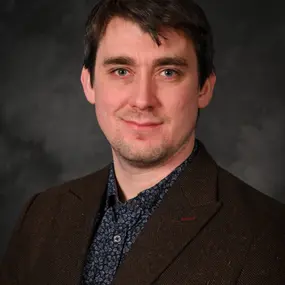
In recognition of National Overdose Awareness Day, Michael Jurasek, a CDC Foundation public health analyst with the ORS program serving Alaska, shares the work the program has done in Alaska to help prevent and be prepared for overdose in the community.

 Spotify
 Apple Podcasts
 Amazon Music
 International Overdose Awareness Day is an opportunity to spotlight the importance of being prepared to respond when overdose spikes occur. Overdose spikes can develop rapidly, leaving public health and safety agencies with a narrow window to respond. In Alaska, public health, public safety, tribal health, treatment and recovery organizations, and community partners used a tabletop exercise developed by ASTHO and the Overdose Response Strategy (ORS) to test a statewide overdose spike response protocol and identify where preparedness efforts needed to improve. ORS is a unique public health and public safety partnership between the Office of National Drug Control Policy and the U.S. Centers for Disease Control and Prevention through their support of the High Intensity Drug Trafficking Areas program and the CDC Foundation. ORS connects public health and public safety agencies so they can share timely information and support innovative, evidence-based strategies to reduce overdoses and save lives. Michael Jurasek, a CDC Foundation public health analyst with the ORS program serving Alaska, discusses how the exercise helped Alaska strengthen notification systems, engage populations at heightened risk, and build relationships with new partners. He also shares how lessons from the exercise were put into practice during a real-world overdose cluster and why jurisdictions should treat preparedness as an ongoing, iterative process.
Public Health Responds to the Overdose Crisis | ASTHO
Overdose Spike Preparedness Exercise Tabletop in a Box | ASTHO
Leading Change October 2026
Beyond the RHTP Buzz: Is Your Rural Community Ready to Scale What Works?

JOHN SHEEHAN:
This is Public Health Review Morning Edition for Monday, August 31, 2026. I'm John Sheehan with news from the Association of State and Territorial Health Officials.
Today is International Overdose Awareness Day. Overdose spikes can develop rapidly, leaving public health and safety agencies with a narrow window to respond. In Alaska, public health, public safety, tribal health, treatment and recovery organizations, and community partners used ASTHO's tabletop exercise to test a statewide overdose spike response protocol and identify where preparedness efforts needed to improve. Today, Michael Jurasek, a CDC Foundation public health analyst with the Overdose Response Strategy program, serving Alaska, discusses how the exercise helped Alaska strengthen notification systems, engage populations at heightened risk, and build relationships with new partners.
MICHAEL JURASEK:
As a program, the ORS really works to implement kind of community-based overdose prevention and response at the nexus of public health and public safety. We do so by strengthening partnerships between law enforcement, public health, and strengthening overdose response programs that involve those two parties. And another way we do that is by engaging in timely data sharing to help break down those data silos between those two entities. And in Alaska, actually not just Alaska, in jurisdictions across the country, there's a need to translate that real-time overdose data into effective overdose spike and cluster responses. So, with that knowledge, our public health and safety partners in Alaska asked the ORS to pioneer spike preparedness efforts at the state and local levels.
SHEEHAN:
I see. And so, one of those efforts was to utilize the Tabletop Exercise in a Box toolkit that was developed by ORS, the Overdose Response Strategy, and ASTHO. So, you sort of alluded to this, but what was happening in Alaska, and what is happening across the country, that necessitated strengthening those preparedness skills?
JURASEK:
Yeah, I like to tell folks that spikes in overdose occur whenever there's a shift in the in the substance use landscape, either a shift in in what's being used or how it's being used, right? And bringing this back to Alaska, I had mentioned how my public health and safety partners had tasked the ORS with spike preparedness, and in furtherance of that effort, I had convened a spike preparedness work group that consisted of state public health, public safety, tribal health and safety, some of our treatment and recovery partners to work on a statewide spike response protocol. It was late 2024 when we had a draft of that of that protocol on the table, and we realized that a tabletop exercise would be a great forum in which to test the tolerances of that draft. As I said, you know, overdose spikes and clusters are always occurring just as a consequence of changes in in the substance use landscape, and we had already been identifying and responding to those while also building our protocol. So we had both this protocol on the table that we wanted to test and real-world examples to help inform, you know, scenario selection. So using a toolkit and performing a tabletop exercise wasn't as foreign to our team as it could have been because we had again, this protocol in in in in real-life experience.
SHEEHAN:
And so Michael, how did you adapt the exercise, the tabletop exercise for Alaska? And, you know, what did that look like? Who are the partners you brought in?
JURASEK:
The toolkit's really nice in that it provides a step-wise road map to building an exercise. We started where the toolkit starts, which is building a partner list. We were pretty intentional about the partners that we invited to plan the exercise and then who we who we invited to actually participate. Our planning team, for instance, included syndromic surveillance epidemiologists, overdose data to action team members, some of our public health emergency response professionals, and then our state treatment and recovery teams. We essentially just made sure we had a we had a cross section of who would be involved at each stage in the response to help to help plan this. I would highlight just how critical our public health emergency response professionals were because they're already out there hosting tabletops and and developing protocols across an array of response initiatives, you know, infectious disease and mass casualty and the like, and they were they were super helpful in being able to set the tone for how the tabletop will likely unfold and how best to facilitate that tabletop. I'll also highlight how important it was to have our syndromic surveillance epidemiologists there when it came to scenario selection. They were crucial for looking at historical spike data and choosing spike events that, you know, ended up resulting in real-world responses and that had the characteristics that lead to decision-making in a response team. So that's a bit about how we adapted the toolkit and who we who we involved for planning.
SHEEHAN:
Yeah. And so what scenario did you choose? What did the actual activity look like?
MICHAEL JURASEK:
We started with a framing scenario that considered a spike in overdoses in an urban center in Alaska, in Anchorage, Alaska, the largest city in the state. And from there, we used a handful of injects, essentially just variations on a theme, to ask the question: Well, what if this component of the event looked different? We had one inject that that asked what if what if it was the youth population that was impacted or what if this was a rural Alaskan community? So that was the framing scenario and the injects that we ended up going with. The event itself was held virtually. We had two 2-hour sessions, and we had a goal in mind for our tabletop exercise. We wanted to run through an exercise and just boost everyone's familiarity with spike preparedness, but we additionally wanted to test this draft protocol that we had. So, to that end, we ended up inviting primarily some other state partners. We had state public health represented, public safety, HIDTA, the High Intensity Drug Trafficking Area Program, and then our tribal public health and safety colleagues, being the other big health authorities, health and safety authorities, in the state, and then a handful of community-based organizations, primarily those that served populations most at risk for overdose.
SHEEHAN:
Yeah, for sure. You've cited a lot of different partners, a lot of different stakeholders, a lot of systems that all had had to be involved in that exercise together. As you were stress testing it, what was exposed? Did it go smoothly? Were there challenges or opportunities that that came to light?
JURASEK:
The most useful outcome of the exercise is that it does a good job identifying both strengths and opportunities. The opportunities that we had identified was just the need to have more partners at the table, specifically partners in corrections and partners serving unhoused populations. These are two populations that we identified were kind of most at risk for experiencing an overdose, experiencing a fatal overdose, and perhaps, you know, there was more opportunity to serve those populations specifically in these periods of heightened overdose risk. We identified also that we need a quicker notification process if we are really hoping to achieve that goal of saving lives in that moment. Overdose spikes can evolve rather quickly over the course of hours to days, which gives us a really narrow window to get notifications and awareness out to out to the community. Some strengths that we identified, you know, Alaska, I think, does an exceptional job when it comes to access to quality data, and then I also have to applaud our overdose education and naloxone distribution efforts. Alaska's got a really strong partnership at the state level with community-based organizations to get naloxone out across the state, or even through tribal partners getting naloxone mailed to rural locations.
SHEEHAN:
Yeah, and so did you bring in those additional partners from corrections and from your unhoused services? And what did you do about the notifications?
JURASEK:
So, yes, we have engaged primarily our Office of Housing, Prevention and Education within our Emergency Medical Systems at Public Health. They are now involved in our spike preparedness work group, and we've actually recently started establishing a partnership with our state Department of Corrections, where we're going to start sending spike notifications and even some drug trafficking intelligence to correctional facilities across the state. And I should say, you know, we hosted this exercise over a year ago, and we're only just now starting to make headway in that partnership with the Department of Corrections. So if there's a lesson to be learned here is that you can't rush relationships, and these things take time. Regarding the notification, we actually drafted a spike notification protocol that goes hand-in-hand with the response protocol. It acts as an opt-in email listserv where once we have identified and validated spikes in the community, those who are who are opted in will get that notification. So, I'd say those were two big changes that were made, again, pulling in those new partners and making sure that we had a notification process that not only served traditional public health partners, but also non-traditional public health partners, too.
SHEEHAN:
Sure. And during the exercise, do you notice either in your team or in partners, like a shift in how they thought about overdose spike preparedness?
JURASEK:
I think we were early in the exercise. I think we were engaging on the questions around notification and response. That's when we began thinking about how we spread awareness and resources among those most at risk for fatal overdose, and that forced us to think about our response a little differently. It really made us think about our response in terms of of those populations most at risk, which made us think differently about some of the traditional tools that we have at our disposal in public health just for emergency operations. And just as an example, I talked about the notifications earlier. Usually, when a public health department or my state public health department would want to get information about, say, an infectious disease out quickly, it would go out through a HAN, a public health alert network bulletin. But by design, that's most likely to be seen by hospitals or healthcare providers. But when we're thinking about populations at risk for overdose, we also want to make sure to capture those community-based organizations, shelters, recovery organizations that might not always see notifications through that through that traditional tool. So, when we started thinking about populations at risk for overdose, we realized that that this tool, this process which our my public health partners were quite familiar with might not always be the most appropriate for awareness and education. So thus, why we created this new notification process.
SHEEHAN:
And so, for some jurisdictions that are thinking about, you know, employing the tabletop exercise, going into it, what should they think about ahead of actually conducting the exercise?
JURASEK:
I think the most important thing that a jurisdiction can do is to make sure they have a clear and specific goal in mind for why they want to host the exercise, and what they hope to get out of it, because that will inform the decision-making at every step of the planning process. Is spike preparedness a new concept to you and your partners? If so, then maybe you just want to host more of a facilitated discussion. In our case, we had a protocol on the table and some real-world experience, so we were much more ready to do kind of the scenario-based role-playing tabletop. But either way, having that specific goal stated and in mind will really help shape how you use the tool kit.
SHEEHAN:
And it sounds like you had a really positive, successful experience. Is there going to be a need to do it again? If so, when?
JURASEK:
Yeah. So, I ascribe to the preparedness school of thought that emphasizes kind of the importance of planning over the actual plan or protocol that's produced. Preparedness is a living and iterative process. So, we will be hosting exercises. We landed on every two years, and this just helps that as new drug threats or partners emerge on scene, then the practice of running a response will change and the exercise will give us a good controlled environment to make those to make those changes to our to our protocols.
SHEEHAN:
Michael Jurasek is a CDC Foundation public health analyst with the Overdose Response Strategy program.
Join us for ASTHO's Leading Change workshop, October 6 and 7, designed specifically for professionals in clinical and non-clinical public health roles. This two-day, in-person opportunity equips participants with strategies and skills to navigate change and uncertainty as individuals, team members, and organization-wide leaders. Emphasizing actionable instruction and resources, it enables leaders to create and implement real-world initiatives at their agencies for 2026 and beyond. Participants will gain tools to design targeted initiatives and foster tangible organizational change. This experience prepares leaders to drive meaningful impact in their workplaces and communities. Learn more at the link in the show notes.
How can communities use data and local assets to make a stronger case for investment in rural health? On October 2, ASTHO and Metopio will host a practical conversation on the Rural Health Transformation Program and the opportunity to build lasting solutions beyond the funding. The webinar will explore how organizations can use data to understand rural communities, connect local assets and outcomes to identify opportunities, and position promising programs for investment and sustainability. The panel features ASTHO Chief Medical Officer Susan Kansagra. A registration link is in the show notes.
This has been Public Health Review Morning Edition. I'm John Sheehan for the Association of State and Territorial Health Officials.