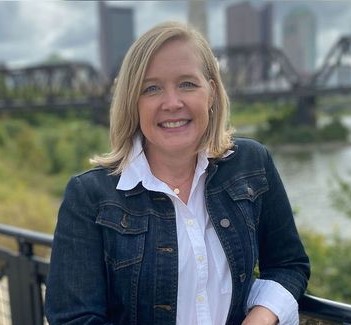
On today's episode, Melissa Sever from the Public Health Accreditation Board tells us about the Strengthening Public Health Workforce Capacity in Island Jurisdictions Project and the unique workforce challenges facing island jurisdictions.

 Spotify
 Apple Podcasts
 Amazon Music
 What does it take to strengthen the public health workforce in geographically isolated island jurisdictions? Melissa Sever, a senior advisor for public health systems and services at the Public Health Accreditation Board, tells us about the Strengthening Public Health Workforce Capacity in Island Jurisdictions Project, a collaborative effort supporting Guam and the Commonwealth of the Northern Mariana Islands. Melissa discusses the unique workforce challenges facing island jurisdictions and explains how the project evolved from a structured planning initiative into a highly-tailored coaching experience. She also highlights the role of Public Health Workforce Interests and Needs Survey (PH WINS) data, the importance of relationship-building across jurisdictions, and how flexible funding through the Public Health Infrastructure Grant made this long-term engagement possible.
Strengthening Public Health Workforce Capacity in Island Jurisdictions | ASTHO
ASTHO Policy Institute Lunch & Learn Series: Improving and Strengthening Prenatal Care Engagement

JOHN SHEEHAN:
This is Public Health Review Morning Edition for Monday, June 1, 2026. I’m John Sheehan with news from the Association of State and Territorial Health Officials.
Today, building public health workforce capacity across island jurisdictions. Melissa Sever, a senior advisor for public health systems and services at the Public Health Accreditation Board, tells us about the Strengthening Public Health Workforce Capacity in Island Jurisdictions Project, a collaborative effort supporting Guam and the Commonwealth of the Northern Mariana Islands. She’ll discuss the unique workforce challenges facing island jurisdictions and explain how the project evolved from a structured planning initiative into a highly tailored coaching experience.
So, Melissa, the blog highlights that geography and connectivity are unique challenges for the islands. And certainly, you know, the territories and islands across US territories have their own challenges, even distinct among themselves. Can you talk about that approach to approaching each territory, each island as a specific place?
MELISSA SEVER:
Sure. So, John, I'll start by saying, you know, when we think about workforce challenges that happen in the field of public health, they tend to be pretty similar. You know, there's challenges related to pay as compared to other sectors. Generally, candidate pools are smaller. We've got a lot of folks going into public health, but they're not choosing governmental public health as a career. Often public health workforce, they're wearing multiple hats, they're serving in multiple roles, there's frequent pivots in their work due to funding changes, there's burnout, particularly post-COVID. So, those challenges I think are general across the field of public health. But when we think about the island jurisdictions, those challenges are just compounded and exacerbated because of their geographic location and their isolation. So, pay tends to be generally pretty lower than even it is stateside, so that's compounded. There's fewer academic institutions that are, you know, creating sort of, this pipeline of public health employees. There's competing demands and obviously limited staff then to meet those demands. If you think about, like the recent typhoon that just went through the Pacific Islands. The work, all non-essential work stops and it's all hands on deck to respond to that. And they don't have the benefit of calling a neighboring jurisdiction to pull in support. I would also just acknowledge, too, that the time differences and the travel just really presents such a challenge as we think about the training and development of our island workforce as well. I know of more than one colleague at an island who said, I got up at two o'clock this morning so I could participate in this live virtual training, they just, the time again and the travel presents challenges. So again, I think the challenges, you know, at a basic level are similar, but they're just so much more compounded because again of their geography and their isolation.
SHEEHAN:
Yeah, absolutely. And as you kind of described, you had an idea going in of what the challenges were. And certainly, that makes sense because you can map it out, “OK, they're in different time zones. They're in island jurisdictions, so they have fewer resources.” But how did those challenges really become illustrated once you were in the engagement?
SEVER:
Yeah, so, you know, we went into, John, into the series with our sessions sort of planned and outlined from the beginning. We were going to, we were leveraging ASTO's Workforce Planning Guide, had a workforce plan template from PHAB and we had some facilitator materials from the University of Nebraska Medical Center. And that was really the basis for the sessions. And our intent was to walk through each phase of the workforce planning cycle with Guam and CNMI sort of simultaneously. And it became pretty apparent really early on that they were in different places. So, even though there were similarities in their, you know, their challenges. and their geographic location, where they were in that workforce planning process was different. And so, we really shifted from, you know, let's walk through these phases together. And we really leaned into the one-on-one coaching approach. And it really became more of a one-on-one coach-to-individual island structure versus walking through those phases simultaneously together. And we were still able to leverage all the resources that we had at our disposal. We just applied them in different ways based on where the jurisdictions were and where their needs were.
SHEEHAN:
Yeah. The sessions were primarily virtual, but there was also an in-person component, correct?
SEVER:
That's correct, yes.
SHEEHAN:
How did that add to the experience?
SEVER:
Yeah, so it wasn't, you know, when we were planning for this, we had a request from CNMI and Guam to do some workforce planning. You know, really this hybrid approach came out of thinking about how can we do this on an economy of scale, right? Knowing that both islands needed similar support and knowing that there is, you know, a lot of resources, time, effort that's, you know, that goes into something like this. And so, we decided to do this collaborative with Guam and CNMI simultaneously and do it in a hybrid format because it wasn't realistic or feasible, even if maybe it had been ideal for us to really be there in person. So, the blended approach was really sort of, a solution to get at some of those challenges, but to also, again, try to meet these islands where they were and address their needs. And so, I think, you know, the challenge, and I can speak from the perspective of being one of the coaches, you know, it is hard to coach in a virtual environment. It's hard to read the room. I really rely on
SHEEHAN:
Yeah. Also underpinning the sessions was data from PH WINS, the public health survey that identifies needs of the workforce. How did that play into the sessions and how did you use the data?
SEVER:
So, we started the sessions actually before the islands had their Public Health [PH] WINS result. And that was a primary focus of the in-person component, the two-day in-person component that was part of the series. And the beauty of Public Health [PH] WINS is that it not only provides data on the training needs of the workforce, but it also is really a pulse check on the well-being of staff as well. And so, that data sheds light for leaders on what staff, not only, again, their training needs, their development needs, but also what they're feeling and experiencing as it relates to their work, which can be an indicator, as we know, for potential turnover. So, that helps to inform planning as it relates to you know, addressing things like burnout, morale, again, those indicators that we know impact retention. It can also help inform succession planning. I would say for anyone not listening, or anyone listening, excuse me, who's not participated in Public Health [PH] WINS, you know, I would strongly encourage it. It provides that valuable workforce data. We were able to combine it with the islands, with other HR- related data, with other training needs-related data to really give them a comprehensive picture of their workforce's training needs, but then also their well-being as well, which informed goals and objectives and other work that was part of that planning process.
SHEEHAN:
Another resource was PHIG, the Public Health Infrastructure Grant. How did PHIG funding play into this?
SEVER:
I would say that we wouldn't have been able to do this had it not been for PHIG funding. And I think really from both perspectives, you know, first, I'll say PHIG funding, it's historic non-categorical funding that's focused on workforce foundational infrastructure and DMI. And because it's flexible and non-restrictive, it really allows health departments to prioritize their specific needs. And then it offers, you know, sort of a unique adaptability and room for tailoring, right? So that they can use those funds to address needs that are specific to them versus sort of general goals and objectives that typically come along maybe that are set federally by a grant. And then as TA providers, technical assistance providers, we have that same flexibility again to use that PHIG funding to be able to support the jurisdictions sort of where they are. We were able as national providers and TA providers to gather the best resources and talent to be able to support this work and to be able to do that over an extended period of time. And that was at no cost to the jurisdictions, direct cost to the jurisdictions as well. So, all of that really factored into being able to provide sort of, this intense, long engagement in supporting their workforce planning efforts.
SHEEHAN:
So, Melissa, what were your big takeaways from it?
SEVER:
Well, first of all, John, let me just say it really was such an honor and a privilege to be part of the project. And I feel like I probably learned and gained as much, if not more than our island participants. So, you know, just super appreciative of being able to be part of the important work. You know, also, I think, I already respected our island jurisdictions going in, but that respect I think was deepened. You know, their ability to remain positive and persevere despite the challenges that they face, their focus on their community, it's just, it's incredibly admirable. The other thing I think I'll take away from this as well, that's tangentially related to the actual work and what was produced, right, is the relationships; both between the technical assistance providers in the jurisdictions and within and across, because as we know, relationships are really central to all of the work that we do in public health. And those relationships are something that will be sustained moving forward and will allow for continued collaboration and work in service to improving the health and well-being of the public that we all serve.
SHEEHAN:
Well said. Melissa Sever, thanks so much.
SEVER:
You're welcome, John. Thank you again for having me. It was a real honor to, again, to represent the team that worked on planning this and then also just a shout out to our island jurisdictions who participated. It was a lovely experience.
SHEEHAN:
Melissa Sever, is a senior advisor for public health systems and services at the Public Health Accreditation Board.
Sign up now for the next webinar in the ASTHO Policy Institute Lunch & Learn Series happening tomorrow, June 2, focused on policy levers to increase prenatal care engagement and improve maternal and infant health outcomes. As part of ASTHO’s Policy Institute for STI and Infectious Disease Prevention, this session will explore national trends of prenatal care utilization, as well as key challenges and potential solutions that impact early and consistent engagement in care. This webinar will highlight promising policy approaches and strategies that support improved access to and uptake of prenatal care, as well as their implications for congenital syphilis prevention. Find the link to register in the show notes.
ASTHO and the Satcher Health Leadership Institute at Moorehouse School of Medicine, with support from CDC, Invites qualified professionals to apply to the next cohort of the Developing Executive Leaders in Public Health, or DELPH, program. Qualified public health professionals must be currently employed at a local, island territory, tribal, or state public health department. Applications are now open. Find the link with more information in the show notes.
This has been Public Health Review Morning Edition. I’m John Sheehan for the Association of State and Territorial Health Officials.