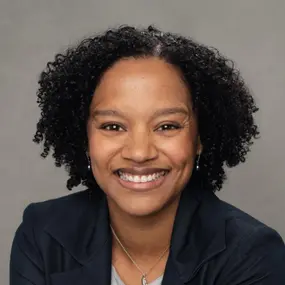
On today's episode, ASTHO member Naomi Adeline-Biggs discusses the development of Oregon’s five-year State Health Improvement Plan.

 Spotify
 Apple Podcasts
 Amazon Music
 Oregon’s latest State Health Improvement Plan (SHIP) is designed to do more than identify public health priorities; it aims to align partners, resources, and communities around measurable goals for a healthier future. ASTHO member Naomi Adeline-Biggs, director of the Oregon Health Authority’s Public Health Division, talks about the development of Oregon’s five-year SHIP. She explains how extensive community engagement, including input from tribal nations, local health departments, and culturally specific organizations, helped shape the plan’s four core priorities: healthy environments, community well-being, disease prevention, and emergency preparedness.
New State Health Improvement Plan a ‘roadmap’ for health | Oregon Health Authority
Creating Successful Collaboration Structures in Public Health Initiatives | ASTHO
Leading Collaboratively for Lasting Public Health Impact | ASTHO

JOHN SHEEHAN:
This is Public Health Review Morning Edition for Monday, June 22, 2026. I'm John Sheehan, with news from the Association of State and Territorial Health Officials.
Oregon's latest State Health Improvement Plan is designed to do more than identify public health priorities. It aims to align partners, resources, and communities around measurable goals for a healthier future. Today, we hear from ASTHO member Naomi Adeline Biggs, director of the Oregon Health Authority's Public Health Division. She'll talk about the development of Oregon's five-year State Health Improvement Plan, or SHIP, and explain how extensive community engagement, including input from tribal nations, local health departments, and culturally-specific organizations, helped shape the plan's four core priorities: healthy environments, community well-being, disease prevention, and emergency preparedness.
NAOMI ADELINE-BIGGS:
The Oregon State Health Improvement Plan, we call it SHIP for short, is a five-year plan, and it describes Oregon's public health actionable priorities and goals that we're working towards to reach by 2029. There are four priorities in there: healthy environment, individual, family and community well-being, health promotion and disease prevention, and emergency preparedness. These four priorities were informed by ongoing, repeated engagement across Oregon to understand the local priorities and the local needs. So, the priorities were developed through close engagement with our Community Steering Committee, and the Committee reviewed feedback from across Oregon, and then made final recommendations for these priorities, and we actually used NACCHO's Map 2.0 to gather feedback from the previous SHIP Steering Committee, and also our agency leadership, and they all directed us to keep our SHIP within the scope of public health work with a realistic approach for what the public health system can accomplish through 2029.
SHEEHAN:
Gotcha. And so, you mentioned it was broken into four, like, large bucket priorities, and throughout, there are also indicators such as lead exposure, source identification, overdose reduction, childhood vaccination rates, heat-related illness. Why were those indicators chosen that you wanted to track?
ADELINE-BIGGS:
Yeah, so, yes, each priority has a wide range of strategies, right? The total SHIP includes 63 strategies, and these strategies were developed by the subject matter experts across most of our public health programs. What we did was we started by comparing our SHIP priorities with measures that are already being tracked as priorities within our state health agency and within our public health system, and then selected a shortlist based on impact and alignment with other plans, like the Oregon Health Authority's Strategic Plan, for example. And then our final measures cover a wide range of topics, so together they focus on the public health role in the agency-wide priorities from blood lead levels to minimizing hospital visits due to heat stroke or due to smoke to immunization access. So, for example, for childhood lead exposure it aligns with our state's Medicaid work to provide blood lead level screenings in children. Our SHIP measure tracks follow-up with families whose child has an elevated blood level to investigate the sources of the lead in the environment, and then the follow-up includes identification and removal of lead exposure sources from the child's environment. And some of the common sources are lead-based paint, bare soil, or contaminated consumer products. And then another example for immunization; this measure tracks completion of the two-year-old immunization series. It's a high priority for health care and for the public health systems, and this measure brings attention to the work of public health to reduce barriers to vaccine access and to engage directly with communities to increase demand and support strong collaboration between health care and public health.
SHEEHAN:
Yeah, and speaking of engaging with the community, you mentioned how the plan was put together with input from community members and through members across the public health and health care organizations. How did that input help shape the plan, and how did you go about getting that kind of engagement?
ADELINE-BIGGS:
Oh, yeah, we could not have completed the State Health Assessment and the State Health Improvement Plan without collaboration and community leadership. So, our Steering Committee included partners and community members, and the Steering Committee provided community perspectives, guided engagement, and reflected on community feedback when developing the final four priorities. They also directed our community engagement strategy, and they generously opened their events and meetings to us, so as a result, we know that our four priorities reflect the work that communities across the state want our agency to be focusing on.
SHEEHAN:
And to take one of the big overarching priorities, individual, family, and community well-being, that can mean so many different things, and can have so many different components that are contributing to that overall well-being, such as preventing overdoses, to tackling violence and mental health issues. How do you sort of wrap your hands around an issue that big and connect each of those segments to a cause?
ADELINE-BIGGS:
Yeah, that's a great question. We have so many ways that we're connecting these to root causes. The community-based organization braided funding, so, the Oregon Health Authority has been grading state and federal funding streams for an integrated grant program across public health areas. So, we're connecting nine funding streams, which is really complicated, and bringing it together, so that on the front end, we've created a seamless integrated funding opportunity to partners for them to tailor resources to their community. And then one of the priorities is intended to build community resilience, so for this, one of the priorities for the grant, right, and so for this, our focus for the grantees is to strengthen community-based efforts that address health risks related to climate, related to environmental hazards, and these include addressing respiratory health impacts from wildfire smoke, preventing health-related illness during extreme heat events, mitigating water quality risks, and reducing climate-related stress and mental health challenges. Our Strategic Prevention Framework Grant is another example. Oregon focuses on common risk factors between alcohol and overdose and other drugs, and we secured funding through SAMHSA, and used these funds to support communities in looking at root causes for opioids and overdose. So, these are some of the examples where we're really bringing together resources and supporting communities who then focus on the root causes and connecting that.
SHEEHAN:
Gotcha, and you just provided some examples of, you know, several different funding methods. How does the plan align resources and partners?
ADELINE-BIGGS:
So, the SHIP is a tool that demonstrates how state public health aligns with our agency's broader health goals and can be used for new initiatives, such as Oregon's Rural Health Transformation Program. It aligns agency efforts to track progress. It closes equity gaps and focuses on priority strategies and areas. So, implementing the SHIP depends on extensive public health system partner collaboration. So, for us, that means collaborating with Medicaid coordinated care organizations, collaborating with local public health agencies, our community-based organizations, the nine federally-recognized tribes in Oregon, and education partners, and other public health partners, and each strategy in our plan shows the partners who are key in advancing the strategy. We're working to track progress through transparent reporting, so we're about to publish a dashboard for SHIP measures for the public and for our partners. And this dashboard will link to the more detailed dashboards maintained by the public health programs. And annually, we'll report on our 36 state population health indicators, and then internally, we'll also track progress through more than 60 process measures.
SHEEHAN:
And, again, to sort of dig down onto one of those indicators, you know, one of the goals of the program is to reduce heat-related emergency visits by 50%. What steps did you put in place to achieve that goal?
ADELINE-BIGGS:
Yeah, so OHA ensures community organizations, and local, and tribal health partners have the resources to implement the equity-centered, trusted, and accessible public health services. So, OHA stewards state public health modernization funds to 33 local public health authorities of 46 community-based organizations and the nine federally recognized tribes and the Northwest Portland Area Indian Health Board to implement environmental public health and emergency preparedness strategies in their communities. So, not just during the heat event, but all the time. And we also have OHA's Healthy Homes Grant Program that funds 44 entities and tribes to implement housing improvements, such as weatherization, which protects residents in low-income and environmental justice communities from extreme heat or extreme weather events. Another example: in 2022, Oregon was amongst the first states in the country to receive federal approval for a Medicaid waiver to cover climate change expenses for certain Medicaid-eligible patients through the Oregon Health Lab. And as of December 2025, the Oregon Health Plan has delivered about 4,500 air conditioners as part of this service, so we have so many ways of how you know all the programs that are focused on reducing heat-related emergency visits. We're really tracking all of that and leveraging these programs and resources to get to the impact and the goals that we have within our life.
SHEEHAN:
And finally, Naomi, what can other states take away from the process, and what lessons have you learned?
ADELINE-BIGGS:
So, we definitely learned a lot through the process. I think involving members of the public and culturally specific communities really early and throughout the process, not just at the end of the planning, has been really helpful for the success. We also funded trusted community organizations to lead the engagement, so Oregon's model of contracting CBOs has really empowered the trusted organizations to collect input and to increase both the reach and the authenticity of the responses, and then I would say, when possible, it's best to compensate community members for their participation within the steering committee or in other ways that engagement is happening, building strong intentional partnerships with the nine federally recognized tribes in Oregon as sovereign governments that has been helpful as well, and using multiple outreach methods to reach different populations, really using multiple methods that work for different communities in different areas.
SHEEHAN:
ASTHO member Naomi Adeline-Biggs is director of the Oregon Health Authority's Public Health Division.
Public health initiatives rely on strong partnerships to sustain momentum and achieve impact, but collaboration can stall when roles, structures, and relationships are unclear. Without intentional design, collaborative efforts risk misalignment, fragmented communication, and missed opportunities to fully engage partners. A new ASTHO resource, titled "Creating Successful Collaboration Structures in Public Health Initiatives," provides practical tools and guidance to help public health teams design, strengthen, and sustain effective collaboration structures. Find a link to it in the show notes.
Across the United States, public health systems navigate complex challenges, such as rising demand, limited resources, persistent health disparities, and the need for cross-sector coordination. These challenges span health care systems, policy environments, and communities. For public health leaders, this reality reshapes how leadership itself is defined. Impact is no longer defined by individual expertise alone, but by the ability to align people, systems, and strategies toward shared goals. Collaborative leadership is essential to building sustainable, equitable public health systems. Read the new blog post Q&A, titled "Leading Collaboratively for Lasting Public Health Impact," at the link in the show notes.
This has been Public Health Review Morning Edition. I'm John Sheehan for the Association of State and Territorial Health Officials.