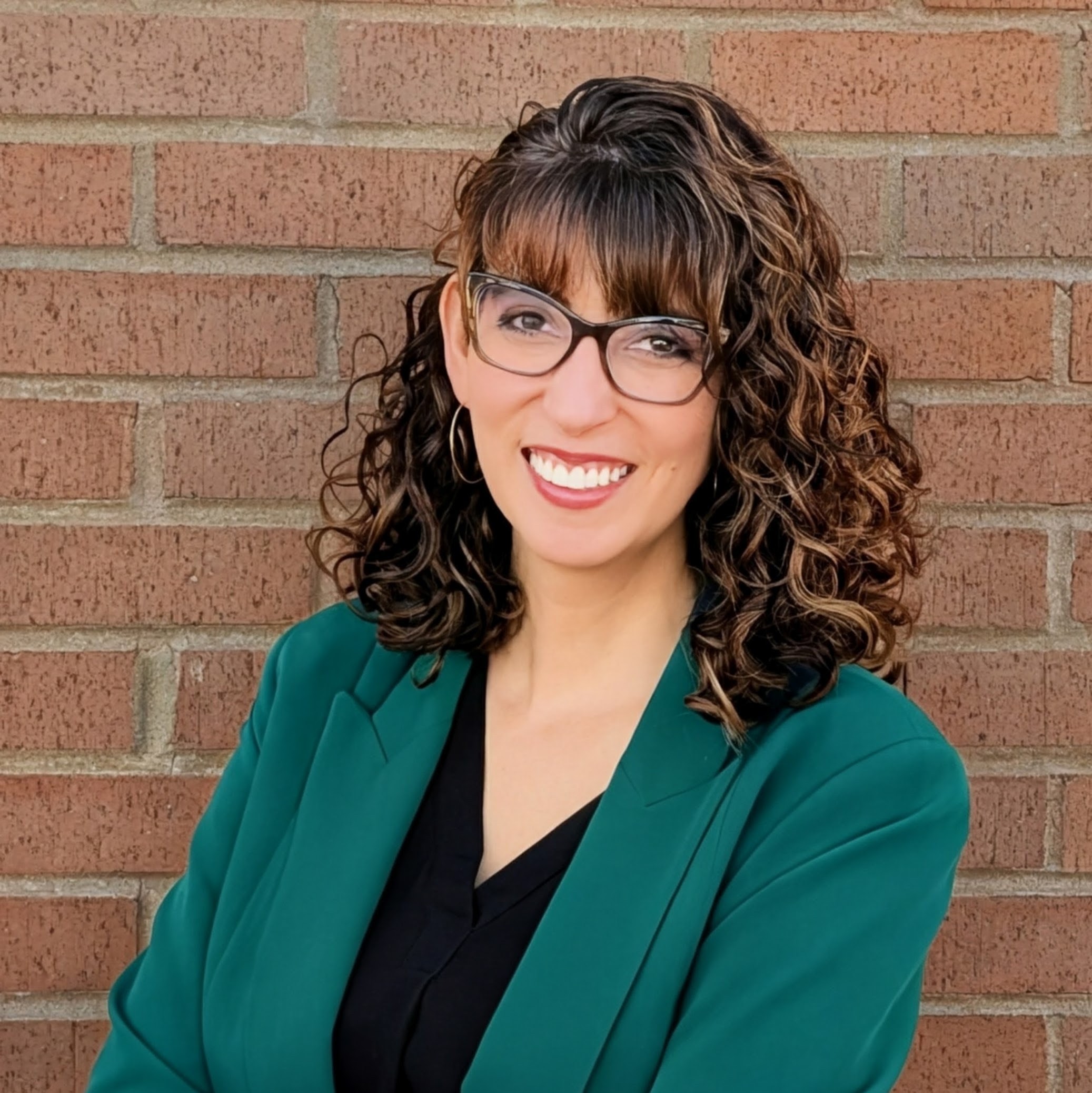
On today's episode, Jessica Wieder, president of Teal Skies Consulting and former leader in external affairs at FEMA and EPA, shares her career journey, covering two decades in radiological preparedness and risk communication.

 Spotify
 Apple Podcasts
 Amazon Music
 What does it take to communicate clearly when the stakes are high and the science is complex? In this episode, Jessica Wieder, president of Teal Skies Consulting and former leader in external affairs at FEMA and EPA, shares how a career that started with a satellite crash simulation turned into two decades at the forefront of radiological preparedness and risk communication. Jessica breaks down the evolution of crisis messaging in the digital age, from early “message mapping” techniques to today’s multi-channel, narrative-driven strategies. She explains why people can only absorb a few key messages under stress, how authenticity can make or break public trust, and why validating emotions is just as important as delivering facts.
Past, Present, and Future: Reflections from a Radiation Readiness Professional
Storytelling in Public Health: Lessons from STI Prevention & Care
Driving Impact with Flexible Funding

JOHN SHEEHAN:
This is Public Health Review Morning Edition for Wednesday, April 1, 2026. I'm John Sheehan with news from the Association of State and Territorial Health Officials.
Today, communicating in a crisis. We talk with Jessica Wieder, a former leader in external affairs at FEMA and the EPA, and currently the president of Teal Skies Consulting about how to communicate clearly when stakes are high and the science can be complex. Jessica will discuss crisis messaging and specifically radiological risk communication from a public health preparedness perspective, including coordinating messages across partners and addressing public concern and false and misleading information. It's the subject of her upcoming ASTHO webinar.
Jessica Wieder, welcome to the show.
JESSICA WIEDER:
Thank you for having me, John.
SHEEHAN:
So, Jessica, what got you started in radiological preparedness?
WIEDER:
So, I love that question because, you know, very few people are nine years old, going, “I really want to be in radiation preparedness when I grow up.” And so, for me, my story starts when I graduated college, right? I wanted a job and my college roommate's mother was the director of the Radiation Protection Division at the Environmental Protection Agency. They were looking for an entry-level public affairs specialist. She gave my resume to the hiring official and then I stayed for 17 years. And what I thought was just going to be a job that was going to pay the bills very quickly became my profession. My second week on the job was my first emergency exercise. It was called “Ruby Slippers.” The scenario was a satellite with a multi-mission radioisotope thermoelectric generator, or a large plutonium source, crashed in Kansas. Again, that was a scenario, but I found myself asking a lot of questions like what is a multi-mission radioisotope thermoelectric generator, and what is a four-day total effective dose equivalent, and what does that mean in terms of public health, and will a decision-maker read a 12-page consequence management report in the middle of a disaster? And what I found was that I was surrounded by these wonderful people who were not only willing to take the time to answer my questions, but they were also willing to teach me and then change how they were thinking about operations based off the questions I was asking. And that, for me, to this day, I still feel like is a communicator's superpower, right? The ability to see a situation, look at it from different perspectives, ask really good questions, and then ultimately change operations to better help people.
SHEEHAN:
You know, a satellite crash was not even a scenario that I had envisioned or I could have imagined, and now you've added one to my list.
WIEDER:
You know, I started with that as my very first exercise, and then I actually got to plan for the Mars Curiosity and the Mars Perseverance launches, which both had multi-mission radioisotope thermoelectric generators on board. So you're taking that exercise experience to real world, and what if something actually went wrong during one of those launches?
SHEEHAN:
Yeah. How else have these kind of emergency preparedness communications exercises, how have things evolved over the years?
WIEDER:
I mean, I think you got to realize, when I graduated college, like you still had to go to the library to do research papers, you know, you still had to. You were transitioning from MySpace to Facebook right in that timeframe, that really ages me, but the speed of information and the sheer volume of information, good information and not good information, it's just increased dramatically from when I first started at the agency. And so, we've really had to think about how we think about messaging. So, you know, initially I got very lucky, got a chance very early in my career to work with Dr. Vincent Covello. He's sort of thought of as the leader, the father of modern risk communication practices. And he taught me about message mapping. It's this idea that during high stress situations, people can only comprehend three messages at a time, low stress: seven to nine messages at a time. And that has really become the foundation of how I think about messaging. I think in three key messages all the time, and that's still very relevant, I think, in today's day and age. But I spent the last four years working at FEMA External Affairs, and I really have a much greater appreciation that it's not just the words on the page that matter to be prepared. It's about how you own the whole narrative, right? It's the visuals that go with your story. It's the spokespeople. It's the seconders. It's like those people, those partners that are gonna agree with your message to give it more trust in the message. And so I'd had to think about a whole more holistic approach to messaging to make sure that we're touching all of those different audiences that are chiming in through all of those different channels that we now have to reach, you know, whether it's influencers on Instagram and our traditional media. I can't underscore the importance of traditional media, but making sure that our plans are more than just the words on the page. They take all that into account.
SHEEHAN:
So, what are some aspects to a successful, concise communication that needs to make its way through different channels, like the ones you just mentioned, different external and internal partners?
WIEDER:
I mean, I think first you need to have a really clear message, right? What is it we're trying to say? Why are we trying to say it is really important, right? Who needs to take action or know this information? What do we want them to do with it? Has to be the basis of any good communications plan. And then the next piece is the person delivering that message has to be coming from a really genuine point of view. People can really tell when somebody is reading talking points, but don't necessarily mean them. And I think that's a whole skill set of making sure you have the right spokesperson when we're talking about disaster response, because people need to feel like the person on the other end is not just giving them good advice, but advice that they would follow themselves. And so, authenticity really matters.
SHEEHAN:
That's really interesting. So, often it seems like there's, I feel like you have to anticipate the emotional state of the audience receiving this information, because you're getting people probably in a state of, you know, at least heightened emotions, at worst panic, but definitely urgency.
WIEDER:
Oh yeah, there's a lot of urgency. And I think people are trying to figure out what to do. And I think that one thing that we collectively as a public health community can do better is validate people's feelings. I think we underestimate the importance of doing that. And if it's something like radiation, for example, where it's a fairly weak carcinogen, so we might say like their fear is unwarranted. We know from behavioral science that radiation is one of the most feared hazards that's out there. And so, while their fear may not be warranted scientifically, but from a behavioral health standpoint, it is completely valid. In fact, it is normal. During COVID, two of my very best friends are school teachers, and when they had to go back into the classroom, they were incredibly scared. And I was able to tell them, the best thing I could do for them was say, your feeling scared is normal. This is a situation with a huge unknown. There is concern for your family. There is, you're being forced into a situation you don't necessarily want be part of. And for all those reasons, the risk perception is really, really, really high. And once they felt like I had heard them and I acknowledged the fact that their fear was real and valid, then we could start talking about, well, how can you take back control? What are the things that you can and should be doing to ensure your safety, the safety of the kids in your classroom, the safety of your family back home, to put them back in a point of control? So, when we're asking people during an emergency to take an action, acknowledging their feelings and validating their feelings first is really important to getting them to trust us to be able to give them the advice that they need to make informed decisions.
SHEEHAN:
Yeah, and getting back to this notion of making sure that your message is trustworthy and accepted across channels, what about when that message gets taken over by others that you have no control over and your message gets turned in some cases by bad actors?
WIEDER:
Yeah, so this is a problem that we're seeing more and more. And I think that it is incredibly challenging and I think you need a strategy for how to deal with it. And I really want to give a shoutout to FEMA's communications team for thinking through, how do you combat rumors? And I think first we need to acknowledge that not all rumors need a response, right? There are some rumors that are going to self-correct or there are some rumors that are never going to get legs, they're not going to go anywhere, they're not worth your time and energy, it's just going to go away. But then there are those rumors that you actually do need to address. So, you need to ask yourself a couple of things, right? Is this rumor affecting our ability to complete our mission? Is this rumor affecting public health or safety in any way? Is this rumor growing with the potential to have a negative impact? So depending on your answers to that, you may want to respond. And I think when we think about how you respond to those, there's an indirect way or there's a direct way. The indirect way is you just say what you need to say, whatever the correct information is without repeating the rumor and hope that that gets enough leverage. But if it is a bad enough rumor, if it is a rumor that is going to hurt people or hurt your mission, you may have to take the direct route of calling that out as here's the false information, it is false, and here is what you need to know, here's the truth. And you have to do that across many, many different channels with as many trusted spokespeople and as many partners as you can when that is a particularly harmful rumor. One thing my FEMA Director of Digital Communications would always emphasize was the use of our website because the website is one of the few places where we own every single word that goes in that context. And so, for example, like during Hurricane Helene, we had up a rumors webpage and that rumors webpage got carried far and wide. I mean, we let everybody know that we had this, our state and local partners knew we had this and everyone was promoting it and it was getting picked up on mainstream media for over a week, which is almost unheard of. But it's a really good resource for people to go to, to go, you know, what is the truth? And then for people to take and use verbatim on their own to help amplify that message.
SHEEHAN:
I feel like I was just re-traumatized by some recent examples of bad messaging that needed to be redacted in public.
WIEDER:
Yeah, it is. And it's hard to make the choice that you're going to go full steam ahead on addressing a rumor because it takes a lot of time, a lot of energy and it puts you under a lot of scrutiny. So, you better be prepared with all of your facts that are going to prove that something is in fact a rumor.
SHEEHAN:
And Jessica, so when you're in the role of a communicator, sometimes you've got to also present a broad message that's got to filter through other smaller jurisdictions or authorities. How do you ensure that your message stays consistent?
WIEDER:
You know, it's really challenging to create consistent messaging. I think having pre-existing relationships helps that a lot because you want make sure that you know the people, your partners, your neighbors, because if one jurisdiction says one thing and another jurisdiction is giving contradicting guidance, we run into problems. We saw this during COVID. We really struggled with this idea of different jurisdictions giving different guidance. So, I think having a consistent message is incredibly important. You know, and let me give you an example. I like to use the example of a group of people going to lunch, right? So, everybody's experienced this. A group of people are trying to go to lunch. One person says, hey, I think I want sandwiches. The next person says, hey, I also want sandwiches. And then the group probably goes for sandwiches, right? And then if you have a group of people and one person goes, I really want sandwiches. And the next person says, actually I'd really prefer a hamburger. Well, it's going to take that group of people longer to decide where to go to lunch. And that is just lunch, right? We've all experienced this. So, if we're in an emergency situation and we need people to take timely action, making sure the action we're asking people to take is consistent is really important. East Palestine is a really great example where we had the train derailment. It was right on the border of Ohio and Pennsylvania. And the initial evacuation message that went out from Ohio and Pennsylvania was the same. If you were in one to two miles of that area, you were to leave because it was consistent from state to state, nobody was questioning whether or not that was the right guidance and people were able to get out of harm's way before they were allowed back into their homes. And so, I cannot emphasize enough the importance of it. But I would also say, there are times where jurisdictions are going to have different guidance. And one thing we can do better is explaining why. Why are we having different guidance from one place to another? What is the rationale that you're using to make that decision? If we can explain that, then I think people are gonna be more willing to work with the decisions that the decision makers are making because they understand the rationale. And I think that during COVID, that was something we could have done a lot better.
SHEEHAN:
Turning the lens back to radiological events in particular, are there pieces of advice you would give to smaller agencies that are looking to revamp or in maybe some cases create a preparedness plan?
WIEDER:
I think the good news is that you don't have to start from a blank piece of paper. Organizations like ASTHO, for example, where you have the ability to ask for help and see what neighbors are doing, I think is a great resource. I also would say that there are a lot of prescriptive messages out there. There's a document from, I think comes out of FEMA, that's called “Communicating in the Immediate Aftermath.” And that's for nuclear detonation response. There's communicating during and after a nuclear power plant accident. There's a ton of prescriptive messages in it. CDC has a bunch of infographics for all different types of radiological disasters and associated, like what is Prussian blue? What are some like medical interventions? What is KI? That sort of thing. But they have them in many different languages, which is wonderful. And EPA's Radiation Protection Division also has a lot of great resources on how to communicate about radiation risk. They have a fairly new infographic on explaining radiation units, which is really challenging to do. So, use the resources that are out there. And then I would say that if you are starting from scratch and you're thinking about how do we write a communications plan for any emergency? You know, one of my favorite quotes is, a brilliant scientific discourse is wasted if nobody listens or understands it, right? So, remember who you are writing for, who needs to take this information, who needs to act on this information. And as long as you're putting people first at the heart of your plan, you're doing something right.
SHEEHAN:
Jessica Wieder is the president of Teal Skies Consulting and a former leader in external affairs at FEMA and the EPA. Jessica will be the speaker for an upcoming ASTHO webinar titled, “Past, Present and Future: Reflections from a Radiation Readiness Professional.” Find the link in the show notes.
Effective public health communication depends not only on what we say, but how we share our message. In an upcoming webinar titled, “Storytelling and Public Health: Lessons from STI Prevention and Care,” join ASTHO as we explore how strong storytelling can transform complex or sensitive health topics into stories that engage diverse audiences, inspire action, and drive change. This webinar will equip participants with concrete storytelling strategies to create impactful messages that resonate. Learn how to identify the core narrative in your work, choose the right format for your story, and connect with audiences on topics that are often technical or stigmatized. Find the link in the show notes.
An upcoming webinar provides an in-depth walk-through of the ASTHO report, “Driving Impact with Flexible Funding.” Participants will explore how state health agencies can move beyond traditional funding silos to create more agile, high-impact public health initiatives. Through real-world examples and strategic analysis, we will examine the pathways to successfully adopting and expanding flexible funding models in a government setting. Find details in the show notes.
This has been Public Health Review, Morning Edition. I'm John Sheehan for the Association of State and Territorial Health Officials.