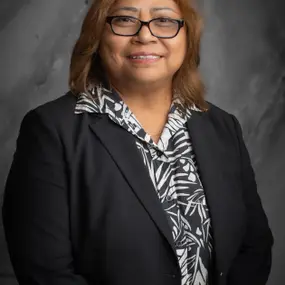
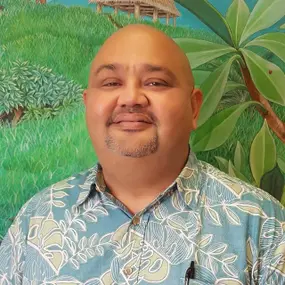
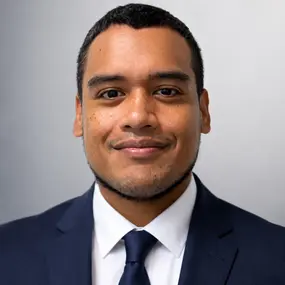
CNMI Commonwealth Healthcare Corporation's Warren Villagomez, Patrick Fitial, and ASTHO Member Esther Muna discuss how the territory prepared for back-to-back super typhoons in 2026 and responded to their aftermath. They describe efforts to activate emergency operations, protect health care facilities, plan workforce coverage, and more before the storms arrived.

 Spotify
 Apple Podcasts
 Amazon Music
 The Commonwealth of the Northern Mariana Islands faced back-to-back super typhoons in 2026, putting its health system and infrastructure under significant strain. Esther Muna, CEO of the Northern Mariana Islands Commonwealth Health Corporation and Territorial Health Official for CNMI and an ASTHO board member, discusses how the territory prepared for the storms and responded to their aftermath. We also hear from two other members of the CNMI hospital emergency preparedness program team: Warren Villagomez, the director for Public Health and Hospital Emergency Preparedness, and Patrick Fitial, senior planner. The team describes efforts to activate emergency operations, protect health care facilities, plan workforce coverage, and secure vulnerable populations before the storms arrived. They also discuss challenges including prolonged power and water disruptions, damaged roads and ports, limited communications, and supply chain disruptions. Mobile clinics, medical reserve corps volunteers, nonprofit organizations, and federal, territorial, and local partners helped bring healthcare and public health services directly to communities during the recovery.
How New Laws Support Telehealth and Access to Health Care | ASTHO

JOHN SHEEHAN:
This is Public Health Review Morning Edition for Tuesday, September 22, 2026. I'm John Sheehan with news from the Association of State and Territorial Health Officials.
The Commonwealth of the Northern Mariana Islands faced back-to-back super typhoons in 2026, putting its health system and infrastructure under significant strain. Today, Esther Muña, CEO of the Northern Mariana Islands, Commonwealth Health Corporation, and territorial health official for CNMI, and an ASTHO board member discusses how the territory prepared for the storms and responded to their aftermath. Later on, we'll hear from two other members of the CNMI Hospital Emergency Preparedness Program team: Warren Villagomez, director for Public Health, and Patrick Fitial, the senior planner. First, we'll hear from Esther Muña.
ESTHER MUNA:
Super typhoon Sinlaku was really massive, and it was a powerful storm that devastated multiple island jurisdictions across Micronesia and the Marianas in April of 2026. This is a Category Five-equivalent storm, crawling, and I mean really crawling, slowly at about three miles per hour, with maximum winds of up to maybe 175 miles per hour. It was stationary and destructive. It had a direct path on the islands of Saipan and Tinian with prolonged exposure of heavy rainfall and strong winds. It severely challenged our infrastructure, leaving residents with damage to their homes from strong winds and also heavy flooding. There were damaged vehicles, island power outages, and to this day, there are homes still without power. The storm truly disrupted daily life, and there was a lot of stress as individuals were waking up daily to gain access to basic needs of food, water, ice, and fuel for their generators, and for one village, emergency vehicles could not be accessed for days. So the health system was severely impacted due to other clinics and health organizations weren't able to open immediately, so our agency was the only access to all health services for the territory. Prior to the storm arriving, however, we were already connecting with nonprofit organizations to be ready to support our health system. So we readied our team to provide outreach services to minimize the impact in the emergency rooms and conducted the community assessment surveys for public health emergency response. And you know, again, as I mentioned, the storm prolonged its stay on the islands, and the mental health support was a top priority. And I asked for support from our federal and other partners.
SHEEHAN:
What are you most proud of with the recovery efforts?
MUNA:
Well, what I'm most proud of is the entire team of our agency. You know, they too were affected by the storm, but they were out in extreme heat, making sure to reach as many individuals as they could to ensure we help our health system and, most importantly, our people. Everyone that was tasked to help did not hesitate at all to help. I am also proud of the resilience and solidarity shown by our community. The way individuals, families, and organizations have come together to support one another has been really, really inspiring. There were numerous volunteer efforts to provide food and shelter, and the dedication of all have gone above and beyond, so really the spirit of our people really shines brightly in these times. But you know, really, really proud of everyone. Just, you know, coming together, no questions asked. You know, they're ready to step up and basically do anything possible to help.
SHEEHAN:
Esther Muña is CEO of the Northern Mariana Islands Commonwealth Health Corporation, the territorial health official for CNMI, and an ASTHO board member. Now, let's hear from two more members of the CNMI Hospital Emergency Preparedness Program: Warren Villagomez, director for Public Health and Hospital Emergency Preparedness, and Patrick Fitial, the senior planner.
WARREN VILLAGOMEZ:
The island is still in recovery mode, considering that we that some of the Northern Marianas got hit with two super typhoons. But again, you know, our people are resilient, and our infrastructure and the health sector are doing everything we can to, you know, provide health and safety to our community.
SHEEHAN:
When Super Typhoon Sinlaku and Bavi threatened CNMI, what were your first actions, and what did your team do to prepare?
VILLAGOMEZ:
Well, being in the office of emergency preparedness and working right under the Commonwealth Healthcare Corporation Chief Executive Officer, like any approaching disaster or you know any disaster, we initiated our Agency Operations Center, making sure that our co-downs are in place, as well as making sure, first and foremost, our infrastructure was adequate to receive such storm workforce personnel listing, and, you know, getting into multiple in-depth workforce rotation and coverage from nursing to doctors to ancillary support services.
PATRICK FITIAL:
We immediately went to securing, of course, the offices and the hospital, looking for ways to prevent extra damage such as floods and damage to the entrances and exits. We did go straight to the conference room and put together our AOC team, and we solidified our ICS structure, and then, from there, we went to look for critical points, such as bringing in the pregnant women from our neighboring islands over, and just kind of securing them before the typhoon hit.
SHEEHAN:
Obviously, during typhoons, things like utilities, transportation, those are going to get knocked out. How else did the typhoons impact things like healthcare facilities and vulnerable populations?
VILLAGOMEZ:
In regards to disruption to utilities, we were very concerned on the water service supply for the entire island, not entirely for the hospital. The hospital has a good connection with utility water supply, but the entire island was compromised in regards to wells that had damages on their backup generator, so reservoirs are not filling up as anticipated. So the entire Island of Saipan, as well as India, were on either ration water or just totally no water service for about two weeks, so we immediately coordinated with, you know, our local office of Homeland Security to identify water stations as well as seeing how vulnerable populations or villages can be powered up with backup generators, just to make sure that public health is not compromised. Transportation is another issue. The east side of the island access way got compromised due to flooding, so that population itself, the state had to open up an alternate route just to make sure that we're able to rescue and transport folks that need to access health care. In regard to communication, that was another island-wide issue. Limited communication, not entirely out of communication, but in health care we had multiple communication tools that we use: HF radios, two-way radios, of course, cell cellphone sat phones for all three islands, Saipan, Rota, Tinian. Those were our two, three-deep level of communication ability.
FITIAL:
Yeah. So, as Warren mentioned, there are a lot of shortages, such as for water. We had distribution sites for water. Communications were low. We were lucky enough to have a plethora of radio channels and radio capabilities that could support ourselves and our neighboring islands, and if I were to think of any physical challenges, it would be the hospital experiencing some flooding, and we were able to combat that flooding. And when it comes to utilities, I think, Warren, we were also on a generator at the hospital, and I think all the traffic lights were down, and most homes were on generators as well. So this was for an extended period of time as well. So utilities, I think, was one of the bigger issues during and post-typhoon.
SHEEHAN:
What was the recovery process like for the supply chain after multiple disasters occurred in such a short time?
VILLAGOMEZ:
So we have a Commonwealth Healthcare Corporation policy that, you know, we need to maintain a supply chain in our warehouse for at least 60 days on critical supplies. We didn't see a significant impact, but we felt it on Bavi, considering the back-to-back super typhoons. Senlaku, I think, were adequately prepared based on just normal operations, but we started to feel the impact when Bavi hits. We were able to coordinate a different pathway of supply deliveries. A lot of it, a lot of them were air freight to Saipan between islands. We coordinated with shipping companies, but for Tinian, it's fine; for Rota, their ports were compromised. So we had to also work with the U.S. Coast Guard to provide waivers for such vessels to come and deliver healthcare supplies, not commercial movements.
FITIAL:
And in terms of vulnerable populations, there were a significant amount of the community that are were not able to access their healthcare needs at the hospital. Therefore, at the Commonwealth Healthcare Corporation, we made efforts to set up mobile or offsite clinics on different parts of the island, and that's where a lot of the vulnerable populations were able to receive their health care. They're even dispensing medication, and it was a good opportunity for a lot of our outreach workers to really get their boots on the ground and help the people of the community.
SHEEHAN:
How did your team work with other nearby island jurisdictions or federal partners?
VILLAGOMEZ:
Great, thank you for that. ESF-8 and ESF-6 were significantly engaged with us. We have the REC on site on ESF-8, and the coordination were seamless all across the services and the support that CNMI got from Beardville Health to environmental health subject matter experts, you know, in regards to food safety, and making sure that our public health functions are well-provided, as well as making sure the safety of our community in regards to food items, the store that are perishable, are maintained and provide guidance for our general public to be safeguarded from any bad items being sold. So, on the local and territorial side, we work hand in hand. CACC is part of the multi-agency coordination group. So, we have a seat up at the Office of Homeland Security. We have daily meetings and briefings with the governor, as well as the municipality, the two other islands that were that are impacted, keeping them abreast on developments as well as progression in regards to support. So we didn't see any challenges with our inter- and intra-agencies from federal to local.
FITIAL:
Just to add on to what Warren was saying, we did work a lot with our public health partners as well as our environmental health group that went straight to assessing the stores and restaurants immediately after the typhoon to make sure everything was compliant. We did have people distributing food immediately after the typhoon as well, and our partners would also go out and assess the food that was being distributed to make sure it was safe for the general public. We, our public health team, would go out and do outreach. There was a lot of CASPER outreach. There were a lot of mobile clinics, offsite clinics, and points of dispensing that public health did, and we kind of thank them for staying out in the field almost every day. And they were also aided by the Medical Reserve Corps. We do have a unit here in the CNMI, and they were out with a lot of different partners to provide support and help to the community.
VILLAGOMEZ:
I'll just add a few on what Pat had mentioned. MRC is one. NGOs such as SAMPERS, American PERS, and Team Rubicon were actively engaged. You know, we're very fortunate here in the CNMI. We get NGOs' support even before landfall of, you know, such storms. So having an offsite clinic, as well as providing public health services and being part of the rapid CASPER assessment.
SHEEHAN:
Warren Villagomez is director for Public Health of CNMI's Hospital Emergency Preparedness Program. Patrick Fitial is the senior planner. Earlier, we heard from Esther Muña, CEO of the Commonwealth Healthcare Corporation, and the territorial health official for CNMI, and an ASTHO board member.
Telehealth strengthens the health system by reducing barriers to access to health care and extending services to underserved communities. Federal and state policies, many born out of the COVID-19 pandemic, have increased the use of telehealth by patients and providers. This includes expanded reimbursement to allow more providers to deliver telehealth services in more locations and through more modalities. The Health Policy Update, How New Laws Support Telehealth and Access to Health Care, summarizes recent federal and state laws and policies that impact telehealth delivery and access to care. Find the link in the show notes.
ASTHO is currently accepting applications for participation in the third cohort of the Leadership Exchange for Adolescent Health Promotion Plus Community of Practice, which will support education and health agencies to work together to improve health education, connect schools to services, and support safe and supportive school environments. Participants will develop state-level action plans that utilize evidence-based practices in schools to improve adolescent health. Find more at the link in the show notes.
This has been Public Health Review Morning Edition. I'm John Sheehan for the Association of State and Territorial Health Officials.