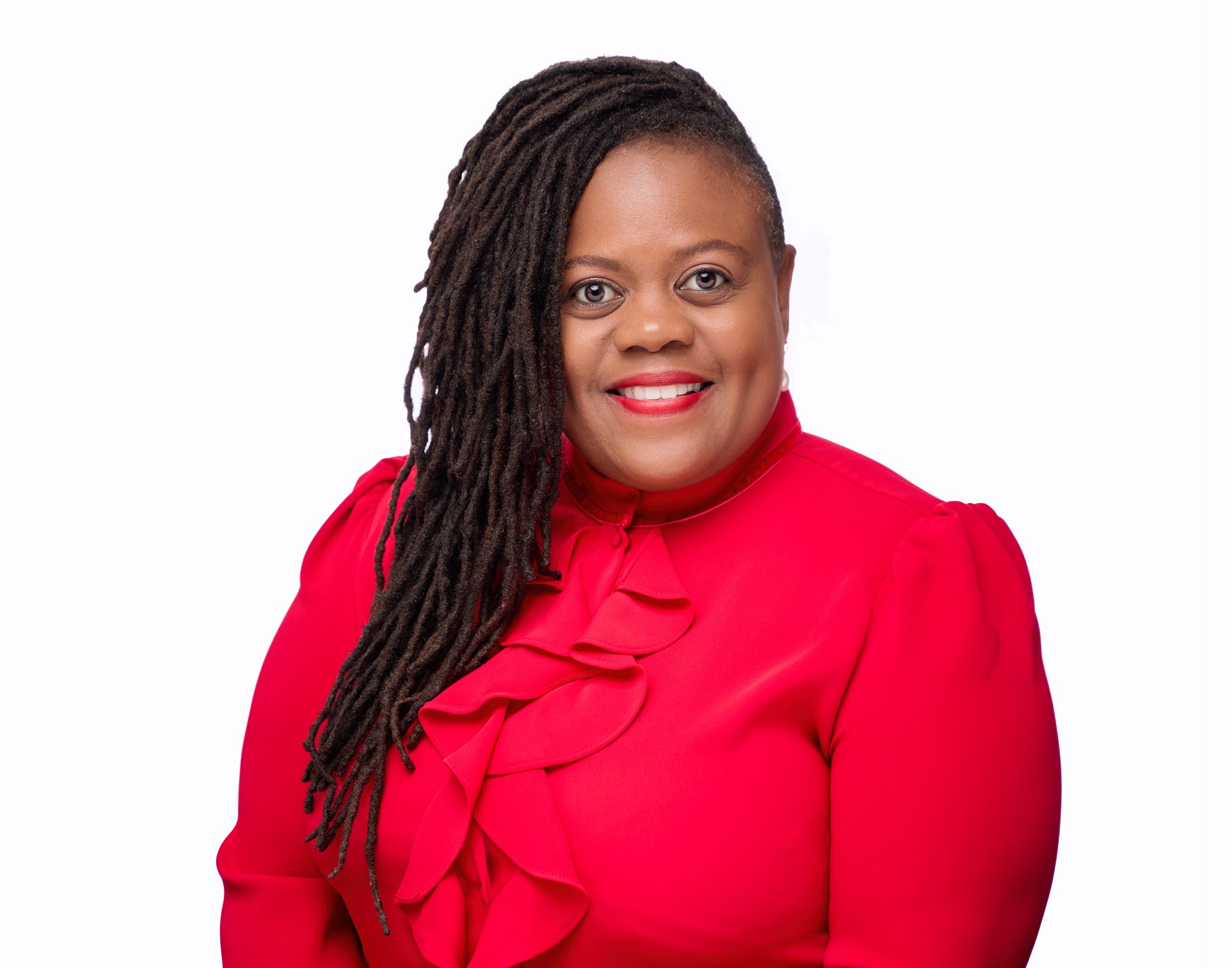
On today's episode, ASTHO’s Alice Schenall, senior advisor, cross sector leadership and change management, and ASTHO's Alyssa Merski, a senior analyst for social and behavioral health, talk about the role of boundary spanning leadership in strengthening Overdose Data to Action (OD2A) efforts.

 Spotify
 Apple Podcasts
 Amazon Music
 What does it take to lead effectively across agencies, jurisdictions, and communities in overdose prevention work? Today, ASTHO’s Alice Schenall, senior advisor of cross sector leadership and change management, and ASTHO's Alyssa Merski, a senior analyst for social and behavioral health, talk about the role of boundary spanning leadership in strengthening Overdose Data to Action (OD2A) efforts. They’ll unpack the five common types of organizational boundaries — vertical, horizontal, stakeholder, demographic, and geographic — and explain how recognizing these challenges can help leaders build stronger collaboration and improve outcomes.
Applying Boundary Spanning Leadership Principles to Overdose Data to Action Efforts | ASTHO
ASTHO Policy Institute Lunch & Learn Series: Improving and Strengthening Prenatal Care Engagement
Exercise Excellence: Michigan Reflects on a National Level Exercise | ASTHO

JOHN SHEEHAN:
This is Public Health Review Morning Edition for Wednesday, May 27, 2026. I’m John Sheehan with news from the Association of State and Territorial Health Officials.
Today: what it takes to lead effectively across boundaries in overdose prevention work. We’ll talk with ASTHO’s Alice Schenall, [senior advisor] of cross sector leadership and [change management], and Alyssa Merski, a senior analyst for social and behavioral health, talk about the role of boundary spanning leadership in strengthening Overdose Data to Action (OD2A) efforts. Let’s start with Alice Schenall.
Alice Schenall, welcome to the show.
ALICE SCHENALL:
Thank you, thank you.
SHEEHAN:
So Alice, the report deals with, as the title implies, applying boundary spanning leadership principles to overdose data and action efforts. From a leadership standpoint, why do public health leaders need to understand and name boundaries?
SCHENALL:
Yes, naming and framing boundaries enables the leader to intentionally build bridges, bridges that lead to creating common ground that moves the work forward. Being aware of boundaries that constrict or either facilitate success is a key predictor of outcomes. In the Overdose Data to Action, which I will refer to as OD2A program, it seeks to decrease overdose and related harms. This requires sector partners using data to inform decision-making. So, naming and framing the boundaries is like knowing which lever to pull to advance the work with an understanding that boundaries are going to be present among cross cutting teams as well as cross-sector partners.
SHEEHAN:
Yeah, and there are five kinds of boundaries, right? Why is it important to know what each is and why they’re important in avoiding misdiagnosing a problem?
SCHENALL:
Oh, that’s great. That’s a great question because the five common boundaries, they’re present. They’re present in any team or organization and when you’re working with partners. And those boundaries are vertical, they’re horizontal, they’re stakeholder boundaries, they’re demographic as well as geographic boundaries. Acknowledging which boundaries are difficult or more simple to navigate provides an opportunity to leverage partners. Like if you and I were talking and we were navigating boundaries and you named one that was harder versus me saying it was easier to navigate, it gives us a broader opportunity to meet the population’s needs. This is spanning boundaries.
SHEEHAN:
Okay, and there are five different types of boundaries. Can we go over those real quick?
SCHENALL:
Sure. So, in the framework developed by Centers for Creative Leadership, the goal is to manage existing boundaries, which require skill. All boundaries are not created equal, and in some cases, multiple boundaries are present. There are five common boundaries, which are vertical, horizontal, stakeholder, demographic, and geographic. Vertical is leading across levels of authority and hierarchy. Understanding how to navigate this boundary is about knowing who to call that is a key influencer to remove barriers and assist with problem solving. Horizontal, however, is about leading across functions, expertise units, and departments. Then there’s the stakeholder, leading at the intersection of an organization as well as its external partners such as funders, vendors, community-based organizations, demographic boundaries leading between groups based on their individual preference, sometimes culture, and even generational differences. When looking at geography boundaries, geographical boundaries looks more closely at across distance, maybe a region, rural or urban. It has its own set of boundaries based on variables that we learn as we engage.
SHEEHAN:
And this plays into the notion of direction, alignment, commitment principles, correct?
SCHENALL:
Indeed, indeed. So, direction, alignment, and commitment, basically the three outcomes, and all of them must be present in order for leadership to happen. Now, most people may be thinking that leadership is referring to maybe the old chart or an executive or C-suite leader, but this is about all actors that are involved in this work. All actors have the capacity to create direction, alignment and commitment. When we think about boundaries that may inhibit overdose surveillance as well as prevention goals, they cannot be circumvented. This is a time that leaders are checking in to assess the strength as well as the presence of DAC, making the necessary adjustments and moving forward in the work.
SHEEHAN:
Absolutely. And when you’re talking about teams that could be working across big distances, across jurisdictions between state and local, or even across different public health practices, having everyone involved and engaged in knowing how to overcome boundaries is pretty important.
SCHENALL:
Absolutely. You know, just to say a little more about DAC, when we’re navigating boundaries, often boundaries exist because there is a lack of direction. People are unclear. And those that make it difficult because people may not understand their roles and responsibilities, their duplication of efforts, and there is a lack of trust in some cases and shared responsibility is necessary, which produces commitment.
SHEEHAN:
And the report includes a prep worksheet. Make the case why it’s important to treat this not as necessarily homework or something to just sort of file away as checking the box, but something to pay attention to.
SCHENALL:
Yes, the preparation worksheet consists of six questions. Each leader in the OD2A program gets the opportunity to spend some time before engaging and committing to the leadership development process of deciding really explicitly what are the boundary challenges that are currently faced. Defining what success looks like if they were able to successfully navigate the boundary. What are the assets that they have as well as exploring how they want to engage in this learning opportunity. Once the leader completes the worksheet, framing where they are, leading with self-first, then thinking about their teams and even their partners, which could activate discussion with teams and partners to even understand their levels of DAC; direction, alignment, and commitment.
SHEEHAN:
For leaders who want to strengthen their OD2A efforts, why is the report a great resource? What is the takeaway from the report that you’re hoping readers will get after reading it?
SCHENALL:
This report weaves boundary spanning principles into common challenges based in the OD2A program. For example, improving timeliness of overdose data for prevention programs so that they can use this data for action. Another is addressing some of the social, economic, and political issues impacting the population, i.e. homelessness. And also, it gives an opportunity for leaders to act as a bridge between leadership and the OD2A. So, when they’re faced with these common challenges that are outlined in the report, it gives leadership an opportunity to complete a BSL training, have individual coaching, as well as peer-to-peer networking. And there’s also in this report a few reflections from the field. The key takeaway in this report is the goal, which is to build capacity for leaders to create direction, alignment, and commitment, and secure leadership buy-in when faced with boundaries in their jurisdiction.
Alice Schenall, is senior advisor of cross sector leadership and [change management] at ASTHO. Now, let’s hear from Alyssa Merski, a senior analyst for Social and Behavioral Health at ASTHO.
SHEEHAN:
Alyssa Merski, welcome to the show.
ALYSSA MERSKI:
Thank you so much for your time today. I appreciate it.
SHEEHAN:
So, Alyssa, what are the most common boundaries that health departments run into when approaching overdose prevention work?
MERSKI:
So, when we talk about boundary spanning leadership or BSL principles, there are really five common boundaries. And those are vertical, horizontal, stakeholder, demographic, and geographic. And those show up in any organization, team, or project. Vertical boundaries are about leading across levels. So rank, seniority, authority. And leading across functions, units, peers, or levels of expertise is an example of a horizontal boundary. Now, the stakeholder boundary comes into play when you’re collaborating with external partners. So, these are vendors, networks, or communities served. And the demographic boundary involves working across different populations or groups. Now, number five, lastly, leading across regions, locations. You know, whether that’s different states, localities, or even urban versus rural settings, these serve those geographic boundaries.
SHEEHAN:
Got it. And how can some of those boundaries manifest themselves in day-to-day activities?
MERSKI:
So, for Overdose Data to Action, or OD2A, leaders, these boundaries show up all the time in their work. They may need to span boundaries between departments within agencies in which they work, which would be an example of a horizontal boundary. Now, vertical boundaries can be found between hierarchical levels within the organization. So, with external partners, like community-based organizations or stakeholders, with a variety of demographics and populations with which they work, like people who use drugs, a demographic boundary. And coordinating efforts across rural or urban regions, states or localities, geographic boundary. Collaborating across these boundaries really ensures strengthened team relationships. It brings in a variety of different perspectives, expertise and experiences, and helps with alignment of vision and strategy. So, all of this combined really, ultimately leads to stronger program impact. Now, BSL can support state or local OD2A leaders in getting health agency leadership buy-in for activities at really every stage; from planning, implementation, and even evaluation of programs. All of these combined ultimately leads to stronger program impact. And BSL can support state or local OD2A leaders in getting health agency leadership buy-in for activities at every stage from planning, implementation, and evaluation of prevention programs.
SHEEHAN:
And of the boundaries, what do you find are the most challenging, especially in the context of overdose prevention?
MERSKI:
So, in OD2A programs, there are some common challenges that leaders may face that really call for this type of boundary spanning approach in their work. Building and managing cross-cutting teams to improve timeliness of overdose data collection and reporting that prevention programs then use to translate into action. Another example is addressing social or economic issues that affect populations impacted by overdose, or even acting as a bridge between agency leadership and the OD2A surveillance and programmatic teams. And, you know, by taking the time to identify these challenges, teams can then manage and navigate these boundaries better. They’re able to find common ground and enhance overdose prevention and surveillance activities.
SHEEHAN:
Now, also when working across boundaries, OD2A teams can apply direction alignment commitment principles. What does that mean and how does it work?
MERSKI:
Sure. So, within the framework of boundary spanning leadership, direction, alignment, and commitment, and that’s shortened to DAC, those are core outcomes that really contribute to effective leadership. So, while formal leadership is an important part of an organization’s success, of course, in reality, all members of the team with the ability to create DAC are acting as leaders. And according to the Center for Creative Leadership, cultivating leadership is a process that involves individuals all working together to achieve results, which in turn creates DAC. So, you know, what does that actually mean? So, well, the ‘D’ stands for direction, which tends to be strong when everyone agrees on priorities and the group is moving in the same direction towards the same common goals. Now, ‘A’ is for alignment. So, that includes strong coordination with everyone understanding their roles and responsibilities. And this often happens when deadlines are met and there’s little to no duplication of effort. And lastly, we have ‘C.’ That stands for commitment, really the more human aspect of teamwork. When everyone’s succeeding, there’s a team dynamic of trust, authentic relationships, and a sense of investment and shared responsibility.
SHEEHAN:
And so, how does the report and also the prep worksheet that’s part of it, how does it help people working in OD2A to identify BSL challenges and get beyond analysis into action?
MERSKI:
Well, great question. There are several resources outlined in the report that can help improve OD2A leaders’ capacity to more effectively and efficiently respond to the overdose crisis in their jurisdictions. Just as an example, there are two ASTHO video resources that highlight the experience of OD2A leaders who’ve already participated in a boundary spanning leadership training and they’ve taken the time to identify challenges, shared ideas through peer exchange, and had the chance to strengthen networks, promote resiliency, and share best practices to support overdose and prevention surveillance efforts. The DAC assessment by the Center for Creative Leadership is a series of scored questions, and that’s meant to help teams gain an understanding of where to start or what areas need the most work. Now, for teams getting ready to participate in trainings, the BSL preparation worksheet can be a really good tool to help guide participants to set the stage for meaningful engagement. And the Boundary Spanning Leadership Challenge questions provides a helpful, practical framework. The Boundary Spanning Leadership Challenge questions provides a practical framework for participants to identify current challenges and opportunities and apply new skills to become a stronger leader when navigating boundaries, especially within the context of OD2A work.
SHEEHAN:
Alyssa Merski, a senior analyst for Social and Behavioral Health at ASTHO. Earlier, we heard from ASTHO’s Alice Schenall, senior advisor of cross-sector leadership and [change management].
Sign up now for the next webinar in the ASTHO Policy Institute Lunch & Learn Series focused on policy levers to increase prenatal care engagement and improve maternal and infant health outcomes. As part of ASTHO’s Policy Institute for STI and Infectious Disease Prevention, this session will explore national trends of prenatal care utilization, as well as key challenges and potential solutions that impact early and consistent engagement in care. Find the link to register in the show notes.
In March 2025, the Department of Energy hosted a national-level exercise designed to promote radiation readiness. ASTHO’s Director of Preparedness, Adrianna (Annie) Evans, sat down with representatives from the Michigan Department of Health and Human Services (MDHHS), who hosted the exercise, to learn about their experiences and how those lessons might be applied to different threats. Read the full blog post at the link in the show notes.
This has been Public Health Review Morning Edition, I’m John Sheehan for the Association of State and Territorial Health Officials.