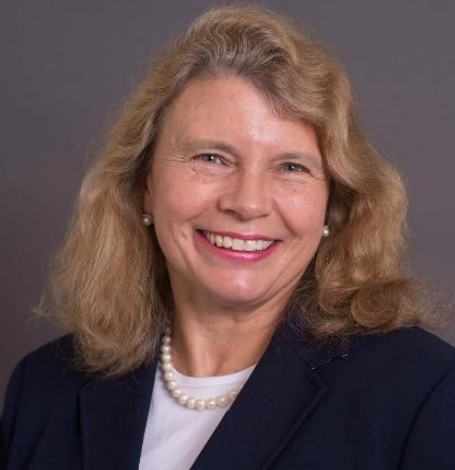
On today's episode, Senior Advisor for Public Health at MaineHealth, former state health official, and ASTHO Alumni Society Representative, Dora Anne Mills, tells us about the rapidly escalating rural maternity crisis, beyond just hospital closures.

 Spotify
 Apple Podcasts
 Amazon Music
 What happens when more than half of rural hospitals stop delivering babies? Senior Advisor for Public Health at MaineHealth, former state health official, and ASTHO Alumni Society Representative, Dora Anne Mills, tells us about the rapidly escalating rural maternity crisis and why it’s more than just hospital closures. Mills explains how Maine has lost nearly half of its maternity units, creating vast “maternity deserts” where pregnant patients face 45-minute or even multi-hour drives for care. Compounding the crisis is worsening maternal health driven by chronic disease, mental health challenges, and substance use, especially among rural and underserved populations.
ASTHO Learning Opportunity: ACEs Strategic Communications Training
Thriving Under Pressure: Building Resilient Dialysis Systems and Teams

JOHN SHEEHAN:
This is Public Health Review Morning Edition for Monday, May 11, 2026. I'm John Sheehan with news from the Association of State and Territorial Health Officials.
Today, inside Maine's rural birth crisis. Dr. Dora Anne Mills, a senior advisor for public health at MaineHealth and a former state health official and ASTHO's Alumni Society representative, tells us about the rapidly escalating rural maternity crisis and why it's more than just hospital closures.
After celebrating Mother's Day this past weekend, it's a sobering reminder that Maine has lost nearly half of its maternity units, creating vast maternity deserts. And compounding the crisis is worsening maternal health driven by chronic disease, mental health challenges, and substance use, especially among rural and underserved populations.
DORA ANNE MILLS:
We hear a lot about the rural maternity crisis and particularly around hospital closures. And one thing I've learned is that it's really two crises in one. So, first is the widespread closures of hospital maternity units. Across the country, there are over 50%, over half of rural hospitals have closed maternity units. And that's true in Maine as well. In fact, we've had 17 of our 36 hospitals have closed their units, units, and, over half of our about four 54% of our rural hospitals have closed their labor and delivery units, 11 of them in the last decade alone. So, it's created these vast maternity deserts where the drive times for people, not just for labor and delivery, but for perinatal care. Prenatal visits, which average about 13, are recommended, as well as postpartum care are very long. In Maine, it's in rural Maine, the average drive time is forty-five minutes. So, you can imagine, in about sixty percent of our rural maternity patients have Medicaid, so they often do not have very reliable transportation. We don't have public transportation significantly in rural areas in this country. So, you're talking about people who don't have reliable transportation, a large proportion of them anyway, and then having to drive 45 minutes each way for 13 prenatal care, postpartum care, and labor and delivery. It's a huge crisis now, but the second one that's related to it is that we have worsening maternal health in and of itself. So, rural pregnant women in the U.S. carry disproportionately high burdens of chronic disease, such as diabetes, substance use disorders, and mental health conditions. A couple examples, one in five rural pregnant women in Maine use nicotine during pregnancy; that's three times the urban rate. Neonatal abstinence syndrome effects are much higher in rural areas. And when you look in a lot of parts of the country, too, the rates are very disproportionately high amongst racial and ethnic minorities. So, our black rural populations, our tribal populations, as examples, have much higher burdens of these chronic diseases.
SHEEHAN:
And, you've described this as a slow-moving crisis or crises. At what point did things tip too far?
MILLS:
Well, I think, you know, in the last decade, things have gotten worse across the country. I know we've seen that in Maine, but I know this is really a national trend. For us in Maine, I would say one tipping point was the 160-mile stretch between the City of Bangor and Presque Isle, which are from Central to Northern Maine, you drive by three hospitals, and they have now all closed their maternity units. So, we're talking about a very large part of the state where a woman who goes into labor in that region faces a very long journey, particularly in winter, on winter roads, where that drive can easily be a couple of hours. So, that's not just a theoretical risk. It's really a public health emergency hiding in plain sight.
SHEEHAN:
Absolutely. And, you know, talk a little bit more about some of the immediate impacts on health systems. When those, when those maternity wards close?
MILLS:
So, one thing that's very striking is we know that when a maternity unit closes, that infant mortality rates in that area double. And those are really striking statistics. And so we see this pretty immediate impact on maternal and infant health. I mean, we know when a maternity unit closes, people who are pregnant have to drive much farther for prenatal care, labor and delivery, and postpartum care. Then the risks there we see are, for instance, significant increases in out-of-hospital births. For women who don't make it to the hospital in time, there are significant decreases in prenatal and postpartum visits. I mean, 13 postnatal visits are recommended. But if you don't have very reliable transportation and you have an hour or so each way to go for those visits, you're just not gonna be able to make them, and the distance and costs become prohibitive. There are impacts on perinatal mental health. So, here's something that also people don't often think about: when a maternity unit closes, often, there's no one left in the emergency department who can safely manage an obstetrical emergency. So, this is a life-threatening gap, not just an inconvenience. And for those rural pregnant people who have a lot of stressors already, and we know our young adult population across the country has high rates of, disproportionately high rates, of anxiety and depression, and you add pregnancy to it, and then you add the stressors of rural maternity units closing and having longer drives, the mental health issues, as I mentioned, are also very, very striking.
SHEEHAN:
Yeah. And, you know, those outcomes for mothers and babies are awful. But then, as you just illustrated, you're compounding pressure on the health system at large.
MILLS:
Exactly. So, you know, maternal and infant health indicators are really the canary in the coal mine in many ways. They're really the indicator for communities' overall health. So, when you have those decline, when they deteriorate, it also shows you how much the health system is stressed. You've got emergency rooms and EMS, emergency medical services, who are not used to obstetrical emergencies or having to handle them on their own. So, it stresses the health system out, and it also stresses the whole community. Well-being starts to go down, starts to deteriorate.
SHEEHAN:
Yeah. And you mentioned, you know, the need for real policy and for a real change. And I'm wondering what that looks like and if the Rural Health Transformation Program might be part of a solution.
MILLS:
Absolutely. And I first just wanna mention that you know, we mentioned the health effects, and on these on this issue as well as the stressors at the hospitals, and other health care, are experiencing. But, also, there's the economic effects too. So, we know that when counties, when communities have had to close and return to the units, there's also a downturn in economic activity. And hospital presidents and businesses have shared with me and others that when a maternity unit closes, they have a hard time recruiting workers to that area. Because what workers look at, particularly young workers and families, they say, well, can we deliver babies safely here because we wanna expand our family or have a family, and can other schools? You know, you look at hospitals and schools, health care and schools. And so when the hospitals are closed for maternity, it then has a ripple effect into the economy. So, there's a lot of ripple effects from closing rural maternity units, overall. But the good news is we do have this rural health transformation program, which does, I think, provide some meaningful strategies that people, that states can implement. So, examples, there are transformational dollars, that are being used and proposed to being used to seed things like regional care coordination systems. You know, for instance, we've got some regional care coordination that's just starting here in Maine. And some of that includes, for instance, closed maternity hospitals, working with open maternity hospitals, and figuring out other ways to provide perinatal care, coordinating things like that to try to cut down on the mileage that people have to drive to just get prenatal care. Also, those Rural Health Transformation Program funds are also being used to increase telehealth alternatives. So for instance, telehealth networks between rural hospitals and referral centers, so that, you know, maybe family medicine OB, obstetricians, and family medicine OBs or family medicine physicians who've been had some extra training in OBs so they can do C sections, that if they're out there in a rural area, that they can call in easily to an obstetrician in a more regional office, and have them see the patients with them through telehealth. So, that's something that's being worked on. Also, workforce pipelines. We know that diversifying the workforce, the OB workforce, is a very important strategy. For instance, implementing programs that train family medicine physicians to do C-sections so they can provide a full range of OB care. So, those are the kinds of things that I think the Rural Health Transformation Program provides an opening to exploring and or implementing.
SHEEHAN:
Do you have any advice for other states, other rural states that are facing similar challenges?
MILLS:
Yes. I would say, first of all, don't treat the hospital closures and maternal health crises as separate problems. They really are intertwined. And I think you have to work with hospitals on the finance side of things, but you also have to work on the health side simultaneously, for instance, such as on substance use, mental health, and social drivers to health. Second, I would get the data systems in order now so that you need them to make the case. Vital records, PRAMS briefs, mortality review panels, producing timely and reliable data. So, as we know in public health, if you don't have data, you don't have a problem. You gotta be able to prove that you got a problem. And third, I would invest in regional planning early. Our experience in Maine, particularly around the trauma centers, we had a big planning process around those several years ago. It was very successful, but just starting regional planning for maternal health. And I believe likewise that regional planning with all the hospitals, health centers, other providers at the table, and patients, will be very successful in trying to assure coordination and a seamless system. And then finally, I think we've got to be honest with our communities about what's coming. The closures are likely to continue in the near term, given the workforce shortages and birth declines in rural areas, and pretending otherwise doesn't serve anybody. But I think we can offer some genuine plans, not just crisis management, and a vision of what safe and sustainable rural maternity systems can really look like, and get a credible path to being there.
SHEEHAN:
ASTHO, in collaboration with the Berkeley Media Studies Group, will host a virtual training designed to strengthen participants' ability to communicate adverse childhood experiences, ACEs, and other relevant public health issues in ways that resonate with target audiences and generate meaningful media coverage. The session will also build skills on crafting compelling narratives by leveraging expert voices, translating data through social math, and delivering clear, impactful messages. Find a link in the show notes.
Join ASTHO for a webinar May 20 to explore how to build resilient dialysis systems and teams. Understanding the structures, processes, and practices that influence patient safety during times of stress is essential to informing priorities and targeting interventions that strengthen resilience. This one-hour session convenes frontline clinicians, workforce leaders, and public health partners to examine practical evidence-informed strategies that enhance both system and worker resilience in the outpatient dialysis setting. The link to register is in the show notes.
This has been Public Health Review Morning Edition. I'm John Sheehan for the Association of State and Territorial Health Officials.