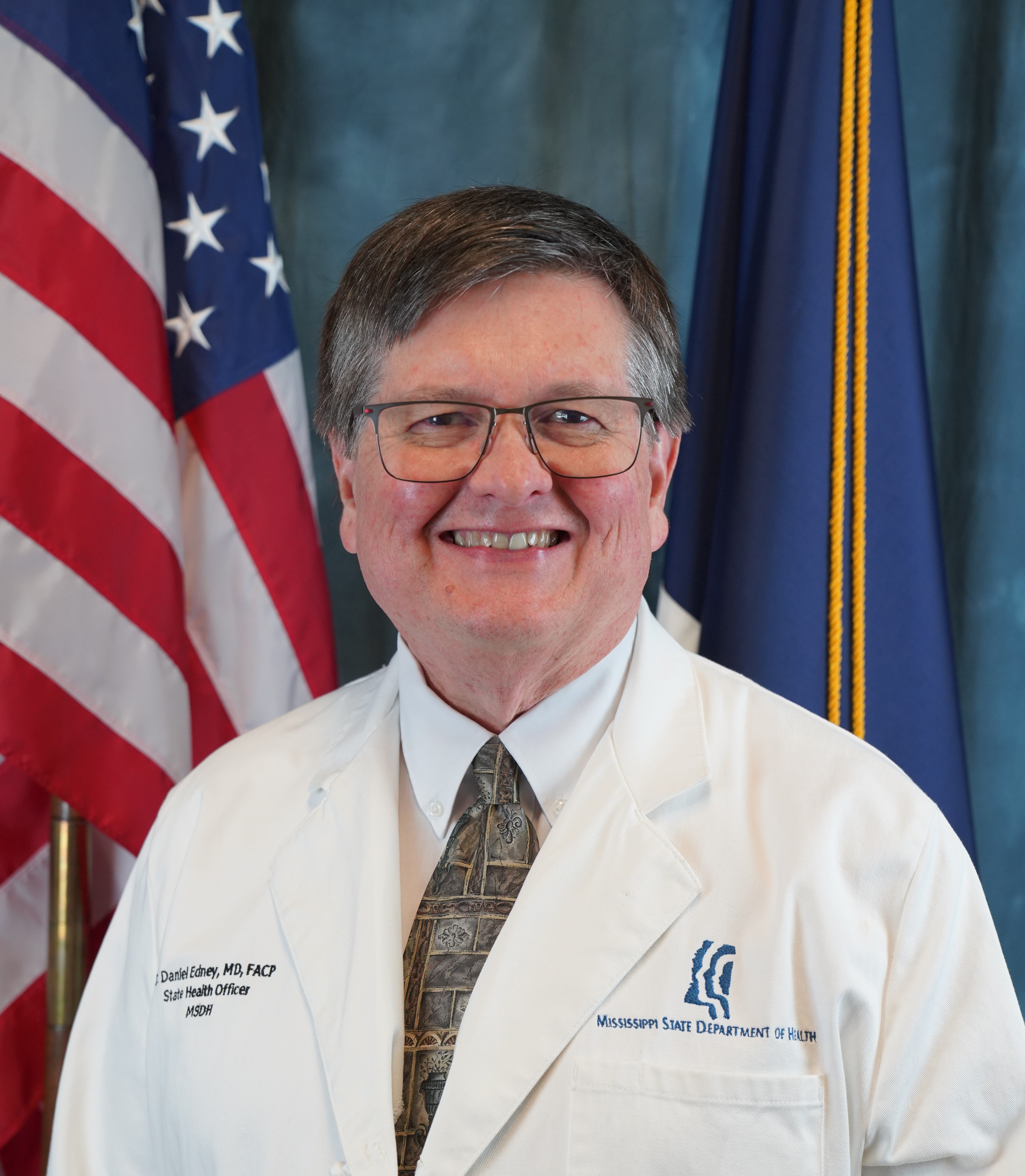
On today's episode, ASTHO member and State Health Officer Daniel Edney explains what’s driving the infant mortality crisis and what it will take to improve infant outcomes, including the roles of maternal health, obesity, and preterm births.

 Spotify
 Apple Podcasts
 Amazon Music
 Mississippi is facing a stark reality: its infant mortality rate has climbed to the highest level in more than a decade, according to the latest 2025 Mississippi public health report card. ASTHO member and State Health Officer Daniel Edney explains what’s driving the crisis and what it will take to improve infant outcomes, including focusing on the role of maternal health and obesity, as well as the rise in preterm births. He also shares how Mississippi is rethinking care delivery through a statewide obstetrical system modeled after trauma networks designed to ensure high-risk mothers and newborns get to the right level of care, no matter how rural the setting.
Public Health Communications for Impact: Approaches to Strengthening Infrastructure

JOHN SHEEHAN:
This is Public Health Review Morning Edition for Friday, May 8, 2026. I'm John Sheehan with news from the Association of State and Territorial Health Officials.
Today, Mississippi's fight against infant mortality. The state's infant mortality rate has climbed to the highest level in more than a decade, according to the 2025 Mississippi Public Health Report Card. ASTHO member and State Health Officer Dr. Daniel Edney explains what's driving the crisis and what it will take to improve infant outcomes, including focusing on the role of maternal health and obesity, as well as the rise in preterm births. He'll also share how Mississippi is rethinking care delivery through a statewide obstetrical system modeled after trauma networks, designed to ensure high-risk mothers and newborns get to the right level of care.
Dr. Edney, Mississippi's infant mortality rate rose to nine point seven deaths per one thousand live births, which is the highest in more than a decade for Mississippi. What are the big drivers of this?
DANIEL EDNEY:
And that's made up almost entirely by a severe increase in African American infant mortality rate that exceeded fifteen per thousand live births. And that was such a huge increase for us in 2024 that prompted me to declare the public health emergency for infant mortality last August, which has been very helpful in helping us expedite work that we were already working on to mitigate infant mortality. Other populations are trending downward, and so, we've been studying this last year, really, the impact that's occurring in the African American community. And a very large driver of this is certainly maternal morbidity overall, but maternal obesity specifically. And there's a very strong correlation with the excess preterm births that we're seeing in Mississippi, especially among African American babies, related to unhealthy weights with their mama. So, we, gratefully, have been reducing maternal mortality in our state significantly, but seeing the difficulty with our infant mortality rates not improving comprehensively, it's a strong sign that maternal morbidity is not improving. So, we've got to lean into helping our pregnant moms be healthier through their pregnancy, and they get further upstream, so women of childbearing age understand the risk factors that generate unhealthy pregnancies, maternal and infant deaths, and help them get healthier before they ever get pregnant.
SHEEHAN:
And one of the responses Mississippi had was to launch an obstetrical system of care, specifically for high-risk mothers and babies. How has that been impactful, and what can other states learn from the model?
EDNEY:
Well, and we've been working on this project for over two years, and it was a main driver for the public health emergency because it has allowed us to move the initiation of that project forward by at least six to eight months by getting normal state government rules out of the way for procurement and hiring, and that type of thing. But we modeled it on our trauma system. And, you know, we are a rural state. We have large service gaps. We have difficulty with access to care in many parts of our state. And our birthing hospitals do a good job, but many of them are not located in the right areas and are leading to large obstetrical deserts. So, the way we handled that with trauma is by having a statewide system overlay of the trauma care that occurs in ERs, EMS, and our trauma hospitals, which has been very effective. And we decided to use the same techniques for high-risk OB and for moms and babies. And the thought is this overlay of a statewide system will help close not only the access gaps, but facilitate getting moms and babies to the right level of care, helping moms deliver at the right level of care, not just the closest level of care, And making sure that our babies that are very high-risk are getting to NICUs, hopefully being born where NICU is, but if not, then getting that baby transferred in a much more efficient and effective manner, so, that baby receives care very quickly, as opposed to what's been happening organically. And as work for trauma, I have great confidence it's going to work with high-risk perinatal care.
SHEEHAN:
Yeah, and that's especially pertinent in Mississippi because it has such a high rural population.
EDNEY:
It is, and we have significant workforce challenges with both OB care and neonatal care. And so, having a high rate of maternal morbidity that's generating a high rate of neonatal morbidity, the babies who are able to be salvaged, we need them being born where they need to be born. And babies come when babies come, and when they're born at a lower level, getting them to a higher level very fast. The OB system will allow us to know there's a baby in the Mississippi Delta that's going to have to move, and pre-positioning NICU transports before the baby is even born. Knowing that this baby needs to go to a university medical center NICU and letting them know, not asking, but letting them know that a baby will be there in two and a half hours: Be ready. We know you have a bed. This baby has activated the system, and this baby's coming.
SHEEHAN:
You mentioned obesity as being one of the drivers of infant mortality, but also as being a driver of preterm births in Mississippi. How do you think agencies can better integrate chronic disease prevention along with their maternal and infant health strategies?
EDNEY:
Yes. Our number one public health challenge is infant mortality. It's our top-tier priority. Our number one population health outcome challenge is obesity, which drives the bus in Mississippi for, you know, it drives the bus for the number one killer of Mississippians, which is heart disease. It certainly does for stroke, diabetes, hypertension; all play into that and really drive many of our negative outcomes. But as I said, many people don't realize how much it contributes to infant mortality. But from my perspective, it's not enough for public health agencies just to talk about education and funding other people to work on obesity. We're a centralized public health state, so we run the county health departments. It's important to me that we get our hands dirty in helping fight the obesity epidemic, and so we have added obesity management as one of our core public health clinical services to provide access to Mississippians who need medical care for their obesity throughout the state, whether they have insurance or not. You know, the one thing that's located in all of our deserts, whether they're obstetrical deserts or primary care deserts or access to obesity management, we have county health departments. And so, accessing those county health departments to attack our population health challenges is really important. It has worked with opioid use disorder. Production in opioid deaths is one of our shining successes, which has helped move us off the bottom. And although we're fiftieth in infant mortality, we're not fiftieth overall, and we've moved from the back of the pack up to forty-eighth, which is a huge part of our public health report card. This is a vast improvement over three years overall population health outcomes. But it's important that we're doing what we can. Now, bottom line, things like diabetes, hypertension, obesity are generational problems and are not going to be fixed in a year or two, but the way to really fix those is K-12 health promotion in our schools. Not a health class, but health promotion. Give me ten minutes a day with the students and teach them just the basics of all the things that you and I are talking about, the importance of obesity, what obesity does to health. If your father and grandfather died when they were 65, here's how you can live longer than that. Here's how you have a chance to live longer than your father and grandfather did. And we teach them these things. Right now, our students don't know. Our moms don't know. They don't know what makes a pregnancy high-risk, and we teach them. But we need to be teaching 13- and 14-year-old young ladies, when you get pregnant down the road, here's how to have a healthy pregnancy and a healthy baby, and here's how not to die because of your pregnancy. And teach them a little bit a day, K-12, and we'll change the generation.
SHEEHAN:
Yeah. Are there other examples of some of that community-level policy change or education that can go a ways towards helping the overall environment?
EDNEY:
Yeah. For us, it's all hands on deck. It's gonna take all of us. While we're the health department, we have to do what we can do, and we need to do everything that we can do in these spaces, but we can't do it all. And we have to work with our community-based organizations, faith-based, and secular, together to work with community-based education and access to resources. We have to work with our FQHC partners as they work to expand access to care, especially in our rural areas and our underserved populations. We have to work with our rural health clinics and the private sector. You know, a lot of times in public health, we don't talk about the private sector, but I came from the private sector. The private sector is an incredibly important partner in achieving the things that all of us in public health want to achieve. So, state government has a distinct role, but it's you know, we don't have jurisdiction over everything. We have to partner together.
SHEEHAN:
The report makes use of the figure one hundred and ninety thousand potential years of life lost before the age of 75 in Mississippi, preventable deaths. How are metrics like that useful in maybe pushing policy or helping make the case to those decision-makers?
EDNEY:
Yeah. So, a couple of metrics that really communicate powerfully to the public. One is the potential years of life lost before age 75. And I I make sure people understand that those are potential years, but they're very real years. So, when a baby dies at their first birthday, that's 74 years of potential life lost. And for every death in Mississippi we add, we look to see, are they younger than 75? And if they are, then we look at the difference and we put it in the bucket, and we add it up. Year after year after year, we do that. That, for me, is the most sensitive indicator of preventable death that we have. John, I want you to know that number has been trending down for three years. When we started with the "Change Can't Wait" campaign, when I became State Health Officer, getting us off the bottom, that number was more than 250,000 years of potential life loss before age 75. So, getting down, breaking 190,000, you know, getting down to 189,000 and change is huge. Now we need that number to be well below one hundred thousand, obviously. But we're trending in the right direction, which I'm so grateful for. But the other metric that we've been looking at is our excess mortality rate for our state compared to the U.S. average and adding that those aren't potential years, those are actual years, those are actual deaths that occurred prematurely. There's no other way to interpret that excess mortality except these are people who died because they were living in Mississippi. There are other states that they were living in, they would not have died. And that's not because of bad health care, it's because the system is not serving our folks well. And so it's our job at the State Department of Health to work on the system, hence the OB system of care. All the things that we do at the Department of Health, I'm prioritizing the things that only we can do. There's nobody else in Mississippi that can do an OB system of care. There's no one else in Mississippi that can close the obstetrical deserts. It's going to take us to do that. So we lean into those spaces. In the areas where the private sector has it well covered, or we have CBOs doing a great job, the FQHCs are doing a great job, we step back and work in support. But going back to 1950, looking at excess mortality compared to the US average year over year over year, that's 300,000 people who died unnecessarily. Those are 300,000 preventable deaths that we have to eliminate. That trend is coming down as well, not nearly where it needs to be. And my goal is not to get to the U.S. average. My goal is to get below the U.S. average. I want us below the average for the United States for maternal death, for infant death. We're below the U.S. average in several things. We're below the U.S. average in opioid deaths and tuberculosis. Our syphilis rates are declining, our HIV rates are declining, congenital syphilis has been cut in half. But until we really reduce heart disease, cancer, and accidental deaths, we're going to continue to really suffer this excess morbidity and mortality that we currently are suffering from. But it's less than it was. And my philosophy is, if it's better than it was, that's a public health win.
SHEEHAN:
Absolutely. Dr. Daniel Edney, thanks so much.
EDNEY:
Thank you.
SHEEHAN:
Dr. Daniel Edney is Mississippi's state health officer.
Stay informed on the latest federal developments with the View from Washington, D. C. segment on this podcast. This special feature offers timely updates from Capitol Hill, so be sure to subscribe and never miss an episode. Carolyn Mullen and Jeffrey Ekoma provide public health policy analysis that are all updates and insights on emerging actions and what they can mean for state and territorial public health.
ASTHO newsletter subscription options feature updates, analysis, resources, and events on pressing issues in state and territorial public health. Subscribe at the link in the show notes to receive Legislative Alerts, news releases, Public Health Weekly, events, and PHIG Connections.
This has been Public Health Review Morning Edition. I'm John Sheehan for the Association of State and Territorial Health Officials.