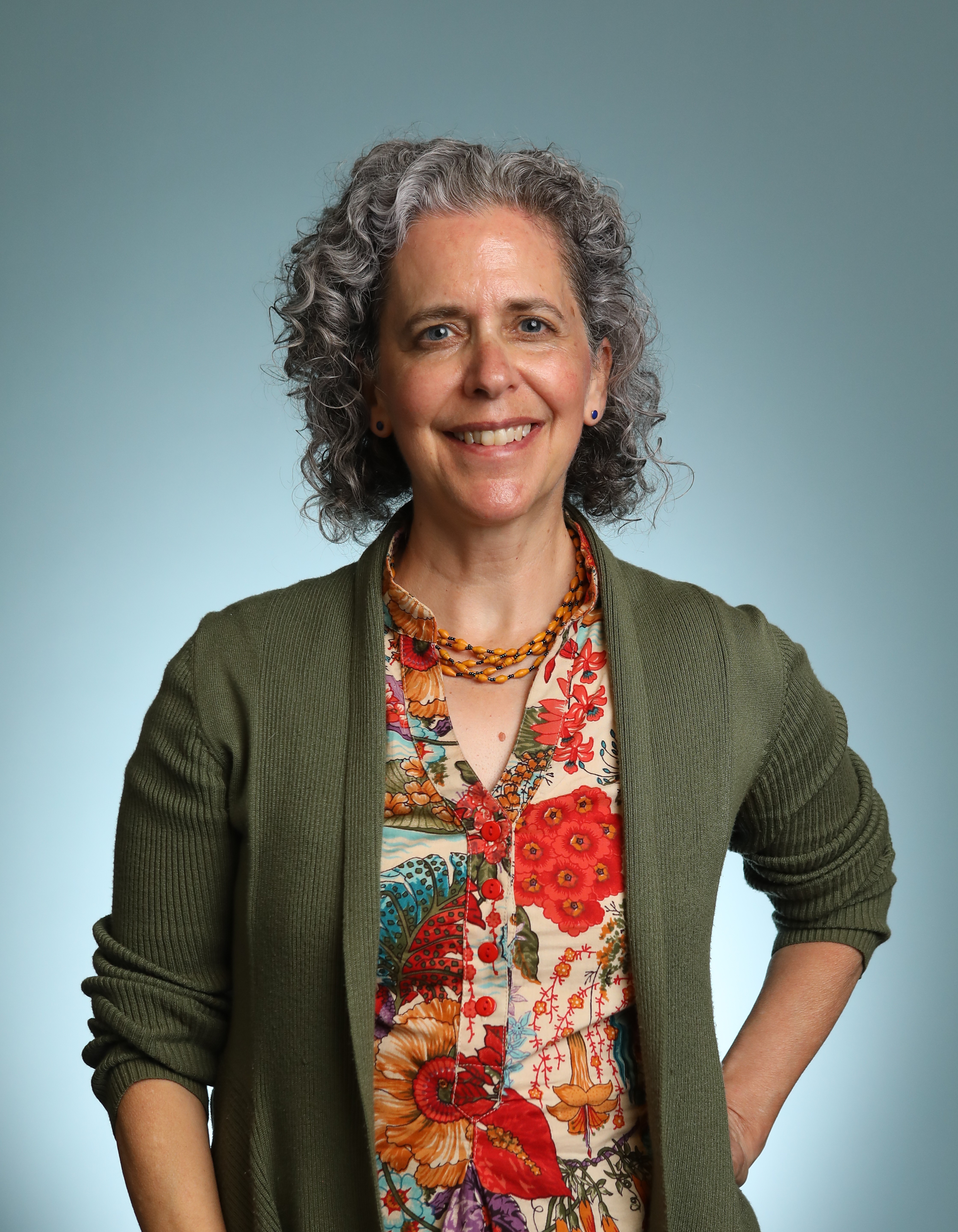
On today's episode, Nessa Richman from the Rhode Island Food Policy Council discusses how the Council brings diverse stakeholders together to tackle complex food challenges.

 Spotify
 Apple Podcasts
 Amazon Music
 What does it take to build a stronger, more resilient food system? In this episode, we speak with Nessa Richman, executive director of the Rhode Island Food Policy Council, about how the Council is bringing diverse stakeholders together to tackle complex food challenges, from farmers and fishers to public health leaders and policymakers. Nessa will explain how the council creates space for collaboration across the food system, helping break down silos and align efforts around shared goals like food access, economic vitality, and environmental sustainability. Through convenings, education programs, and coordinated advocacy, the council is driving more equitable and community-informed food policy.
Food System Resilience: A Planning Guide for State Governments | ASTHO
A Guide for Sustainable Public Health Accreditation | ASTHO
How States Can Prevent Adverse Childhood Experiences Through Stability, Safety, and Support | ASTHO
Utilizing Partnerships, Data, and Messaging to Prevent ACEs | ASTHO
Adverse Childhood Experiences | ASTHO

JOHN SHEEHAN:
This is Public Health Review Morning Edition for Tuesday, April 21, 2026. I'm John Sheehan with news from the Association of State and Territorial Health Officials.
Today: what it takes to build a stronger, more resilient food system. Nessa Richman, executive director of the Rhode Island Food Policy Council, explains how the Council is bringing diverse stakeholders together to tackle complex food challenges, from farmers and fishers to public health leaders and policymakers. Nessa will explain how the Council creates space for collaboration across the food system, helping break down silos and align efforts around shared goals like food access, economic vitality, and environmental sustainability.
Nessa Richman, welcome to the show.
NESSA RICHMAN:
Glad to be here.
SHEEHAN:
So Nessa, can you tell us about Rhode Island's Food Policy Council, kind of how it works and how it was created?
RICHMAN:
Sure. The Rhode Island Food Policy Council was created to bring together different stakeholders from all across the food system, from farmers to fishers to food businesses and food justice advocates and food access workers, because they don't normally have a chance to meet each other and understand each other's challenges and opportunities.
SHEEHAN:
And I think just that communication itself would provide a lot of benefits. Could you tell us how that ends up strengthening a food system?
RICHMAN:
Absolutely. Well, our mission statement is to create a more equitable, accessible, environmentally sustainable, and economically vibrant food system. And that's really what we do when we come together. So, we basically work across a triple bottom line of food access, food business, and food and climate. And the way that we do that work is by convening people, educating them, and then advocating together on areas where we have shared interests. So that takes the form of retreats that we have across the year. It takes the form of lunch and learn webinars. We have an in-depth educational program that we call the Food Leaders Lab. And then after folks are really understanding where there's common ground, we develop work groups and strategies and we go to the state house and advocate for better food policy together.
SHEEHAN:
And how do states often interact with the food councils? You mentioned a lot of other partners as well.
RICHMAN:
Yeah. Well, it really does bring the state agencies together. State agencies can't be technical members of our Food Policy Council because that's just the way that it was set up to be outside of government. But they are allowed to and encouraged to participate in our work groups because they bring really valuable information and resources and expertise that can help our members understand what is and isn't possible from a policy perspective.
SHEEHAN:
And what are some of the measures of success for the council?
RICHMAN:
Certainly, a big measure of success is that we want to have a broad and diverse network that's representative of all of the different parts of the food system. Another measure of success is that we're doing a good job facilitating and bringing people together so that we can help communities across the state move beyond fragmented efforts to address the kind of structural and entrenched problems that we face in the food system to develop more systemic solutions. So, food policy councils are really important for developing community-informed strategies, strategies that can create healthier communities, more sustainable communities, more equitable communities and food systems. Just by bringing diverse stakeholders together, as we mentioned, we can strengthen our local economy. We can improve access to nutritious food. And we can foster collaboration between government and community to tackle these kinds of complex food-related challenges like hunger and chronic disease.
SHEEHAN:
And I imagine it's as important to communicate the good work of the council as it is to communicate the solutions that the council is creating.
RICHMAN:
Absolutely. Raising the profile of the council at the state house is really important to what we do. So, we're always working on these specific issues that are kind of surfaced by through these conversations and collective retreats. But at the same time, at the staff level, we're always working to strengthen relationships with key leaders and decision makers, both at the state house and in the state agencies. We want to be known as the go-to resource for expertise and information about our state's food system because we know that, for example, our state legislators can't know all of these different things about the food system. When they see a piece of legislation come across their desk, they may have questions about it. And certainly I don't have all the answers, but with this network, I pretty much know who to call to get that expertise to the table.
SHEEHAN:
And does the network include all of New England? And how do you work between states?
RICHMAN:
That's a great question. So, our Food Policy Council focuses just on Rhode Island. And there are food policy councils and food policy networks. They're called many different things in all of the other New England states as well. So, while we focus on our state, we also work together. And we work together in particular through a partnership called the New England Feeding New England Partnership. And that's made up of groups like ours that are network-based and nonprofit organizations that are kind of bringing together inside and outside government actors and decision makers to align regional policy as best we can while still really paying attention to the opportunities and challenges that exist in our specific state houses. So, we work a lot on the regional level. And the New England Feeding New England Project in particular has done a lot of research and now has grown to include the various state departments of agriculture and in Rhode Island also the Commerce Department to be part of that planning that's going on and implementation work that's going on.
SHEEHAN:
I would imagine in New England, that's especially necessary just given how interconnected the communities are and how sort of close together everyone is.
RICHMAN:
Absolutely. What I'll say is that in Rhode Island, if we were to depend just on the food that we can grow and harvest, we wouldn't be able to make it. That's actually true for New England as a whole as well. The food system is really spread out. And we get a lot of our food from California, Texas, Florida, and of course overseas. But what we're doing as a region is working to make ourselves more resilient. And what that means is that we're working together to make sure that Maine blueberries and potatoes make it down to Rhode Island. And at the same time, here in Rhode Island, we're providing seafood up to all of the other states. So, it's really a matter of understanding the strengths, the relative strengths of the New England states and building markets that are local and regional so that when emergencies or other types of climate-related challenges or other types of supply chain challenges occur, like what happened in COVID and what can happen sometimes, that as a region, we're ready and prepared with those shorter supply chains that remain uninterrupted by those types of national and international crises.
SHEEHAN:
And given some of those experiences, what advice would you have for, say, public health officials or agents in other states who would like to get this kind of food policy council helping their own food resiliency in their own states? What would you say to them?
RICHMAN:
Well, I think that food policy councils are an extremely effective tool to creating better food systems. And in order for them to work properly, they need to have both inside and outside government participation. Here in Rhode Island, we actually have a unique setup where the Rhode Island Food Policy Council exists outside of government. But we also have an interagency food and nutrition policy advisory council that sits inside government. And there's a director of that council as well. And she meets regularly with the state agencies. So, food policy councils can be both inside and outside government. And I would think that any of your listeners would be able to find a council near them that they could begin to participate in. If a food policy council exists inside government, then state agencies can be official members. And so, that's what we have in our interagency food and nutrition policy advisory council. It was created by the governor, and now it's embedded in a state agency. If the food policy council is outside government, then state agencies can usually assign agency representatives to serve on work groups or committees. They can provide expertise, staff support, funding, collaboration on research or grant rating. And all of that can be aimed at strengthening local food systems. The other thing I'd say is that non-governmental food policy councils can sometimes act as effective intermediaries for state agencies to connect with on the-ground community-based efforts and help the folks on the ground understand what's happening in state-level policy and also help the state-level entities do good community-based work and get good information from on-the-ground efforts, facilitating coordinated action on whatever that topic is, whether it's about public health, food security, agricultural economic growth, or food equity.
SHEEHAN:
So, food policy councils can be really good partners, I think, even if they are in the Nessa, what do you see as the council's responsibility for communicating the work of the council to the state, to the community?
RICHMAN:
Yeah, well, at the Rhode Island Food Policy Council, we really take measurement and metrics and evaluation seriously. So, we work at different levels to provide important information to the state about the state's food system. And that's not to say that the state doesn't have good data itself, it absolutely does, but it's not contextualized as a food system. The Department of Education will have information on school meals, the Department of Agriculture will have information on acres and farms, but we kind of put it all together. And the way that we do that is through our Rhode Island food system metrics dashboard. Our dashboard is interactive, and it contains about 40 different measurements of how our food system is doing across different categories like food access, fisheries, food business, and all of that. So, we have that interactive dashboard that's available free for everyone. And we also turn that into a fact book annually. So, this is a downloadable PDF. And we provide that PDF to every single one of our elected officials when it comes out every year. And we also, of course, make it available to our agency staff as well. In addition to that state-level work, we also create municipal fact sheets. So, this is a downloadable fact sheet for every city and town in our state that includes about 20 different indicators. It'll tell the people in that municipality how many kids are on free and reduced price meals, how many food businesses and restaurants they have in their community, how many farms, how many community gardens, and many other really useful measures. And then because we know that busy municipal officials may not have the resources to kind of understand what to do with that information immediately, we also have a handbook for how they can use that information to improve their municipal food system. So, we do all of that, and we also want to know how we're doing. And the way that we understand our own impact is through a biennial network survey that we run with all of our members to make sure that we're really meeting their needs for education, for convening, for advocacy, and so that we can improve more and more and be more effective over time.
SHEEHAN:
Nessa Richman is executive director of the Rhode Island Food Policy Council.
Public health accreditation is a dynamic process that requires ongoing commitment, strategic planning, and organizational alignment for agencies to uphold consistent quality, accountability, and performance over time. During ASTHO's webinar, “Tools and Strategies for Building a Sustainable Accreditation Infrastructure,” two health departments, Montana Department of Public Health and Human Services and Southern Nevada Health District, described how they leveraged ASTHO's Guide for Sustainable Accreditation and strategies gained from participating in ASTHO's Accreditation Sustainability Learning Community to develop plans that strengthen their accreditation infrastructure, improve internal communication, and help maintain momentum beyond each accreditation cycle. Watch the recording linked to in the show notes.
April is Child Abuse Prevention Month. Adverse child experiences, or ACEs, can have lasting effects on health and well-being. These experiences include trauma, such as abuse, neglect, household substance use, and witnessing violence at home or in the community. Find resources on preventing ACEs at the links in the show notes.
This has been Public Health Review Morning Edition. I'm John Sheehan for the Association of State and Territorial Health Officials.