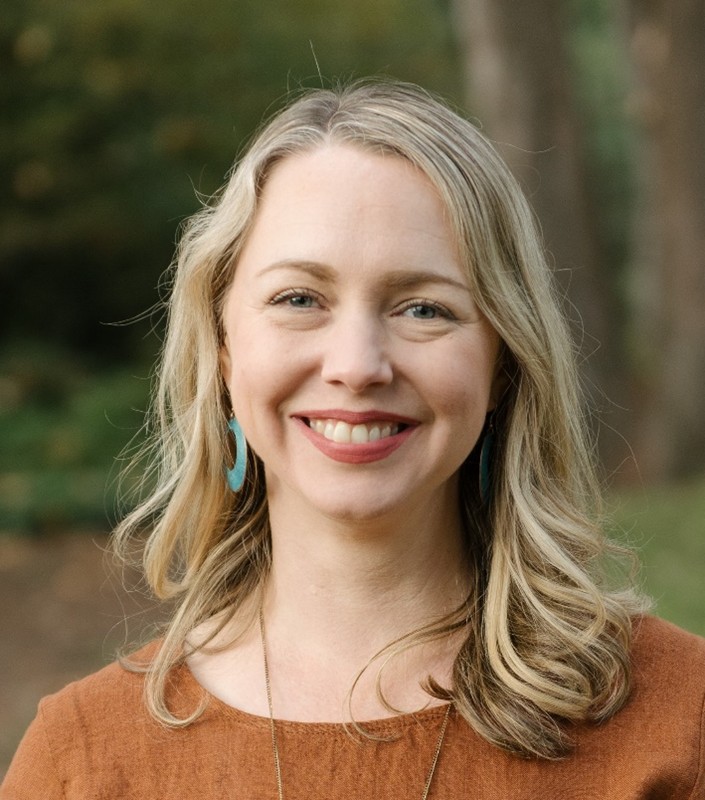
On today's episode, Heather Drummond from the Washington State Department of Health discusses the realities and urgent gaps in Long COVID care.

 Spotify
 Apple Podcasts
 Amazon Music
 Long COVID didn’t end with the pandemic, and in some ways, the challenges are just beginning. In this episode, Heather Drummond, deputy director of the Center for Access to Whole Person Care for the Washington State Department of Health, joins us to discuss the myths, realities, and urgent gaps surrounding Long COVID today. With an estimated 6.2% of Washington adults affected and over $1.5 billion in associated medical costs, Long COVID remains a complex and often misunderstood condition. Drummond explains why it’s so difficult to diagnose, how symptoms can vary widely across individuals, and why stigma and low awareness continue to prevent patients from getting the care they need. We also explore Washington State’s innovative response, from building a multi-source surveillance system to expanding provider training, launching public awareness campaigns, and developing clinical decision tools in partnership with the University of Washington.
Living With Long COVID: Stories, Science, and Public Health
Past, Present, and Future: Reflections from a Radiation Readiness Professional
Now, Next, and Beyond: Understanding the Rural Health Transformation Program | EY - US

JOHN SHEEHAN:
This is Public Health Review Morning Edition for Thursday, March 26, 2026. I'm John Sheehan with news from the Association of State and Territorial Health Officials.
Today, Long COVID: it didn't end with a pandemic. Heather Drummond, deputy director of the Center for Access to Whole Person Care for the Washington State Department of Health, joins us to discuss the myths, realities, and urgent gaps surrounding Long COVID today. She'll explain why it's so difficult to diagnose, how symptoms can vary widely across individuals, and why stigma and low awareness continue to prevent patients from getting the care they need.
HEATHER DRUMMOND:
I think some people, perhaps understandably, believe Long COVID was a pandemic-era problem that is over now, but we know that Long COVID continues to have significant medical, social, and economic impacts. An estimated 6.2% of Washington adults were affected, according to the 2024 Household Pulse Survey data. Unfortunately, there is a lot of stigma associated with both COVID-19 and Long COVID, which can add to challenges in identifying symptoms, being diagnosed, and accessing treatment resources. Relatedly, variability in how Long COVID presents in individuals and when it presents relative to a COVID-19 infection makes it difficult to recognize. For example, the proportion of individuals who either self-test or are lab-confirmed for COVID-19 infection continues to decline, making it difficult to link symptoms to a prior infection. Finally, Long COVID is a condition with significant economic implications. An analysis conducted by our team estimated that Long COVID is responsible for approximately $1.53 billion dollars in direct medical costs in Washington State alone. So, we all have a responsibility to develop infrastructure and support resources for individuals and communities who may feel they are navigating this alone.
SHEEHAN:
And that sounds like a really complicated challenge, specifically because it's so hard to diagnose and to track and to treat once it's there. What are we talking about? What are the symptoms of Long COVID that can present in different ways?
DRUMMOND:
It's a great question. So, Long COVID is an infection-associated chronic condition, and it has an onset after SARS-CoV-2 infection. The clinical diagnosis is that its symptoms are present for at least three months as continuous, relapsing or remitting, or progressive disease state. So, it can get, symptoms can become more severe over time. Long COVID can affect one or more organ systems, and as you can see, the diagnosis is intentionally broad and inclusive, because it can present very differently in different individuals, which I think contributes to the challenges in thinking you may have Long COVID, seeking diagnosis, and then connecting to treatment.
SHEEHAN:
Absolutely, and just getting to that stage of seeking treatment, what are the gaps there? How are patients not getting the care they need, and what are some of the most urgent needs that you're seeing?
DRUMMOND:
Yeah, so our work in Washington has focused on several components, which seek to increase awareness of Long COVID screening and connection to treatment and support services. As you mentioned, many people may have Long COVID, but don't realize they have it, or don't think to get screened or talk specifically to their health care provider about the potential of having Long COVID. Similarly, there is still limited awareness with health care providers about Long COVID, again, the variability in how it presents and the process for diagnosing and connecting to treatment. We've also heard about significant delays in challenging and connecting to treatment resources. For example, the University of Washington here has a Long COVID specialty clinic, one of just a few across the country, but they are already far exceeding their current capacity. Our work here in Washington strives to increase provider training for Long COVID, so folks can connect to resources locally and with their own primary care providers.
SHEEHAN:
Yeah, what other initiatives are you and your team in Washington trying to roll out to tackle this? Understandably, really. A kind of pernicious problem.
DRUMMOND:
Yeah, so at the Washington State Department of Health, our goals have been twofold: to build a better understanding of the prevalence of Long COVID and to expand awareness of and access to treatment resources within the state. To understand the prevalence of Long COVID, we are building a multi-source passive surveillance system by leveraging data that's already being collected through health care encounters, rather than asking providers or patients to report separately. And we're using a tiered approach to case identification to understand not just those who have been clinically diagnosed with Long COVID, but also looking at specific symptom patterns to better capture the variability that we've talked about. Alongside our surveillance work, we've been working on multiple initiatives to increase awareness of Long COVID, including a social media campaign and resources for providers to have more knowledge of Long COVID symptoms and screening needs. This includes two Long COVID-focused episodes of the Provider Facing Podcast that our department produces, development of learning modules for our statewide community health worker training system, and a partnership with the University of Washington to build a Long COVID module into their medical school curriculum for future positions. We're also collaborating with the University on a clinical decision support tool that can be integrated into the electronic health record system to prompt clinicians to screen for Long COVID based on specific criteria.
SHEEHAN:
Gotcha. So, going back hand in hand with that surveillance part of it, it sounds like it's really sort of this two-pronged effort to better document and gather information on it, as well as, you know, spreading information within clinics that say, hey, this is out there, you've got to catch it, and then let's start getting these patients into treatment.
DRUMMOND:
Exactly.
SHEEHAN:
So, Heather, what would you say to those patients that actually have Long COVID, have been diagnosed, and are sort of dealing with it day-to-day? What would you say to them to sort of let them know it's on the horizon?
DRUMMOND:
Yeah, so I'm hopeful that with our public awareness campaign and our efforts, we are contributing to expanding awareness and then screening and treatment for Long COVID across Washington State. The awareness campaign strives to reduce stigma about Long COVID and help people find resources to support them as they navigate their symptoms. Since the launch of our public awareness campaign a few short weeks ago, we've been really appreciative of the response from communities across the state. And I think it connects to, as you say, the persistent advocacy of folks across the country who are experiencing Long COVID. They're connecting with each other and learning and raising visibility by telling their stories, and this is, I think, informing the narrative and the dialogue about how important it is to develop and leverage additional resources to address this condition.
SHEEHAN:
You're taking part in an upcoming ASTHO webinar about Long COVID. What are you expecting in terms of takeaways for participants?
DRUMMOND:
Yeah, so really excited for the webinar next week. I recently had the privilege of attending a Long COVID Community of Practice meeting hosted by ASTHO, and it's always helpful to learn from other states and jurisdictions. I think both in public health and in health care, we need to recognize that COVID and Long COVID are here to stay, and to thoughtfully consider how long-term support infrastructure is operationalized, and how we best serve our communities. Long COVID is not the only infection-associated chronic condition, and public health has an opportunity to promote health and access to care for all of these conditions, coordinating strategies and learning alongside each other, and centering the voices of those most impacted by Long COVID will help us best address this critical public health issue.
SHEEHAN:
Heather Drummond, thanks so much.
DRUMMOND:
Thank you for inviting me.
SHEEHAN:
Heather Drummond is deputy director of the Center for Access to Whole Person Care for the Washington State Department of Health.
Pull up a chair and join ASTHO for a fireside chat with a subject matter expert in radiation readiness communications. In this webinar, titled, "Past, Present, and Future: Reflections from a Radiation Readiness Professional," Jessica Wieder will share reflections on her career and insights from her experience in radiological preparedness and emergency communications. This webinar will include discussions around key considerations for effective radiological risk communication from a public health preparedness perspective, including coordinating messages across partners and addressing public concern and false and misleading information. The conversation will also highlight practical tools and readiness resources that can support state, local, and territorial partners.
Curious as to how states and providers are navigating the CMS Rural Health Transformation Program? On March 30, ASTHO Chief Medical Officer Susan Kansagra will participate in an expert panel hosted by EY, discussing CMS expectations for the program, states' funding strategies, and more. Registration information is in the show notes.
This has been Public Health Review Morning Edition. I'm John Sheehan for the Association of State and Territorial Health Officials.