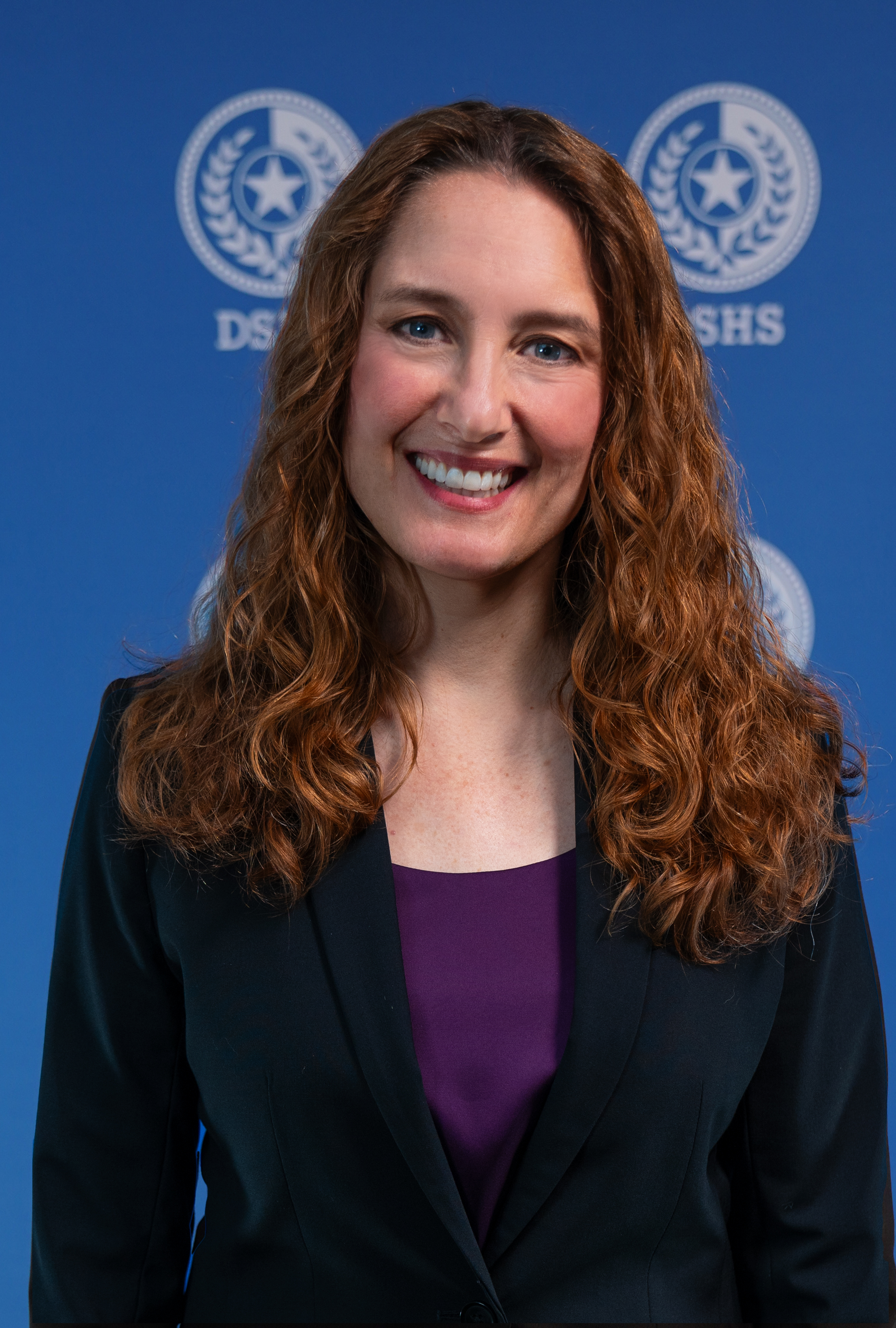
On today's episode, ASTHO member Jennifer Shuford discusses how Texas is preparing for a potential return of New World screwworm, prompting proactive clinician alerts and enhanced environmental surveillance for detection and containment.

 Spotify
 Apple Podcasts
 Amazon Music
 A parasitic pest once eradicated from the United States is moving closer to the border, and public health officials are paying close attention. In this episode, Jennifer Shuford, an ASTHO member and commissioner of the Texas Department of State Health Services, discusses the growing threat posed by New World screwworm as cases spread north through Central America and Mexico. Shuford explains how Texas is preparing for a potential return of the parasite, an organism that primarily affects livestock but can also cause severe infections in humans. From clinician alerts and lab guidance to enhanced environmental surveillance, Texas is taking a proactive approach to detection and containment.
New World Screwworm: Outbreak Moves into Northern Mexico | HAN | CDC
New World Screwworm Insights and Action Steps | ASTHO

JOHN SHEEHAN:
This is Public Health Review Morning Edition for Tuesday, March 10, 2026. I'm John Sheehan for the Association of State and Territorial Health Officials.
Today, New World screwworm: it's a parasitic pest, once eradicated from the United States, but it's moving closer to the border, and public health officials are paying close attention. Dr. Jennifer Shuford, an ASTHO member and commissioner of the Texas Department of State Health Services, discusses the growing threat posed by the New World screwworm and how Texas is preparing for a potential return of the parasite, an organism that primarily affects livestock but can also cause severe infections in humans.
JENNIFER SHUFORD:
So, New World screwworm is making its way northward through Central America and Mexico towards the Texas border. Since late 2023, there's been this movement up. Previously, it was contained in Panama and in South America, those were places where there was indemnity. And now, it's moving northward, and most recently, there have been some cases in Tamaulipas and Nuevo Leon, which are states in Mexico that are right on the border of Texas. Since late 2023, we know that there's been over 150,000 cases in animals and over 1,300 cases in humans, just in Central America and Mexico. So, we know this is posing a real threat and is threatening those areas actively, and so, we're concerned about Texas and the United States.
SHEEHAN:
So, how is Texas preparing for a possible return, and what should other states be thinking about?
SHUFORD:
So, over the last year, Texas has been making efforts to prepare ourselves. I can tell you that last summer, the summer of 2025, our governor, Governor Abbott, established a rapid response team for Texas to address New World screwworm, and we are one of the agencies that's involved. The lead agencies include agencies that deal more with animals, and so, Texas Parks and Wildlife, Texas Animal Health Commission, as well as the Department of Agriculture. But we're participating in that response team, knowing that New World screwworm can impact human health alongside the impact that it has on animals. So, we had started that response team in the summer of 2025. About that same time, we released a health alert to providers throughout our state, so they would know that this isn't an emerging issue, and one that they might be called on to address. So, we have been putting out education to providers and to hospitals over the last nine months or so to make sure that everybody knows to be on the lookout for these cases, especially right now in travelers who have gone to these areas where we know there have been cases of animal or human New World screwworm. But also knowing that we might see it within Texas borders soon. We want everybody to be prepared, so this is something that other states might consider as well. We know there has already been one case that Maryland identified in a traveler who had been in El Salvador. So, we know that this can already be impacting the health of animals and humans within the United States, even if the pest itself, the New World screwworm, hasn't crossed our borders yet.
SHEEHAN:
So, what should clinicians be looking for in patients that have been to the affected areas?
SHUFORD:
Because the New World screwworm is a fly that lays eggs on the side of open wounds or within mucus membranes, those eggs, when they hatch, they burrow down into live flesh and cause pain. And so, what we'd be looking for are wounds that are painful and not healing, and that there might be maggots that can be visualized within them. Those are clues to a person who has that disease state, or for a provider that's looking at that to know that they need to consider New World screwworm on their differential diagnosis. That's the education that we're trying to get out to providers right now; to be on the lookout for the possible larvae of New World screwworm within either an open wound or a mucus membrane.
SHEEHAN:
So, fast and accurate testing is important during an outbreak. What advice do you have for states on how to strengthen their lab readiness?
SHUFORD:
So, what we found is that we were getting a lot of education out to providers. And so, they knew to look for New World screwworm, that we didn't get as much education out to our lab colleagues, so they would know how to submit those samples to us. It is so important for us to identify if this is New World screwworm, because the way that we treat it and contain it depends on that accurate diagnosis. So, the lab can submit those samples to our public health lab, where we have experts that can look at it under a microscope. We have the equipment and experts in our lab. We also have an entomologist that can do a quick review of that larvae that is submitted to us. We can also send those photos to CDC. And so, there's a whole process in place right now for a rapid diagnosis. The reason that that's really important is that the treatment for New World screwworm is removal of all the larvae. In order for a provider to know the importance of that, they need to know that that is indeed the parasite that they suspected it might be, and that that's the definitive treatment. The other reason it's important is containment of this parasite. So, there's many things where it doesn't really matter in medicine about where you put that waste from wounds management. However, in this case, it's really important where the larvae end up. We need all of them contained. They need to be deactivated within a 70% ethanol solution, so that they don't end up in a landfill or in a water treatment plant, where they might be able to complete that life cycle, become a fly, and then establish New World screwworm, reproducing New World screwworms here in the United States. And so, really deactivating that at the time that a provider is seeing that patient is super important, and that does rely on an accurate diagnosis quickly.
SHEEHAN:
What role does environmental monitoring play?
SHUFORD:
So, we have a lot of experience doing surveillance for mosquitoes, knowing that mosquitoes are vectors that carry a lot of diseases that impact humans. And so, we are just applying that knowledge, that surveillance activity to this new parasite that we're concerned about, New World screwworm. And so, having the sterile flies dyed with a fluorescent dye, we can easily identify them when they're in a trap. We're trying to differentiate between the flies that are these sterile insects that have been released versus the ones that are capable of reproduction and capable of causing this really intense disease state in humans and animals.
SHEEHAN:
What lessons do you think other states can learn from Texas when thinking about their approach to preparing for emerging threats?
SHUFORD:
So, with this New World screwworm fly response, what has happened in Texas has been different than what's happened with some of the other public health activities that we have planned for other parasites. So, in this case, our governor called a rapid response team together last summer, and there was this top-down approach to agencies really working together. So, the state agencies within Texas really started working together early on and having discussions about how we will work together and when we identify this in our state. We also then got linked in to our federal agency partners, and so we have been able to do exercises with USDA, FDA, Department of Homeland Security, as well as other Texas agencies, just to make sure that we are prepared for when we see a New World screwroom introduced into Texas. And so, that sort of top-down approach has really helped our coordination between agencies. A couple of other little things: one of the things that we're really trying to do is not only get out our education to providers and hospitals, but to other humans in Texas that might be interacting with animals or be in an outside environment where they could be infected. So, we're targeting some information towards farm workers who might have exposed skin and would be more at risk of having this parasitic fly lay its eggs around their wounds. We know that people that work outside might have extra skin abrasions, and they could be at risk of this. In addition, we're working on some communications with animal control workers, knowing that this parasitic fly can impact pets or animals that are brought in, too or by animal control officers, and making sure that they know what to look forward to and who to report to. And so, we're trying to get to these different groups of people that might be impacted and make sure that the information that we're passing them is understandable by them. We're also working with other federal partners like USDA and FDA as the regulator of milk in the state of Texas. Our agency is also worried about how potential treatments in cattle could affect dairy products, and so, trying to maintain those really close relationships with federal partners that deal with food and dairy regulation, as well, to make sure that we're on the same page, and that we're protecting not only the people and the animals from direct impact from these parasitic flies, but also making sure that the food products and dairy products that we regulate are safe for human consumption. And so, really trying to approach it from both angles.
SHEEHAN:
Dr. Jennifer Shuford is an ASTHO member and commissioner of the Texas Department of State Health Services.
This has been Public Health Review Morning Edition. I'm John Sheehan for the Association of State and Territorial Health Officials.